Ford government looking to build three new power plants to meet electricity demands. Here’s where they’d be located

We’ll have probably reverted before anything is built.

And it’ll be at least a decade before the 1st shovel full of dirt because of crap like this …

… Green Leader Mike Schreiner has called for public hearings on the new plan and urged the government — which is hinting at an early election next spring instead of waiting until the scheduled date in June 2026 — to emphasize renewables like solar, wind and storage as costs for those sources of electricity fall.

Share

Trump plans to restart Keystone XL pipeline

President-elect Donald Trump plans to revive the long-delayed Keystone XL pipeline on his first day back in the White House.
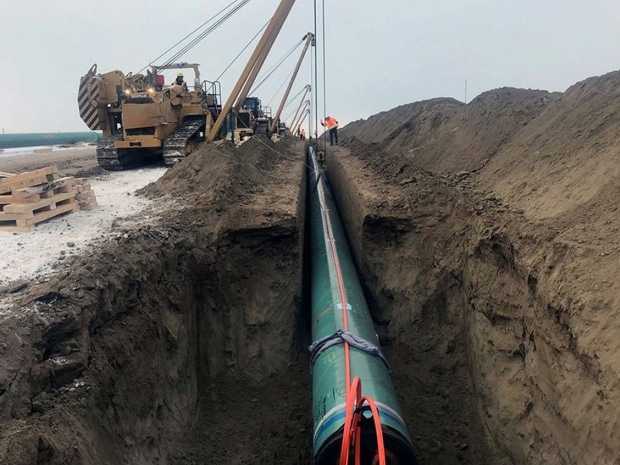
Sources close to Trump’s transition team told Politico that the president-elect wants to signal his commitment to pro-oil policies by declaring the 1200 mile Canada-to-Nebraska crude pipeline project active again.

h/t DS & Mauser

Share

Why Canada could become the next nuclear energy ‘superpower’

Uranium is making a comeback thanks to a renewed focus on nuclear energy as a climate crisis solution. Canada, rich with high-grade deposits, could become a nuclear “superpower”. But can its potential be realised?

Leigh Curyer had been working in uranium mining for nearly two decades when he noticed a striking shift.

In 2011, the Fukushima nuclear plant disaster in Japan badly damaged the world’s view of nuclear power, and the price for the heavy metal – a critical component for nuclear fuel – cratered.

Share

Cory Morgan: With Trump’s America-First Focus, Canada Should Quit Shooting Itself in the Foot on Energy

Canada’s general wealth has been in a sharp decline when compared to the United States for over 10 years. In 2013, GDP per capita in the United States and Canada was nearly equal at US$53,000. Today, GPD per capita in the United States is nearing US$82,000 while Canada remains stagnant at US$53,000.

To make things worse, Canada’s federal government plans to put a punitive emissions cap on the oil and gas industry while President-elect Donald Trump is talking about imposing trade tariffs of 10-20 percent on goods coming into the United States. Canada could be heading toward an economic cliff.

Share

Trump victory hands hedge funds $1.2bn win from bet against renewables

Investors running bets against renewable energy stocks have racked up profits of more than $1.2bn from the heavy sell-off that swept the sector in the wake of Donald Trump’s US presidential election victory.

Arrowstreet Capital and Qube Research & Technologies were among firms that had built up short positions against companies such as Norwegian hydrogen firm Nel and German wind turbine manufacturer Nordex, according to data group Breakout Point.

Share

Silicon Valley progressives buy up nuclear reactors to power their AI and data center needs

… Today, Jo Nova at her eponymous blog reported on the news that executives at three of the biggest names in the tech world, Google, Microsoft, and Amazon, have been buying up nuclear reactors to supply the tremendous amount of energy required to run AI programs and data collection/storage facilities…

Share

Ontario electricity demand to soar due to EV manufacturing and AI: system operator

Demand for electricity in Ontario is set to soar by 75 per cent in the next couple of decades, far higher than was projected just last year, in part due to a sudden surge in data centres supporting artificial intelligence, the system operator said Wednesday.

The demand has been relatively flat for the past 20 years, but now it is building and shows no signs of levelling off, officials with the Independent Electricity System Operator said in a briefing. Just last year, they expected demand to grow 60 per cent higher by 2050.

Can’t wait for those magic reactors to be built to match that magic EV manufacturing.

Share

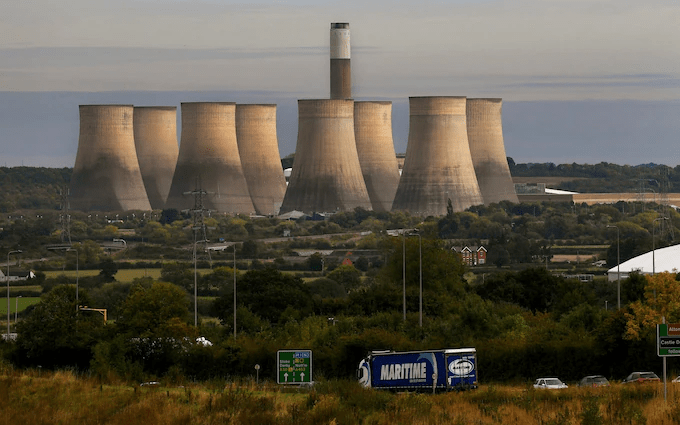
Britain’s industrial age ended this week – and there is nothing to replace it

It was quite a moment. With the simultaneous closure this week of Britain’s last remaining coal-fired power station and steel-making blast furnace, Britain’s once glorious industrial past this week drew to an ignominious close, driven to final destruction by a combination of net zero zealotry and rocketing industrial power costs.

All economies must change and adapt to survive, and ignoring the human cost of these closures, there is undoubtedly a certain poetic eloquence to them.

Share

Philip Cross: Canada’s ‘energy blindness’ must end

In its monthly update on energy trends, Statistics Canada reported this week that this year, for the first time ever, Canada has become a net importer of electricity. The switchover in our electricity trade balance reveals the shortcomings of an energy strategy that now emphasizes decarbonization over energy security, leaving customers vulnerable to supply shortfalls and higher prices.

Share

Abnormally Dry Canada Taps U.S. Energy, Reversing Usual Flow

In February, the United States did something that it had not done in many years — the country sent more electricity to Canada than it received from its northern neighbor. Then, in March, U.S. electricity exports to Canada climbed even more, reaching their highest level since at least 2010.

The increasing flow of power north is part of a worrying trend for North America: Demand for energy is growing robustly everywhere, but the supply of power — in Canada’s case from giant hydroelectric dams — and the ability to get the energy to where it’s needed are increasingly under strain.

Share

New study: Infrastructure needed to support a ‘zero emissions’ electric trucking fleet comes with a $1 trillion price tag

“We’re facing an unfunded, $1 trillion mandate that carries enormous consequences for the American consumer.” At least that’s what Chris Spear, American Trucking Associations President and CEO has to say about one D.C. diktat coming down from on high in particular, and that is the one mandating that the American trucking industry bend to EPA rules requiring all electric fleets and production lines.

Share

The “Energy Transition” Won’t Happen

The laptop class has rediscovered a basic truth: foundational innovation, once adoption proceeds at scale, is followed by an epic increase in energy consumption. It’s an iron law of our universe.

To illustrate that law, consider three recent examples, all vectors leading to the “shocking” discovery of radical increases in expected electricity demand, now occupying headlines today. First, there’s the electric car, which, if there were one in every garage, as enthusiasts hope, would roughly double residential neighborhood electricity demands. Next, there’s the idea of repatriating manufacturing, especially for semiconductors. This is arguably a “foundational innovation,” since policymakers are suddenly showing concern over the decades-long exit of such industries from the U.S. Restoring American manufacturing to, say, the global market share of just two decades ago would see industrial electricity demand soar by 50 percent.

Share