
‘How quickly do they want to sell?’ The Liberals’ Trans Mountain drama opens on a new scene

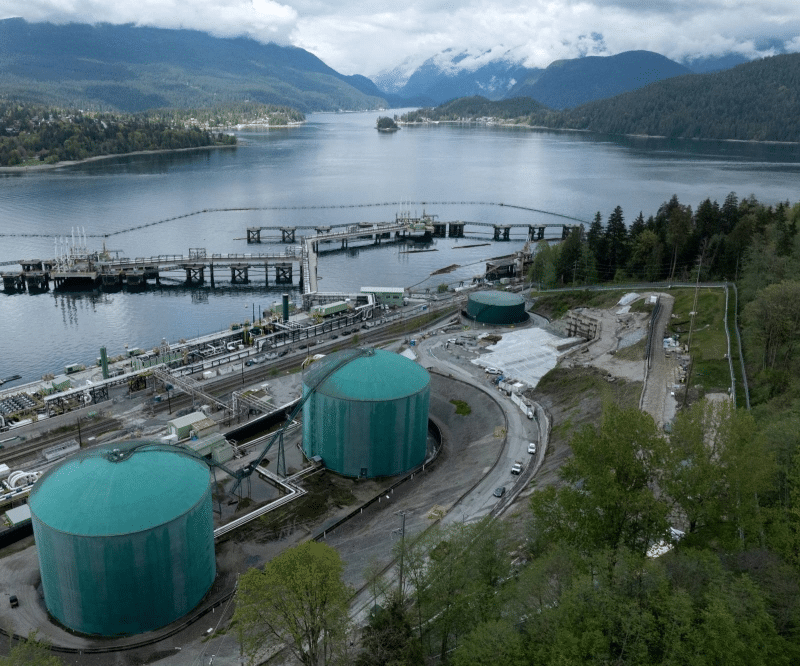
OTTAWA — When Finance Minister Chrystia Freeland delivered her budget speech last month, she gave a nod to the workers on the Trans Mountain pipeline expansion, a $34-billion, government-owned project more than a decade in the making that, after multiple cost overruns and delays, will this month finally begin carrying Alberta oil to the West Coast.

Freeland used the opportunity to take a shot at those who, she said, think government only stands in the way of development.

Share

Can floating nuclear power plants help solve Northern Canada’s energy woes?

Godzilla and The Monsters of Nuclear War

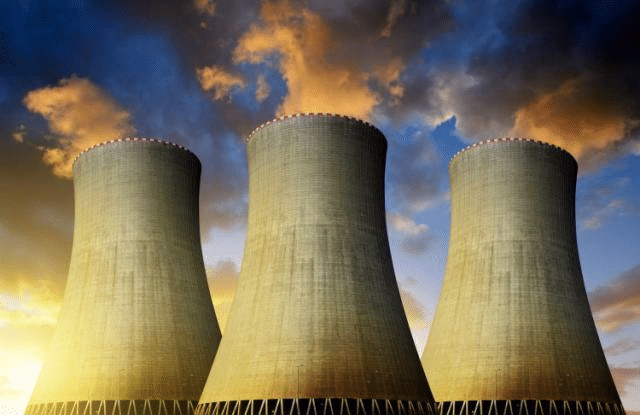
The nuclear industry is seeking to establish a beachhead in Canada’s North – literally – with a proposed floating nuclear power plant to serve remote Indigenous communities.

Westinghouse, a U.S.-based reactor vendor, has partnered with Prodigy Clean Energy, a Montreal-based company, to develop a transportable nuclear power plant. Essentially a barge housing one or more of Westinghouse’s eVinci microreactors, it would be built in a shipyard and moved thousands of kilometres by a heavy-lift carrier to its destination in the Far North. There it could be moored within a protected harbour, or installed on land near the shore.

Don’t get me wrong I’m on Team Godzilla.

Share

Trudeau Government Doing ‘Poor’ Job on Energy Plans, 60 Percent of Canadians Say

Nearly 60 percent of Canadians believe Canada is doing a poor job in developing a shared long-term vision for the country’s energy future, a new poll has found.

Thirty percent of those surveyed say Ottawa is doing a “poor” job, and 29 percent say it is doing a “very poor” job, of planning for the country’s future energy needs, according to a poll conducted by Nanos Research.

Share

EVs aren’t burdening Canada’s electricity grids – yet

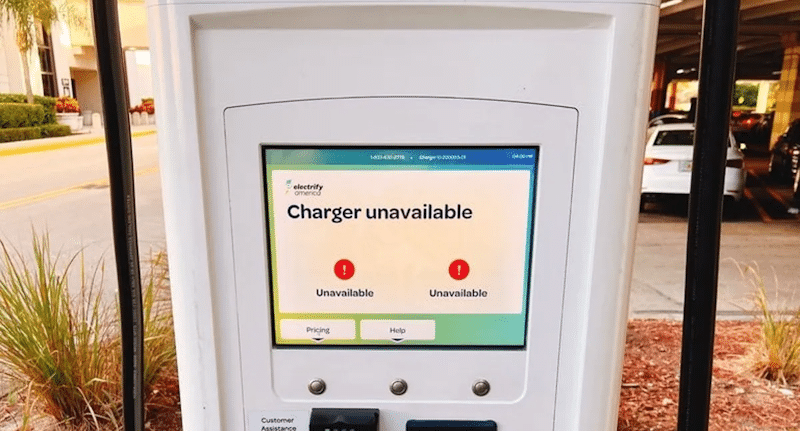
In certain urban neighbourhoods, it can seem like Tesla Model 3s, Volkswagen ID.4s and Chevy Bolts occupy every third driveway.

Zero-emissions vehicles accounted for nearly 11 per cent of all new motor vehicles registered last year, according to Statistics Canada – the first time they’ve topped one in 10. That’s more than double the 5-per-cent sales threshold after which some experts believe consumer preferences shift and mass-adoption ensues

Charging a single EV draws as much energy as two average households combined, according to Toronto Hydro. Many observers have warned that rapid EV adoption will cause demand for electricity to surge.

Share

GUNTER: Trudeau ignoring potential value of gas exports

Markus Krebber, the head of Germany energy giant RWE, warned that the effects of Germany’s current energy crisis could permanently damage the ability of German industry to grow at full scale.

Think about that. German Chancellor Olaf Scholz came to Canada six months after Russia cut off half of Germany’s gas supply looking for LNG (liquified natural gas) supplies from us. We could have helped an ally save their economy, yet our “green” fanatic prime minister refused.

Share

Alexander Dalziel: Canada must follow Europe’s lead on building new energy infrastructure

Another foreign visit, another plea for Canadian liquified natural gas unanswered. Greek Prime Minister Kyriakos Mitsotakis, who was in Canada March 24 and 25, got the same cool reception that his peers from Japan and Germany in their calls for Canadian liquefied natural gas (LNG) exports.

Why the indifference? Enter the dreaded rhetoric of the Canadian “business case,” the habit in domestic policy discourse to dismiss LNG exports to Europe as unviable — despite repeated asks from Europeans themselves.

Share

A step closer to limitless clean energy? Nuclear fusion reactor breaks record after hitting 100 MILLION degrees for almost 50 seconds

If we want to rely on nuclear fusion to power the world’s homes, the first step is making reactors that can run as hot and as long as possible.

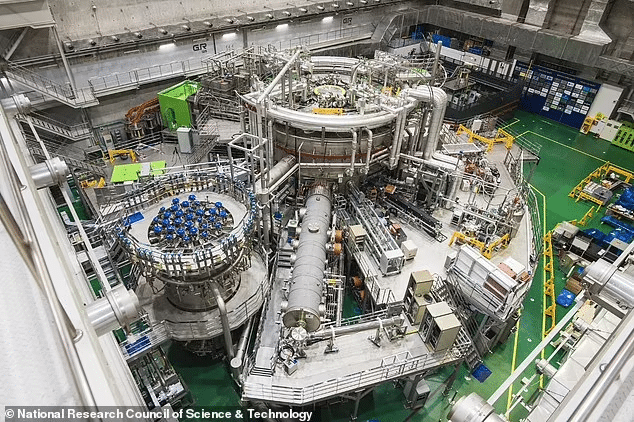
Now, an experimental reactor called KSTAR in Daejeon, Korea, has set a new world record.

The massive doughnut-shaped device, which has been dubbed ‘Korea’s artificial sun’ ran at 100 million°C (180 million°F) for 48 seconds.

Share

Trudeau’s electric vehicle mandate could cause Canada’s power grid to collapse, analysis shows

A noted fiscally conservative think tank warned that a proposed federal mandate from the government of Prime Minister Justin Trudeau to ban the sale of new gasoline/diesel-only powered cars after 2035 and allow electric-only sales is an unrealistic fantasy that would cause massive chaos by threatening to collapse the nation’s power grids.

“Requiring all new vehicle sales in Canada to be electric in just 11 years means the provinces need to substantially increase their power generation capabilities, and adding the equivalent of 10 new mega-dams or 13 new gas plants in such a short timeline isn’t realistic or feasible,” said G. Cornelis van Kooten, a Fraser Institute senior fellow and author of “Failure to Charge: A Critical Look at Canada’s EV Policy.”

Share

Nuclear fusion for the grid is coming much sooner than you think

Commercial nuclear fusion has gone from science fiction to science fact in less than a decade. Even well-informed members of the West’s political class are mostly unaware of the quantum leap in superconductors, lasers, and advanced materials suddenly changing the economics of fusion power.

Britain’s First Light Fusion announced last week that it had broken the world record for pressure at the Sandia National Laboratories in the US, pushing the boundary to 1.85 terapascal, five times the pressure at the core of the Earth.

Share

UK power station still burning rare Canadian forest wood

A power company that has received £6bn in UK green subsidies has kept burning wood from some of the world’s most precious forests, the BBC has found.

Papers obtained by Panorama show Drax took timber from rare forests in Canada it had claimed were “no go areas”.

It comes as the government decides whether to give the firm’s Yorkshire site billions more in environmental subsidies funded by energy bill payers.

Share

1 in 5 Canadian Households Facing ‘Energy Poverty’

As many as one in five Canadian households face “energy poverty” due to high energy costs, according to research from McGill University.

More Canadians “potentially suffer” from energy poverty than from food insecurity, with 6 to 19 percent of Canadian households affected, research from McGill University’s geography department has found.

Share

Why it’s Danielle Smith vs. Ottawa, over and over

Alberta Premier Danielle Smith knows she increasingly needs to step up where Ottawa steps down.

“Canada is becoming irrelevant,” the premier reports, matter-of-factly. “We have the ability to supply the world with everything they need, and we really could be a leader. But we have a federal government that chooses not to, that chooses to work against the national interest rather than advance it.”

Share

NDP in Alberta and Saskatchewan join forces to push back on federal private member’s bill targeting oil ads

Energy critics within the NDP’s provincial affiliates in Alberta and Saskatchewan are pushing back against MP Charlie Angus’s private member’s bill targeting fossil fuel advertising.
The dispute between provincial and federal New Democrats comes days after two candidates to lead the Alberta NDP expressed openness to loosening the formal ties that bind the party branches.

However, federal party leader Jagmeet Singh said while there may be disagreements on some particular matters, “we’re a large party and that’s a normal thing that happens.”

Share

The renewables bubble has burst

It wasn’t so long ago that Orsted was being held up as an example of how oil and gas companies should handle the transition to clean energy. In 2009 the then-DONG (Danish Oil and Natural Gas) announced that it was going to turn around it business so that instead of earning 85 per cent of its money from oil and gas it was going to earn 85 per cent of it from renewables. It was an early mover in offshore wind – and, at least for some years, shareholders were richly rewarded. The share price marched upwards from around £19 in 2014 to a peak at £100 in early 2021. Increasing your money fivefold and saving the planet at the same time – you can hardly argue with that.

Share

The strengthening case for nuclear

Last week, the Ontario government announced plans to spend many years and billions of dollars refurbishing an old nuclear plant in Pickering, just east of Toronto. Pure folly, said its critics. In fact, the decision makes good, solid sense, both for Ontario and the planet.

Winning the battle to control global warming depends in large part on powering more things with electricity – specifically electricity that isn’t produced by burning fossil fuels. Making that energy shift is a huge task, but Ontario has two big advantages.

Share