A Chinese firm bought an insurer for CIA agents – part of Beijing’s trillion dollar spending spree

Since 2018, the United States has been tightening its laws to prevent its rivals from buying into its sensitive sectors – blocking investments in everything from semiconductors to telecommunications.

But the rules weren’t always so strict.

In 2016, Jeff Stein, a veteran journalist covering the US intelligence community, got a tip-off: a small insurance company that specialised in selling liability insurance to FBI and CIA agents had been sold to a Chinese entity.

Share

China’s New World Order: Michael Kovrig on how Beijing is trying to undermine the West

Kovrig is a senior advisor at the International Crisis Group and a former Canadian diplomat, but he is best known to Canadians as one of the “two Michaels” who were detained by Chinese authorities in 2018, in response to the arrest of Huawei executive Meng Wanzhou at the Vancouver airport on a U.S. extradition request.

“I was detained by state security officers when I was coming back from dinner and they abducted me and held me hostage for 1,019 days,” said Kovrig. “I spent about nearly six months in solitary confinement, being relentlessly interrogated, and then another two years in a detention centre, confined to a single cell.

Share

Beijing-Born Alberta Lawyer Says ‘Wokeism’ in Canada Increasingly Resembling Communist China’s Ideological Tyranny

Alberta lawyer Roger Song moved to Canada 25 years ago from China to distance himself from a regime he says he could no longer live under.

Having witnessed the 1989 Tiananmen Square massacre–when government forces opened fire on unarmed students demanding democratic reform–he says he saw Canada as a place of freedom where he and his family could start over. He was a law professor at Peking University at the time, and says he witnessed how the regime used its authority to suppress students’ “legitimate demands” for democracy.

Share

How American and Chinese Drone Arsenals Stack Up

The U.S. is falling behind China in one of the defining technologies of the modern battlefield.

Drones have proven indispensable in conflicts like Ukraine, where troops rely on them to destroy tanks, lay mines, evacuate wounded fighters, and deliver food and medication. Advances in artificial intelligence increasingly allow unmanned systems to operate with minimal human direction, such as tracking and attacking targets on their own.

Share

Lock and Load

U.S. Secretary of Defense Pete Hegseth knows something the rest of us should embrace.

For the last five years, Communist China’s military spending has grown consistently. Published reports suggest annual budget increases of 6.8-7.2%, rising from approximately $209 billion in 2021 to $246 billion in 2025. And that is only what is reported. The real numbers are undoubtedly much higher.

Share

Trump’s trade war is pushing Canada closer to China

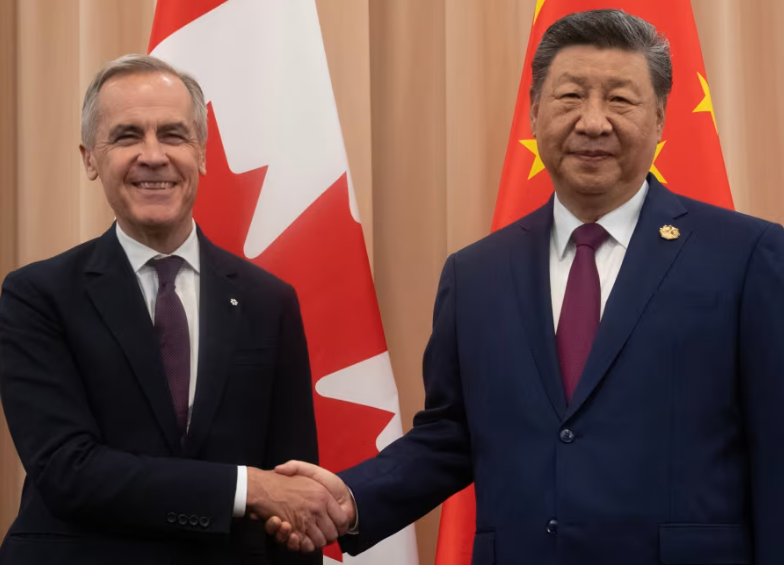
It is an image that just a year ago would have seemed unfathomable: the Canadian and Chinese leaders standing side by side, shaking hands and grinning.

Ties between the two countries cratered in 2018 when Canadian police arrested Chinese technology executive Meng Wanzhou in Vancouver on US fraud charges. Days later, Beijing locked up two Canadians, Michael Kovrig and Michael Spavor, on spying charges that Canada slammed as bogus. (Kovrig and Spavor were released nearly three years later after the US dropped the extradition request for Meng).

The diplomatic tussle soured the relationship and engendered a deep mistrust between Ottawa and Beijing. But as President Donald Trump escalates his trade war with one of the US’s closest allies, Canada has looked to a longtime foe for some common ground.

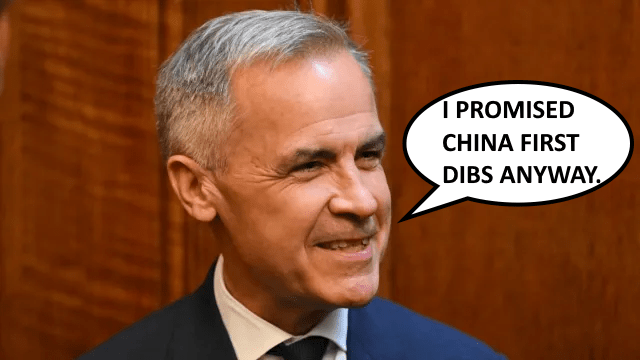
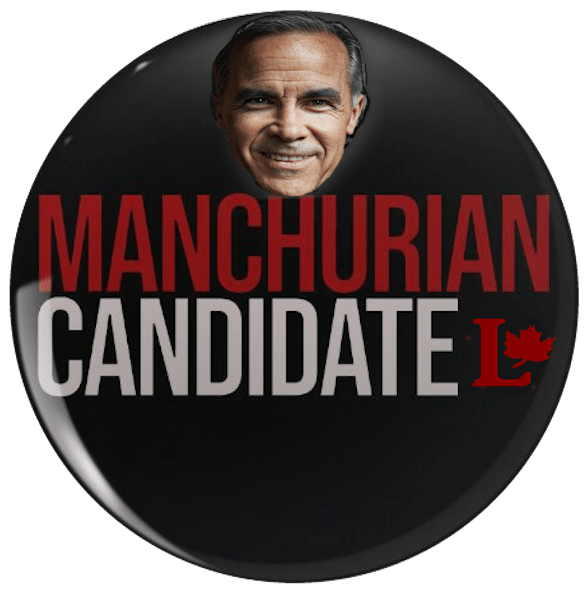
Carney wants this.

Share

Tracking China in the Americas: Hongqi Bridge Is Falling Down — and Everything Else Is Too

Welcome to the fourth installment of my “Tracking China in the Americas” series, in which I cover some underreported stories on China’s footprint in the Western Hemisphere. I actually had something different planned for this week — a deep dive into how China is reaching out to young people in the Western Hemisphere — but when I saw this bridge fall, I knew I had to switch gears. Anything to point out what China does wrong should spread far and wide. So, check back in next week for the young people stuff. Let’s get to the Hongqi Bridge.

Share

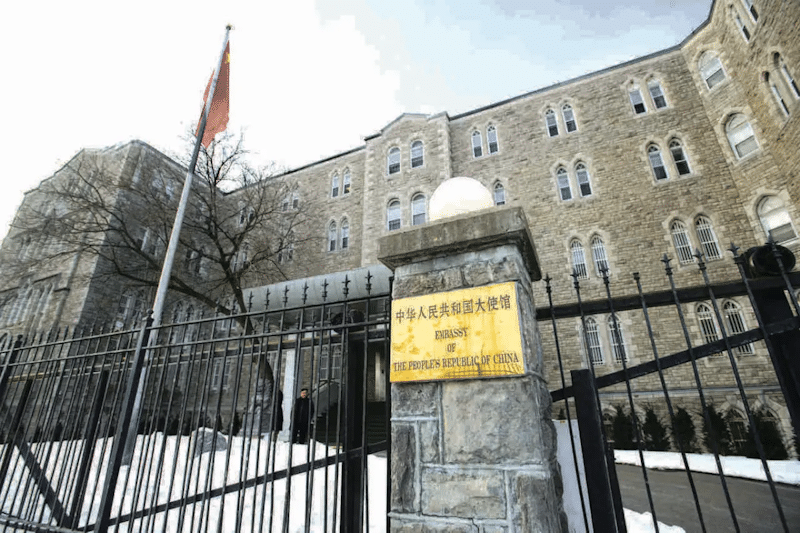
Chinese-Owned Trailer Park Beside U.S. Stealth Bomber Base Linked to Alleged Vancouver Repression Case

A sprawling U.S. investigative report has placed a Richmond, B.C., couple already identified in a high-profile Chinese-diaspora repression case at the center of an even more explosive national-security controversy south of the border: they are linked to a web of shell companies that own a trailer park beside Whiteman Air Force Base in Missouri — home to the B-2 Spirit stealth bomber and launch point for the June 2025 strike on Iran’s nuclear facilities.

h/t SC

Share

Terry Glavin: China couldn’t be more pleased to have Carney as prime minister

To discern how Prime Minister Mark Carney’s government sees Canada’s place in a radically changed world, the federal budget tabled this week won’t help you as much as you might think. There’s a lot there — the budget’s $78.3-billion deficit is the third highest in Canadian history — but what’s not there may give you a better idea. How Canada is seen in the big, weird outside world — that too has utterly changed.

Share

Canadian Law Firm That Represented Buddhist Landholders Became a Pipeline of Lawyers Into Regulator That Investigated Them

OTTAWA — When the Island Regulatory and Appeals Commission opened an investigation into Buddhist landholdings between 2016 and 2018, few could have imagined that, nearly a decade later, its quietly shelved probe would raise serious questions about whether the regulator itself had become entangled in the very network of interests it was meant to police.

Share

Perils of Ottawa’s Declared ‘Strategic Partnership’ With China Amid Beijing’s Hybrid Warfare

Recent statements from Ottawa that frame Canada as being in a “strategic partnership” with China land against a record of cyber operations, foreign interference, coercive finance, and alignment with other authoritarian actors. NATO texts, Five Eyes advisories, and U.S. trade negotiations will show how allies and markets are reacting to Ottawa’s words.

A clear course on Canada’s part requires definition, verification, and visible enforcement.

Share

“Overrun”: Washington’s Grim Verdict on Canada’s CCP Infiltration Crisis

OTTAWA — In his striking conclusion to Under Assault, former national-security analyst Dennis Molinaro reveals that U.S. government sources have privately described Canada as “overrun” with Chinese influence — the ultimate consequence of a fifty-year pattern, begun under Pierre Trudeau and seemingly accelerated by his son, of engaging the Chinese Communist Party on its own terms and to the detriment of Canadian sovereignty.

It’s a finding that resonates sharply as Justin Trudeau’s successor, Prime Minister Mark Carney renews deeper ties with Beijing amid Washington’s intensifying, security-driven tariff pressure on its allies.


h/t Handy n’ Handsome

Share

France threatens to block Shein over ‘childlike’ sex dolls

French authorities have threatened to block Chinese online store Shein if it does not remove sex dolls with “childlike” features from its website.

The Directorate General for Competition, Consumer Affairs and Fraud Control (DGCCRF) said descriptions for the products on the Shein website “make it difficult to doubt the child pornographic nature of the content.”

The French daily newspaper Le Parisien said the product in question — an 80 centimeter (30 inch) tall doll holding a teddy bear — was accompanied by an explicitly sexual description on the Shein website.


No wonder the LPC is hot for China.

Share

This city bought 300 Chinese electric buses — then found out China can turn them off at will

A city had a rude awakening when it tested its electric buses for security flaws.

Some cities have gone all-in on their dedication to renewable energy and electric public transportation, but discovering that a jurisdiction does not actually control its own public property likely was not part of the idea.

h/t SC

Share

Leader of Chinese Chamber Linked to RCMP ‘Police Station’ Probe Was Sought by Japan for Triple Murder Questioning, Tied to Synthetic Drug Investigations

TORONTO — Four years after the RCMP first announced investigations into alleged clandestine Chinese “police stations” in Toronto, The Bureau has learned that a Fujian business leader listed as a key principal for the Markham clubhouse under investigation was previously the subject of major narcotics, organized-crime, and triple-murder inquiries in Japan — long before arriving in Canada amid a history of falsified travel documents, gaining citizenship through a refugee claim, and later rising in political and business circles tied to Beijing’s United Front Work Department.

Share