Chinese Spies Hit More Than 80 Countries in ‘Salt Typhoon’ Breach, FBI Reveals

A Beijing-linked yearslong espionage campaign that hit U.S. telecom companies and swept up Donald Trump’s phone calls actually targeted more than 80 countries, reaching across the globe to a far greater extent than investigators initially understood.

The scope of the intrusion allowed Chinese intelligence officers to potentially surveil U.S. citizens’ private communications and track their movements around the globe, Brett Leatherman, the FBI’s top cyber official, said in an interview. The agency estimates that the intruders likely obtained more than one million call records and targeted the telephone calls and text messages of more than 100 Americans.

“This is one of the more consequential cyber espionage breaches we have seen here in the United States,” he said.

Share

Carney’s conundrum: Will he abandon some 40,000 farmers to save Canada’s auto industry?

You might have seen those bright yellow fields reaching toward the horizon under a clear blue sky — fields of canola spread across Alberta, Saskatchewan and Manitoba, bringing in billions of dollars each year for farmers and their families.

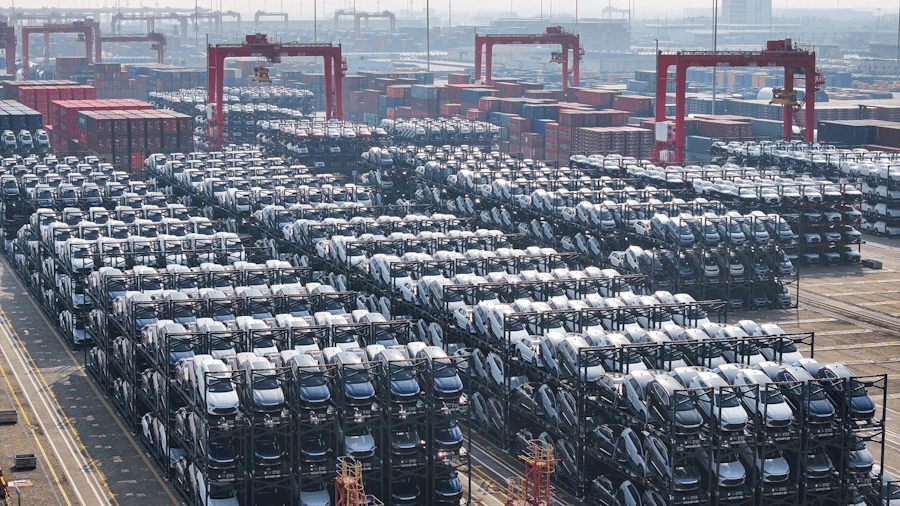
Now the annual harvest is in danger: one of Canada’s biggest customers, China, has slapped a 76 per cent tariff on canola seed, as well as a 100 per cent tariff on canola oil and meal. Why has it done this? In retaliation for the 100 per cent tariff Canada applied to Chinese electric vehicles starting last October. We were copying the United States at the time, back when relations between our two countries were more cordial, to protect the American and Canadian auto industries. But the Canadian sector, which operates mostly in Ontario, has yet to produce a single EV.

Share

How China Influences Elections in America’s Biggest City

The Chinese consulate in Manhattan has mobilized community groups to defeat candidates who don’t fall in line with the authoritarian state.

In New York City, social clubs backed by China undermined a congressional candidate who once challenged the regime on Chinese television.

They helped unseat a state senator for attending a banquet with the president of Taiwan.

And they condemned a City Council candidate on social media for supporting Hong Kong democracy.

Share

Why pivoting to China is a huge mistake for Canada

China’s behaviour has not changed since the founding of the People’s Republic of China. It aims to create wedges between America and its allies in the hope of undermining U.S. economic, political, diplomatic and security interests in the Indo-Pacific region.

Prominent scholar Yan Xue Tong of Tsinghua University explained China’s long-term interests this way …

Share

Cartels, Triads, and Trade-Based Money Laundering—From Pemex to Vancouver Casinos

In this episode of The Bureau Podcast, investigative journalist Sam Cooper sits down with Chris Meyer of WideFountain to trace the stunning global patterns of cartel, Triad, and Chinese Communist Party–linked networks penetrating legitimate trade structures to launder narcotics proceeds and move fentanyl and meth invisibly around the world.

Together, they examine how cartels and Chinese Triads exploit commodities, corporate shells, and international trade routes—controlling entire sectors like oil, seafood, and luxury goods—as part of a new hybrid criminal statecraft that links Mexico, Canada, China, and beyond.

Share

Poll shows Chinese Communist Party has higher approval rating than Trump among Canadians

A poll recently conducted by Gallup has found that the Chinese Communist Party has a higher approval rating than United States President Donald Trump among Canadians.

The vast majority of Canadians disapproved of Russian President Vladimir Putin, though the margin between him and his American counterpart was rather slim.

Share

Canadian shipyard slams B.C. Ferries’ contract with Chinese shipbuilder

The largest and oldest shipyard in Canada says it didn’t stand a chance in bidding against a Chinese company to build four new vessels for B.C. Ferries.

It’s the latest criticism levelled at the ferry operator following its decision to purchase the vessels from Chinese-state owned CMI Weihai Shipyards. That criticism and China’s punishing new tariffs on Canadian agriculture products have renewed calls for the contract to be cancelled.


This stinks.

Share

CHARLEBOIS: Why are we trading our breadbasket for a battery pack?

China’s announcement this week of a 75.8% tariff on Canadian canola seed, effective Thursday, is not an isolated policy shift — it’s the latest escalation in a trade conflict that Ottawa itself helped set in motion.

Earlier this year, on March 20, Beijing imposed 100% tariffs on Canadian canola oil, canola meal, and peas, along with an additional 25% on lobster and pork. These measures were already weighing on our agri-food exports.

Share

China slaps temporary 75.8% duties on Canadian canola

BEIJING/SINGAPORE — China on Tuesday announced preliminary anti-dumping duties on Canadian canola imports, a fresh escalation in the year-long trade dispute that began with Ottawa’s imposition of tariffs on Chinese electric vehicle imports last August.

The provisional rate will be set at 75.8 per cent, effective from Thursday, the Ministry of Commerce said in a statement.

ICE November canola futures RSX5 fell 6.5 per cent to a four-month low after the announcement.

“This really came as a surprise and a shock,” said trader Tony Tryhuk of RBC Dominion Securities.

Share

Unprecedented Chinese Icebreaker Deployment Off Alaska Being Monitored By U.S.

The U.S. military and Coast Guard are monitoring the simultaneous appearance of five Chinese icebreaking vessels in the Arctic region near Alaska. That unprecedented presence represents two and a half times the number of icebreakers currently capable of being operated in the entire Arctic region by the U.S. Coast Guard. Another is scheduled to be commissioned on Sunday and plans are underway to build dozens more.

h/t DS

Share

Could Systemic Corruption in British Columbia Explain Botched Narco Prosecutions and PRC Ferry Deal?

Sam Cooper – In this sweeping conversation with Jason James of BNN, I discuss some of The Bureau’s biggest investigations of the summer — including the widening pattern of prosecutorial failures in major synthetic narcotics and money laundering cases in British Columbia. We spotlight the recent collapse of charges against a Chinese-state linked scientist accused of importing over 100 kilograms of precursors for MDMA production.

Share

Propaganda or fair warning? Taiwanese TV show imagines Chinese invasion

A Chinese fighter jet plane crashes in the waters off Taiwan’s coast, prompting Chinese warships to blockade the island for a “search and rescue”.

Taiwanese soldiers manning Dadan Island, a rocky outcrop mere kilometres from China’s coast, begin vanishing mysteriously.

Then one night, a fishing boat lands on Dadan. A signal flare arcs into the inky sky – and illuminates Chinese soldiers who have spilled out of the boat and amassed on the beach.

Share

The CCP Is Inside the Fed: Shocking New Evidence of Chinese Infiltration at America’s Central Bank

A decade-long infiltration campaign by the Chinese Communist Party has penetrated the Federal Reserve—coercing employees, stealing sensitive data, and compromising America’s financial core.

Most Americans have heard about Chinese spies targeting our military or hacking private companies. But there’s another front in this quiet war, one that’s gone largely unreported—and it may be the most dangerous of all: China’s long game to infiltrate and manipulate the United States Federal Reserve.

A 2022 Senate investigation offered a rare glimpse into this operation, but even that barely scratches the surface. What’s playing out behind closed doors isn’t just a few bureaucratic missteps or naïve collaborations—it’s a full-blown economic espionage campaign.

This is warfare without bullets.

h/t DS

Share

China Is Choking Supply of Critical Minerals to Western Defense Companies

Beijing’s tightened controls are a sign of the leverage it has over the U.S. military supply chain

China is limiting the flow of critical minerals to Western defense manufacturers, delaying production and forcing companies to scour the world for stockpiles of the minerals needed to make everything from bullets to jet fighters.

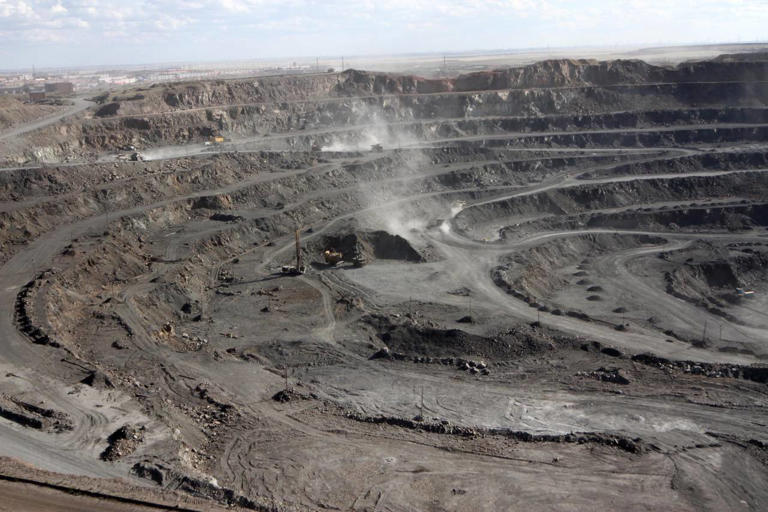
Earlier this year, as U.S.-China trade tensions soared, Beijing tightened the controls it places on the export of rare earths. While Beijing allowed them to start flowing after the Trump administration agreed in June to a series of trade concessions, China has maintained a lock on critical minerals for defense purposes. China supplies around 90% of the world’s rare earths and dominates the production of many other critical minerals.

As a result, one drone-parts manufacturer that supplies the U.S. military was forced to delay orders by up to two months while it searched for a non-Chinese source of magnets, which are assembled from rare earths.

Share

Canada Renews Funding for China Student Exchange Program That Requires Allegiance to Communist Regime

Canada has renewed funding for a bilateral scholarship program that requires Chinese candidates applying to study in Canada to show allegiance to the Chinese Communist Party (CCP) and uphold the party’s “socialist system.”

David Morrison, deputy minister of foreign affairs at Global Affairs Canada, on July 30 signed an agreement with his Chinese counterpart, executive vice minister Ma Zhaoxu, to renew the Canada-China Scholars’ Exchange Program. Through the program, Ottawa funds Chinese applicants to conduct research at Canadian universities as visiting scholars for 4–12 months.

Share