I Fled Beijing’s AIIB Alleging CCP Influence. The Bank’s Appointment of a United Front Veteran Proves My Case: Bob Pickard

I was the global communications chief at the Asian Infrastructure Investment Bank, a Beijing-headquartered multilateral development institution founded in 2016, until I resigned on principle in June 2023 over the undue influence of the Chinese Communist Party in the bank’s everyday operations. I directly experienced the toxic corporate culture that the party’s political contamination created.

While the bank denied my public allegations about the institution’s true nature, the installation of Zou Jiayi — a longtime Chinese finance official and Communist Party member — as AIIB’s new president this week should dispel any remaining illusions.


Freeland’s shitty little hands were all over this as I recall.

Share

China sees a chance to lure jaded US allies

HONG KONG—China has seized upon the disarray left by President Trump within the trans-Atlantic alliance, denouncing his push to acquire Greenland and trying to entice U.S. allies with the promise of reliable trade partnerships.

But as some of Washington’s traditional allies tiptoe closer to Beijing, they appear clear-eyed about the danger of leaving the U.S. embrace only to end up in the hands of another superpower.

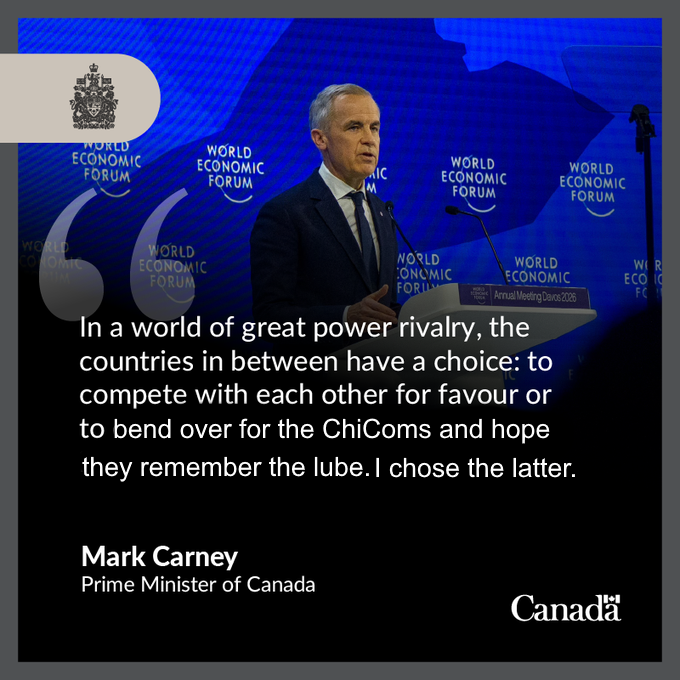
“In a world of great power rivalry, the countries in between have a choice—compete with each other for favor, or to combine to create a third path with impact,” Canadian Prime Minister Mark Carney declared in a speech Tuesday at the World Economic Forum in Davos, Switzerland.

Share

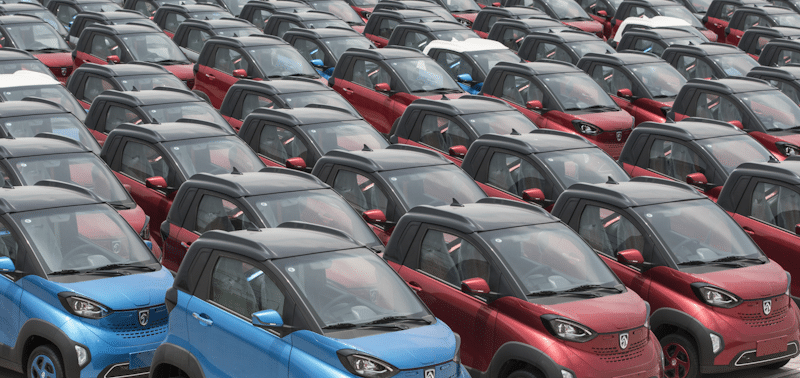
Chinese EVs are coming to Canada. So should they be built here too?

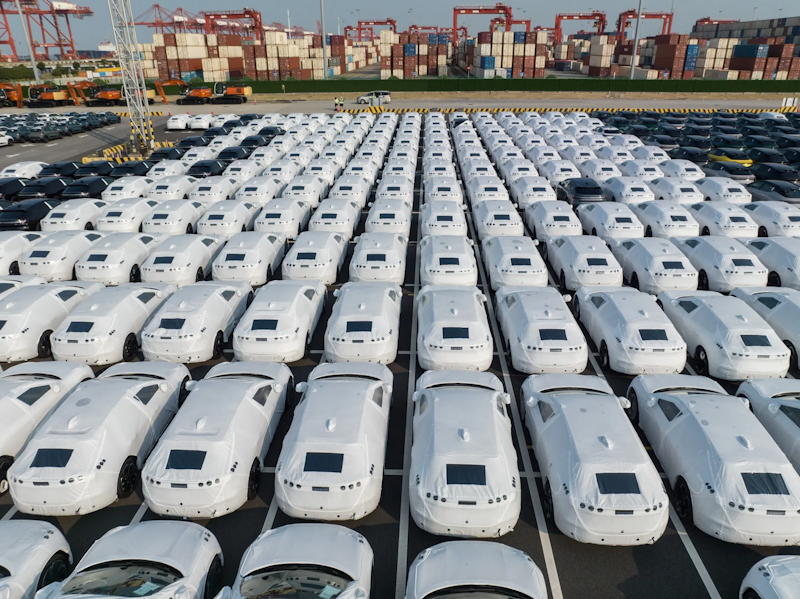
The Canadian auto sector could be poised for its biggest shakeup since the arrival decades ago of Ontario assembly plants operated by Toyota Motor Corp. and Honda Motor Co.

Much depends on whether Prime Minister Mark Carney pushes beyond last week’s landmark decision by Ottawa to allow up to 49,000 Chinese electric vehicles (EVs) into the Canadian market after effectively banning them with 100 per cent tariffs since August 2024.


Carney will let his CCP handlers do as they wish.

Share

Trade with China, But Don’t Fall in Love

Canada’s recent trade advances with China—including renewed access for canola, lobster, and beef, alongside the lifting of visa restrictions—have triggered predictable reactions at home. Some see these developments as a long-overdue reset in a strained relationship. Others worry Canada is drifting into geopolitical territory that could unsettle our most important ally, the United States. As is often the case with trade, the reality is more nuanced than either camp suggests.

h/t handy n handsome

Share

Lutnick suggests Canada-China deal threatens CUSMA renegotiation

U.S. Commerce Secretary Howard Lutnick says Canada is “playing with a set of rules that they haven’t really thought through” by moving to reset relations with China ahead of trade deal renegotiations with the United States.

Lutnick made the comments in an interview with Bloomberg in Davos, Switzerland on Thursday.

h/t Mauser

Share

How the Ottawa-Beijing Agreement Plays Into China’s Factional Struggles and Emboldens Xi

Chinese state-owned media hailed Canada’s new agreement with Beijing and pursuit of “strategic partnership,” with the regime’s China Daily saying Prime Minister Mark Carney’s visit “reflects China’s increasing global stature.”

Amid factional infighting and struggles, Carney’s visit is being portrayed as a win for Chinese leader Xi Jinping, whose side has been increasingly sidelined in recent months, says Wang He, a senior China commentator with The Epoch Times and former university lecturer.

Share

Conrad Black: As Canada Seeks to Diversify Trade, It Should Have No Illusions About the Chinese Regime

After eight months without any trade or tariff agreements, some people said that it was a relief to see that Prime Minister Carney had reached a partial free trade agreement with China. It appears to be substantially a liberalization of our sale of canola in exchange for their exportation to us of 49,000 electric vehicles.

To the extent that this begins a process of making Canada less dependent upon the United States economically, it is useful. And to the extent that it inaugurates a series of enterprising trade agreements with a wide variety of countries, it is the beginning of a welcome and long-overdue procession of events to end Canada’s status as a branch-plant country. This process began with the Canada -U.S. Free Trade Agreement of nearly 40 years ago, prior to which almost every company in Canada, except Canadian Pacific and the large banks, had the words “Canada Ltd.” after their names.

Share

Jesse Kline: Carney declares world order dead, just don’t ask him about China

Prime Minister Mark Carney took to the podium at the World Economic Forum in Davos, Switzerland, on Tuesday to deliver one simple message: the world as you know it is over. But it’s not even clear that Carney knows what he thinks should take its place, or whose side he’s on.

The Prime Minister’s Office billed the trip as a means of deepening Canada’s “economic partnerships,” creating “new opportunities” and pitching our country as the “premier destination for global capital and investment.” But those talking points comprised just five per cent of his speech.

Share

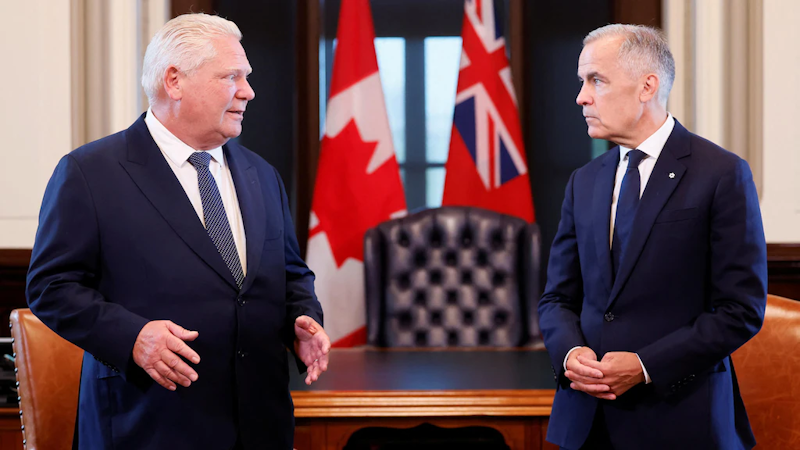
Doug Ford calls for Chinese EV boycott in Canada after Carney deal

Ontario Premier Doug Ford is calling on Canadians to boycott Chinese-made electric vehicles when they are allowed back into the country under a deal recently struck by Prime Minister Mark Carney.

Ford has been critical of the deal — and the fact Carney did not speak to him about it in advance — saying it will harm Ontario’s auto sector.

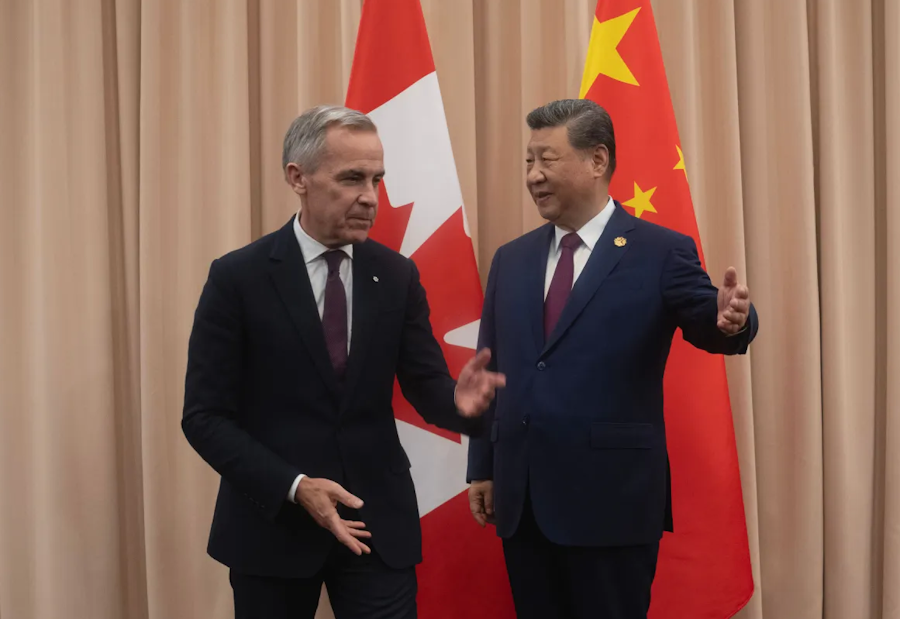
Carney and Chinese President Xi Jinping agreed while the prime minister was in China that Canada will all but drop its 100 per cent tariffs on Chinese EVs and allow an annual import quota of up to 49,000 of the vehicles in exchange for China reducing its canola tariffs.

Share

Former RCMP Director Alarmed by New Canada-China Agreement on Public Safety Cooperation

Former national director of the RCMP’s proceeds-of-crime program Garry Clement says Ottawa’s new agreement with Beijing on public safety is concerning because it potentially opens the door for the Chinese regime to “capitalize on intelligence.”

Prime Minister Mark Carney made several agreements with Beijing during his visit to China last week as part of a broader effort to establish closer ties with China and boost non-U.S. exports.

Share

‘Undeniable’: The Many Security Risks of Chinese EVs as Canada Opens Its Markets

China crappy electric cars, EV

As Canada moves to slash tariffs on Chinese electric vehicles, a growing number of reports and researchers are warning about security risks and the potential for espionage by the Chinese Communist Party through these vehicles.

When asked for evidence to support his concerns about the security risks posed by Chinese electric vehicles (EVs), Ontario Premier Doug Ford pointed to the fact that everyone who accompanied Prime Minister Mark Carney to China, including Canadian reporters, was instructed to use burner phones for security reasons.

Share

Stupid Shit Andrew Coyne Says

No, Canada is not selling out to Beijing

Well, that got their attention. Since the Prime Minister’s visit to China, the American media – and social media – have been filled with expressions of shock and amazement.

For critics of Donald Trump, it was payback for his bullying and abusive treatment of America’s nearest neighbour and historic ally. For the President’s supporters, it was a sign of Canadian perfidy, if not grounds for invasion. Canada will “surely regret” gives you the flavour of it.

Share

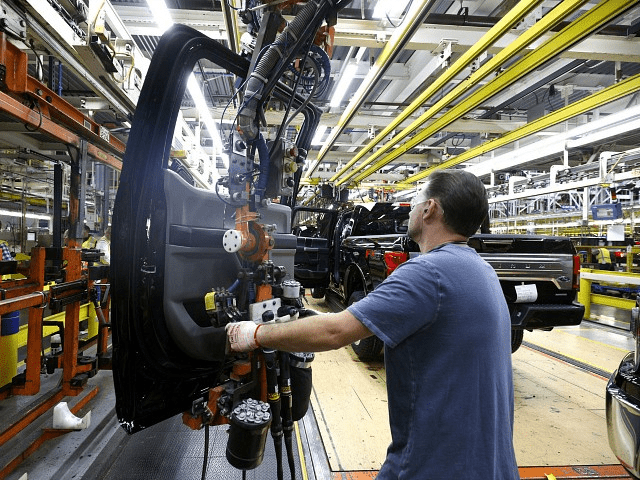
Carney’s China deal isn’t a sign of confidence in Canada’s auto sector

Whatever you think of the wisdom of Mark Carney’s trade deal with China, it’s not a big vote of confidence for the future of Canada’s auto industry. At least, not the auto industry we have known.

It was a move to jump-start trade with the world’s second-largest economy, opening the big Chinese market to Canadian canola, peas and seafood.

Yet, the concession that Mr. Carney made – accepting imports of 49,000 Chinese vehicles a year with very low tariffs – is a far bigger signal than he admitted.

Share

Uncommon Knowledge: China Complaining About Trump’s Land Grab? That’s Rich

In a tense confrontation at Scarborough Shoal, Filipino captain Joely Saligan said the Chinese coast guard ordered him to dump his catch. He shouted back, according to the Associated Press, “this is Philippine territory. Go away.” The crew left, shaken but unhurt. It was January 12, 2024, inside waters an international tribunal says China has no right to control.

Fast-forward to this week. As President Donald Trump revives his push to take control of Greenland, China is wagging its finger. Beijing’s Foreign Ministry told Washington it “shouldn’t use other countries as a ‘pretext’ to pursue its interests in Greenland,” casting China’s own Arctic activity as lawful and benign. Elsewhere, it is not so benign. From reefs in the Philippines’ exclusive economic zone to a map that colored in a slice of Russian borderlands, and even on the moon, Beijing is no stranger to the kind of behavior it now deplores.

Share

Will a ‘disappointed’ Doug Ford and Mark Carney get over their differences on Chinese EVs?

It feels a bit Taylor Swiftian.

Hurt feelings.

Unsent texts.

Exotic trips with someone else.

Yearning for what was last summer.

Premier Doug Ford sounded like a spurned paramour from a Swift song as he bleated about Prime Minister Mark Carney’s visit to China with Saskatchewan Premier Scott Moe.

I hope Ford goes Ape.

Share