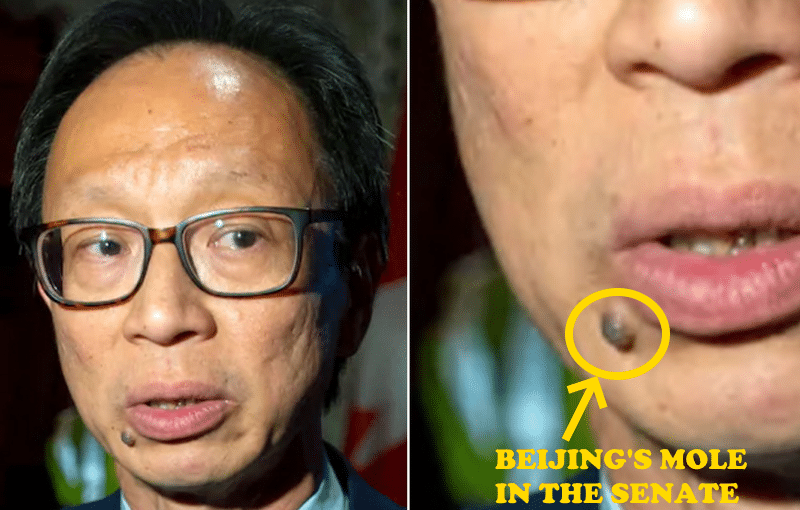
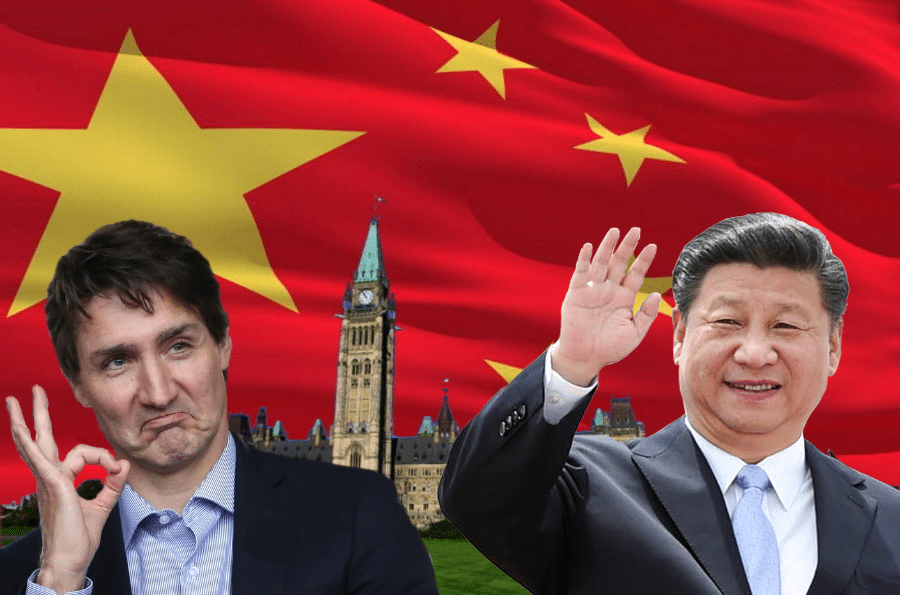
More than half of Chinese Canadians say suggesting some Chinese-Canadian politicians are under Beijing’s influence is racist, only 1/3 believe ChiComs are election meddling

A third of Chinese Canadians believe Beijing meddling in elections, pressuring Canadians: poll

Just over a third of Chinese Canadians believe the government of China has tried to interfere in elections here and pressure Canadians in pursuit of its political aims, suggests a new Postmedia-Leger poll of an ethnic group at the centre of the foreign interference affair.

… At the same time, more than half thought suggesting certain Chinese-Canadian politicians are under Beijing’s influence is racist.

As discussion and debate rages over allegations of meddling by Beijing in Canadian affairs, much attention has turned to the country’s 1.7 million or so residents of Chinese descent.


No punches pulled those numbers indicate a clear danger to our society.

Our Politicians have remade Canada into a balkanized 5th Columnist state via mass immigration, multiculturalism and the denigration of our nations values and heritage.

Playing identity politics with Canada’s security is a vile and dangerous practice that all our political parties engage in.

Down with the Uniparty.

Share

RCMP not investigating foreign interference in Vancouver’s 2022 election, despite CSIS report

The RCMP is not investigating foreign interference in Vancouver’s election last year, despite a Canadian intelligence report that China’s consul-general sought to shape the outcome of that vote.

The report from the Canadian Security Intelligence Service describes Tong Xiaoling, then China’s chief representative to the West Coast city, as saying that “they needed to get all eligible voters to come out and elect a specific Chinese-Canadian candidate,” in the mayoral race, while also assessing a specific person to “groom” as a councillor.

Share

Allegations MP told China to delay freeing Canadians ‘odious’ but likely not a crime, lawyers say

Han Dong has made his position very clear: the former Liberal MP says he never told a Chinese diplomat to put off releasing two imprisoned Canadians to avoid helping the Conservatives. And he announced Monday he’s already hired a lawyer to sue the news outlet that reported the alleged conversation.

Share

CBC says … Chinese Canadians worry foreign interference probe could stigmatize politicians, candidates

Chinese Canadians in public office and academia are warning the recent claims China interfered in Canadian politics could stigmatize an entire community and dissuade them from running for public office or taking on public-facing roles.

“There is a lot of fear,” said Keren Tang, a city councillor in Edmonton.

Tang and others in the Chinese community are worried racism resulting from the federal investigations into the alleged Chinese government interference could roll back years of progress of getting more diverse voices in all levels of government.

Just the CBC running interference for Trudeau and his ChiCom allies.

Share

The whiff of Katie Telford: ‘This is very bad for them’ – months of leaks rattle Canada’s low-profile spy agency

Any strong words Trudeau may mouth about China are to be taken with a very large grain of salt.

Most Canadians have no idea where the country’s spy agency is located, nor do they know much about its daily operations. This is not because the Canadian Security Intelligence Service operates in a particularly clandestine fashion, it’s because most Canadians don’t care.

The CSIS, a civilian-run organisation based in a triangular structure of concrete and glass on the outskirts of Ottawa, lacks the intrigue of Britain’s MI5 and the notoriety of America’s Central Intelligence Agency.

“I look nothing like Daniel Craig, and I did not arrive here in an Aston Martin. I’m just as disappointed as you are – on both fronts,” its director, David Vigneault, said in a speech in 2018, poking fun at the service’s largely uncharismatic reputation. “Most of you remember the movie Fight Club. And you will know that the first rule of Fight Club is ‘don’t talk about Fight Club’. Well, the first rule of CSIS has always been ‘don’t talk’. Period.”


During the SNC Lavalin Scandal Katie Telford is said to have told Jody Wilson-Raybould’s chief of staff that she could arrange for her connections to ‘Write op-eds saying that what she is doing is proper.’ This piece fits the bill for narrative control.

I don’t know of anyone who thinks ill of CSIS for these leaks, other than the CCP compromised Liberal Party. In fact most of us are grateful for having this criminal chicanery exposed.

Share

Federal budget 2023: Canada to create foreign-interference office to combat meddling from China, Russia

The federal government is establishing an office to counter foreign interference and giving nearly $50-million to the RCMP to combat harassment of Canadians by powers such as China and Russia.
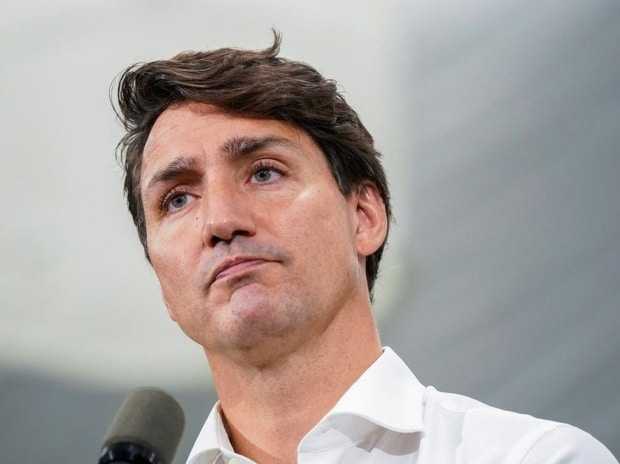
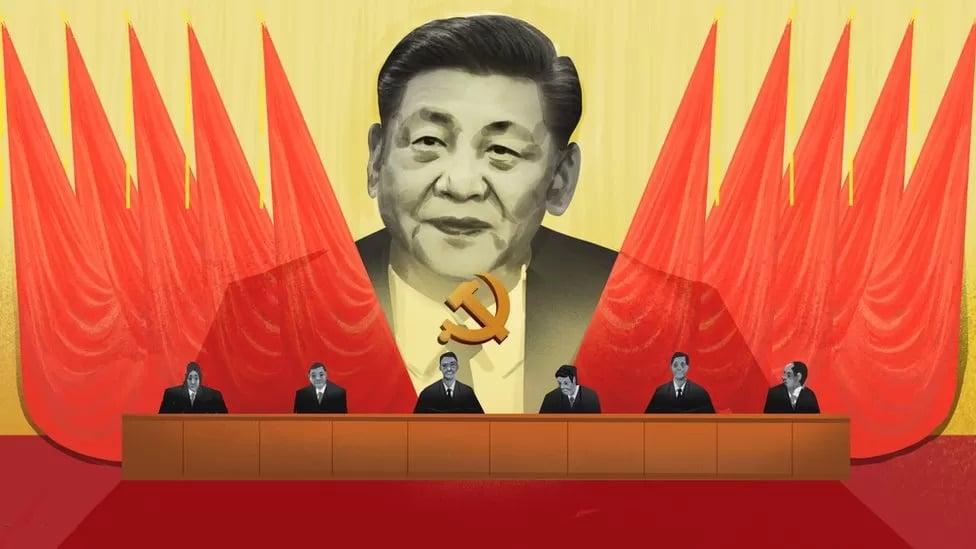
The government said in the 2023 budget that it will spend more than $16-million to create a National Counter-Foreign Interference Office in the Department of Public Safety, citing the threat of espionage.

Share

TikTok and 9/11

Both pose serious threats to our nation, as Congress’ recent hearing reveals.

What does TikTok have in common with 9/11?

On Sept. 11, 2001, terrorists hijacked airplanes and committed suicide attacks on the World Trade Center’s twin towers in New York City and the Pentagon in Arlington, Virginia. These terrorists took advantage of the freedoms in the U.S. to be trained as pilots and organize the attacks. In responding to this new type of terrorist attack, the U.S. instituted several new measures.

Share

Justin Trudeau has let Beijing deep into Canadian politics

A series of explosive allegations about Chinese interference in Canadian politics have rocked Ottawa

As hard as it is to conceive of him as such, as the longest-serving head of government in the G7 Justin Trudeau is now one of the world’s elder statesmen. He has achieved this exalted status despite innumerable scandals rocking his government, on issues ranging from corruption to “blackface” to bullying to sexual misconduct, many of which would have felled a lesser politician.

But his lucky streak may finally be ending. For the past month, Ottawa has been riveted by a series of explosive allegations about Chinese interference in Canadian politics, from illegal campaign donations to disinformation campaigns, allegations leaked to the media by members of Canada’s usually docile intelligence service reportedly angry with the government ignoring their reports.

Share

National Security Threat: Another Latin American Country Chooses China

Honduras recently cut ties with Taiwan and established diplomatic ties with China.

Honduras’ Foreign Minister Eduardo Reina made it clear that the decision was about “pragmatism, not ideology” and that it was motivated by the country’s debt, which totals $20 billion, as well as the need to deal with the country’s energy and other needs. Honduras’ decision came just weeks after the Honduran government announced that it was negotiating with China to build a hydroelectric dam called Patuca II. China has already invested $298 million in a first dam in eastern Honduras inaugurated in January 2021.

Share

The election-interference discussion can easily slip into racism says the Senator from Beijing


Why do some Canadians bristle at the suggestion that recent reporting on foreign interference in our democracy encourages racism?

Setting aside partisan point-scoring, let’s assume that the reason is an inability to see how genuine concern about foreign interference could be construed as racist.

Share

Adam Zivo: CBC keeps coming to Trudeau’s defence over interference scandal

The CBC’s coverage of the China interference scandal has often been questionable and partisan. Though its unsurprising that the organization has chosen to act, yet again, as the Liberals’ state-funded PR wing, its recent decision to platform an apologist for Beijing’s genocide against the Uyghurs is a new low.

Share

Michael Taube: How the Trudeau Liberals Lost the Plot With Chinese Election Interference

For more than 25 years of writing columns and making media appearances, I’ve often discussed the importance of controlling the political narrative. It’s a key component for successful governments, and an art form unto itself.

The narrative is the messaging, or series of events, pertaining to a particular issue, policy, event, or controversy. There are times when it’s been shaped by parties and leaders. There are moments where it naturally develops on its own. No matter how it evolves, it’s always incumbent on the government to ensure the narrative points in their general direction for as long and as often as possible.

Share

China campaign to influence local leaders bore fruit in Utah: report

China’s furtive efforts to affect policy and raise its stature worldwide achieved some of its greatest successes in Utah — a deeply religious and conservative state seemingly a world away from the machinations of Beijing’s Communist government, the Associated Press reported Monday.

For years, China and its affiliates in the US have worked behind-the-scenes to cultivate relationships with state and local officials and lawmakers, connections that have allowed Beijing to delay legislation it didn’t like and ditch resolutions that expressed dissatisfaction with its actions.

Share

MPs to Vote on Questioning Special Rapporteur Johnston on Foreign Interference Investigation

MPs on a House of Commons committee are set to vote this week on a motion calling for former governor general David Johnston—the recently appointed special rapporteur tasked with investigating foreign interference in Canada’s last two elections—to appear at committee for questioning about his work.

NDP MP Rachel Blaney recently served notice that she will ask the Commons Standing Committee on Procedure and House Affairs to vote on the motion this week, according to Blacklock’s Reporter.

Share

The CCP Has an Inside Informant on Our Military and Supply Chains

The Chinese government may be using its shipping technology as a spy tool.

For more than 15 years, the Chinese Communist Party (CCP) has developed an elaborate espionage campaign to gather insight on American businesses, strategic assets, and supply-chain weak links. The goal: to gain a competitive foothold it can leverage against the United States and our allies.

Share