
Bytown Blackie’s Star: Conservative Messaging is more effective at attracting donations than Trudeau’s so we need to put the government in charge of party financing

An editorial from Bytown Blackie and Katie Telford.

If Justin Trudeau wants to curb extremism in politics, he should start here

As Justin Trudeau prepares his cabinet ministers’ marching orders, he should consider putting a new item on the list — resurrecting the per-vote subsidy for federal political parties.

Currently, parties are financially dependent on donors, who are often moved to give in response to emotional messaging. That’s why the parties focus on identity politics — why we hear so much about abortion rights, gun laws and “Liberal censorship.” It’s why we see fundraising notes from the Conservatives warning “Canada’s democracy is in danger.”

… Changing the way parties are financed by adopting a per-vote subsidy — and reducing contribution limits for political donations — could be part of the solution.

Share

Two-thirds of Canadians say now is poor time for carbon tax increase: Nanos

Two-thirds of Canadians now say it a poor time to increase the price on carbon, with a majority saying they believe raising prices on gas is an ineffective approach for curbing fuel emissions.

This is according to a survey conducted by Nanos Research and commissioned by CTV News intended to better understand Canadian perception towards combating climate change through increasing prices on fuel. The survey involved 1,081 Canadians surveyed between July 30 and Aug. 2 and results were evaluated with the latest census information, weighted by age and gender, and the sample of respondents was geographically stratified.

Share

Cory Morgan: Canadians Must Push Back Against Government’s Expensive and Annoying Plastic Bans

Lunatic

Just how far can the government go with costly and inconvenient environmental regulations of questionable benefit before citizens decide they have had enough of it?

Steven Guilbeault’s environment department appears determined to find out as they indicate plastic bags and wrapping used for meat and produce in grocery stores will be banned.


There just isn’t a bad idea this government won’t endorse.

Share

Canadian governments are spending us into misery

Two statistics illustrate Canada’s disastrous economic outcomes in recent years and the bleak outlook. First, as Fraser Institute senior fellow and former Statistics Canada chief economic analyst Philip Cross observes in a recent study, Canada’s 10-year average real GDP growth per capita was its lowest since the Great Depression. And it’s not a problem we’ve imported: from the fourth quarter of 2015 to the fourth quarter of last year cumulative growth was about two per cent in Canada versus 12 per cent in the United States.

Share

Sabrina Maddeaux: Justice Minister Arif Virani gaslights Canadians on crime

The federal Liberals’ new communication strategy appears to be doubling down on their signature tactic: gaslighting Canadians into thinking there’s no problem and, if that fails, blaming them for thinking there’s a problem at all.

Earlier this week, Prime Minister Justin Trudeau attempted to assert that housing isn’t primarily a federal responsibility, despite several key levers fuelling the crisis being very much under federal jurisdiction — and a history of campaigning on housing affordability.

Share

Green Electricity Means Rising Costs for Consumers: Federal Memo

Moving to green electricity will mean higher costs for consumers. That’s from a staff memo sent to federal Environment Minister Steven Guilbeault, according to Blacklock’s Reporter.

“As the economy transitions to net zero by 2050 there will be increased demand for clean electricity to decarbonize other sectors such as transportation or buildings,” said the March 27 memo. “Some experts are predicting that demand could double by 2050.”

Share

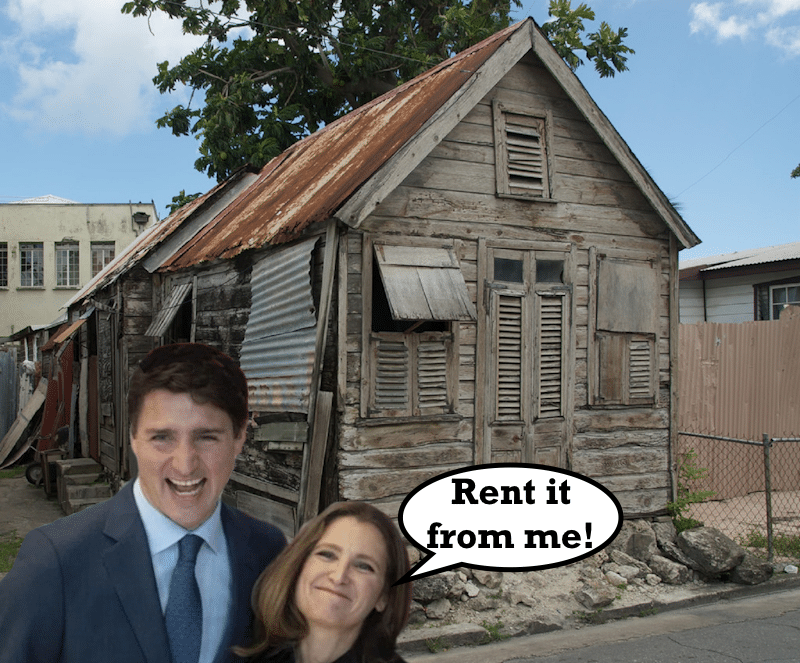
Justin Trudeau needs to make housing a primary federal responsibility

For two decades, from the mid-1990s to the mid-2010s, through Liberal and Conservative governments, Ottawa was largely absent from housing.

Justin Trudeau’s Liberals in 2015 promised to change that, with major federal investments in affordable rental housing. As of March, Ottawa had committed more than $30-billion (much of it low-cost loans for rental housing), and the result is 107,519 new homes.

It is at once a success and failure. It’s more than Ottawa has done in a long time – and it’s far, far too little. The Trudeau government has been overtaken by events: an out-of-control housing market where the cost to buy or rent is extreme.

Share

Canada’s housing shortfall could widen by another 500K units if immigration continues at current pace: report

Canada’s housing shortfall could widen by another 500,000 units within just two years if immigration continues at its current pace, according to a recent report from TD Economics.

In the report, economists Beata Caranci, James Orlando and Rishi Sondhi note that Canada’s population grew by 1.2 million over the past year, as of the second quarter of 2023 — more than double the pace of population growth in 2019 and years prior.

Share

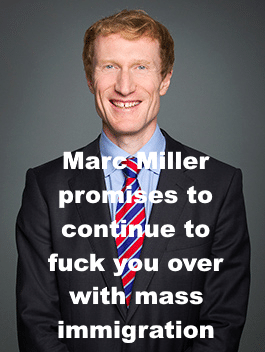
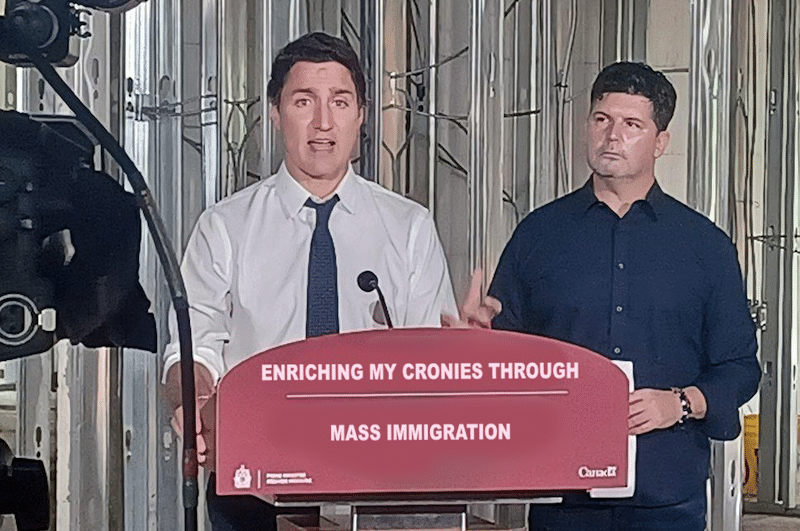
Trudeau’s Liberals will continue to gravely harm citizens economic security with continuation of ruinous mass immigration policy, new minister says

Canada’s new immigration minister said he is open to “having a conversation” on concerns raised by some economists and groups on rising immigration targets amid a housing shortage, but said he still has no plans to lower them in the near future.
Share

Sorry, Prime Minister Trudeau, housing is your primary responsibility

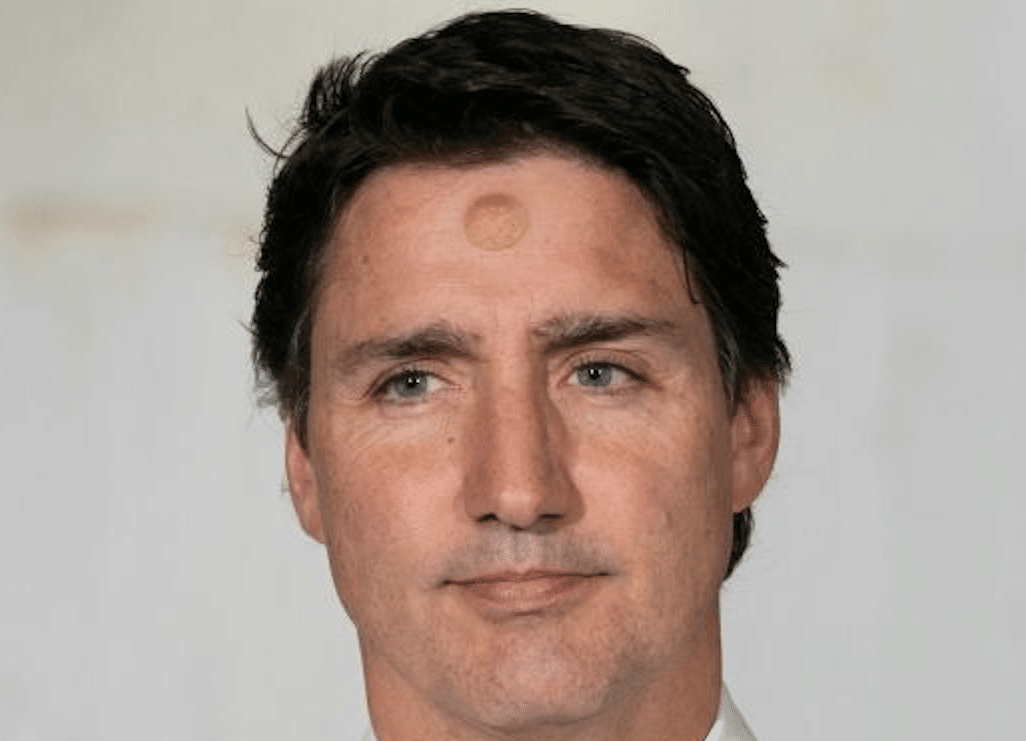
Prime Minister Justin Trudeau spoke from a podium in Hamilton this week sporting a circular bandage on his forehead, the result of an injury he sustained while playing with his kids. I won’t be surprised, however, if the PM appears with an additional band aid on his head in the coming days, the result of banging it against his desk after making arguably one of his worst gaffes in recent years.


Pretty bad when Blackie’s Star takes him to task.

Share

Australia made a deal to keep news on Facebook. Why couldn’t Canada?

Back in February 2021, Facebook blocked news on its platforms across Australia to protest a proposed law that would have forced it, along with Google, to pay media companies for stories appearing on their sites.

About a week later, Facebook and Google struck a deal with the Australian government and the restriction stopped. Yet in Canada, such a deal never materialized.

Instead, Ottawa passed the Online News Act in June, requiring tech giants to pay news outlets for content they share or otherwise repurpose.

Share

Justin Trudeau’s quandary: to go or not to go

Says his kids punched him out

Earlier this week, the federal Conservative Party dropped a new online ad targeting Prime Minister Justin Trudeau.

It begins with Mr. Trudeau, on the 2015 campaign trail, promising to “prioritize new investments in affordable housing.” It then jumps to 2021, with the Prime Minister talking about housing once again.

“For far too long a first home has been out of reach for far too many,” he says. “It’s time to change that.”

Finally, the ad concludes with a clip of Mr. Trudeau from this year. “I’ll be blunt as well, housing isn’t a primary federal responsibility,” he says.

Share

Trudeau government’s plan to end fossil fuel subsidies does not actually end a single one

In 2009, Ottawa made its first commitment to end “inefficient” fossil fuel subsidies that “encourage wasteful consumption, distort markets, impede investment in clean energy sources, and undermine efforts to deal with climate change.” Last year, this was adopted as a mandate of the Trudeau government.

However, instead of delivering on this pledge when the federal government released its framework in July, the new policy consists only of guidelines to evaluate subsidies without announcing the elimination of any of them.

Share

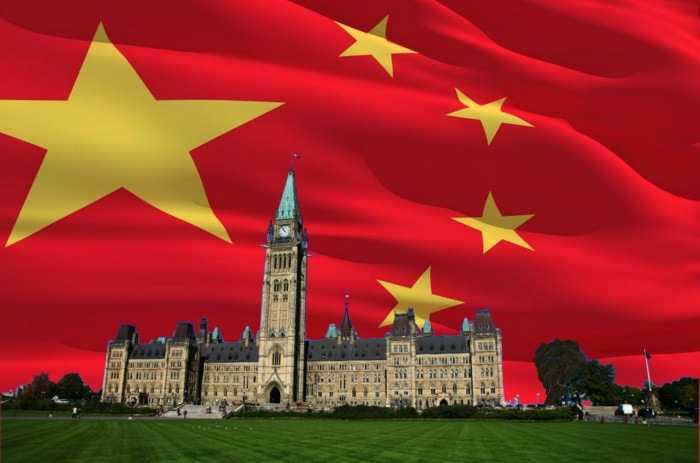
Decoupling From China: Canada Among the Laggards

Economic decoupling from China gathered steam during the pandemic when the vulnerability of supply chains came to the fore. But Canada’s economic linkages with China haven’t diminished, despite its closest ally the United States actively doing so.

Whether it’s called decoupling or friendshoring or nearshoring, international trade expert Eric Miller says it’s primarily about reducing risk—de-risking—in trade with China and then adjusting to the impacts.

Share