Canada’s Liberal Party of Canada (LPC) is commonly referred to as the Natural Governing Party of Canada. It has governed Canada for 70% of the 20th century.
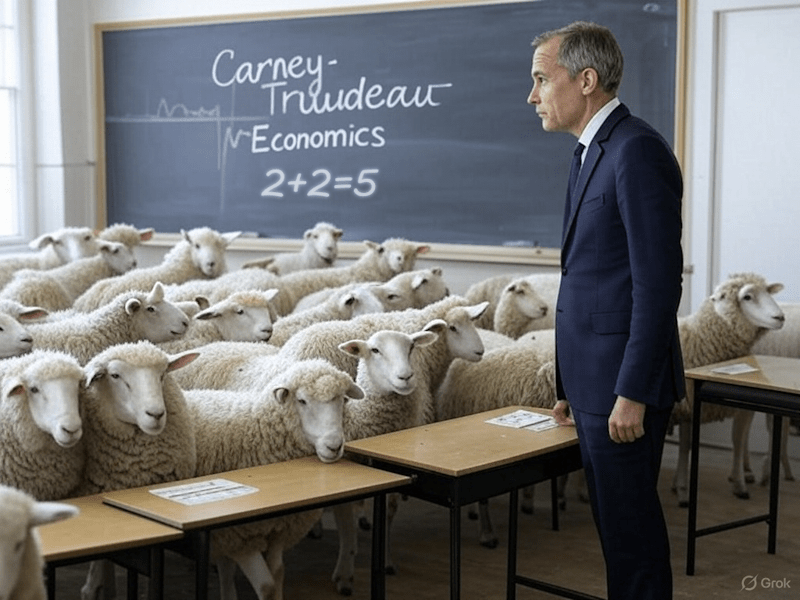
After John A. and confederation, the Conservatives had a good run, but once the smooth, Carney-like Wilfred Laurier, and his Liberals eased their way into power, the LPC never really never looked back. In fact, Canada came close to being a one party state.
In perhaps the most famous scene of the Charles Dickens classic Oliver Twist, the titular character walks up to the formidable beadle, Mr. Bumble, to meekly ask for more gruel. Monday night, Canadians voters asked for more of the same thin policy gruel from our own political beadles by sending the Liberals back to power for a fourth term. A decade of lost economic prosperity, denigration of national pride and failed immigration policy was ultimately not enough to turn the stomachs of the voting public.
OTTAWA — Alberta Premier Danielle Smith says she’ll make it easier for citizens to initiate a referendum on the province’s future in Canada, after warning that a Liberal win in Monday’s election could spur a groundswell of support for Alberta separatism.
Smith said on Tuesday that a newly tabled elections bill will give everyday Albertans a bigger say in the province’s affairs.
If you’re a backer of either the Liberals or the Conservatives, you can read the Ontario results in the federal election in both optimistic and pessimistic ways.
For Prime Minister Mark Carney’s Liberals, the pessimistic view is that a poorer-than-expected showing in Ontario is precisely what kept him from forming a majority government.
The Liberals lost a string of ridings in the Greater Toronto Area that they had held for the past three straight elections, and Liberal incumbents also went down to defeat in places with notable working class populations such as Hamilton, Windsor and Sudbury.
During election night coverage, some CBC pundits dropped much of the pretense of impartiality as soon as an “at least Liberal minority” was predicted shortly after 10 p.m. ET. At this point, the national broadcaster’s hosts and commentators could breathe a sigh of relief that they wouldn’t be delivering their own eulogy.
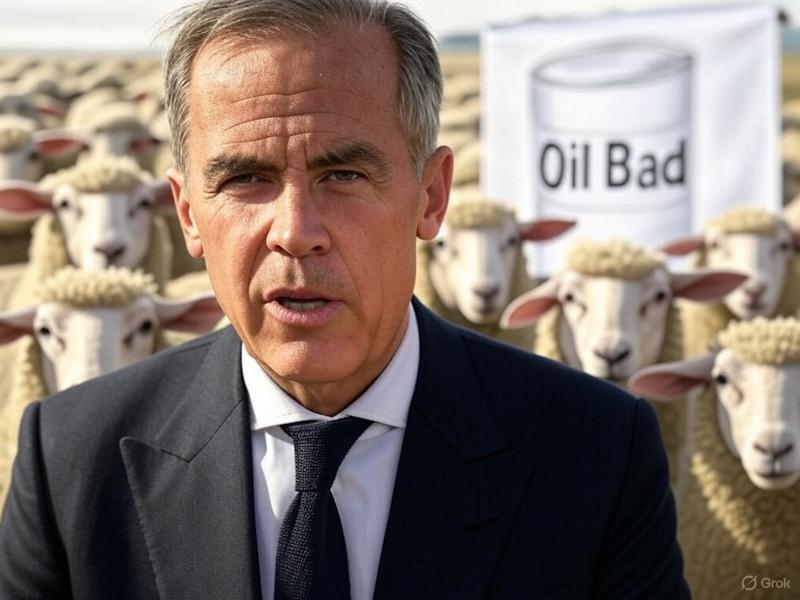
The problem with Prime Minister Mark Carney saying he wants to make Canada an “energy superpower” in both conventional and clean energy is that Canada is already a superpower in conventional energy.
We’re the world’s four largest producer of oil and fifth largest producer of natural gas.
The problem is that when it comes to exporting our oil and natural gas to anywhere but the U.S., we’re a 10-pound weakling.
Some of Beijing’s top critics in Parliament were re-elected this week, but a Conservative candidate said by authorities to be targeted by a Chinese regime operation lost his bid to sit in the House of Commons.
There is no evidence so far that Joe Tay fell short because of the Chinese regime’s efforts, but in the lead-up to the vote, election security officials had warned he was the victim of a transnational repression operation.
On Monday night, President Donald Trump single-handedly saved Canada’s Liberal Party from the electoral disaster predicted by pollsters for over a year. With 99% of polls reporting, the Liberals secured 168 seats in the federal election—just shy of the 172 needed for a majority government, but a stunning comeback for a party that, earlier this year, was expected to be nearly wiped out by Pierre Poilievre’s Conservatives. It is the first time a Canadian government has earned a fourth mandate since William Lyon Mackenzie’s four consecutive terms from 1921 to 1935.
The Conservatives were defeated in Canada’s federal election on Monday night – after being significantly ahead in the polls just a few months ago – and Liberal leader Mark Carney has managed to cling to power.
Canada just hit its own Great Reset – Klaus Schwab-style. And it’s far from the great win for the country that the Liberal voters of Canada may think it is – unless, of course, they voted for their own country’s destruction, which we know is a desire rooted in the hearts of many leftists residing in any Western capitalist nation.
New Canadian leader Mark Carney: “We have an enormous opportunity to bring climate change into the heart of every financial decision.”pic.twitter.com/aXxrTrbt30
OTTAWA — U.S. President Donald Trump, the elephant in the room of the 2025 Canadian election, agreed to meet Prime Minister Mark Carney in the days ahead after calling to congratulate the Canadian leader who squeaked through with a minority win, not the “strong mandate” Carney sought for their looming trade negotiation.
The congratulatory call from Trump came around midday, as Carney was still uncertain whether his election victory would tip into a majority win with a handful of seats teetering between Liberals and opposition candidates.
OTTAWA — Only this campaign could have produced Prime Minister Mark Carney.
The former banker with the sober demeanor of a natural technocrat convinced millions of Canadians he was the guy to lead the nation amid an unprecedented onslaught of threats and ridicule from the brash President Donald Trump.
Two narratives were at play in Canada’s election: either the Great White North was going to continue on its liberal sonderweg, rejecting the Right-populist surge that has erupted elsewhere in the West — or it was going to take the same plunge into the unknown that their American and British cousins had taken with Trump and Brexit.
Instead, they have delivered a muddled, mixed result that neither fully confirms nor denies either of these projections. With the long, dramatic count not yet completed, it looks like the parliament will be divided between a returned but humbled Liberal government under Prime Minister Mark Carney, holding on to minority status, and a rising but still not triumphant opposition Conservative Party under Pierre Poilievre. Both these parties made sizeable gains, the more consequential performance likely coming from Poilievre, who stole a number of working-class seats from progressive parties. But both will nonetheless also have to deal with the sting of dashed expectations. Neither side was handed a decisive victory: Carney and Poilievre each fumbled the historic leads they held at different turns of the campaign, failing to provide a compelling or unifying vision of leadership before the electorate.
How foolish are Canadian voters? They have just kept a politically inexperienced prime minister and largely discredited Liberal minority government in power because of their frustration with a US president.
That, in a nutshell, is what happened in Monday’s election in the Great White North.
Canada's new PM, Mark Carney: "We can't stabilize climate until we get to ZERO NET emissions"




 During election night coverage, some CBC pundits dropped much of the pretense of impartiality as soon as an “at least Liberal minority” was predicted shortly after 10 p.m. ET. At this point, the national broadcaster’s hosts and commentators could breathe a sigh of relief that they wouldn’t be delivering their