Mark Carney’s budget exposes Canada’s deeper malaise

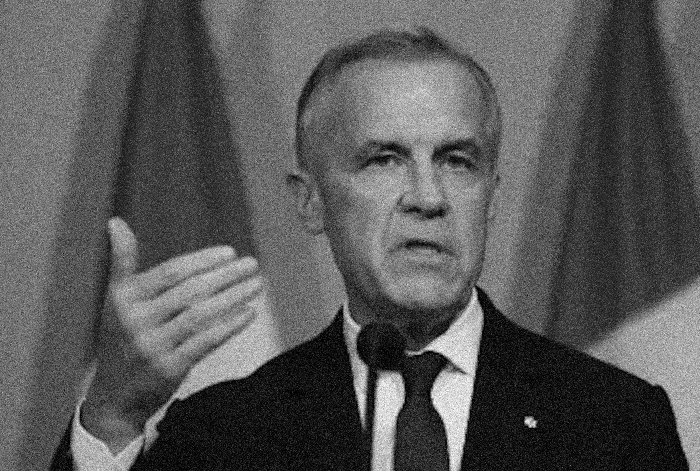
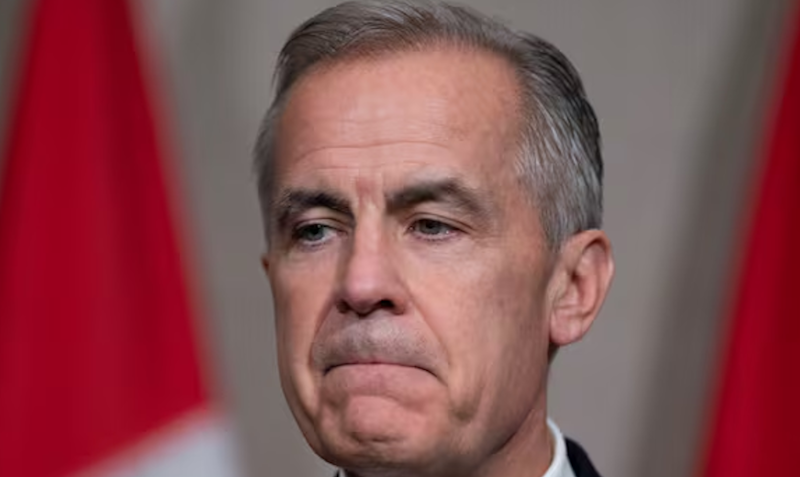
Suspense is high in Ottawa as Canadian Prime Minister Mark Carney steers his first budget through to passage. A masterpiece of centrist triangulation, it promises steep cuts — or “sacrifices” — in spending and government personnel, while simultaneously committing to “generational investments”. It outlines C$141 billion in total spending over five years, offset by $51.2 billion in savings, resulting in a $78 billion deficit.


Share

Conrad Black: Carney squanders all his goodwill on bloated budget

No Canadian federal budget in my conscient lifetime, going back to finance minister Walter Harris in the St. Laurent government, has been as noisily hyped or widely anticipated as the Carney-Champagne budget of this past Tuesday, and none has been such a stultifying anti-climax. What was promised was a cornucopia of “generational investments” that would ”define our next century” by making a series of “difficult choices (and) sacrifices.” The same prime minister who is in a photo finish with his British analogue Keir Starmer for who can be more obsequious to President Donald Trump, but who promised to keep his ”elbows up,” promised also to “swing for the fences” in the budget with intermittent hints of ”austerity.”

Share

EYRE: What would Queen Elizabeth I think of Canada’s crazy spending?

Give the highest priority to finance. That was Queen Elizabeth I’s top rule of her famous “nine principles of power.”

Aside from “never marry” — she was the “Virgin Queen” after all — QEI’s rules are as relevant today as they were 500 years ago. Pick wise counsellors. Avoid war. Beware new-fangled innovation for the sake of it. Improve the usefulness of existing institutions.

Share

Toronto’s unemployment rate rises to 8.9%

Toronto’s unemployment rate climbed to 8.9% as of September 2025, marking nearly a 3.5-percentage-point increase from its post-pandemic low and leaving Canada’s largest city with the fourth-highest jobless rate among the country’s 41 major urban areas, according to a report released Wednesday by TD Economics.

Share

Terry Glavin: China couldn’t be more pleased to have Carney as prime minister

To discern how Prime Minister Mark Carney’s government sees Canada’s place in a radically changed world, the federal budget tabled this week won’t help you as much as you might think. There’s a lot there — the budget’s $78.3-billion deficit is the third highest in Canadian history — but what’s not there may give you a better idea. How Canada is seen in the big, weird outside world — that too has utterly changed.

Share

FARROW: Ottawa’s anti-church tax plan would punish the poor

When Parliament’s finance committee slipped Recommendation #430 into its 2025 pre-budget report, few noticed. Yet the clause proposing to delete “advancement of religion” from Canada’s definition of charity could transform the country’s social landscape. If adopted, every church, synagogue, mosque, and temple would be taxed like a business and lose its authority to issue receipts to donors.

Share

Jamie Sarkonak: Immigration levels plan doesn’t solve Canada’s overcapacity problem

The immigration levels plan Prime Minister Mark Carney released Tuesday addresses Canada’s population overload in the same way that partially mending a plumbing leak helps drain a flooded basement. It doesn’t.

Carney intends to give 380,000 people permanent resident status per year from 2026 to 2028 through regular streams; over the next two years, another 148,000 refugees and work permit holders will be granted PR as well — which means not everyone is going home, despite their temporary status. The government will also bring in 385,000 temporary residents (workers and study permit holders) in 2026 and 370,000 in each of the two years after. Altogether, that’s over 800,000 per year.

Share

Poilievre is right about Trudeau – but the press won’t have it

For the past couple of weeks, since Pierre Poilievre appeared on YouTube’s Northern Perspective, members of the dominant media in Canada have sounded like scorched rats howling in protest about his unfair comments regarding former prime minister Justin Trudeau. The problem with their frustrations seems to be more about what he said than about the facts. Poilievre simply recited some basic knowledge that everyone is familiar with. His conclusions irritate members of the Laurentian media because they bear responsibility for helping the RCMP keep this matter underreported.

Share

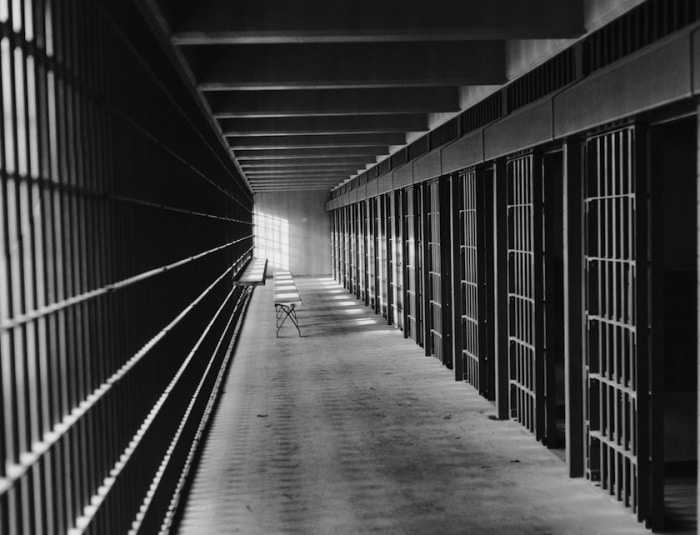
Number of non-Canadian federal inmates continues to rise

OTTAWA — While the numbers of Canadian citizens held in federal prisons continue a downward trend, populations of non-Canadians behind bars continues to rise.

But information on where these inmates are from is largely missing from the data provided by Public Safety Canada – with the national origin of nearly 35% of Canada’s non-citizen prison population listed as “unknown.”

Share

This Trudeau minister kickstarted Canada’s immigration cuts. Here’s what he thinks about Carney’s new plan

Miller literally did that his 1st week on the job.

Whether people agree or disagree with Ottawa’s new immigration targets, the plan will help Canada regain control of the system, says the man who launched the mission to bring it back on track.

“It denotes stability, whether you like or not the important reforms that I put through in the last two years,” said Liberal MP and former immigration minister Marc Miller. Miller was tapped in 2023 by then prime minister Justin Trudeau to rein in rapid immigration growth amid a public outcry.

Share

Most Canadians say Liberals falling short, but still approve of Carney: poll

OTTAWA — Most Canadians say Prime Minister Mark Carney’s government has fallen short on its campaign promises, even as his overall satisfaction and approval ratings edge upward, a new Postmedia-Leger poll finds.

“There’s a lot of things to like about Mr. Carney’s experience and credentials that people gravitated to during the election and hold true now,” said Leger executive vice-president Andrew Enns, in an interview.

Share

Mark Carney’s budget will make Canada the strongest economy in Eurovision

Look at these simpletons, doddering around waving their budget report cards. They assert that Prime Minister Mark Carney did not deliver on his promise of transformational change, of generational investment. They huff that Mr. Carney has crafted a fairly typical Liberal big-spending budget, with the exception of actual investment in Canada’s military (though the budget is light on details) and plans to reduce the size of the public service by 40,000 jobs by 2028-29.

Share

Mark Carney aiming to repeat Justin Trudeau’s biggest mistakes

On Nov. 4, Prime Minister Mark Carney’s government tabled its first budget since taking office in the spring. Despite the new face at the helm, Carney’s budget unfortunately relies on the same failed economic strategy the Justin Trudeau government pursued for a decade.

For starters, Carney’s economic plan calls for more government involvement in the economy. Ottawa will become a home developer, pick winners and losers from a bevy of major national energy project proposals, implement a new “climate” strategy and substantially increase federal spending and borrowing.

Share

Budget offers mass amnesty for asylum-seekers

As part of the federal budget’s promise to bring immigration “under control,” it is offering a one-time mass amnesty to some of the hundreds of thousands of asylum seekers who have entered Canada in recent years, including by illegally crossing the U.S. border.

Starting in 2026, the budget announces that Canada will pursue a “one-time” $120.4 million program to fast-track “eligible protected persons” into permanent residency.

Share

Liberals target Farm Credit Canada for being ‘too white’

The federal government is taking aim at Farm Credit Canada (FCC), saying the Crown-owned lender’s portfolio is dominated by “older white men” and needs to better reflect the country’s diversity.

In a budget notice, the Department of Finance said cabinet will amend the Farm Credit Canada Act to require regular legislative reviews ensuring the bank’s loans align with the “changing needs” of the agriculture sector.

Share