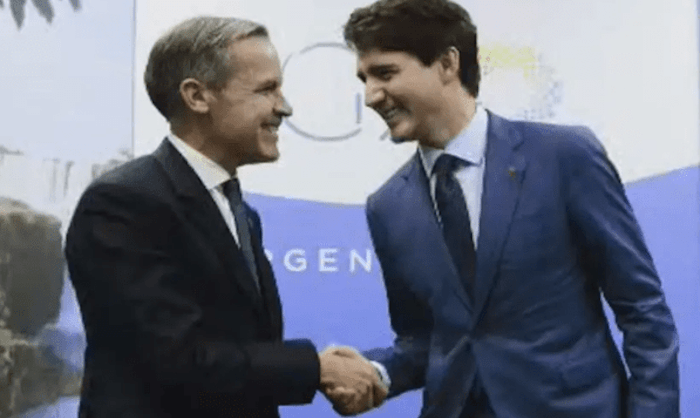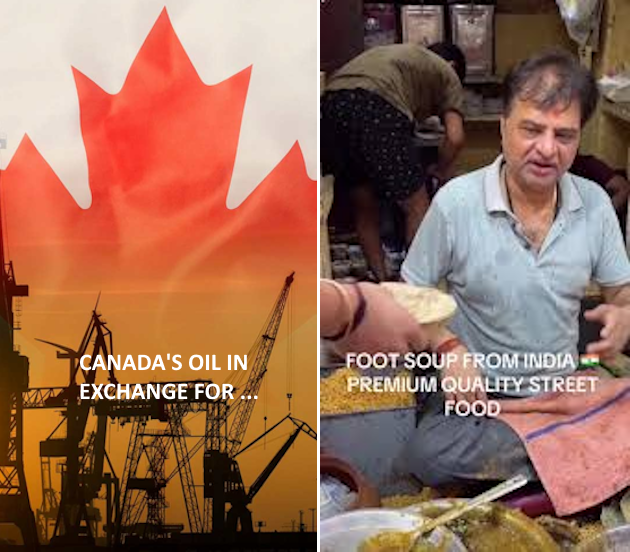
Energy-hungry India tells Carney ‘we are willing to buy whatever Canada is offering’

India wants to buy any energy product it can from Canada, and its officials are urging the federal government to streamline approvals for various projects so it can tap into new supplies to feed a rapidly growing country with relatively few natural resources of its own.

That’s the message India’s high commissioner to Canada, Dinesh Patnaik, relayed in an interview with CBC News before Prime Minister Mark Carney left for a five-day visit to the country.

It’s a trip that will be laser-focused on cutting new business deals and getting negotiations for a free trade agreement underway as part of a push to diversify from the American market.


Share

Carney’s bid to forge the world’s largest trading bloc will be an uphill battle

No one can accuse Prime Minister Mark Carney of lacking ambition.

But high on the agenda for a three-country trip that will take him over the next week to the eastern reaches of the globe is what may be his most audacious gambit: trying to forge the world’s largest trading bloc as an antidote to U.S. President Donald Trump.

Share

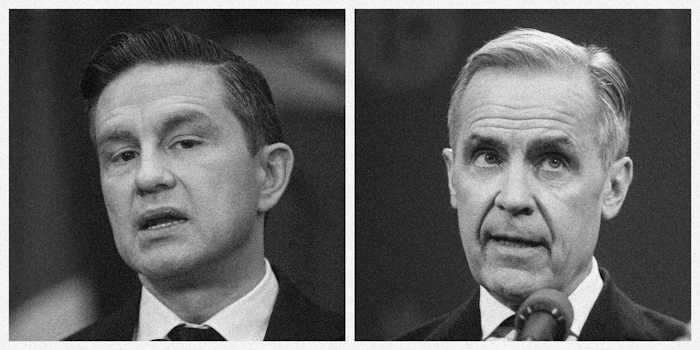
Poilievre says China is no substitute for the United States as Canada grapples with Trump

OTTAWA — Conservative Leader Pierre Poilievre said trade with China is no substitute for trade with the United States and Canada should build on its leverage to secure a tariff-free trade deal with our neighbour to the south.

“Canada’s prosperity and security are inseparable from a stable relationship with the United States,” said Poilievre, during a speech at the Economic Club of Canada in Toronto on Thursday.

Share

Ottawa admits ‘significant strain’ and possible fraud in Canada’s refugee system

Stupid rhymes with witch

The federal immigration department is acknowledging mounting “integrity pressures” and potential fraud within Canada’s refugee system, even as Liberal MPs downplay concerns about bogus claims.

Blacklock’s Reporter says in a formal Response To A Request For Information tabled with the Senate social affairs committee, the department of Immigration Minister Lena Diab conceded there is no single metric to precisely measure fraud in the asylum process.

Share

Canada’s Friendly Dictatorship Problem

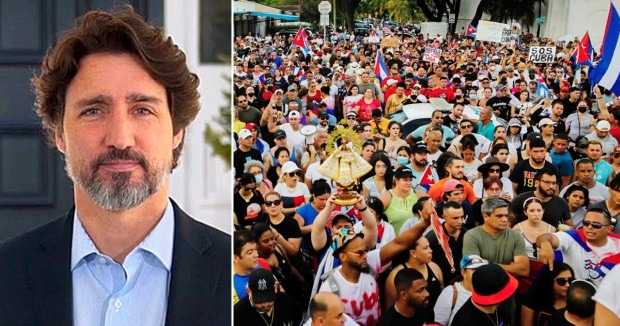
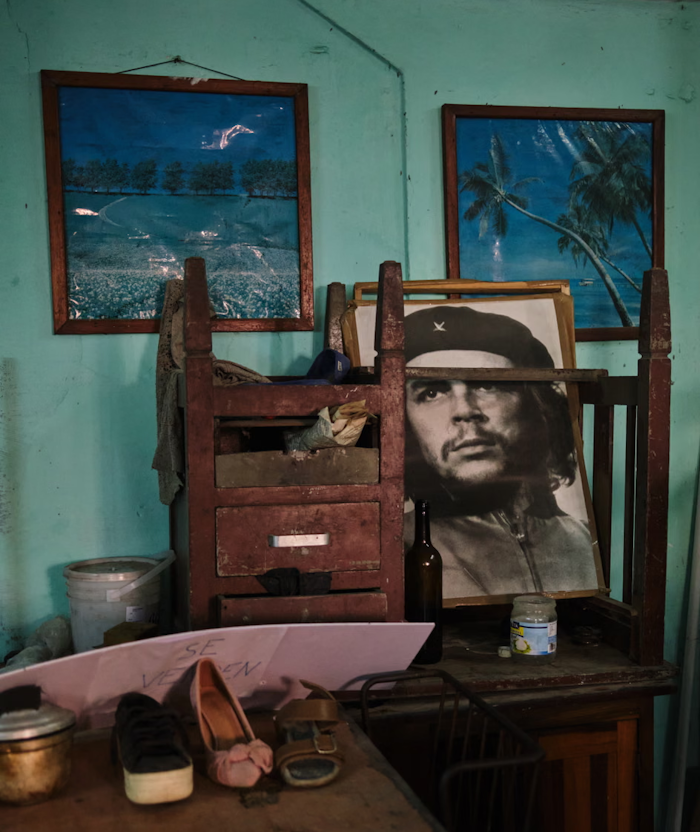
Trudeau refused to condemn communist Cuban regime’s suppression of protesters

OTTAWA — On January 3, 2026, US special forces captured Venezuelan dictator Nicolás Maduro in a military operation that seized him and his wife and transported them to the United States. In the operation, 32 members of Cuba’s elite “Black Wasps” counter-insurgency unit were killed protecting him; Havana subsequently declared two days of national mourning (14ymedio 2026; Prensa Latina 2026). The Cuban regime’s response lays bare a reality that Canada has long preferred to ignore: Cuba is not simply a poor Caribbean nation struggling under US sanctions. It is an active participant in an authoritarian network that spans continents, exports repression, and works systematically to undermine democratic governance across the Western Hemisphere.

Share

Canadian Liberals let in nearly 25k unvetted asylum seekers from world’s most dangerous countries: report

An insider report authored by a former director of policy at Immigration with the Canadian government has shown that, for nearly a decade, Canada let in 25,000 asylum seekers without any of them ever being properly vetted.

The report, by the Toronto-based C.D. Howe Institute, and authored by James Yousif, who is the former director of policy at Immigration, noted how the federal government “slashed all its usual controls to weed out fraudsters, human traffickers and terrorists” in letting these people into the nation.

Share

Sabrina Maddeaux: Canada didn’t become poorer than Alabama ‘out of nowhere’

Some Canadians clutched their pearls so hard they nearly shattered last week, after The Globe and Mail published a deep dive into how, as its online headline read, “Out of Nowhere, Canada Became Poorer Than Alabama.”

There was some debate about whether analyses showing that our GDP per capita had recently fallen behind Alabama’s is enough to declare us poorer (GDP per capita is a nation’s economic output divided by the population, and is used to determine a country’s standard of living). But the real source of righteous indignation was far more revealing: the idea that Canada’s moral and social standing is so superior that such data can’t possibly reflect reality and, even if it does, it doesn’t matter.

Share

State Typist Andrew Coyne Defends Liberal Party’s Extravagant Healthcare Coverage For Fraudulent Asylum Seekers

Smith and Poilievre find someone to blame for their problems: immigrants

Danielle Smith has a problem. Her government is heading toward a deficit projected, before Thursday’s budget, at $10-billion. This is only partly because it overestimated oil revenues, with oil prices now projected at roughly $5 to $10 a barrel lower than forecast in last year’s budget. It is because the government set spending at levels that could only be sustained so long as the oil boom continued. She needs something, or someone, to blame for her excess spending.

Pierre Poilievre, too, has a problem…

Share

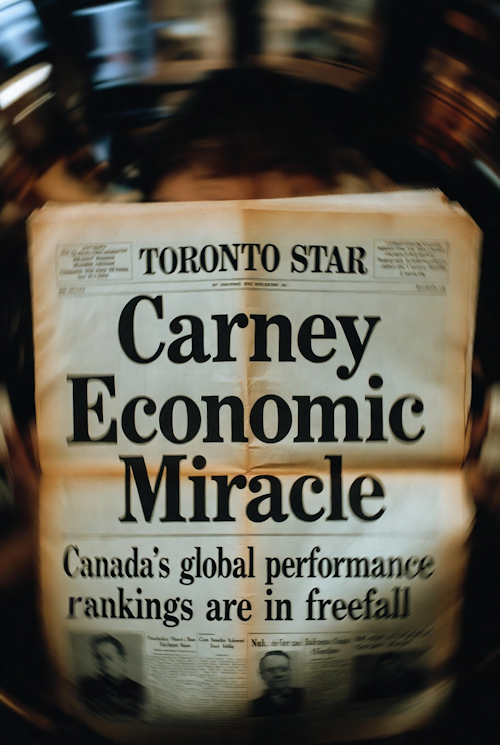
Canada’s global performance rankings are in freefall

There is an ongoing debate over whether Canada is doing better economically than Alabama, based on their relative GDP per capita, with many on the Canadian Left arguing that our country’s economic performance and quality of life look much better when other factors are taken into account.

Unfortunately, this argument misses the mark. When we expand our comparisons beyond Alabama, it quickly becomes apparent that GDP per capita is, if anything, overstating the relative state of our economy and wellbeing relative to our global peers.

Share

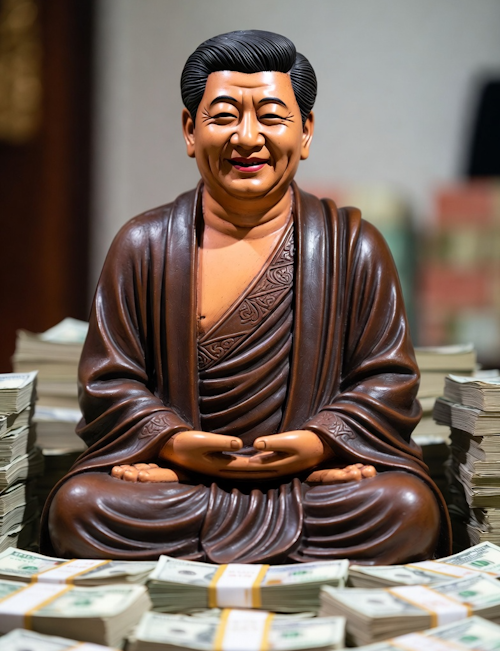
China accused of using Buddhist monasteries in Canada for money laundering, intel operations

 Regular readers of LifeSiteNews, and in fact those who read most independent media, most likely are already aware that the People’s Republic of China, through its Communist Chinese Party’s (CCP) many arms, has been meddling in Canada’s elections, as well as democracy in general, for years.

What may not be as well known is that in Canada’s smallest province, the picturesque Prince Edward Island (PEI), the CCP has been accused of using Buddhist monasteries as money laundering fronts to the tune of half a billion dollars.

Share

Let’s just buy the F-35s and not cut off our nose to spite our face

Canadian anger toward U.S. President Donald Trump is understandable, but there is a real risk that this leads to poor policy choices. A case in point is the growing pressure to revisit the decision to buy a fleet of American F-35 fighter jets.

In economics, we think that governments should set policy goals, then decide how many workers to employ and how much capital equipment to use in order to achieve those goals at as low a cost as possible. A key goal underlying the decision to buy fighter jets is to protect Canada from military intervention by hostile countries. Swedish Gripen fighter jets are less costly, but also less militarily effective than the F-35s. Given this cost difference, the key question is whether the policy goal of keeping Canada safe from foreign aggression can be achieved using Gripens instead of F-35s.

Share

High speed rail project called ‘sexy’ but $90 billion price tag raises red flags

The head of the Crown corporation behind Ottawa’s proposed high speed rail corridor admits the project is “sexy” — but concedes Canadians have reason to be wary of a venture that could cost as much as $90 billion.

Blacklock’s Reporter says appearing before the Senate national finance committee, Martin Imbleau, CEO of Alto — the renamed VIA High Frequency Rail corporation — acknowledged public skepticism over whether the federal government can deliver the massive infrastructure build on time and on budget.

Disaster is written all over this pipe dream.

(Incognito)

Share

Canada pledges $8 million in food aid for Cuba as U.S. fuel blockade continues

OTTAWA – Canada is sending $8 million in food aid to people in Cuba, where a U.S. oil blockade has triggered a humanitarian crisis.

Foreign Affairs Minister Anita Anand and MP Randeep Sarai, secretary of state for international development, say the funding is aimed at addressing urgent needs.

The funding will be delivered through United Nations agencies instead of the Cuban government.

Share