Trade with China, But Don’t Fall in Love

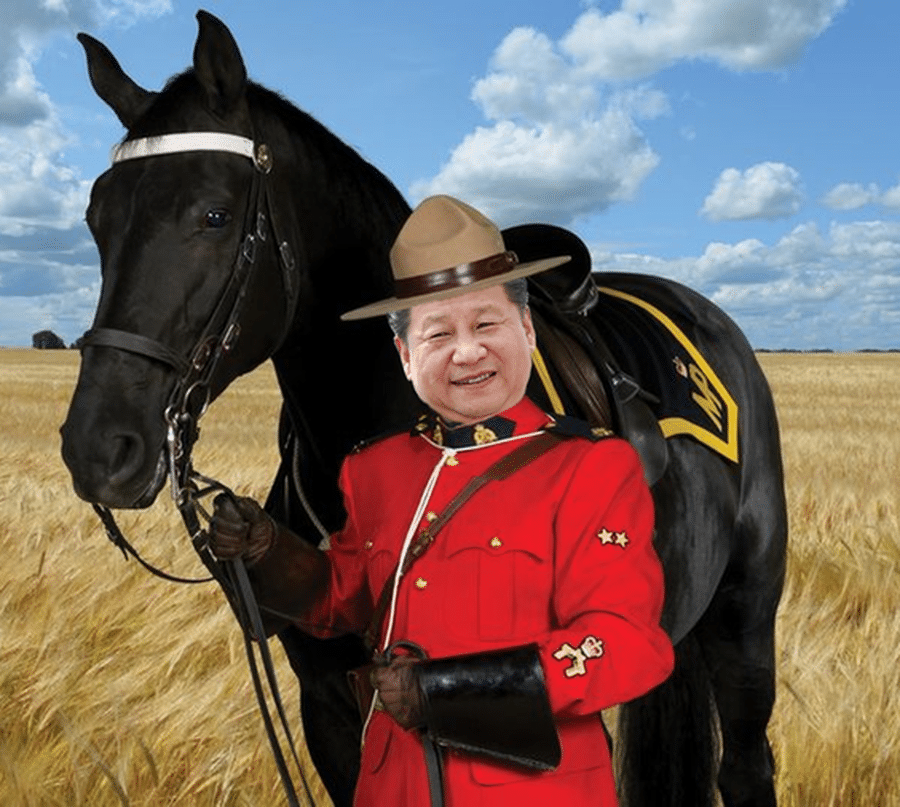
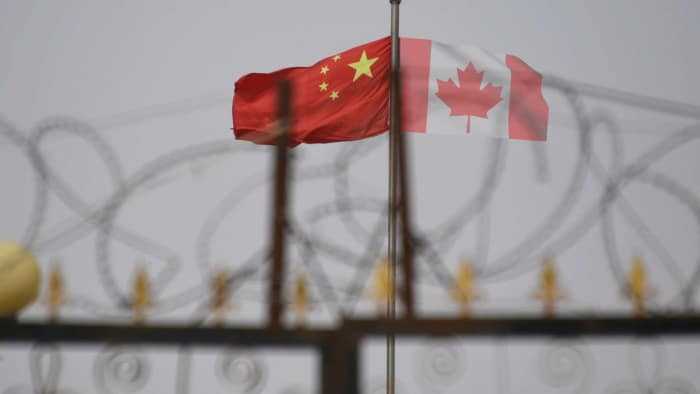
Canada’s recent trade advances with China—including renewed access for canola, lobster, and beef, alongside the lifting of visa restrictions—have triggered predictable reactions at home. Some see these developments as a long-overdue reset in a strained relationship. Others worry Canada is drifting into geopolitical territory that could unsettle our most important ally, the United States. As is often the case with trade, the reality is more nuanced than either camp suggests.

h/t handy n handsome

Share

Conrad Black: As Canada Seeks to Diversify Trade, It Should Have No Illusions About the Chinese Regime

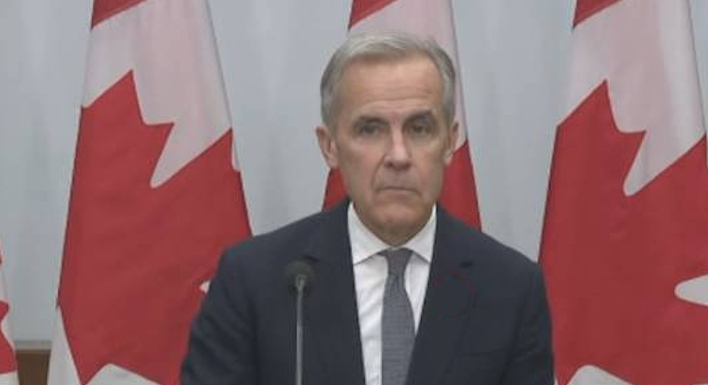
After eight months without any trade or tariff agreements, some people said that it was a relief to see that Prime Minister Carney had reached a partial free trade agreement with China. It appears to be substantially a liberalization of our sale of canola in exchange for their exportation to us of 49,000 electric vehicles.

To the extent that this begins a process of making Canada less dependent upon the United States economically, it is useful. And to the extent that it inaugurates a series of enterprising trade agreements with a wide variety of countries, it is the beginning of a welcome and long-overdue procession of events to end Canada’s status as a branch-plant country. This process began with the Canada -U.S. Free Trade Agreement of nearly 40 years ago, prior to which almost every company in Canada, except Canadian Pacific and the large banks, had the words “Canada Ltd.” after their names.

Share

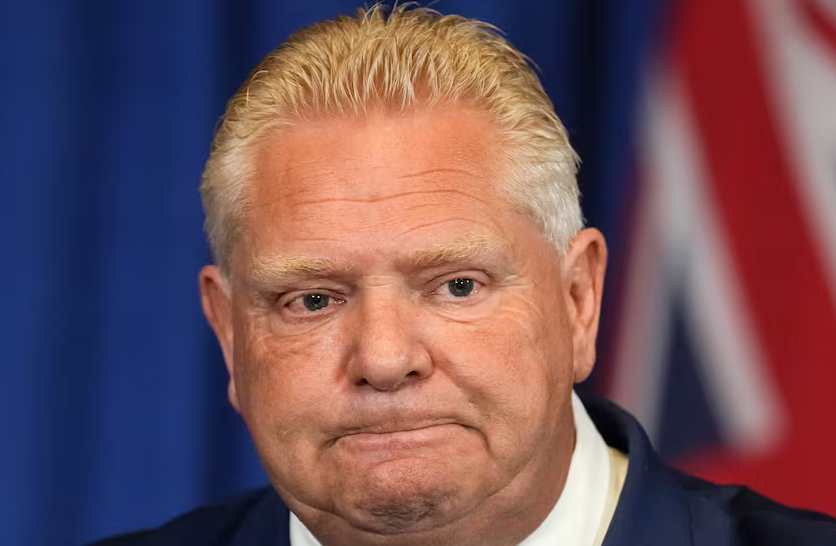
Doug Ford calls for Chinese EV boycott in Canada after Carney deal

Ontario Premier Doug Ford is calling on Canadians to boycott Chinese-made electric vehicles when they are allowed back into the country under a deal recently struck by Prime Minister Mark Carney.

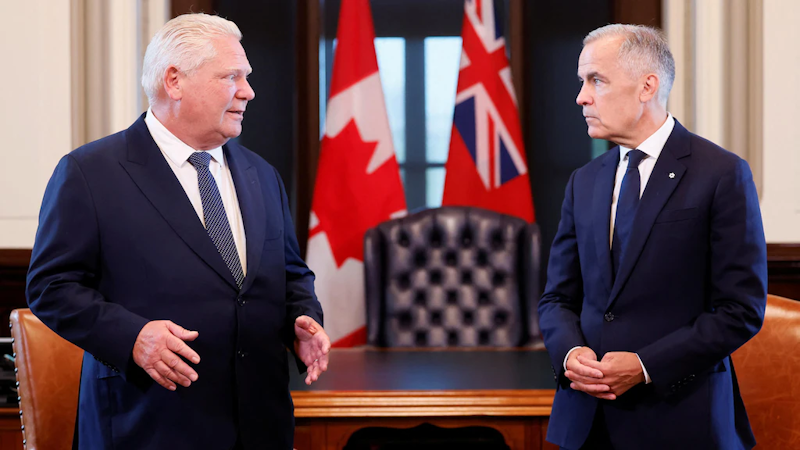
Ford has been critical of the deal — and the fact Carney did not speak to him about it in advance — saying it will harm Ontario’s auto sector.

Carney and Chinese President Xi Jinping agreed while the prime minister was in China that Canada will all but drop its 100 per cent tariffs on Chinese EVs and allow an annual import quota of up to 49,000 of the vehicles in exchange for China reducing its canola tariffs.

Share

Stupid Shit Andrew Coyne Says

No, Canada is not selling out to Beijing

Well, that got their attention. Since the Prime Minister’s visit to China, the American media – and social media – have been filled with expressions of shock and amazement.

For critics of Donald Trump, it was payback for his bullying and abusive treatment of America’s nearest neighbour and historic ally. For the President’s supporters, it was a sign of Canadian perfidy, if not grounds for invasion. Canada will “surely regret” gives you the flavour of it.

Share

Will a ‘disappointed’ Doug Ford and Mark Carney get over their differences on Chinese EVs?

It feels a bit Taylor Swiftian.

Hurt feelings.

Unsent texts.

Exotic trips with someone else.

Yearning for what was last summer.

Premier Doug Ford sounded like a spurned paramour from a Swift song as he bleated about Prime Minister Mark Carney’s visit to China with Saskatchewan Premier Scott Moe.

I hope Ford goes Ape.

Share

Former Senior Mountie: Carney’s RCMP–Chinese Police Cooperation Deal Is a Counterintelligence Danger That Risks Sovereignty

OTTAWA — After nearly five decades in policing, intelligence, and financial-crime investigations—including professional experience working in Asia—I have learned a simple rule: who you cooperate with matters as much as what you cooperate on.

Last week, the Prime Minister’s Office announced that Canada and the People’s Republic of China will enhance law enforcement cooperation on drug trafficking, transnational and cybercrime, and money laundering. On paper, this sounds reasonable. Fentanyl is devastating communities. Cybercrime drains billions. Organized crime adapts faster than borders.

Share

WAPO: Canada will regret cozying up with China to troll Trump

Canada is cozying up to China. It’s not surprising because of President Donald Trump’s bullying, but it is shortsighted.

Describing a “new world order,” Canadian Prime Minister Mark Carney had the gall during a trip to Beijing last week to claim that China is a “more predictable” partner than the United States.

Trump has been a bad neighbor, so maybe Carney is trolling Trump for musing about making Canada the 51st state. After all, he acknowledged last year while campaigning for the premiership that China is the biggest threat to his country’s security. At the same time, the Greenland saber-rattling, which threatens to upend NATO, is deeply unnerving Canada.


Great, now all our Amazon shipments will go missing.

Share

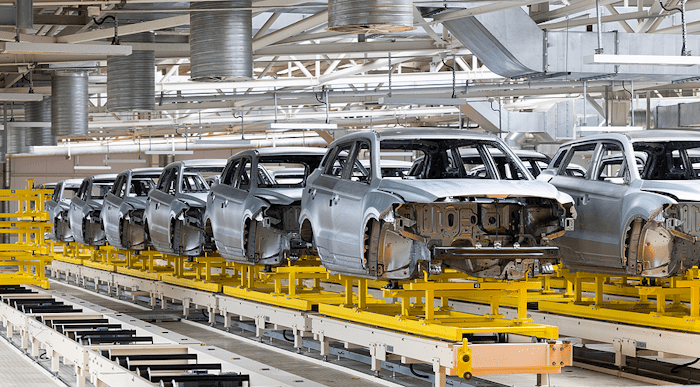
China unlikely to invest in Canadian auto plants, experts say

If the federal government is expecting Chinese electric vehicle manufacturers will rush to build an assembly plant in Canada, economists, industry analysts and insiders say they’re sorely mistaken.

The biggest reasons, say experts? There’s no guarantee Chinese EV makers would be able to sell anything they produced here in the U.S., it would cost billions to build or buy a plant, and they’ve already got more than enough capacity at home.


The goal is for Carney and pals to personally profit from their ‘relationships” with the ChiComs.

They’ll casually lie to further those interests.

Share

Analysis: CSIS Warned Beijing Weaponized Canola and Elections in the 2019 Meng Crisis — Is Carney’s EV Trade-Off a Replay?

OTTAWA — A high-level Canadian Security Intelligence Service assessment in June 2019 concluded that Beijing, jolted by Canada’s detention of Huawei executive Meng Wanzhou, launched a “calibrated and multi-faceted pressure campaign” that blended trade coercion — including curtailing canola imports — with the detention of Canadians and clandestine interference surrounding the 2019 federal election, aiming to exert “personalized political pressure on Canada’s leadership,” with the Ministry of State Security driving the response and CSIS collection further establishing that President Xi Jinping received reports “directly from the MSS.”

Share

Burner phones, security warnings and no ‘megaphones’: How Carney’s trip to Beijing struck a surprising new tone with China

BEIJING — In April 2025, Prime Minister Mark Carney was standing on the stage of the federal election leaders’ debate when he was asked to identify the greatest threat to Canada’s national security.

Without hesitation, Carney declared: “China.”

Share

Doug Ford calls on Carney to ‘step up’ to help Ontario’s auto sector after Chinese EV deal

As Prime Minister Mark Carney moves to allay concerns about lifting tariffs on Chinese EVs, Premier Doug Ford says Ottawa needs to “step up” to protect Ontario’s auto industry.

Speaking to Rural Ontario Municipal Association conference delegates at the Sheraton Centre on Monday, Ford reiterated his alarm at Carney’s new agreement with China.

Share

US Lawmakers Warn Canada Against Allowing ‘Beijing a Foothold in the North American Auto Market’

The U.S. House Select Committee on China is warning Canada that it should reconsider opening its auto industry to Beijing and risking thousands of jobs, ahead of the upcoming renewal negotiations for the United States-Mexico-Canada Agreement (USMCA).

By opening its market to Chinese electric vehicles (EVs), Canada risks distorting its auto industry by giving “Beijing a foothold in the North American auto market, threatening thousands of jobs and undermining a century of integrated automotive leadership,” the committee said in a Jan. 16 post on X.

“China’s state-subsidized overcapacity has already distorted Europe’s auto industry, and North America will be next if this precedent stands,” the committee said.

Share

A dramatic B.C. court case reveals how one family moved huge sums of money from China to Metro Vancouver

First of two. Go here for part 2.

The saga of how one extended family transformed their wealth from China into roughly $60 million worth of property in Canada, specifically in Metro Vancouver, has come to light in a lawsuit that has been working its way through B.C. courts.

The case, presided over by B.C. Supreme Court Justice Gordon Funt, tells a remarkable story that blends the trans-national transfer of huge sums out of China with the yearning of migrating families for a more secure lifestyle abroad.

(Incognito)

Share

Mark Carney brushes off Doug Ford’s anger and Autoworkers fears over China EV tariff cuts

DOHA — Prime Minister Mark Carney’s response to Doug Ford’s criticism of Ottawa’s deal to reduce tariffs on Chinese EVs: he’s out to build the auto industry of the future, not the past.

“Remember, this is a market that is the auto sector, which is evolving very rapidly,” Carney told reporters at a news conference. “We don’t want to be competitive in the market of 2000, 2010. We want to become competitive in the market in the future. That’s what’s going to get great jobs for Ontarians going forward,” said Carney.


The auto industry of the future? Sure Carney.

The only thing this carpetbagger is building is policy to funnel ill-gotten gains to his pals.

Share