On Which Side of History Will You Stand? A Former Mountie’s Challenge to Canada’s Lawmakers

OTTAWA — When we held the press conference unveiling Canada Under Siege: How P.E.I. Became a Forward Operating Base for the Chinese Communist Party, we did much more than launch a book. We set down a marker: Canada has entered a new era of contestation — over influence, sovereignty, and the integrity of its democratic institutions.

Now, the question we pose to every political actor — federal, provincial, and municipal — is this: On which side of history will you stand?

Share

Pressure Mounts for Release of Long-Buried PEI Report on Buddhist Land Transactions, Amid Broader Calls for Federal Inquiry

OTTAWA — The authors of a new book, Canada Under Siege, allege that a religious group linked to the Chinese Communist Party has been involved in a pattern of suspicious land transactions across Prince Edward Island — Canada’s smallest province, which they say is increasingly a flashpoint for questions about national security, land control, and transparency.

h/t Auntie Polly

Share

China’s Reach in Canada: Former RCMP National Director Calls for Urgent Action

Despite years of Beijing’s efforts to expand its influence in Canada, the country has yet to fully recognize or counter the threat the communist regime poses to its future, according to a former RCMP officer.

Garry Clement, former national director for the RCMP’s Proceeds of Crime program, has been investigating transnational crime for decades. He describes the Chinese Communist Party (CCP) as the “biggest transnational organized crime group in the world,” and says that despite growing evidence of its operatives, many in positions of authority in Canada appear unwilling to acknowledge the threat or take action.

Share

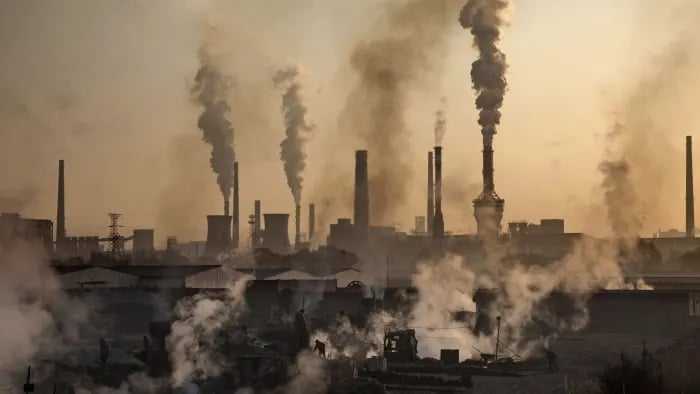
Canada Is Falling for China’s Climate Promises the Same Way the West Fell for Beijing’s WTO Myths

Ottawa is once again easing closer to Beijing, this time under the banner of climate policy. The suggestion is that Canada should welcome China’s pledges on carbon neutrality and treat them as an opportunity for common ground on net-zero emissions. On the surface, it looks pragmatic. In practice, it is naive. Canada risks mistaking performance for progress, applauding promises while ignoring the record of the world’s largest polluter, while granting Beijing the leverage it seeks through climate diplomacy.

Share

RCMP closes investigation into two alleged Chinese police stations without laying charges

OTTAWA — The RCMP has closed its investigation into two alleged Montreal-area secret Chinese police stations in Quebec without laying charges.

In a statement, RCMP Quebec division spokesperson Cpl. Erique Gasse confirmed that the police force had closed the two-year-long investigation “recently.” The information was first reported by the Journal de Montréal.

Share

China snaps up Australian canola after trade spat with Canada, sources say

SINGAPORE/BEIJING/CANBERRA, Sept 19 (Reuters) – Chinese state trading firm COFCO has bought up to nine 60,000-metric-ton cargoes of Australian canola, three trade sources told Reuters, after Beijing last month imposed preliminary anti-dumping duties on imports of the oilseed from traditional supplier Canada.

The purchases amount to around 540,000 tons, equivalent to about 8% of China’s total canola imports last year.

Share

Feds ‘looking at’ axing Chinese EV tariffs to ease canola tax

OTTAWA — On the same day the prime minister is set to meet Saskatchewan’s premier after his trade mission to China, Canada’s industry minister said opening the Canadian market to Chinese-made EVs isn’t off the table.

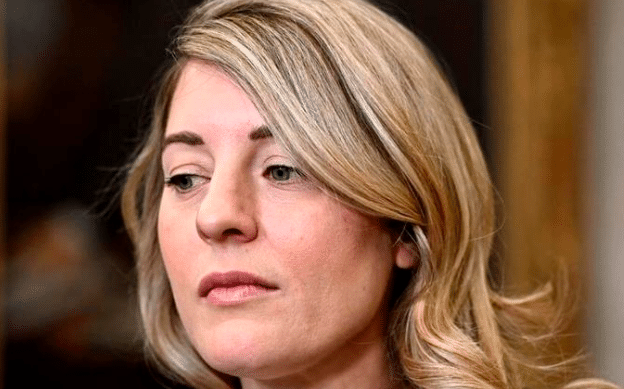
Speaking to reporters Tuesday morning outside of the Liberal cabinet meeting, Melanie Joly said loosening Canada’s restrictions to China’s electric vehicles has not been ruled out to ease punishing tariffs on Canadian canola.


Flooding the market with cheap Chinese EV’s to keep a Canola market open? What could go wrong?

I mean besides Trump eviscerating what’s left of Canada’s auto industry.

Who wins?

Share

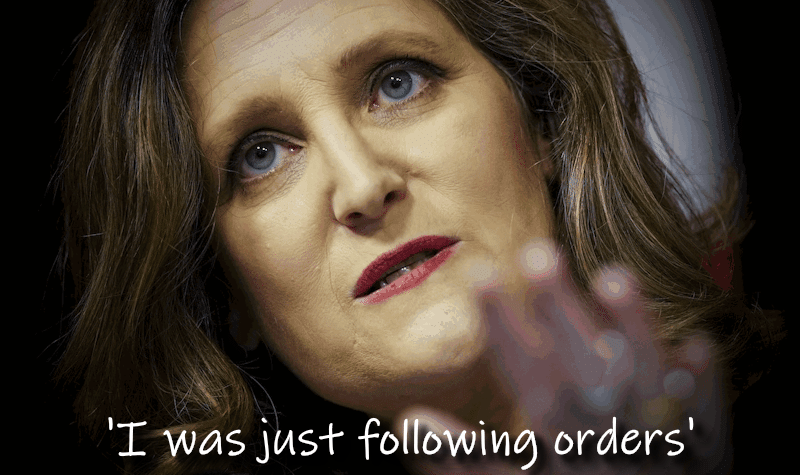
Liberal staffers strategized over $1-billion loan for Chinese ferries while Freeland dismissed federal connection

As Transport Minister Chrystia Freeland was in the House of Commons distancing Ottawa from BC Ferries’ plan to buy four new ships from a Chinese state-owned shipyard, senior Liberal advisers were debating how to manage a looming announcement that there was in fact a connection.

Canada Infrastructure Bank, a federal Crown corporation, had provided $1-billion in financing for the purchase.

The Globe and Mail has obtained internal e-mails involving senior Liberal political aides, including one sent at 2:17 p.m. on June 18 just as the daily Question Period was about to start.


She’s only a little corrupt. I wonder what her cut was? What was Carney’s take?

Share

Inside Xi’s Fifth Column: How Beijing Uses Gangsters to Wage Political Warfare in Taiwan — and the West

TAIPEI — At a banquet in Shenzhen more than two decades ago, Chang An-lo — the Bamboo Union boss known as “Big Brother Chang” or “White Wolf” — raised a glass to one of the Communist Party’s princelings. His guest, Hu Shiying, was the son of Mao Zedong’s propaganda chief. “Big Brother Chang,” Hu reportedly toasted him, an episode highlighted in a new report from the Jamestown Foundation.

Hu would later be described by Australian journalist John Garnaut as an “old associate of Xi Jinping.” That link — through Hu and other princelings Chang claimed to have met — placed the Bamboo Union leader within the orbit of Party elites. Garnaut also reported that the Ministry of State Security (MSS) had used the Bamboo Union to channel lucrative opportunities to Taiwanese politicians. According to Jamestown researcher Martin Purbrick, a former Royal Hong Kong Police intelligence officer, such episodes show how the CCP has systematically co-opted Taiwanese organized crime as part of its united front strategy.

Share

Carney considering scrapping tariffs on Chinese electric vehicles

If Canadians were in the driver’s seat, tariffs imposed by Ottawa on Chinese electric vehicles (EV) would have an easier road to the Canadian market.

At least that’s according to a Nanos Research survey with CTV News, which found 62 per cent of respondents either support or somewhat support removing a 100 per cent tax on all Chinese-made EVs, in the hopes that China may remove tariffs against Canadian crops like Canola.

Just what we need.

Share

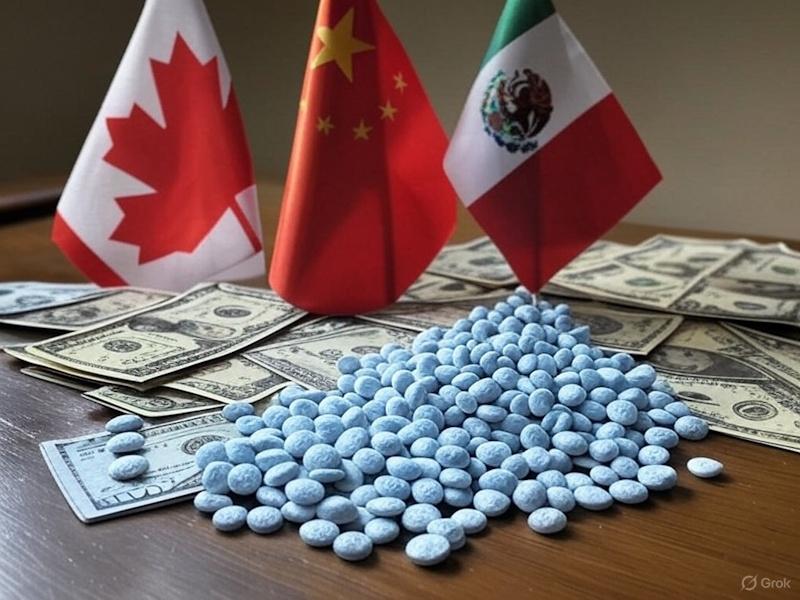
U.S. Treasury Warns of $312 Billion in Chinese Laundering For Mexican cartels

… As reported previously by The Bureau in coverage of a sweeping FinTRAC warning on Chinese underground banking in Toronto, FinCEN is now raising similar alarms. The Treasury said so-called “money mules” often rely on falsified jobs and identities to gain access to the banking system, disguise unexplained wealth, and buy residential properties. In cases where these mules opened accounts, they frequently listed occupations such as “student,” “housewife,” “retired,” or “laborer” — roles that would not normally involve large volumes of financial activity — yet the accounts showed high-value deposits and transactions consistent with laundering.

Share

How China’s Market Dominance Tactics Call for Caution on EV Tariff Concessions

Beijing’s escalation of tariffs on Canadian agricultural products has prompted prominent voices such as Saskatchewan Premier Scott Moe to push Ottawa to drop its tariffs on Chinese EVs.

The argument is that Ottawa’s tariffs primarily benefit the central Canada-based EV sector, while Western farmers bear the cost of China’s retaliation, including its recent 75.8 percent tariffs on Canadian canola. Alberta Premier Danielle Smith has noted that China understands “divisions” in Canada and that it uses targeted tariffs to divide the country to Beijing’s advantage.

Share

Carney’s conundrum: Will he abandon some 40,000 farmers to save Canada’s auto industry?

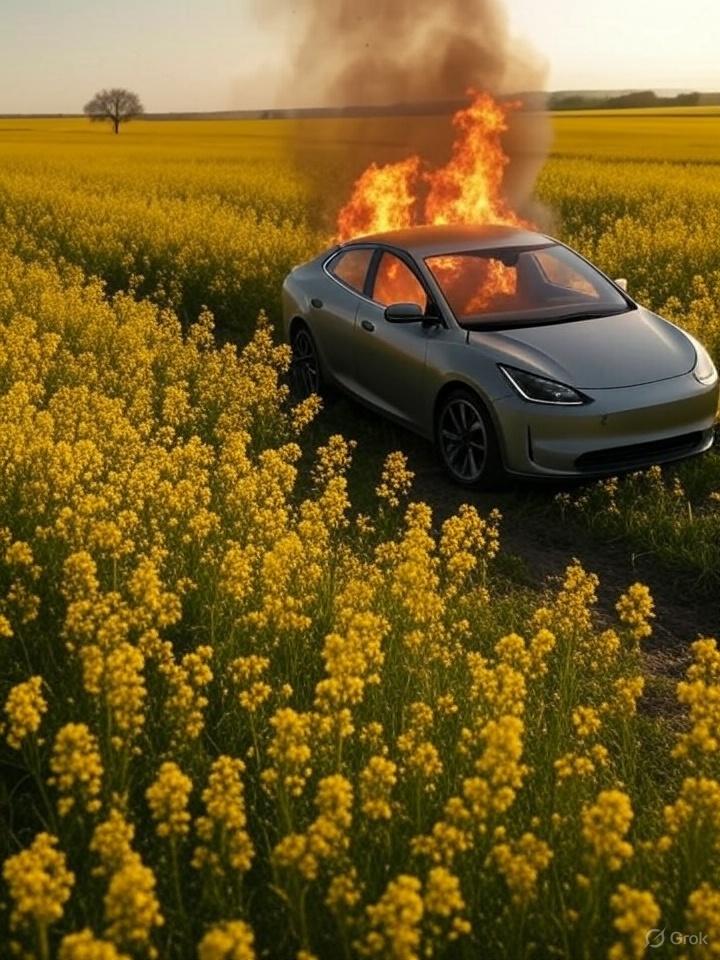
You might have seen those bright yellow fields reaching toward the horizon under a clear blue sky — fields of canola spread across Alberta, Saskatchewan and Manitoba, bringing in billions of dollars each year for farmers and their families.

Now the annual harvest is in danger: one of Canada’s biggest customers, China, has slapped a 76 per cent tariff on canola seed, as well as a 100 per cent tariff on canola oil and meal. Why has it done this? In retaliation for the 100 per cent tariff Canada applied to Chinese electric vehicles starting last October. We were copying the United States at the time, back when relations between our two countries were more cordial, to protect the American and Canadian auto industries. But the Canadian sector, which operates mostly in Ontario, has yet to produce a single EV.

Share

Why pivoting to China is a huge mistake for Canada

China’s behaviour has not changed since the founding of the People’s Republic of China. It aims to create wedges between America and its allies in the hope of undermining U.S. economic, political, diplomatic and security interests in the Indo-Pacific region.

Prominent scholar Yan Xue Tong of Tsinghua University explained China’s long-term interests this way …

Share

Poll shows Chinese Communist Party has higher approval rating than Trump among Canadians

A poll recently conducted by Gallup has found that the Chinese Communist Party has a higher approval rating than United States President Donald Trump among Canadians.

The vast majority of Canadians disapproved of Russian President Vladimir Putin, though the margin between him and his American counterpart was rather slim.

Share