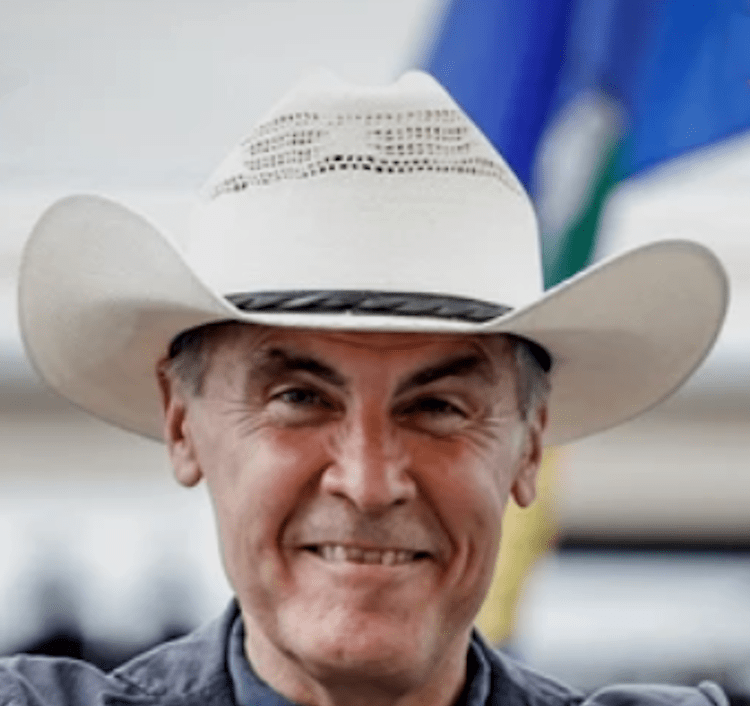
Carney Cozies Up to China

Cowboy Carney

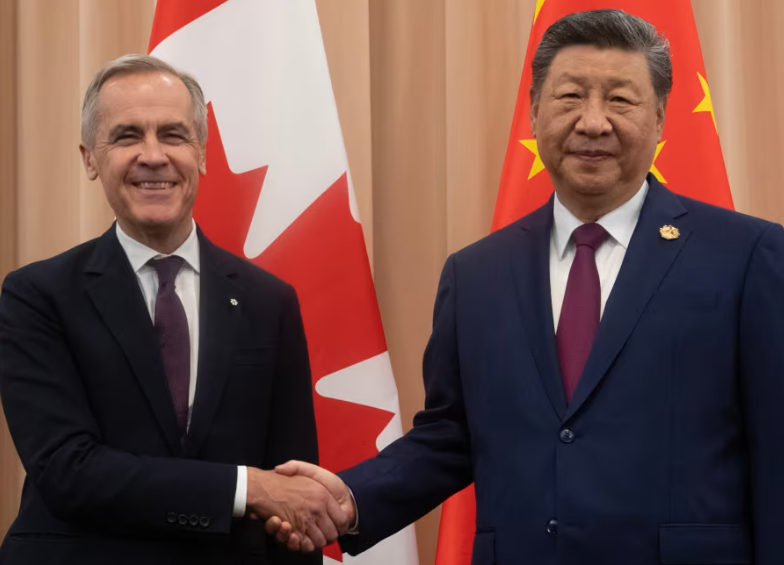
Canadian Prime Minister Mark Carney is selling out to China, and Chinese dictator Xi Jinping is loving it.

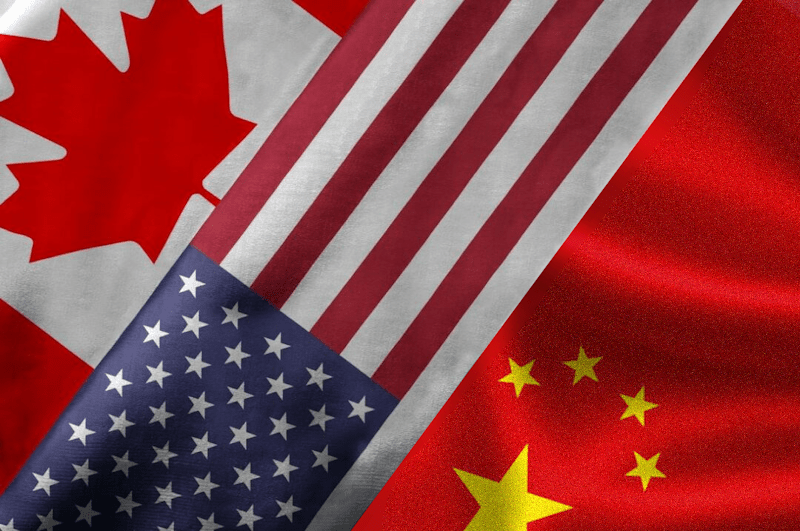
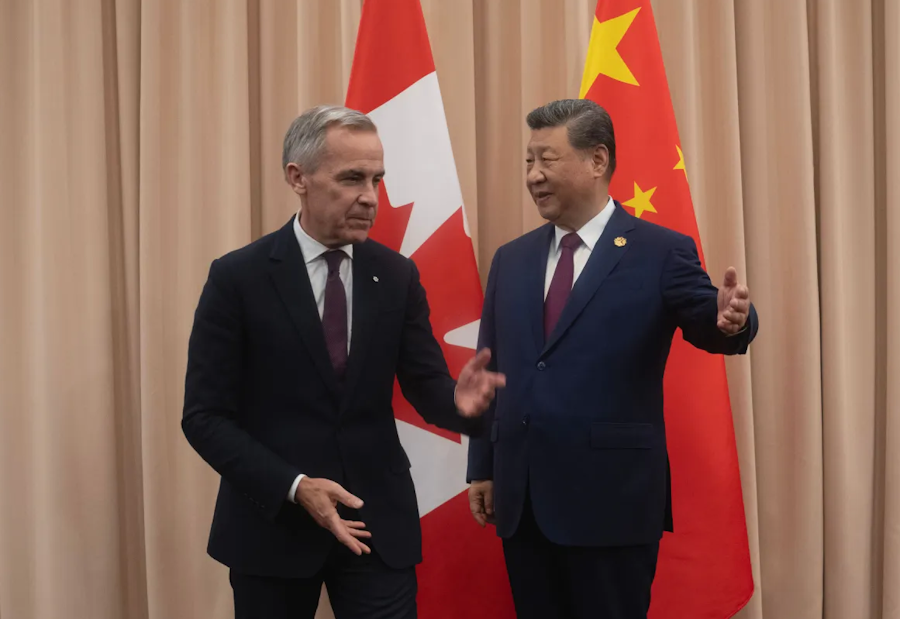
Over the past few days, Canadian Prime Minister Mark Carney has been in China in an open attempt to pivot to China and spurn Canada’s relationship with the United States. In a jubilant press release on Friday, the prime minister’s office declared that Carney is “forg[ing] [a] new strategic partnership with the People’s Republic of China.” The government went on to repeatedly tout this “new strategic partnership,” framing the relationship as entirely overhauled.

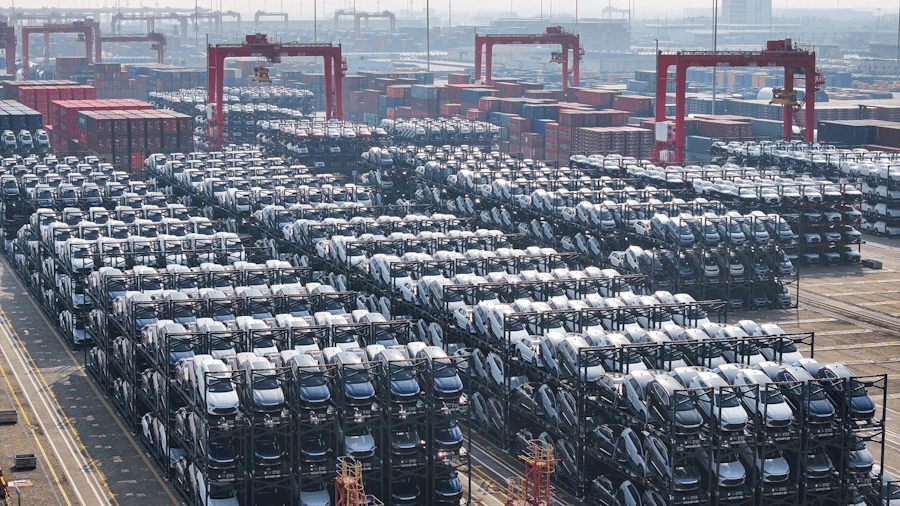
Further, Carney announced that Canada is dropping tariffs on Chinese electric vehicles from 100 percent to 6.1 percent, opening the door to importing cheap Chinese cars (heavily subsidized by the communist government) that promise to sink the Canadian car industry. That decision signals a major break from Canada’s previously united stance with the U.S. against such vehicles.

Share

There is ‘much alignment’ between Canada, China on Greenland sovereignty: Carney

Canada’s latest defence policy warns of Chinese and Russian ambitions in the Arctic and says China’s interests “increasingly diverge from our own on matters of defence and security.”

OTTAWA — Prime Minister Mark Carney said Friday he found “much alignment” between his views on Greenland’s sovereignty and those of Chinese President Xi Jinping in response to U.S. President Donald Trump’s threats against the territory.

“I had discussions with President Xi about the situation in Greenland, about our sovereignty in the Arctic, about the sovereignty of the people of Greenland and people of Denmark, and I found much alignment of views in that regard,” Carney said at a press conference in Beijing.

Share

A China Deal That Trades Leverage for Illusion

Canada’s newly announced trade memorandum with China has been presented by the federal government as pragmatic statecraft in a turbulent world. Lower tariffs on canola and seafood in exchange for the entry of nearly 50,000 Chinese electric vehicles, we are told, will diversify exports, lower consumer prices, and signal Canada’s independence from American protectionism.

This framing is incomplete. More troublingly, it is strategically naive. Trade policy is not merely about price and volume. It is about leverage, reciprocity, industrial resilience, and alignment with trusted partners. On those measures, this agreement falls short.

Share

CHARLEBOIS: Carney’s trip to China revealed Ottawa knows CUSMA could collapse before year’s end

The trade feud between Canada and China is finally thawing — and it was long overdue.

The rupture began in 2018 with the arrest of Meng Wanzhou, a senior executive of Huawei, in Vancouver. What followed was not merely a diplomatic dispute, but a calculated economic response: China weaponized trade, and Canadian agriculture became collateral damage. Canola, pork, lobster, and other agri-food exports faced punitive tariffs and informal barriers that reverberated across rural Canada for years.


Climate finance? With Coal King China? Globalist Gibberish.

Share

Carson Jerema: Mark Carney embraces Chinese EVs and the, uh, ‘new world order’

How about instead of becoming the 51st American state, Canada becomes the 23rd Chinese province?

Listening to Prime Minister Mark Carney and his ministers fawn over the Chinese government in Beijing this week, it almost seemed like they would be willing to follow President Xi Jinping down any path he led — and in the end, they did.

Share

China EV deal puts Canada’s entire auto sector at risk, industry leaders say

The Canada-China trade deal announced early Friday puts the future of Canada’s entire automotive industry at risk and concedes ground to “hostile” players in the market, say Canadian automotive industry leaders.

“This is a self-inflicted wound to an already injured Canadian auto industry,” said Unifor national president Lana Payne in a press release reacting to news of the deal, which allows 49,000 Chinese EVs a year into Canada, at the “most-favoured nation” tariff rate of 6.1 per cent.

Share

Trump seems unconcerned about Canada-China trade deal: ‘If you can get a deal with China, you should do that’

Carney Fades Away

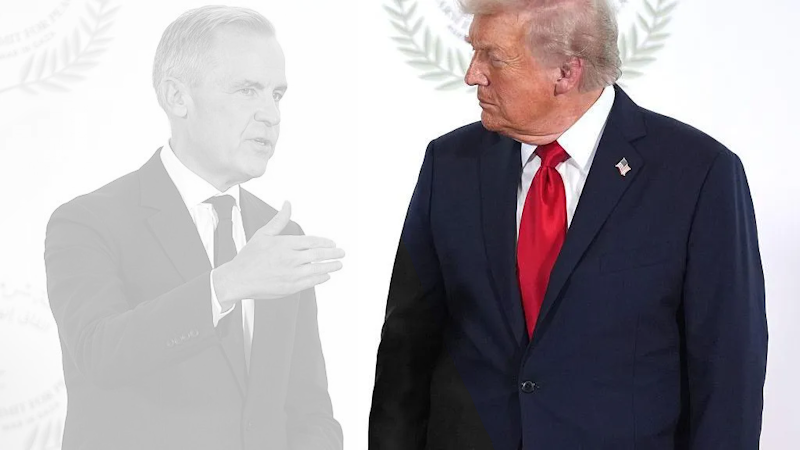
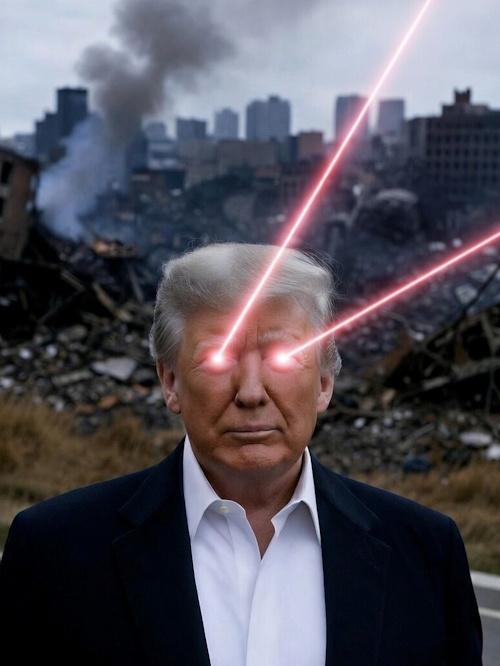
Trump, speaking to reporters outside the White House, was asked about the Canada-China deal. The U.S. president didn’t sound too fussed.

“It’s OK. That’s what he should be doing. It’s a good thing for him to sign a trade deal. If you can get a deal with China, you should do that,” Trump said, referring to Carney.


Mixed Signals: Trump backs Canada-China trade deal, contradicting own administration

… “I think it’s problematic for Canada,” U.S. Trade Representative Jamieson Greer told CNBC Friday morning. “There’s a reason why we don’t sell a lot of Chinese cars in the United States. It’s because we have tariffs to protect American auto workers and Americans from those vehicles.”

Share

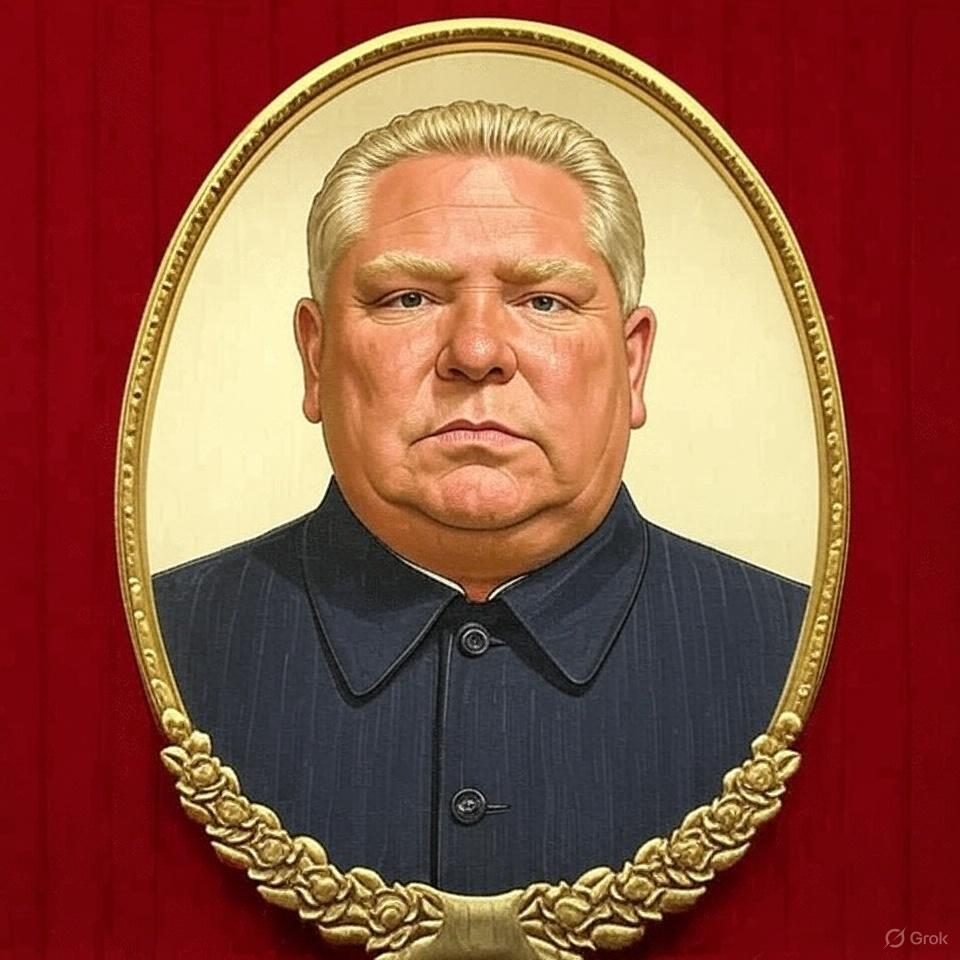
Doug Speaks!

Ontario premier slams Canada’s ‘lopsided’ new EV deal with China

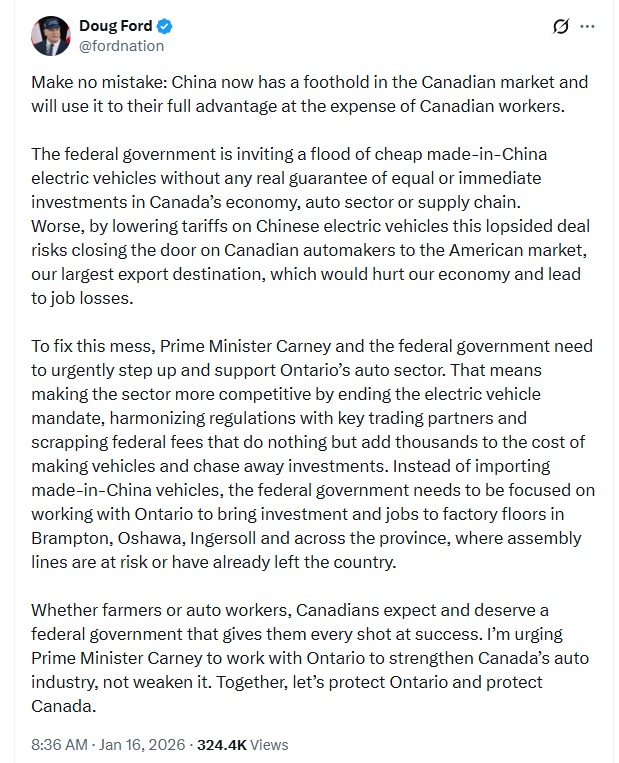
Ontario Premier Doug Ford isn’t mincing words about Canada’s new electric vehicle deal with China, saying Friday that Chinese manufacturers are gaining a foothold in the country’s auto market at the expense of workers in this country.

“The federal government is inviting a flood of cheap made-in-China electric vehicles without any real guarantee of equal or immediate investments in Canada’s economy, auto sector or supply chain,” Ford said in a statement issued shortly after news of the deal broke.

Share

Doug Ford blasts Mark Carney’s EV deal with China

Premier Doug Ford is panning Prime Minister Mark Carney’s slashing of Canada’s 100 per cent tariff on Chinese electric vehicles.
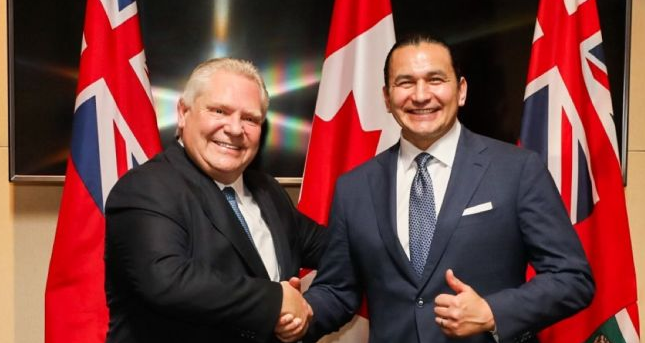
“Make no mistake: China now has a foothold in the Canadian market and will use it to their full advantage at the expense of Canadian workers,” Ford warned Friday after Carney reached a deal with Beijing in exchange for China cutting retaliatory levies on Canadian canola and seafood.

“The federal government is inviting a flood of cheap made-in-China electric vehicles without any real guarantee of equal or immediate investments in Canada’s economy, auto sector or supply chain,” the premier said in a statement.


The loss of Canada’s automotive industry is inevitable assuming Trump holds true to course and reshores manufacturing.

And EV’s are not the future but that won’t stop Carney and his plans to turn bad policy into profit for the China class.


This may be a tacit admission by Ford that the Great EV Gamble came up snake eyes.

“To fix this mess, Prime Minister Carney and the federal government need to urgently step up and support Ontario’s auto sector,” he added.

“That means making the sector more competitive by ending the electric vehicle mandate, harmonizing regulations with key trading partners and scrapping federal fees that do nothing but add thousands to the cost of making vehicles and chase away investments,” stressed Ford”

Share

ChiCom EV’s On The Way! A Victory For Carney’s New World Order!

Of course … Canada and China reach tariff deal on electric vehicles, canola

BEIJING — Canada will lower its U.S.-aligned tariffs against Chinese electric vehicles in exchange for China reducing tit-for-tat tariffs against Canadian canola and seafood, a deal that has the potential to anger U.S. President Donald Trump.

Under the agreement, Canada will allow a small toehold for up to 49,000 Chinese EVs to enter the Canadian market at a tariff rate of 6.1 percent, down from the current tariff rate of 100 per cent that Ottawa applied on Chinese-made EVs in fall 2024.

Prime Minister Mark Carney said it simply returns to a rate that Canada once had with China in 2023 prior to its “recent trade frictions.”

He underscored Chinese manufacturers — who churn out electric cars far more cheaply than North American-made EVs — will invest in auto production in Canada.


WARMINGTON: Mark Carney tells China, Canada ready for ‘New World Order’

When you have Prime Minister Mark Carney talking to leaders in China about the “new world order,” one has to wonder what could be coming next.

Social credit scores? Digital ID? More carbon taxes? More net zero talk? Fifteen minute cities?

Share

BARBER: US doesn’t need Canada anymore and that changes everything

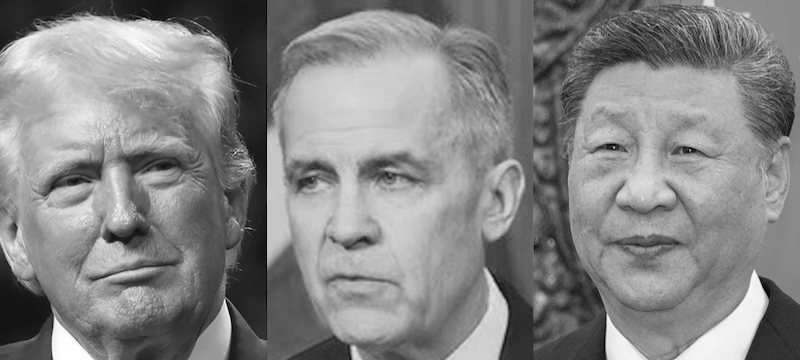
In October 2025, President Trump and Chinese President Xi Jinping met in Busan, South Korea. Both leaders were in Busan for the Asia-Pacific Economic Cooperation (APEC) summit. Although they reached a temporary agreement, considerable tension had built up before the meeting. President Trump had imposed very high tariffs on Chinese goods, while President Xi had placed export restrictions on some goods destined for the US as well as the EU. Most importantly, President Xi restricted rare earths; China believed it held a strong bargaining position because it dominates the rare earth market.

h/t Malcolm-Y (Incognito)

Share

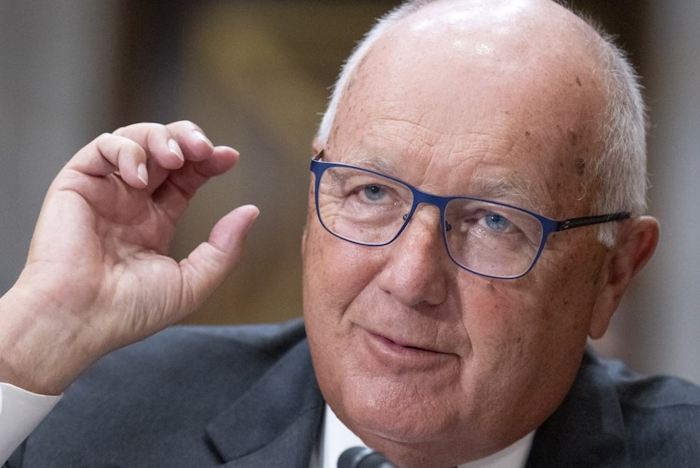
‘We do not need Canada,’ says U.S. Ambassador during Montreal visit

Pete Hoekstra – I’m crushing your head

The U.S. ambassador to Canada, Peter Hoekstra, repeated during his stop in Montreal on Wednesday, President Donald Trump’s claim that the United States doesn’t need Canada.

Hoekstra sat down with CJAD 800 Radio to discuss the bilateral relationship and Canadians’ attitude toward their southern neighbour.

“Sometime this summer or sometime hopefully this fall, we will have a new outline of how we do business together,” he said in the interview. “And those relationships that we have put in place, whether those will foster and grow or whether Canadian companies and American companies will go their separate ways because of the decisions that are made by their governments.”

Share

Why two Canadian provinces are in a spat over Crown Royal whisky

A British owned, Canadian-made whisky is at the centre of a spat between two provinces that is testing a unified “Team Canada” approach in the face of US tariffs.

It started after the whisky maker, Diageo, said it will shut down a bottling plant in Ontario to move some of it closer to US consumers.

Soon after, Ontario Premier Doug Ford angrily poured out a bottle of Crown Royal in front of reporters, and now says the product will be removed from provincial liquor stores. This has alarmed neighbouring Manitoba, where a Crown Royal distillery is a key employer in the small town of Gimli.


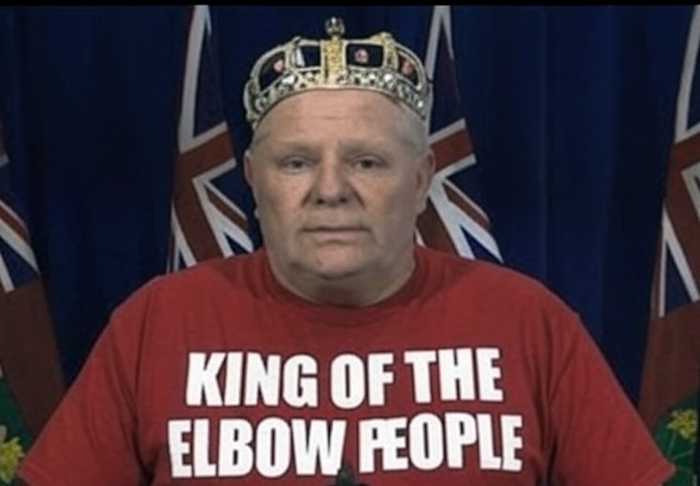
Rifts grow within the Elbow Kingdom.

Share

Ontarians toasting Doug Ford’s Crown Royal ban, poll suggests

Ontarians support Premier Doug Ford’s removal of Crown Royal whisky from LCBO shelves to protest the company’s closure of its bottling plant here, a new Abacus Data poll suggests.

Ford has vowed to stop selling the popular Manitoba-made rye at Ontario liquor stores after U.K.-based Diageo shutters its Amherstburg factory near Windsor next month, which will cost about 200 jobs.

“Crown Royal should have thought twice before closing their plant here,” the premier told reporters at Queen’s Park on Tuesday, expressing concerns Diageo is moving jobs stateside.


It’s distilled in Manitoba.

Share

Almost one in three Canadians say U.S. might try to invade Canada: poll

OTTAWA – Following the recent U.S. military intervention in Venezuela, a new poll suggests almost a third of Canadians say the United States might attempt “direct action” to take control of Canada.

It suggests one-in-five Americans think the same.

The poll, which was conducted online and can’t be assigned a margin of error, surveyed 1,540 Canadians between Jan. 9 and Jan. 11.

Share