The Trump administration is demanding what amounts to an “entry fee” from Canada to engage in trade talks toward a revised Canada-United States-Mexico Free Trade Agreement (CUSMA), four sources told Radio-Canada.
“The Americans are setting conditions before negotiations begin,” said one high-ranking individual familiar with the matter.
Three sources used the term “entry fee” to describe concessions the U.S. administration is seeking before formal trade talks begin.
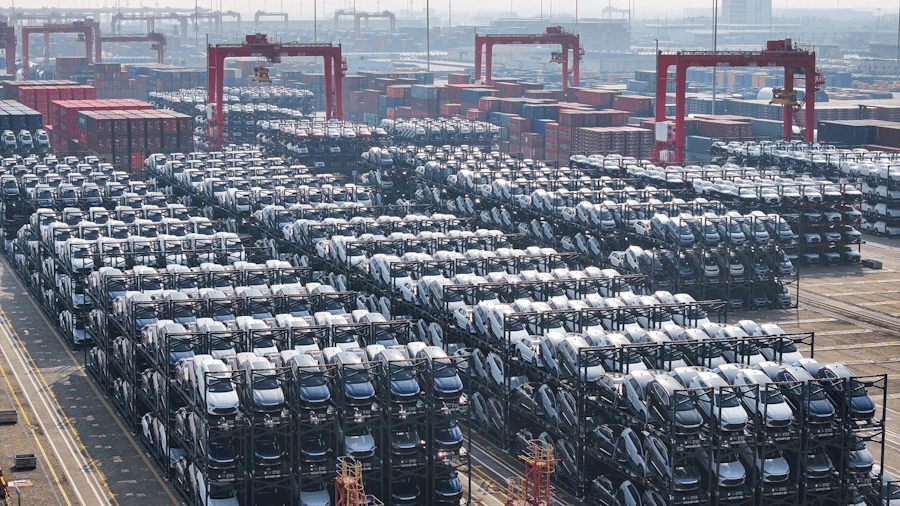
Canada’s decision to allow Chinese electric vehicles into the country could negatively affect crucial upcoming trade negotiations with the United States, automobile industry representatives told MPs.
The leaders of two industry groups representing Canadian operations of American and global carmakers testified in the House of Commons science and research committee on April 20. The committee is studying the implications of Ottawa’s deal allowing up to 49,000 Chinese electric vehicles to enter Canada at a preferential tariff rate.
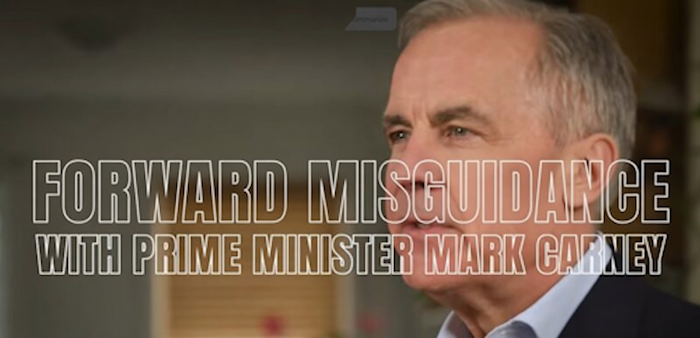
Was the timing of Mark Carney’s feel-good “fireside chat” video released Sunday mere coincidence, landing as it did the day before concerning inflation numbers?
Or was it a deliberate calculation to point out that Canadian fur traders were all over the northern plains before the Americans had left St. Louis, a day ahead of confirmation that consumers are now paying $2.50 for a single bloody cucumber?
Prime Minister Mark Carney has released the names of his new advisory committee on Canada-U.S. economic relations.
The list includes experts, industry and union leaders and retired high-profile politicians such as former Quebec Premier Jean Charest, former Conservative leader Erin O’Toole and former Conservative cabinet minister Lisa Raitt.
According to a government statement, the committee will serve as a forum where members can develop strategy for how Canada should approach its economic relationship with the U.S.
OTTAWA — Prime Minister Mark Carney’s view that Canada’s “weakness” stems from its longtime close trade ties with the U.S. was mocked by the Conservatives Monday, and met skepticism by an Eastern premier who warned it will likely further anger the U.S.
In a video message posted Sunday on YouTube, Carney said the U.S. “has fundamentally changed its approach to trade, raising its tariffs to levels last seen during the Great Depression. Many of our former strengths, based on our close ties to America, have become our weaknesses, weaknesses that we must correct.”
The idea keeps coming back. A French politician mused about it in Berlin last month. A Finnish leader visiting Ottawa this April didn’t dismiss it out of hand.
Fresh polls show a majority of Canadians would support it.
And in an era when the United States has turned on its closest allies, the question has acquired a new urgency: Could Canada join the European Union?
Carney is prepping the Elbow people to be ready for a Canada in steep decline. A decline he orchestrated.
Prime Minister Carney’s message today was largely expected.
The warning signs have been there for months, especially as he increased his international travel. We’ve also reached this point because he has not delivered on his key promise to secure a deal with the United States—a… pic.twitter.com/ajtKhuDRWi
Prime Minister Mark Carney says Canada’s ties to the U.S. have become “weaknesses” that must be corrected, as workers in Canada’s auto, steel and lumber industries remain under threat due to U.S. President Donald Trump tariffs.
“The U.S. has fundamentally changed its approach to trade, raising its tariffs to levels last seen during the Great Depression,” Carney said in a video posted to YouTube on Sunday morning.
“Many of our former strengths, based on our close ties to America, have become weaknesses — weaknesses that we must correct.”
TORONTO — Canada’s Conservatives are ratcheting up attacks on Prime Minister Mark Carney for moving too slowly to secure a trade deal with President Donald Trump, opening a new political fight in a dispute with consequences on both sides of the border.
This is becoming a wedge issue in Ottawa because the closer the deadline for a review of the North American trade agreement gets, the easier it is for Conservatives to argue Carney is failing to shield Canada from a U.S. trade offensive he has repeatedly promised to stop.
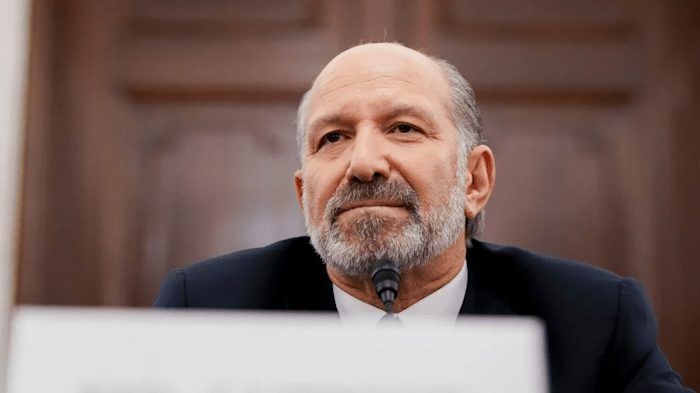
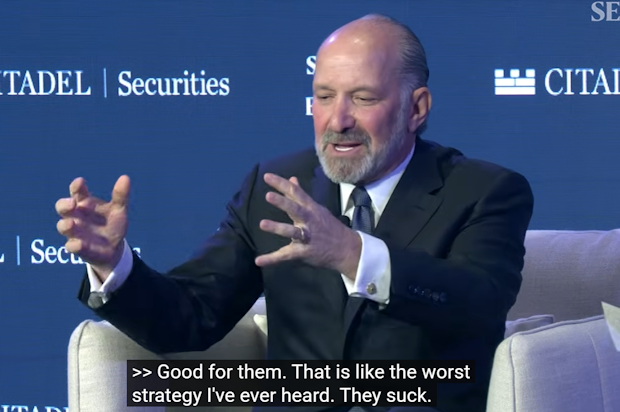
Howard Lutnick, the U.S. secretary of commerce, said on Friday that President Trump was committed to reining back the North American trade deal and blasted Canada for its trade negotiating strategy, adding, “they suck.”
Mr. Lutnick, who was speaking at a conference organized by the media outlet Semafor, was particularly critical of Canada’s effort to push back against the Trump administration. He dismissed a former Canadian trade official’s suggestion that Canada could benefit from negotiating more slowly because political pressure on the Trump administration was increasing, as “the worst strategy I ever heard.”
A spokesman for the Department of Commerce said that Mr. Lutnick was describing America’s unfair trade imbalance with Canada and how Canada “sucks off” America’s $30 trillion economy.
Howard Lutnick says USMCA is OVER.
Mark Carney’s BEST deal with the U.S. is about to expire.
US Commerce Secretary Howard Lutnick on Friday slammed Canada as trade negotiators prepare to review the US-Mexico-Canada Agreement this year.
Asked at Semafor World Economy in Washington, DC, about Canada’s former trade chief suggesting time is on Canada’s side in the talks, Lutnick responded: “That is like the worst strategy I’ve ever heard. They suck. They — look, we are a $30 trillion economy, right?”
Canadian Prime Minister Mark “Carney has a problem with us; he gets on a plane and he goes to China,” Lutnick continued. “Does he think China’s… going to buy his stuff? China is an entirely export-driven economy. So what did he do? He came back and said, ‘Oh, we’ll take their electric cars.’ I mean, is this nuts?”
The Canada stuff starts at the 13:00 minute mark and it isn’t good news.
Worse is that Lutnick speaks highly of the Japanese, Koreans and also Europe for their efforts in striking the sort of deal Canada can only dream about.
Canadians aren’t used to being hated by the United States. Stereotyped, sure. Ignored, absolutely. But hated?
We got a taste of it during Donald Trump’s first term. There were tariffs and lies and lots of weirdness then, too. But it seemed to be more between chummy adversaries, rather than outright enemies.
Well, something happened in the intervening four years. Between rounds of golf and trial dates, Mr. Trump seemed to nurture a white-hot animosity toward Canada, for reasons that escape any balanced mind. The MAGA hordes dutifully hopped on the bandwagon, all riled up over the latest scapegoat to be served up to them.
With the future of free trade between Canada and the United States unclear at best, a look to the past could provide hints at where critical exports of energy fit into a deal in the future.
Previous versions of the free trade agreements between the two countries used to include a section called “energy proportionality,” which restricted Canada from reducing the percentage of its total oil, gas or similar exports to the United States — even in the event of an emergency.
WASHINGTON, D.C. — Grocery prices are elevated, gas prices are high, job markets are cooling, and U.S. President Donald Trump is sticking to his tariff plans while the world eyes a shaky ceasefire with Iran.
The two-week truce this week between the U.S. and Iran has raised hopes and markets while lowering oil prices somewhat — Brent is now in the mid-US$90s per barrel, down from a conflict peak of $120 — but there are already signs that peace may not last: There are disagreements over Lebanon’s inclusion in the ceasefire, Israel is vowing to continue hitting Hezbollah, and Tehran has said continued hits on Lebanon render any negotiations pointless.
Prime Minister Mark Carney has consistently argued that Canada currently has the best trade deal with the United States, with roughly 90% of Canada-U.S. trade shielded from President Donald Trump’s tariffs thanks to the Canada-United-States-Mexico Free Trade Agreement (CUSMA).
He’s not wrong that the CUSMA has shielded Canada from the brunt of Trump’s tariffs. In fact, Canada would be in a deep recession today if such a large portion of cross-border trade weren’t protected by the CUSMA.