China Hacked Treasury Dept. in ‘Major’ Breach, U.S. Says

A state-sponsored actor in China hacked the U.S. Treasury Department, gaining access to the workstations of government employees and unclassified documents, the Biden administration said on Monday.

The announcement comes after revelations in recent months that China had penetrated deep into U.S. telecommunications systems, gaining access to the phone conversations and text messages of U.S. officials and others.

In a letter informing lawmakers of the episode, the Treasury Department said that it had been notified on Dec. 8 by a third-party software service company, BeyondTrust, that the hacker had obtained a security key that allowed it to remotely gain access to certain Treasury workstations and documents on them.

Share

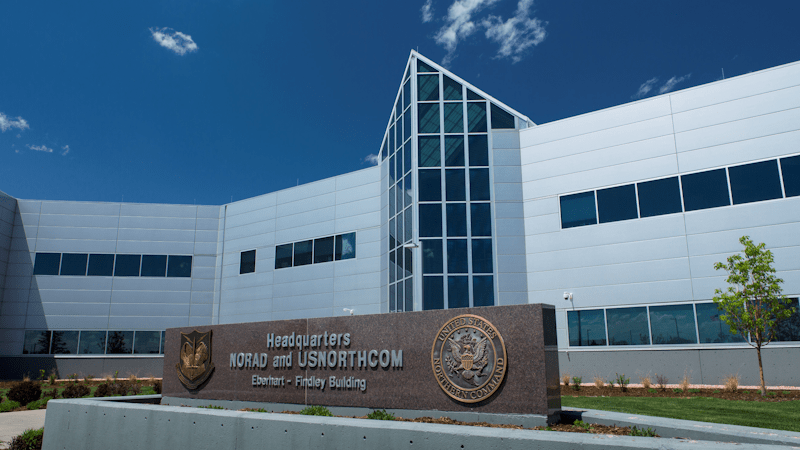
Norad paying ‘full attention’ to Chinese-Russian air co-operation

The head of the North American Aerospace Defence Command says Chinese and Russian air co-operation in the Arctic has Norad’s “full attention.”

Those two countries for the first time staged a joint patrol in the Arctic near the coast of Alaska last July.

U.S. Gen. Gregory Guillot told The Canadian Press in a year interview that it potentially takes decades for two nations’ militaries to reach “full integration” at a level like the U.S. and Canada.

Share

Why liberals keep losing

They ignore America’s real majority

At home: disorder in the streets and a rising tide of drugs. Abroad: a shameful, humiliating withdrawal from an Asian outpost of empire. In politics: a conservative demagogue, backed by the silent majority, sweeps aside an ineffectual liberal stooge. In culture: fights over abortion, and women, and music, all conjuring a feeling that the republic is doomed. Am I talking about pot and Saigon and the sweep of Richard Nixon, or fentanyl and Kabul and the return of Donald Trump? I could be describing either, for both 1968 and 2024 feel like chaotically epochal years in the American story. Nor are these the only similarities between past and present. Just as in the Sixties, liberals today are faced with an urgent question: what now?

The answer, I think, is epitomised in a single book. Written by Ben Wattenberg and Richard M. Scammon in 1970, The Real Majority: An Extraordinary Examination of the American Electorate charted the political centre in the new Nixonian age. Over half a century on, it still offers deep insights for navigating a society in flux, even as it shrewdly leavens its electoral insights with clear and evocative language. Especially with Donald Trump the new American leviathan, moreover, The Real Majority offers another enduring truth — if liberals fail to occupy the heartland of American politics, wily conservatives will rush to get there first.

Share

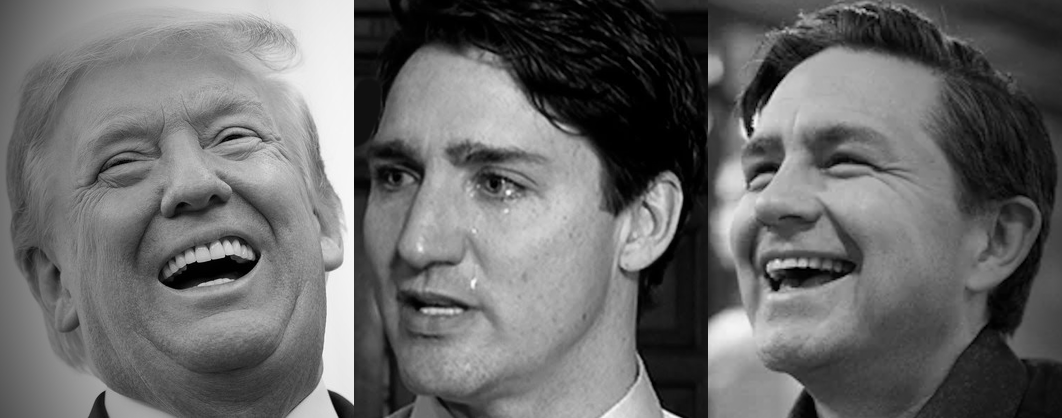
‘Hot mess’: Trudeau’s turmoil draws Trump’s taunts

TORONTO — Canada’s government is melting down at the worst possible moment.

The country is girding for the return of Donald Trump, who many here see as an existential threat to Canada’s security. He has threatened to slap 25 percent tariffs on Canadian goods, levies that could crush the economy of a country that sends nearly 80 percent of its exports to its southern neighbor.

And he has taken to mocking embattled Prime Minister Justin Trudeau as the “governor” of the “great state of Canada” in middle-of-the-night social media posts that officials here have sought to cast as lighthearted ribbing but others view as not-so-neighborly and not-so-funny. On Christmas, he said he’d pitched hockey great Wayne Gretzky on becoming Canada’s next prime minister.

Share

Chinese Telco Hack of America Far Worse Than We Imagined

Back in October, I wrote about the Chinese cyberattack that penetrated our telecommunications system, arguing that the damage done was unimaginably large.

At the time the government was releasing information in dribs and drabs. The spooks let us know that the breach was serious but made all sorts of noises about how the breaches were relatively limited and only affected individuals who the American government was already tracking for some reason.

Share

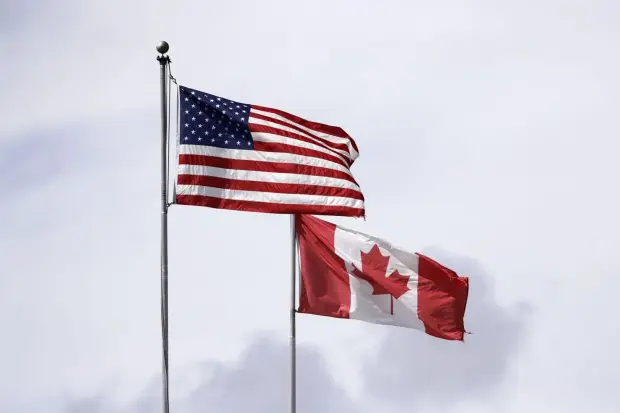
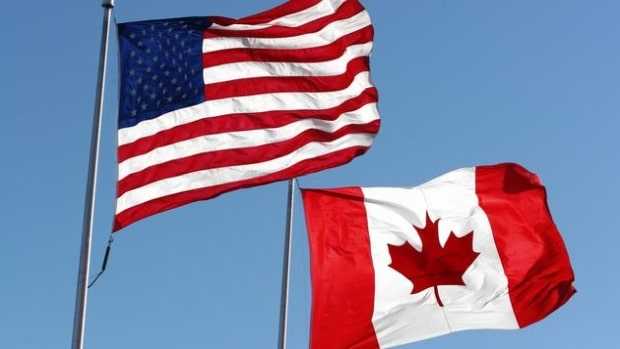
Are Canada and the United States now back on a path towards political and cultural convergence?

Holiday dinners are sometimes about making the best of an awkward situation, forcing smiles and exchanging pleasantries with people you’d rather not be sitting next to for very long. That’s just what Justin Trudeau did at the end of November, when he flew to Florida to dine with the incoming president of the United States. There is no bromance between Mr. Trudeau and Donald Trump, but their neighbouring countries are still better off when they can find a way to fake it, at least long enough to get from the appetizer to dessert.

Share

Trump team says Canada, Greenland, Panama comments are part of a broader plan

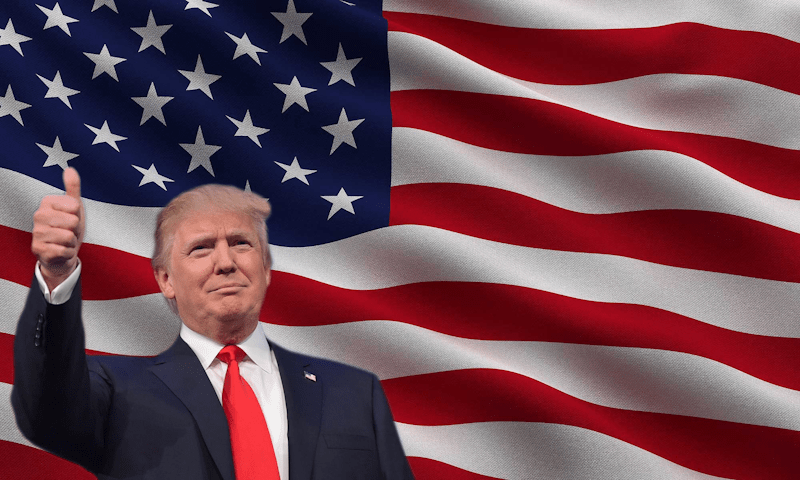
In the past several weeks — and before he has been sworn in for his second term — President-elect Donald Trump has threatened trade wars with both of the United States’ closest neighbors, mused about taking over Greenland, blustered about bringing the Panama Canal back under American control and suggested making Canada the 51st state.

Less than a month before his inauguration, Trump — who vowed to end foreign wars and made “peace through strength” a rallying cry of his 2024 presidential campaign — is crafting an “America First” foreign policy defined by antagonism toward U.S. allies and adversaries alike, centered around dreams of territorial expansionism, and channeled through the president-elect’s braggadocio.

Share

Immigration Moratorium Now

There is no MAGA without a restoration of immigration sanity.

For the past few days, certain highly visible elements of the MAGA coalition have been sparring with one another. Specifically, X users have been privy to an extensive immigration policy flame war between two competing MAGA coalition camps: the pro-immigration “tech bros,” on the one hand, and the nationalist-populist immigration restrictionists, on the other hand. The debate has focused, above all, on the thorny question of so-called high-skill immigration. A Politico headline summarized the dispute as “Elon Musk vs. Stephen Miller.”

Share

American-Canadian Border, Following ‘Extraordinary’ Surge of Migrant Encounters, Emerges as Immigration Hotspot

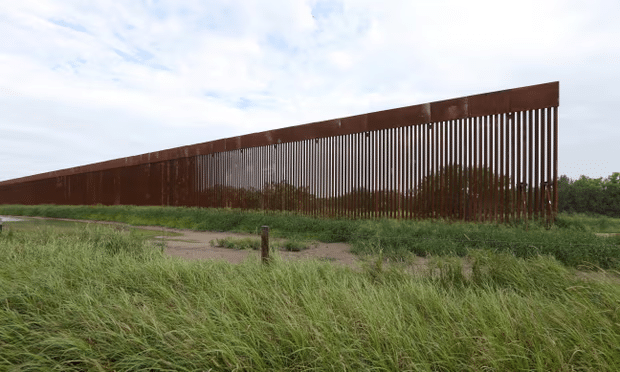
“An extreme national security vulnerability” is how the incoming border tsar, Tom Homan, describes the American-Canadian border, foreshadowing what is sure to be a focal point of the incoming Trump administration.

Canada’s border with America — the longest in the world, spanning more than 5,500 miles — has recently seen an explosion of illegal crossings. The Border Patrol tracked nearly 24,000 migrant encounters in fiscal year 2024 — more than double the roughly 10,000 encounters in the previous year and more than ten times the number from two years ago.

Share

Criminologist Says Canada Should Better Track Foreign Student Departures

A Canadian criminologist who once worked on inland immigration enforcement for the Canada Border Services Agency said Canada needs to better track foreign nationals who arrive in the country on student visas.

Kelly Sundberg, a professor at Mount Royal University, said he was not shocked to hear that Indian law enforcement agencies are investigating links between Canadian colleges and a scheme to ferry international students across the Canada-U. S. border.

“I’m not surprised that our ridiculous honour-based immigration program is being gamed by transnational criminals. That doesn’t surprise me at all,” Sundberg said.

Share

No commitment from Trump team to drop tariff threat after meeting with Joly, LeBlanc in Florida

Two of Prime Minister Justin Trudeau’s top cabinet ministers met Friday with two of U.S. president-elect Donald Trump’s cabinet picks in an attempt to stave off the looming prospect of tariffs on Canadian exports.

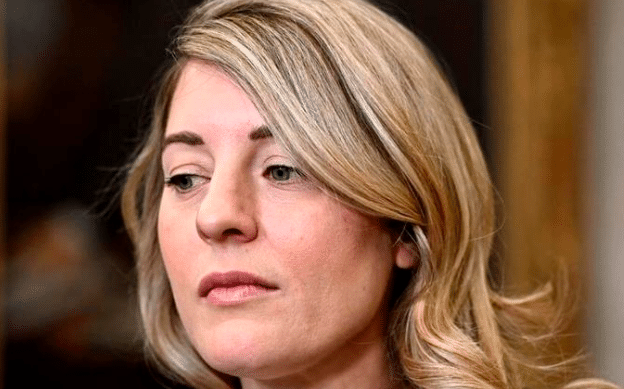
Foreign Affairs Minister Mélanie Joly and Finance Minister Dominic LeBlanc flew to Florida to brief the presidential transition team on the government’s plan for improving border security and to make the case that Trump’s threat of steep tariffs on all Canadian exports to the U.S. would damage both countries’ economies.

Share