Christopher Coates: Canada should double down on NORAD, not walk away

Christopher Coates: Canada should double down on NORAD, not walk away

The recent Walrus article “Why Canada Needs to Walk Away from NORAD” points to the Netflix thriller “A House of Dynamite” and suggests that among the very “realistic” aspects of the film is the absence of Canadians from the command centres involved in the response to a nuclear attack on the U.S. or North America. Like the film, that suggestion is a fiction.

Share

‘One decision will not kill Norad,’ U.S. ambassador says of Canada’s possible mixed fighter jet fleet

‘One decision will not kill Norad,’ U.S. ambassador says of Canada’s possible mixed fighter jet fleet

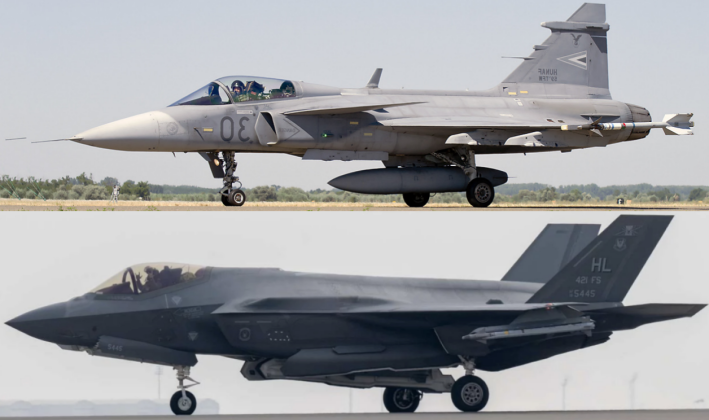
OTTAWA – U.S. Ambassador to Canada Pete Hoekstra says when it comes to Canada’s ongoing F-35 fighter jet review, a potential mixed fleet will not put Norad in jeopardy.

“One decision will not kill Norad,” Hoekstra said in an exclusive broadcast interview with CTV News chief political correspondent Vassy Kapelos.

“What we’re always going to look for is what is the total capability that we believe we need to keep America safe, that we need to keep North America safe, the Western Hemisphere safe from the threats that are out there,” he later added.

Share

NORAD pact would change if Canada pulls back from F-35 order, warns U.S. ambassador

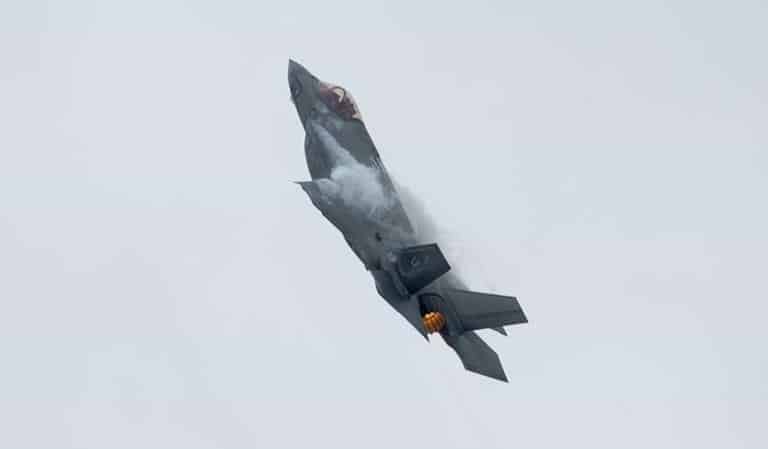
U.S. President Donald Trump’s ambassador to Canada is warning of consequences to the continental defence pact if Canada does not move forward with the purchase of 88 F-35 fighter jets.

“NORAD would have to be altered,” U.S. Ambassador to Canada Pete Hoekstra told CBC News in an exclusive interview at Luke Air Force Base in Arizona.

He says the United States would likely need to purchase more of the advanced fighter aircraft for its own air force, and would fly them more often into Canadian airspace to address threats approaching the U.S.


I think Canada will come to resemble the Albania of the Soviet era.

Share

Norad paying ‘full attention’ to Chinese-Russian air co-operation

The head of the North American Aerospace Defence Command says Chinese and Russian air co-operation in the Arctic has Norad’s “full attention.”

Those two countries for the first time staged a joint patrol in the Arctic near the coast of Alaska last July.

U.S. Gen. Gregory Guillot told The Canadian Press in a year interview that it potentially takes decades for two nations’ militaries to reach “full integration” at a level like the U.S. and Canada.

Share

Trudeau gov’t dragging its feet on NORAD modernization

Documents reveal why Trudeau government needs to speed up NORAD modernization, expert says

OTTAWA—The federal government is off to a slow start on its 20-year plan to improve Canada’s contribution to the North American Aerospace Defence Command (NORAD) that it shares with the United States, new documents show.

Tabled in Parliament last week in response to a written question from Conservative MP Bob Zimmer, the documents detail how much money was spent over the first two years of the government’s $38.6-billion “NORAD modernization” plan. As of June this year, the government had spent $69.7 million on the initiative, more than half of which was used for expanding internal government services to start shepherding through the promised projects, which include new radar and communications systems, the documents show.

Trudeau would weaken the ability of NORAD to track Santa.
Share

Outgoing Norad commander says Canada, U.S. too slow to adapt to threats

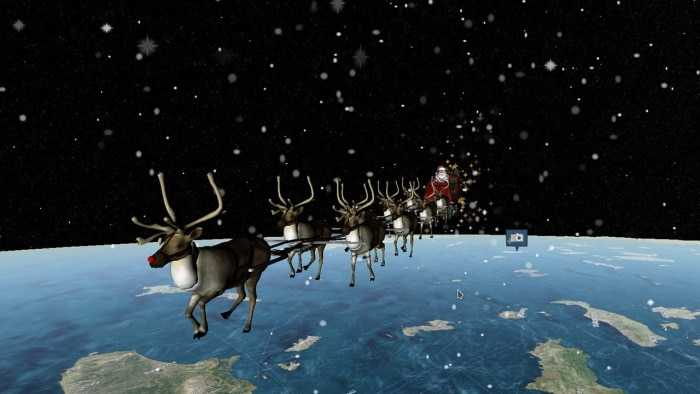
OTTAWA – In a world of uncertainty, there is one critical mission the North American Aerospace Defence Command can count on every year: tracking Santa Claus.

On Sunday, millions of people will log onto the specialized website and social media channels that depict the jolly old elf’s magical journey as he and his reindeer visit children around the world.

More than 60 years after it began, the Santa tracker is a beloved holiday tradition and a powerful public-relations opportunity for the binational agency dedicated to defending North American airspace.

Share

China’s Balloons Draw Attention to an Overlooked Canada-U.S. Partnership

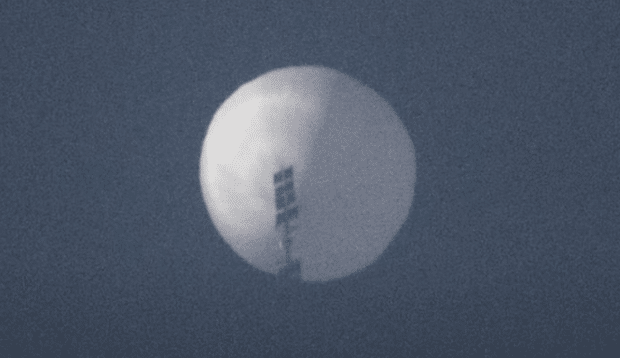
The interest in balloons, other than the party and clown varieties, has recently reached levels perhaps not seen in Canada since the 19th century.

It all began, of course, with a giant Chinese surveillance balloon that floated above British Columbia before drifting around the United States and ultimately being blown up by the United States Air Force over the Atlantic. Since then, three other objects have met a similar fate including one brought down over Yukon and another shot down above Lake Huron.

Share

A plan to plug gaps in the continent’s Arctic defence shield faces roadblocks

Despite the ballyhoo that surrounded last year’s announcement, it’s becoming clear that the modernization of North American air defence systems — a plan to spend $4.9 billion over six years — has a long way to go and a number of key technical obstacles to overcome.

The Trudeau government announced the long-anticipated NORAD modernization plan back in June during the run-up to the NATO leaders summit — a tense gathering where alliance members, sobered by the war in Ukraine, were expected to show how serious they are about defence spending.

Share