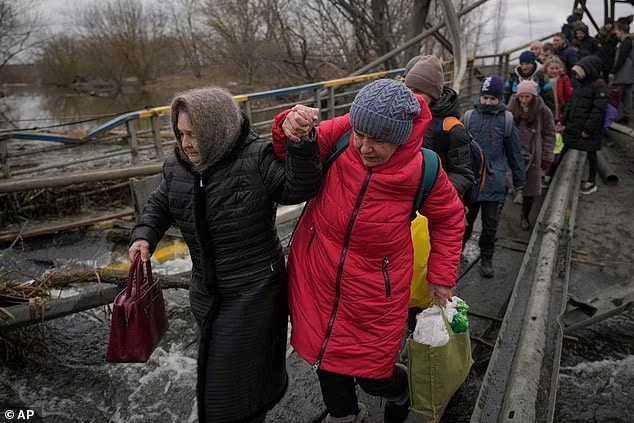
Is journalism really having a ‘good war’?

Or has too much reporting from Ukraine emphasised emotionalism over analysis?

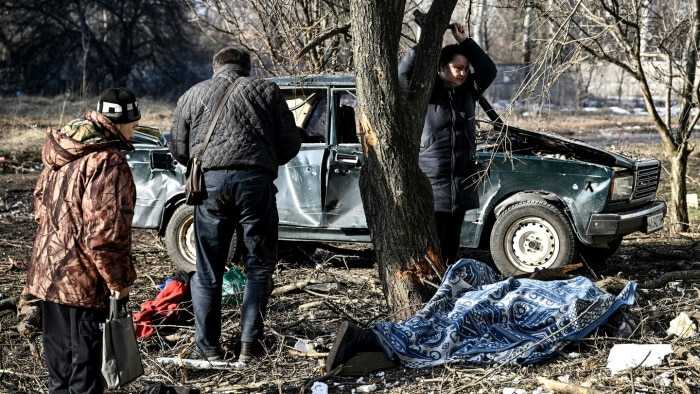
The Russian invasion of Ukraine is an historic international crisis that demands serious reporting of what’s happening and sober analysis of why. But is the war always getting the war journalism it deserves?

British and Western journalists covering the conflict have been widely praised. There is an apparent consensus that journalism is, as the old saying goes, ‘having a good war’.

Share

Putin understands America’s moral decay

He and Xi Jinping think we’re weak and dissolving from within. Could they be right?

Last October, Vladimir Putin aired a speech to the Russian nation chiding the United States for its moral decay. He observed an America “blotting out whole pages” of its history, pursuing “reverse discrimination against the majority in the interests of minorities,” and renouncing time-honored values in an effort at “public renewal.”

“It’s their right, but we are asking them to steer clear of our home,” he warned. “We have a different viewpoint.” This iteration of family values and conservative critique went barely noticed by the American press at the time.

Share

Russia Has Suffered a Crushing Moral Defeat. And Russians Know It.

MOSCOW — Shock and shame.

That’s the response of many Russians to the sight of rockets and artillery shells hitting Ukrainian tower blocks that in their concrete uniformity could easily be in Moscow. The towns through which Russian armored vehicles are rolling, captured in shaky videos and accompanied by howls of horror, could be Voronezh or Krasnodar or any Russian city. The invasion of Ukraine is a waking nightmare, horrible and absurd.

And it’s being done in our name. Feb. 24, when President Vladimir Putin announced the invasion, is the day Russia became an outcast, despised nation, not just economically isolated but actively shunned by the rest of the world — in sports, science and most other kinds of international cooperation. Whatever military “victory” Mr. Putin might find acceptable in his twisted mind, Russia has already suffered a crushing moral defeat.

Share

Canada prepared to welcome an ‘unlimited number’ of Ukrainians fleeing war, minister says

Immigration Minister Sean Fraser announced Thursday the federal government has created two new pathways for Ukrainians fleeing their war-torn country to come to Canada — part of a plan to accept an “unlimited number” of people who want to leave.

To start, Fraser said his department has created a new visa category that will allow a limitless number of Ukrainians to come to Canada to live, work or study here for up to two years.

People accepted under the Canada Ukraine Authorization For Emergency Travel program will have an open work or study permit and employers will be free to hire as many Ukrainians as they want.

Share

Ukraine: Amateurs dig in to fight Russian troops from Kyiv forests

Day by day, Kyiv grows more tense.

Checkpoints, barricades, and roadblocks radiate from the imposing streets in the city centre to the motorways on the outskirts. Spiky metal tank traps – called hedgehogs – have mushroomed at strategic locations. Troops are more alert, checking every car. Some still smile and say “welcome”, but many look distracted, already focusing on the battle to come.

It feels like Ukrainian forces in the capital are poised and ready to fight. This ancient city – with its elegant facades and onion domed churches – is now on a war footing.

Share

Russia’s Looming Economic Collapse

This is terra incognita for economic policy. No country has ever faced this kind of global freeze-out.

The war in Ukraine is being fought on two battlefields. The first battlefield is geographic. It is the land Russia is tearing up with tank treads and pounding with missiles.

The second battlefield is made up not of physical particles, but rather of relationships—contracts and promises between nations, banks, companies, and individuals. This is the economic arena.

Share

Freeland warns Canadians against fighting for Russia in Ukraine

OTTAWA — Deputy Prime Minister Chrystia Freeland is warning Canadians against fighting for Russia in Ukraine, saying anyone who does so could face severe consequences.

Freeland issued the warning during a news conference in Ottawa today, where she announced further sanctions against Russia over its invasion of Ukraine.

The deputy prime minister said Canada believes Russia’s attack is illegal, implying anyone fighting for the Russian side could be breaking international law.

Share

Ukraine’s Volunteer ‘IT Army’ Is Hacking in Uncharted Territory

The country has enlisted thousands of cybersecurity professionals in the war effort against Russia.

VLADIMIR PUTIN’S ATTACK on Ukraine has been met with fierce resistance throughout the country’s towns and cities. As Russian forces have moved closer to Kyiv, lawyers, students, and actors have taken up arms to defend their country from invasion. They are not the only ones: Volunteers have also flocked to join a Ukrainian volunteer “IT Army” that’s fighting back online.

At around 9 pm local time on February 26, Ukraine’s deputy prime minister and minister for digital transformation, Mykhailo Fedorov, announced the creation of the volunteer cyber army. “We have a lot of talented Ukrainians in the digital sphere: developers, cyber specialists, designers, copywriters, marketers,” he said in a post on his official Telegram channel. “We continue to fight on the cyber front.”

Share

Ukraine, Russia make progress on evacuation corridors as war rages

Russia and Ukraine have agreed on the need to set up humanitarian corridors and a possible ceasefire around them for fleeing civilians, both sides said after talks on Thursday, in their first sign of progress on any issue since the invasion.

But while Russian negotiator Vladimir Medinsky said the talks had made “substantial progress,” Russian invasion forces surrounded and bombarded Ukrainian cities as the conflict entered its second week.

Share

Buttigieg on Keystone Pipeline amid Ukraine Invasion: We Don‘t Want ‘Permanent Solutions‘ to Short Term Problems

Transportation Secretary Pete Buttigieg said Wednesday on MSNBC’s “The 11th Hour” that to combat oil prices skyrocketing amid the Russian invasion of Ukraine, President Joe Biden did not want to authorize the Keystone Pipeline.

According to Buttigieg, it would be “galloping after permanent solutions to immediate short term problems.”

Share

Putin’s Foreign Minister Sergei Lavrov likens the US to Nazi Germany and repeats warning that WW3 ‘can only be nuclear’

Sergei Lavrov has repeated his warning that World War Three would be nuclear while at the same time accusing the West of fixating on his dire threats of destruction.

The foreign minister also compared the US to Nazi Germany in his latest rant after Russian forces seized the Black Sea regional capital of Kherson in Ukraine, its first major city after a week of fighting.

Vladimir Putin’s lackey said today: ‘It is clear that World War Three can only be nuclear.

Share

Paskudnyak Putin

Learn the phrase, for historians will be referencing it for generations to come.

Linguists remind us that Paskudnyak is “THE most potent and offensive insult known to man. It has so much connotation that cannot be truly defined that the closest you can come to its meaning is ‘horrible person’…. Use with caution.”

And so with cluster bombs and shattered hospitals, schools, and apartments, Putin has earned the title of Paskudnyak, a description that will accompany him as long as long as there are historians to record the deeds of despots, dictators, and war criminals, who would crush democracy and freedom.

Share

In Canada, world’s second largest Ukrainian diaspora grieves invasion

Every weekend for most of her youth, while other children were out playing, Natalia Toroshenko attended Ukrainian school, studying the country’s geography, language, its history and national heroes.

“Ukraine, and being Ukrainian, is a deep part of me,” she said. “I wasn’t born there, but it’s my ancestral homeland.”

Toroshenko grew up in Montreal, thousands of kilometres away from the country her father had left to flee famine and conflict. But, she like many other Ukrainian Canadians, has maintained strong connections to the country – and watched horrified as family and friends are trapped in war.

Share

Ukraine authorities say seized Russian tanks don’t need to be declared on tax form

It’s not often that tax can lift people’s spirits but Ukrainian authorities may have done just that, assuring citizens that any Russian military equipment they seize won’t need to be declared for tax purposes.

“Have you captured a Russian tank or armoured personnel carrier and are worried about how to declare it? Keep calm and continue to defend the motherland!” Ukraine’s National Agency for the Protection against Corruption (NAPC) said, according to the Ukraine arm of the Interfax news service.

The agency went on to explain there was “no need to declare the captured Russian tanks and other equipment, because the cost of this … does not exceed 100 living wages (UAH248,100) ($8,298).”

Share