
‘I was blindsided:’ Long-time news anchor Lisa LaFlamme speaks out after CTV ends contract

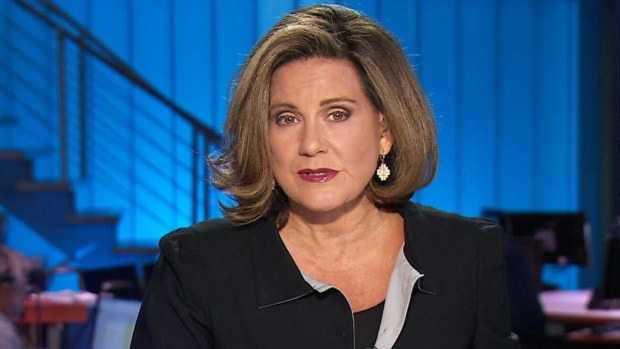
Long-time news anchor and journalist Lisa LaFlamme is speaking out after what she called a “sudden” decision by Bell Media to end her contract with CTV National News.

“On June 29, I was informed that Bell Media made a ‘business decision’ to end my contract, bringing to a sudden close my long career with CTV News,” said LaFlamme in a video posted on social media Monday afternoon.

Share

The Liberal Media and the Criminalization of American Politics

The headline in The Atlantic read this way: “The DOJ Must Prosecute Trump.”

The authors, Establishment lawyers one and all, want Trump criminally prosecuted because of the “evidence” presented by the nakedly partisan, Democrat-run January 6 Committee.

This is the popular theme in today’s media, a guessing game of will-he-or-will-he-not be prosecuted.

Share

Gaslighting: How the Mainstream Media Tries to Drive You to the Left

It’s no secret that the mainstream media has abandoned objective reporting for a long time. The left-leaning — and often more than leaning — narratives from the press aren’t hard to miss.

But there’s more at play than just reporting the news from one particular viewpoint. The mainstream media, along with social media and cultural tastemakers, attempt to lead the public to question anything that doesn’t hew to a far-left narrative. The end result, in the hopeful minds of the media, is that everyone who consumes their media will move to the left politically and culturally.

Share

How the Media Polarized Us

The shift from ad revenue to the pursuit of digital subscriptions has turned journalism into post-journalism.

Public trust in the media has hit an all-time low. Common explanations for this crisis of credibility include bias, polarization, and fake news, but these causes are themselves effects of the tectonic, and generally overlooked, shift in the media’s business model. Throughout the twentieth century, journalism relied for its funding predominantly on advertising. In the early 2010s, as ad money fled the industry, publications sought to earn revenue through subscriptions instead of advertising. In the process, they became dependent on digital audiences—especially their most vocal representatives. The shift from advertising to digital subscriptions invalidated old standards of journalism and led to the emergence of post-journalism.

Share

Broken and distrusting: why Americans are pulling away from the daily news

A Reuters Institute survey found that a rising number of people are avoiding the news or just don’t believe it

This might be just another negative news story. And if it is, there is evidence that many of you will turn away in despair.

The Reuters Institute revealed last month that 42% of Americans actively avoid the news at least some of the time because it grinds them down or they just don’t believe it. Fifteen percent said they disconnected from news coverage altogether. In other countries, such as the UK and Brazil, the numbers selectively avoiding it were even higher.

“In the United States, those who self-identify on the right are far more likely to avoid news because they think it is untrustworthy or biased, but those on the left are more likely to feel overwhelmed, carry feelings of powerlessness, or worry that the news might create arguments,” the institute said.

Share

OH FFS… How close is too close to the far-right? Why some experts are worried about Canada’s MPs

On June 30, Conservative leadership candidate Pierre Poilievre made a choice.

Wearing a crisp blue shirt and a politician’s smile, he walked up to a group of anti-vaccine mandate protesters and led the pack as it walked down Ottawa’s streets.

Beside him marched a man named James Topp, an anti-vaccine figure now set to face a court martial, who had been walking across the country to draw attention to his opposition to vaccine mandates. Topp, however, had recently joined a podcast run by far-right figurehead Jeremy Mackenzie for over an hour, saying that the podcast and others like it “kept (him) hanging on.” Mackenzie said in January that the “Freedom Convoy,” which gathered in Ottawa in February, could “bring down the government.”

The “Experts” are the usual suspects that populate the perpetual anti-conservative media feedback loop. Frankly this expert is concerned that the  world is just too  awful for them. Medication is likely required.

Share

How the Media Used Russiagate Conspiracy Theories to Create a News Cartel

In the fall of 2019, Facebook announced that it would be writing selected media outlets some very big checks. The launch of Facebook News was billed as a way to give consumers more access to information, but it was actually an attempt at appeasing big media companies.

Facebook, with its older and more conservative user base, had become the epicenter of election conspiracies from the Clinton campaign and its media allies. While Hillary Clinton and her associates were eager to shift the blame for her defeat by relaunching their existing Russiagate smears with false claims that Russian Facebook ads had tilted the election to Donald Trump, the media’s obsession with Facebook was even more corruptly self-interested.

Share

The media bubble is real: Study shows massive disconnect between journalists, public

To say there’s a disconnect between many journalists and the public they serve is a gross understatement, according to a new in-depth survey by the nonpartisan Pew Research Center.

Per Pew, 65 percent of the nearly 12,000 journalists surveyed say the media do a solid job of “covering the most important stories of the day” and reporting news accurately. But a solid majority of the American public at large has the opposite view, with just 35 percent feeling the same way. That’s a 30-point perception gap. 

Share

Canadians Increasingly Losing Trust in Media, Study Finds

Only 29 percent of respondents indicated that the media is free from undue political influence, compared to 39 percent in 2017
A study on how people globally engage with the news found that Canadians are increasingly losing trust in the media.
report released Wednesday by the Reuters Institute for the Study of Journalism found that Canadians who place their trust in the news fell from 58 percent to 42 percent over the last four years.
Share

A third of youth avoid reading the news because they are worn out and don’t trust it: poll

Interest in the news, among young people in particular, has reached a new low, according to a global survey.

While engagement dipped for all age groups, the highly valued younger demographic was more prone to avoiding the news, most commonly due to fatigue and the negative effect on how they feel, the 2022 Reuters Institute Digital News Report found.

Share

The Elite Press Remains The Handmaid Of War

Since Russia invaded Ukraine, pro-interventionist accounts have dominated the airwaves and op-ed pages.

Far too often, the elite U.S. press has been a reliable mouthpiece for Washington’s dubious foreign policies. That was true during the Cold War, except for a brief period of disillusionment and dissent once the Vietnam War became such an obvious debacle. That period of more vigorous scrutiny and skepticism did not last long, however. When George H. W. Bush launched his drive for U.S. military intervention in the Persian Gulf to expel Iraqi forces from Kuwait, CNN, the New York Times, the Washington Post, and other elite outlets were fully on board with that agenda, as their shamelessly biased treatment of the relevant issues confirmed. That pro-interventionist bias became even more flagrant during the Balkan crises of the 1990s, the lead-up to the U.S. invasion of Iraq in 2003, and Washington’s subsequent campaigns for forcible regime change in Libya and Syria. There was very little daylight between the official U.S. government positions on those issues and the dominant media narratives.

Share

How the Media Used Russiagate Conspiracy Theories to Create a News Cartel

The alliance between Big Tech and Big Media was sealed with censorship and cash.

In the fall of 2019, Facebook announced that it would be writing selected media outlets some very big checks. The launch of Facebook News was billed as a way to give consumers more access to information, but it was actually an attempt at appeasing big media companies.

Facebook, with its older and more conservative user base, had become the epicenter of election conspiracies from the Clinton campaign and its media allies. While Hillary Clinton and her associates were eager to shift the blame for her defeat by relaunching their existing Russiagate smears with false claims that Russian Facebook ads had tilted the election to Trump, the media’s obsession with Facebook was even more corruptly self-interested.

Share

More people are avoiding the news, and trusting it less, report says

“Large numbers of people see the media as subject to undue political influence…”

June 14 (Reuters) – A growing number of people are selectively avoiding important news stories such as the coronavirus pandemic, Russia’s invasion of Ukraine, and the cost-of-living crisis, according to a report released on Tuesday.

While the majority of people surveyed consume news regularly, 38% said they often or sometimes avoid the news – up from 29% in 2017 – the Reuters Institute for the Study of Journalism said in its annual Digital News Report. Around 36% – particularly those under 35 – say that the news lowers their mood.

Trust in news is also declining, and is lowest in the United States. On average, 42% of people said they trust most news most of the time; that figure has fallen in almost half the countries in the report and risen in seven.

Share