
According to CDC Director Rochelle Walensky, the CDC will be expanding its surveillance at four major international airports in an attempt to see whether the Omicron variant of COVID is present in travelers into the U.S.
According to CDC Director Rochelle Walensky, the CDC will be expanding its surveillance at four major international airports in an attempt to see whether the Omicron variant of COVID is present in travelers into the U.S.
I often feel like I’m banging my head against the wall, trying to get through to complacent Canadians, who seem to politely accept anything the government throws their way, no questions asked.

Back in 2016, I was one of the lone voices who spoke out against Bill C-16, Canada’s gender-identity legislation, testifying at the Senate that enshrining gender identity in law would likely result in the nullification of women’s sex-based rights. All my fears came to fruition – and more – as males who identify as ‘transwomen’ are being transferred to women’s prisons, allowed access to shelters for women escaping domestic abuse, permitted to use women’s and girls’ changing rooms and washrooms, and dictating what women may and may not say about all of this.
… The review agency’s legal assessment of the measures looked at requirements in the CSIS Act that the spy service have “reasonable grounds to believe that a particular activity constitutes a threat to the security of Canada” and that the measure be “reasonable and proportional in the circumstances.”
Most of the measures “satisfied the requirements of the CSIS Act,” the report says.
But in a “limited number of cases” the spy service’s inclusion of people “without a rational link” to the threat meant the measures “were not ‘reasonable and proportional’ as required under the CSIS Act.”
For years, he was only known as Septic Tank Sam — a macabre nickname the RCMP pinned on a disfigured body pulled from a septic tank in rural Alberta in the late 1970s.
But this past summer saw a breakthrough: Septic Tank Sam got his name back.
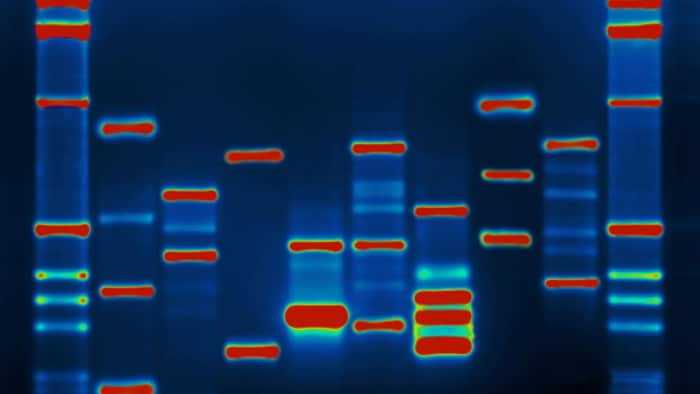
Through a Texas-based DNA lab that uses genetic genealogy, the RCMP in Alberta was able to identify the deceased as Gordie Sanderson, who had been reported missing decades earlier.
Using DNA extracted from his bones, Othram Inc. was able to build a genetic profile by uploading his information to public genetic databases.

Australia embraces the science of control.
At the beginning of this September, the Atlantic — a mouthpiece of the progressive professional managerial class if there ever was one — ran an unexpected article criticizing Australia for its COVID-19 policies. The piece, titled “Australia Traded Away Too Much Liberty,” ponders whether the country’s eliminationist approach toward the virus has rendered it undeserving of the title of liberal democracy.
These proposed areas include automated artificial intelligence sensing technology, counterfeit microelectronic detection, a broadband interoperability platform, biological hazard detection, a mass fatality tracking system, a wearable detector for chemical threats, low cost diagnostic devices, and streamlined airport checkpoint technology for passengers with limited mobility.

A prominent human rights group is leveling some serious concerns over Canada’s proposed online hate speech legislation.
Penned by B’nai Brith Canada, a report entitled How Social Media Algorithms Fuel Hate Speech And Misinformation says the new rules are so far-reaching it would do a better job censoring fair and legitimate comment over actually battling online hate.

The Israeli technology has reportedly been used to spy on journalists and politicians across continents.
The biggest spy scandal of the year has been all but ignored in conservative media. Apart from a freelance story in the Washington Examiner, a conservative reader will be entirely in the dark about the scandal embroiling Israeli cybersecurity firm NSO Group.

The Liberal government’s upcoming legislation to address “online harms” could undermine Canadians’ freedom of speech and render diasporas from authoritarian countries more vulnerable, says the director of an internet security advocacy group.
Between July 27 and Sept. 25, the federal government held public consultations on its proposal to introduce new legislative and regulatory frameworks for social media platforms that aim to address five categories of “harmful content” online: hate speech, terrorist content, content that incites violence, child sexual exploitation, and non-consensual sharing of intimate images.
The days of working from home while lounging in your sweats and cuddling with your pandemic pet may be over.
Now, employers want to ensure you’re as productive as possible — by using surveillance technology.
Since the start of the pandemic, demand for employee surveillance measures jumped 54%, according to research by online privacy review site Top10VPN.

OTTAWA — Canada’s spy service said on Friday it was increasingly concerned about the rise of violent ideologically motivated online rhetoric, which it blamed in part on tensions caused by the COVID-19 pandemic.
The Canadian Security Intelligence Service (CSIS) said since the start of the pandemic, threats posed by extremists had “evolved with unprecedented multiplicity and fluidity.”
COVID-19, it said, had worsened existing strains of xenophobia and anti-authoritarianism. Violent extremists were exploiting the pandemic by amplifying false information about government measures and the virus, it said.
Another manufactured crisis.
In his years as a welder, David Muhanlal would start the day by checking in with his supervisor. That changed in 2017, when his employer asked its workers to download an app on their phones and clock in and out through that instead.
Mr. Muhanlal didn’t mind too much at first, until one day he left the job site without punching out. He did an errand at a bank, then remembered that he had to clock out.
The next morning, he says, his supervisor was livid about the mistake. Mr. Muhanlal understood the clock-out time was wrong – but he was disturbed to learn that his supervisor knew his exact whereabouts in the 20 minutes he was off-site, because the mobile app’s GPS locator had followed him every step of the way.
THE Behavioural Insights Team (BIT) have a busy remainder of the year ahead of them. The government’s ‘Nudge Unit’, whose chief executive Professor David Halpern and director Hugo Harper sit on Sage sub-group SPI-B, are about to embark on a psyops campaign to manipulate the populace into decarbonising their lifestyles: a project to run concurrent with their autumn and winter attack on ‘potential superspreaders’ – the unvaccinated people earmarked for blame for the re-introduction of any public health interventions in the coming months.
Their latest report titled ‘The Power of TV: Nudging Viewers to Decarbonise their Lifestyles’ (November 1, available to download here) marks the beginning of the part-Cabinet-Office-owned group’s attempt to begin prodding the nation toward the mirage of Net Zero, changing how they travel, what they eat, and how they power and heat their homes.

The Liberal government’s proposal to force online platforms to monitor all user content and take down posts they judge to be illegal “will result in the blocking of legitimate content,” says Google.
NSO Group has been placed on a US blacklist by the Biden administration after it determined the Israeli spyware maker has acted “contrary to the foreign policy and national security interests of the US”.
The finding by the commerce department represents a blow to the Israeli company and reveals a deep undercurrent of concern by the US about the impact of spyware on national security interests.
It comes three months after a consortium of journalists working with the French non-profit group Forbidden Stories, including the Guardian, revealed multiple cases of journalists and activists who were hacked by foreign governments using the spyware.
