Canada’s Bill C-34 Would Require ID or Face Scan to Use Social Media

Canada’s Bill C-34 Would Require ID or Face Scan to Use Social Media

Canada’s long-anticipated and dreaded Bill C-34 arrived on June 10 with the usual fanfare about protecting children.

We obtained a copy of the bill for you here.

Marc Miller, the Minister of Canadian Identity and Culture, tabled it.

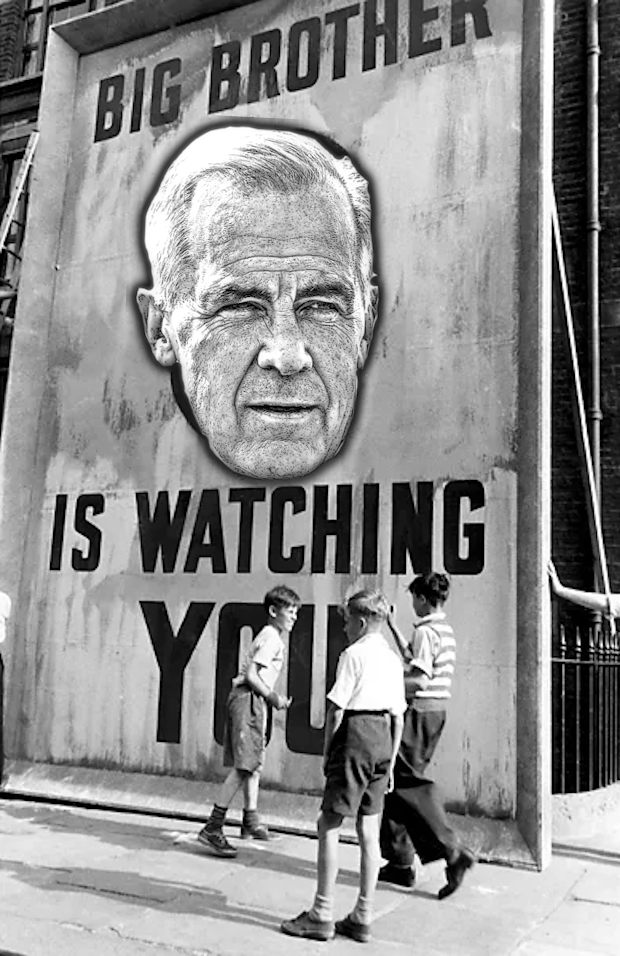
Strip off the press release and what is left is a law that lets an appointed federal body order Canadians’ posts deleted across the country, decide which platforms can give an account to a 15-year-old, and tell AI chatbots to watch what you type.


Bill C-34 LPC Internet anonymity killer

Share

Privacy commissioner says Grok deepfakes violated Canadian privacy law

Privacy commissioner says Grok deepfakes violated Canadian privacy law

OTTAWA — Canada’s privacy commissioner says sexual deepfakes generated by Elon Musk’s Grok artificial intelligence chatbot violated Canadian privacy law and were produced without adequate safeguards to protect Canadians.

Privacy Commissioner Philippe Dufresne released the findings of an investigation Thursday into Grok’s AI image-generation tools, concluding the technology was launched without sufficient consideration of privacy risks and consent requirements.

Share

Surveillance drones deployment on US’s Great Lakes raises data collection fears

Surveillance drones deployment on US’s Great Lakes raises data collection fears

The Great Lakes have rarely ever been considered a hotbed of illicit drug activity or center for illegal immigration.

But that hasn’t stopped US government agencies and the company behind surveillance sailing drones from treating the region as such. The US Coast Guard recently announced it has launched an armada of at least six sailing drones in the Great Lakes this summer in an attempt to, in part, “track illicit activity”.

At 33ft long, Saildrone Inc’s Voyager surveillance vessels can operate for 100 days at a time without needing servicing. The California-headquartered company claims the drones can operate for months without refueling and can “track vessels across wide maritime regions”.

Share

Carney government to ban social media for kids younger than 16, but will allow exemptions

Carney government to ban social media for kids younger than 16, but will allow exemptions

OTTAWA — Prime Minister Mark Carney’s government is expected to table its long-awaited legislation aimed at online safety this week, including a ban on social media platforms for minors.

A government official, speaking on the condition of background, confirmed plans to present a bill in the coming days, which will usher in a path to create a new regulator and target different types of harmful content online.


Better hope you keep your social credit scores high enough to merit “Online privileges”.

Share

Christine Van Geyn: Privacy isn’t a crime, but Bill C-22 acts like it is

Christine Van Geyn: Privacy isn’t a crime, but Bill C-22 acts like it is

Parliament’s public safety committee is currently studying a mass surveillance bill developed by the Carney government. Bill C-22, the Lawful Access Act, is being pilloried by civil liberties experts and the tech industry alike for the potential risk it poses to our privacy online. But legislation like this is only possible because of the profound lack of understanding so many of our elected leaders have about why privacy matters.

Share

Retailers warn they’ll gouge the poor if surveillance pricing outlawed

Retailers warn they’ll gouge the poor if surveillance pricing outlawed

OTTAWA — As the Carney government signals a crackdown on surveillance pricing, major retailers are lobbying for weaker guardrails they argue are necessary for data-based personalized discounts.

But critics argue that’s a talking point used to justify a “creepy” business practice that violates people’s privacy and discriminates against the consumers who ultimately pay a higher price.

Share

BARBER: Canada’s free speech crisis is no accident

BARBER: Canada’s free speech crisis is no accident

Recent Canadian legislation increasingly aligns Canada with approaches taken by the European Union (EU). Canadian Bill C-9, the Combatting Hate Act, passed third reading in the House of Commons on March 25. Both the Canadian Civil Liberties Association (CCLA) and the Canadian Labour Congress (CLC) have expressed significant concerns regarding the provisions of this bill.

Share

When they abolish cash they abolish freedom

When they abolish cash they abolish freedom

A VEXING experience awaits anyone attempting to use cash in Britain. One enters a café, a supermarket, or even a public event carrying legal tender only to discover that physical money is treated as if it were counterfeit currency, and those who still insist on using it are regarded as if they had arrived from another planet. No law has prohibited cash. No decree has abolished it. Yet through countless small refusals repeated across daily life, people learn that participation in the economy involves digital traceability or, more simply, an erosion of privacy.

Share

Carney government abandons Trudeau-era effort to allow human rights complaints on online hate speech

Carney government abandons Trudeau-era effort to allow human rights complaints on online hate speech

OTTAWA — Prime Minister Mark Carney’s government is abandoning efforts by his predecessor to reintroduce into the Canadian Human Rights Act the ability to bring forward complaints of online hate speech.

The controversial provision, known as section 13, was repealed under the former Conservative government of Stephen Harper, with efforts to revive it advanced by former prime minister Justin Trudeau as part of his government’s online harms agenda, which never passed.

Share

Google and Apple rail against Carney government’s police powers bill

Google and Apple rail against Carney government’s police powers bill

OTTAWA — Google and Apple are warning that the Carney government’s effort to make it easier for police and spies to intercept private communications risks opening up “backdoors” in their products that would hinder Canadians’ privacy and make their data vulnerable to malicious hackers.

Officials from the multibillionaire tech giants railed against the legislation that Ottawa has argued would modernize police and spy powers as they testified in front of a parliamentary committee Tuesday, claiming the proposed reforms are overly broad and pose a risk to encryption in a way that could undermine user trust and goes further than other Western countries.


Carney wants to shut down the internet like Iran.

Share

Carpay: ‘Grave Threat to Privacy’: Resistance to Lawful Access Bill Mounts

Carpay: ‘Grave Threat to Privacy’: Resistance to Lawful Access Bill Mounts

Why do Canadians cherish privacy in the first place? If a person has nothing to hide, why should they care if the authorities can read their emails, texts, or AI conversations? Why does Section 8 of the Charter expressly protect Canadians against unreasonable search and seizure?

Even completely innocent people who have nothing to hide rightfully cherish their ability to think, speak, explore ideas, and meet with others, without the state silently observing their every move. If we are not comfortable with a nosy neighbour (or even a close friend!) knowing everything about us, why should we accept the state knowing all kinds of things about our personal lives?

Share

LILLEY: On Bill C-22, Apple, Meta warn that Carney will compromise your data

LILLEY: On Bill C-22, Apple, Meta warn that Carney will compromise your data

On one side, you have the lawyers and executives of every major tech company, every telecom company, every major internet provider all saying that the Carney government’s Bill C-22 goes too far. On the other side, you have Public Safety Minister Gary Anandasangaree saying these companies just misunderstand the legislation.


As a public service lets take a look at what ProtonVPN is saying about C-22…

(more…)

Share

CSIS says transnational investigations are being hindered by Canada’s lack of lawful access powers

CSIS says transnational investigations are being hindered by Canada’s lack of lawful access powers

Canada’s spy agency says the lack of a “lawful access” regime that would give it easier access to Canadians’ digital data has frustrated its ability to help foreign intelligence partners combat transnational threats, including those moving into Canada.

In a rare on-the-record briefing, Nicole Giles, deputy director of policy and strategic partnerships at the Canadian Security Intelligence Service, said that, in one instance, the agency was unable to respond to a request from a “like-minded” foreign intelligence partner to identify suspects found to have Canadian phone numbers.

Share

X Agrees to Review Illegal “Hate” Within 48 Hours Under UK Online Safety Act

X Agrees to Review Illegal “Hate” Within 48 Hours Under UK Online Safety Act

X has agreed to process the vast majority of content flagged as illegal “hate” under the UK’s Online Safety Act within 48 hours, giving Ofcom, Britain’s speech regulator, a significant new enforcement win.

The platform committed to “review and assess UK suspected illegal terrorist and “hate” content reported through its dedicated UK illegal content reporting tool on average within 24 hours of it being reported, to be calculated as a mean” and to “review and assess at least 85% of UK suspected illegal terrorist and hate content reported through its dedicated UK illegal content reporting tool within a maximum of 48 hours.”

Share