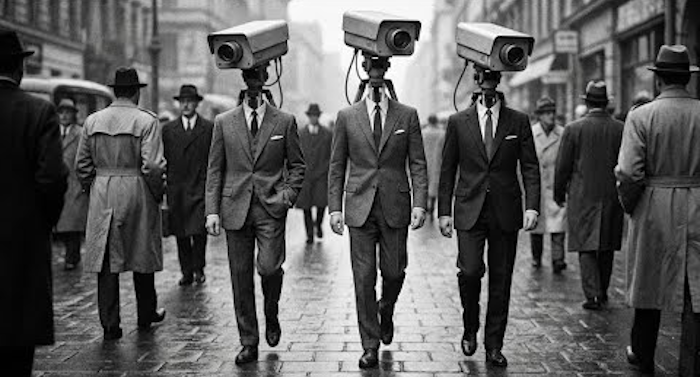

Ontario police are using spyware that lets them remotely take over your smartphone. They’re fighting to keep almost everything about it secret

Ontario police are using spyware that lets them remotely take over your smartphone. They’re fighting to keep almost everything about it secret

When police in Windsor began looking into an alleged international auto‑theft ring in late 2022, they turned to familiar investigative techniques.

Some officers went undercover, others conducted long hours of surveillance, while the courts gave police permission to hide a tracking device in the alleged ringleader’s car and to intercept his cellphone location.

Within a few months, cellphone data placed the main suspect’s phone near 23 car thefts, sometimes hours apart. Yet, police never caught him actually stealing any vehicles.

Share

Bill C-22 Surveils Ordinary Canadians While Leaving Cartel Networks Untouched

Bill C-22 Surveils Ordinary Canadians While Leaving Cartel Networks Untouched

OTTAWA — When The Bureau published its analysis of Bill C-2 last fall, the diagnosis was unsparing.

Ottawa had confused expansion of state power over ordinary Canadians with the enforcement tools Canada actually needs to confront the Chinese Triads, Mexican cartels, and hostile-state networks that have turned Canadian cities into operational platforms for the hemisphere’s most dangerous criminal organizations. The government has now repackaged that same flawed instinct under a new number. Bill C-22, the so-called Lawful Access Act, deserves the same verdict.

h/t Mauser

Share

Ottawa Accused of Lying About Its Own Surveillance Bill on X

Ottawa Accused of Lying About Its Own Surveillance Bill on X

Public Safety Canada is under fire after a social media post trying to downplay its new lawful-access legislation was slapped with a community note on X. Critics and privacy advocates are accusing the federal government of misleading the public about the true scope of Bill C-22.

The backlash started when the official Public Safety Canada account posted on Friday that Part 2 of the bill would not create new authorities for police and CSIS, but would simply ensure electronic service providers have the technical capabilities to respond to court orders.

Share

Canada Says Critics Don’t Understand Its Surveillance Bill

Canada Says Critics Don’t Understand Its Surveillance Bill

Canada’s Public Safety Minister is telling Apple, Meta, and Signal that they don’t understand his own surveillance bill. They understand it fine. That’s the problem.

Bill C-22, the Lawful Access Act, would force telecoms, internet companies, and social media platforms to rebuild their systems so police and the Canadian Security Intelligence Service (CSIS) can access user data more easily during investigations.

h/t patthedog

Share

Bill to help authorities probe online activities raises widespread privacy fears

Bill to help authorities probe online activities raises widespread privacy fears

OTTAWA – A Liberal government bill that would make it easier for police and spies to navigate the online world is running into fierce opposition from major digital companies, civil liberties groups and law professors who say it would open the door to serious privacy infringements.

The government says the bill — “An Act respecting lawful access” — will ensure law enforcement agencies have the legal tools to prevent, investigate and respond to modern crime and protect Canadians in a manner consistent with the Charter of Rights and Freedoms.

Share

Government-Controlled AI Could Enable Surveillance, Impact Free Expression: Report

Government-Controlled AI Could Enable Surveillance, Impact Free Expression: Report

Greater government control over artificial intelligence in Canada could allow increased surveillance of users and discourage people from speaking freely in private interactions with AI systems, according to a Canadian rights advocacy group.

Increased state involvement in AI systems could also lead to routine government access to private conversations and data, according to a May 5 report by the Justice Centre for Constitutional Freedoms (JCCF).

Share

Surveillance pricing is discrimination by another name

Surveillance pricing is discrimination by another name

In 2008, on The Price Is Right, retired meteorologist Terry Kniess gave exactly the correct answer – right down to the dollar! – on two grand prizes. Everyone assumed he had cheated, but he said he hadn’t – instead, he memorized the show’s predictable set of prices.

That mind-blowing feat couldn’t happen today. Companies have made it almost impossible to know when the price is “right,” thanks to endless data collection that changes how much things cost across both time and place. Businesses now commonly use computational systems to track behaviour and traits to figure out what consumers might tolerate paying, to extract the maximum possible amount of money from them. This goes by many names: Algorithmic, personalized, surveillant, or even “snitch” pricing (though some economists see it as the holy grail of market efficiency, since everyone is paying what they are willing to pay). Some companies even claim, weakly, that this data collection helps them to deliver personalized and optimized discounts. But no matter what you call it, the result is discriminatory – even as this variance becomes a dominant feature of the modern economy.

Share

Commons tracks Canadians’ Facebook posts about MPs in internal security files

Commons tracks Canadians’ Facebook posts about MPs in internal security files

House of Commons officials are keeping detailed internal records on what Canadians say about their elected representatives online, including comments posted to social media, according to testimony at a parliamentary committee.

Deputy Sergeant-at-Arms Paul Mellon told MPs the Commons maintains what he described as a “very robust records management system” that catalogues incidents involving members of Parliament, including online remarks that may be critical or offensive.

Share

‘We Know You Live Right Here’: No Secrets in America’s New Surveillance Dragnet

‘We Know You Live Right Here’: No Secrets in America’s New Surveillance Dragnet

Liz McLellan spent a morning in January witnessing the work of federal agents who had arrived in Maine to pursue the Trump administration’s immigration crackdown.

Like other community activists, protesters and passersby around the U.S., McLellan took photos, including of an arrest. Then she followed a federal officer driving an unmarked vehicle to see where the agent was headed next.

McLellan was surprised when the agent led her to her own house and blocked her driveway. Other federal officers quickly arrived, boxing in her car with their own vehicles.

“This is a warning,” an agent told her, according to court records and a video recording. “We know you live right here.”

Share

President Trump Make Us An Offer!

President Trump Make Us An Offer!

Spread the word: Protests against Bill C-9 taking place across Canada on May 1

We’re entering a critical stretch in the fight against the Liberal government’s anti-religion Bill C-9.

This legislation directly threatens our fundamental freedoms of expression and religion, including the ability of Christians to live out their beliefs without fear of government prosecution.

Certain Bible passages will be effectively banned as “hate speech” if C-9 passes in the Senate.


Carney is making annexation more attractive by the day.

I hope the US accepts us as political refugees.

h/t Patti Jo

Share

Child social media bans, the Trojan horse for the State surveillance of adults

Child social media bans, the Trojan horse for the State surveillance of adults

AUSTRALIA’S government was the first to introduce a ban on under-age use of social media platforms. Though the ban, introduced in December for under-16s, likely had some positive effects, many teenagers had little difficulty outwitting the systems designed to lock them out.

The whole saga should serve as a warning to other governments of the folly of attempting to micro-manage children’s access to a widely accessible communications technology. Governments need to take a step back and ask themselves how they can support, rather than supplant, the supervisory role of parents.

Share

A New Online Harms Act Would Mean Canadians Talk Less Freely

A New Online Harms Act Would Mean Canadians Talk Less Freely

Once it was confirmed that, for the first time, Canada would be ruled by a majority government achieved through floor-crossing, it didn’t take long for talk of a renewed Online Harms Act to be proposed.

Heritage Minister Marc Miller was approached after his party—thanks to winning three byelections to hold seats it had previously won in last year’s election and gaining five floor-crossing MPs—had turned a minority government into a majority with unfettered legislative power.

Share

Germany’s Authoritarian Liberals Have Gone Berserk

Germany’s Authoritarian Liberals Have Gone Berserk

Remember when you, a conservative-leaning, patriotic European, were ridiculed and laughed at for fearing that the game was being rigged, that the Left was coming after you, and that the days in which political institutions at least tried to simulate ideological neutrality were gone? Remember being portrayed by the press as a tin foil hat-wearing simpleton for fearing that Chat Control wasn’t actually—or, at least, not primarily—about destroying the horror of child sexual abuse, but, rather, about social, ideological, and therefore political control? Do you recall being painted as a silly conspiracy theorist for doubting that Marine Le Pen’s judicial prohibition from running for the presidency was really just the impartial courts doing their work? Well, the crumbling German government is tired of keeping up appearances: if it has its way, as in all likelihood it will, right-wing critics of the establishment will soon find it difficult to buy a house or any other form of real estate, for that matter. This will be done, they say, in the name of liberty and democracy.

Share

Toronto police’s new counterterrorism unit aims to tackle increase in hate crimes

Toronto police’s new counterterrorism unit aims to tackle increase in hate crimes

The head of the Toronto Police Service’s new counterterrorism squad says that local police forces have a crucial role to play in pre-empting, investigating and enhancing prosecutions around crimes hatched by extremists.

While terrorism investigations typically fall under the RCMP’s federal policing mandate, Toronto Police last month announced the new unit as part of its response to violence linked to the Middle East conflict. Canada’s largest city is grappling with an increase in alleged hate crimes and extremist violence, which include shootings targeting Jewish schools, synagogues sites and businesses, as well as bullets fired last month at the U.S. consulate.

Share

How Canadian military members violated intelligence-gathering rules during COVID-19

How Canadian military members violated intelligence-gathering rules during COVID-19

Canadian Armed Forces members used their own personal social media accounts, computers and networks at home during the COVID-19 pandemic and gathered information about Canadians, violating intelligence-gathering rules, according to a newly released report.

The internal military report obtained by CBC News provides a new look behind the scenes at how a controversial military operation went so wrong.

“Everything you could imagine in a military operation went wrong in this case,” said national security expert Wesley Wark.

Share