EU tourists could soon have to apply for ‘permission to travel’ before entering the UK

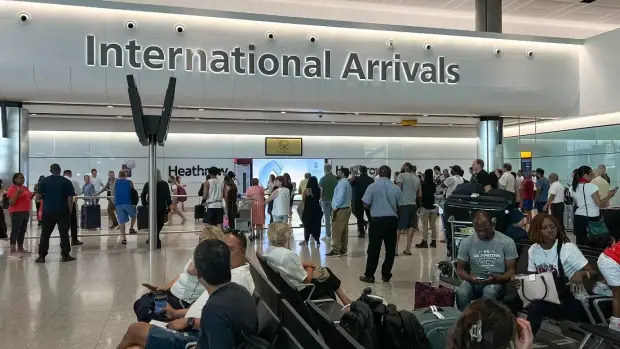
Facial recognition technology could be used to make these “contactless corridors” possible, British newspaper The Times reports. It would require international travellers to submit biographic and biometric details, like photos of their faces through the new Electronic Travel Authorisation (ETA) scheme before they fly.

Share

ArriveCan needs to go – now

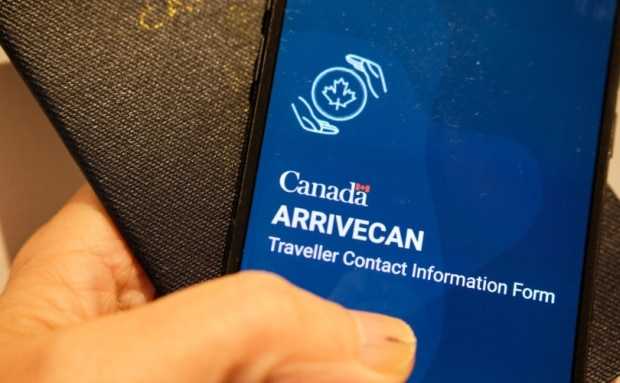
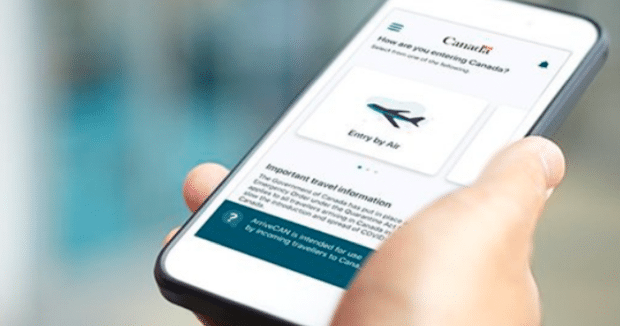
The federal government’s ArriveCan app is stranding travellers abroad and getting elderly Canadians getting fined because they aren’t tech-savvy. Justin Trudeau and Omar Alghabra claimed it was a Covid app, but it’s gradually morphing into a permanent requirement to enter your own country, True North’s Andrew Lawton says. Also, do Canadians want a fall election?

Share

The danger of digital tattoos

This innovation could allow governments to surveil us at all times

Was the Covid vaccine used to inject us with microchips? Obviously not.

However, the idea that medical implants could be used for surveillance purposes isn’t so crazy. The best-known examples are the microchips subcutaneously injected into our pets. Strictly speaking, that’s a veterinary procedure, but the same technology can be used on humans. 

Share

Most people are eager for digital IDs, military defense contractor says

According to Thales, the poll shows that two in three EU residents (66 percent) are eager to start using Digital ID Wallets, that will contain their ID card, driver’s license, and a slew of other official documents and attestations, all accessible on their smartphones.

But Thales Group is not a pollster; it is a French multinational corporation that works with defense, transportation, aerospace, security sectors, and governments, and has been working on implementing the EU’s Electronic Identification, Authentication and Trust Services (eIDAS) since the beginning, 2014.

No wonder then that the white paper based on the survey identifies as a key trend that people in the EU already feel their “identification headaches” are being relieved, and user experience improved, with the advance of digitization.

Share

Are robot police officers RACIST?

Artificial intelligence predicts crime a week in advance with 90 per cent accuracy – but can also perpetuate bias, study shows

RoboCop may be getting a 21st Century reboot, as an algorithm has been found to predict future crime a week in advance with 90 per cent accuracy.

The artificial intelligence (AI) tool forecasts crime by learning patterns in time and geographic locations of violent and property crimes.

Data scientists at the University of Chicago trained the computer model using public data from eight major US cities.

Share

RCMP admits use of spyware to hack phones

OTTAWA, Ont. — In a “remarkable” disclosure, Canada’s national police force has described for the first time how it uses spyware to infiltrate mobile devices and collect data, including by remotely turning on the camera and microphone of a suspect’s phone or laptop.

The Royal Canadian Mounted Police says it only uses such tools in the most serious cases, when less intrusive techniques are unsuccessful. But until now, the force has not been open about its ability to employ malware to hack phones and other devices, despite using the tools for several years. Between 2018 and 2020, the RCMP said it deployed this technology in 10 investigations.

What could go wrong with Lucki in charge?

Share

Feds would hand border agents free pass to your digital life

You’re returning home after a long trip. You’re exhausted, jetlagged, and perhaps irritated because of the lineup at border control. If it’s an overseas flight, you probably slept in your seat – and it shows.

If the federal government gets its way, your fatigue could give border agents a “reasonable general concern” – a made-up standard allowing them to pull you aside without cause and search your emails, browsing and search history, banking, legal or health records and anything else stored or accessible on your phone, tablet or laptop.

Share

Our dystopian future is here now … in China

Four Takeaways From a Times Investigation Into China’s Expanding Surveillance State

China’s ambition to collect a staggering amount of personal data from everyday citizens is more expansive than previously known, a Times investigation has found. Phone-tracking devices are now everywhere. The police are creating some of the largest DNA databases in the world. And the authorities are building upon facial recognition technology to collect voice prints from the general public.

Share

Residents say China used health tracker to prevent freedom of movement

TAIPEI, Taiwan (AP) — Angry bank customers who traveled to a city in central China to retrieve their savings from troubled rural banks have been stopped by a health app on their cellphone.

Chinese residents are required to have the health app, which displays a code indicating their health status, including possible exposure to COVID-19. A green code is required to use public transportation and to enter locations such as offices, restaurants and malls. But some depositors at the banks in central Henan province said their codes were turned red to stop them.

The incident has started a national debate on how a tool designed for public health was appropriated by political forces to tamp down controversy.

The future is scary.

Share

Conservatives say curbing debate on online streaming bill is ‘draconian,’ ‘disturbing’

The federal government is cutting short debate by MPs on its online streaming bill, a move Tory MPs have condemned as “draconian” and “disturbing.”

They say curbing scrutiny of the bill line by line in committee is an attempt by the government to rush it through the House of Commons and will lead to the creation of a “flawed and incoherent” law.

Share

Jesse Kline: C-11 will allow Liberals to control all that you see and hear online

“Sit quietly and we will control all that you see and hear.” These famous words used to usher in viewers of “The Outer Limits,” but they could more aptly describe the designs of the CRTC, the broadcasting regulator that Prime Minister Justin Trudeau’s government seems intent on putting in charge of anything that moves or makes a sound.

Share

Sabrina Maddeaux: The indefensible Liberal plan to search your phone on a whim


This week, Toronto’s Pearson International Airport went viral for all the wrong reasons when former NHL player Ryan Whitney described it as “the worst place on Earth.” Many recent travellers would agree. It appears the airport is running a not-so-limited promotion where all fares include a tour through the nine circles of hell.

But if you think hours-long security and customs delays, passengers held on planes for hours without food or water, staffing shortages and cascading flight cancellations are bad now, just wait until border agents can search through your phone and laptop based on nothing more than “reasonable general concern.”

Share