British Deep State Trained to Surveil Anti-Migration Social Media Posts

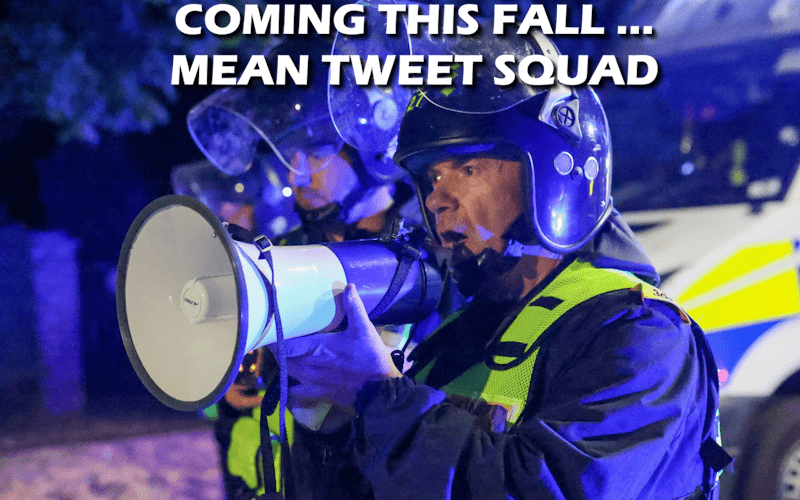
British civil servants are reportedly being trained on how to monitor and push back against so-called “high-risk narratives” on social media, such as posts opposing the mass migration agenda imposed on the country.

A deep state team within the Cabinet Office, the Government Communications Service (GCS), has been tasked by the government with combating supposed “disinformation” while simultaneously promoting the government line through “counter-narratives” online.

Share

The Borehamwood WhatsApp farce shames the speech police

Britain’s WhatsApping parents can sleep a little easier in their beds. Remember the Borehamwood couple, Maxie Allen and Rosalind Levine, arrested in January after they had complained about their daughter’s primary school on a parents’ WhatsApp group? Well, Hertfordshire Constabulary have now conceded that the arrest, at the hands of six of their officers, was unlawful. Better late than never, I suppose.

Share

Britain’s police state unmasked: Map reveals shocking numbers clapped in handcuffs over ‘offensive’ social media posts

Britain’s police state can today be unmasked as the Daily Mail can reveal which forces have made the most arrests for ‘offensive’ posts on social media.

Figures obtained by the Daily Mail show that some forces are making arrests for ‘offensive’ social media posts at ‘extremely concerning’ rates.

Share

Speechcrime

On Britain’s authoritarian turn

It is only appropriate that the head of Britain’s government should be Keir Starmer, a human rights lawyer and former head of the nation’s prosecuting authorities, because Britain now prosecutes its own citizens—if they say the wrong things. The ideology and culture of human rights, whether by design or not, have served to make the country safer for criminals, increase mass illegal immigration, curtail freedom of speech, and entrench a sprawling ideological bureaucracy.

Share

AI, UBI, and the surveillance state

Artificial Intelligence (AI) is rapidly transforming the economy, boosting productivity while simultaneously threatening widespread job displacement. As AI progresses, a growing number of workers face unemployment or precarious employment, fueling political pressure for Universal Basic Income (UBI)—typically understood as unconditional payments aiming to guarantee a basic standard of living.

Share

Ontario sets date to remove speed cameras, temporary signs to be installed

The Ford government’s automated speed enforcement legislation will become law just two weeks after it was first introduced, compelling municipalities to remove speed cameras before roundabouts, speed bumps and flashing lights have been installed.

Transportation Minister Prabmeet Sarkaria said an omnibus red tape bill, which includes the speed camera ban, will receive royal assent next Monday, with municipalities then required to remove the cameras by Nov. 14.

Share

“New Tech Launch” sounds so much nicer than “Surveillance State Citizen Criminalization Cameras”

WRPS hosting public info sessions ahead of new tech launch

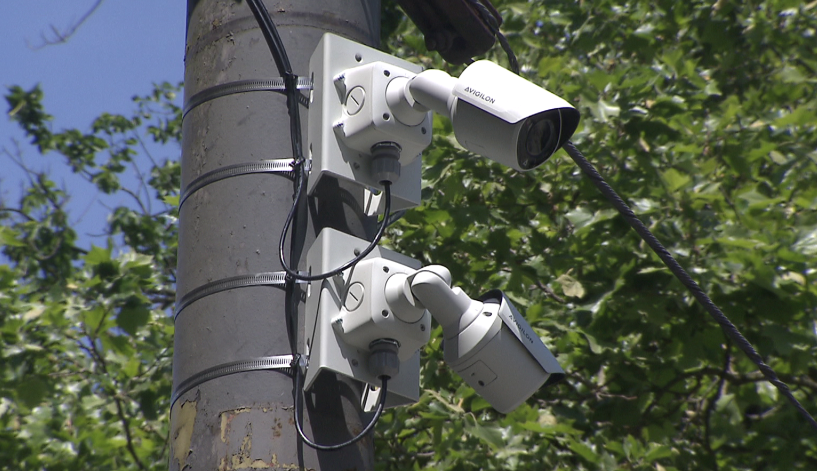
In an effort to remain transparent, Waterloo Region Police Service (WRPS) will be hosting several public information sessions ahead of the installation of new closed-circuit television (CCTV) and automated license plate recognition (ALPR) technology.

WRPS plan to use new CCTV equipped with ALPR systems to help prevent and investigate crime.


Every day the screw tightens until it’s too late …

h/t Patti Jo and Auntie Polly

Share

German Scholar’s Home Raided Over Ironic Tweet

Many voices—this time, even on the political left—in politics and journalism sharply criticized the police search of author and scholar Norbert Bolz’s home on Thursday. Ricarda Lang, former leader of Germany’s Green Party, emphasized that such raids are “absurd” and that this broad interpretation of criminal law in matters of opinion “undermines public trust in the rule of law.”

Share

Maxime Bernier warns Canadians of threat to internet access posed by Liberal bill

People’s Party of Canada (PPC) leader Maxime Bernier called a new Liberal federal bill that, if passed, would empower the government to ban anyone’s internet access a “digital guillotine” designed to “silence critics.”

“I want to talk to you about a number that should send a chill down your spine: Bill C-8. The Liberals are trying to set it as a cybersecurity bill. Don’t believe them. This bill is a digital guillotine,” Bernier said in a recent X video post.

Bernier said that Bill C-8, named “An Act respecting cyber security, amending the Telecommunications Act and making consequential amendments to other Acts,” would give unprecedented power to federal officials with no due process.

Share

Privacy watchdog says he was never consulted on bill allowing secret internet bans

Canada’s privacy watchdog says he was never consulted on a federal bill that could let cabinet secretly shut down a Canadian’s internet or phone access.

Blacklock’s Reporter says Privacy Commissioner Philippe Dufresne told MPs the issue “never came up” before the Trudeau government tabled Bill C-8, legislation that would give Ottawa sweeping new powers over telecommunications companies in the name of cybersecurity.

Share

John Carpay: If These 3 Bills Pass, Canada Could Be a Police State by Christmas

Canada will be a police state by Christmas if Parliament passes Bills C-2, C-8, and C-9 in their current form, and even more so if the federal government reintroduces the former Bill C-63.

If Bill C-63, the Online Harms Act, had become law prior to the April 2025 election, it would have given new censorship powers to the Canadian Human Rights Commission, with penalties up to $50,000, plus up to $20,000 payable to complainants, for offensive but non-criminal speech. A new army of bureaucrats working for the newly created Digital Safety Commission would now be enforcing censorship regulations passed by the federal cabinet. Canadians could be punished pre-emptively with house arrest, ankle bracelets, and curfews for speech crimes they might commit in the future. The maximum penalty for speech crimes would be life imprisonment.

Share

Conservatives warn bill could let Liberals cut off Canadians’ internet

Conservative MPs are sounding the alarm over a new federal cybersecurity bill, warning it could give cabinet sweeping powers to target ordinary Canadians online without due process.

Blacklock’s Reporter says Bill C-8, An Act Respecting Cybersecurity, would allow cabinet to order telecom providers to cut services to individuals it deems a threat to Canada’s telecommunications system — with orders kept secret and no court oversight.

Share