
Ontario police force may be 1st in Canada to use drones for some 911 calls

A police force in one of Canada’s most populated regions may soon be deploying drones as first responders for certain 911 calls.

Peel Regional Police Deputy Chief Anthony Odoardi told Global News in a statement Wednesday the initiative would make them “one of, if not the first police service in Canada” to use drone technology in that capacity.

Share

“Chat Control” – EU Proposal To Scan All Private Messages Gains Momentum

A controversial European Union proposal dubbed “Chat Control” is regaining momentum, with 19 out of 27 EU member states reportedly backing the measure.

The plan would mandate that messaging platforms, including WhatsApp, Signal and Telegram, must scan every message, photo and video sent by users starting in October, even if end-to-end encryption is in place, popular French tech blogger Korben wrote on Monday.

Share

Ottawa Police illegally used terrorism-level emergency powers to wiretap Detective Helen Grus and her family

Court Documents reveal Ottawa Police wiretapped Detective Grus and her family


h/t Mauser

Share

Public Servants Risk Scrutiny for Criticizing Government Online: Federal Guidance Document

Ottawa has issued a guidance document informing public servants they may face scrutiny if they post content on social media that it deems partisan, disrespectful, or critical of government policies—even when shared from anonymous personal accounts.

The document seeks to provide “guidance for public servants on their personal use of social media.”

Share

The secret Labour plot to silence migrant hotel critics

A secretive Whitehall unit complained to US tech giants about social media posts criticising asylum hotels, immigration and ‘two-tier’ policing, it has emerged.

Officials working for Technology Secretary Peter Kyle warned TikTok about videos with ‘concerning narratives’ and claimed they were ‘exacerbating tensions’ on the streets.

Emails sent by the Government’s National Security and Online Information Team (NSOIT) during last year’s Southport riots have been obtained by a US congressional committee.

Share

Five things we can’t post about thanks to the Online Safety Act

From grooming gangs to men’s fashion, literally any topic of discussion can now be censored.

A week has passed since the Online Safety Act’s age-verification rules came into effect, turning vast swathes of the internet dark for users based in the UK. Although the bill was sold as a necessary measure to protect children from pornography, it is not just ‘adult’ content that has suddenly been restricted.

Share

British PM: We Censor Anti-Migrant Protests ‘for the Children’

“For the children” — the last refuge of the censorious tyrant.

Asked at a joint press conference with President Trump on his European tour earlier this week, Keir Starmer, current occupant of the premiership of the once-great British state, about his regime’s draconian censorship of social media, the PM resorted to the tried-and-true justification that rulers of his ilk always do at the end of their rope: the “children.”

Share

Elite police squad to monitor anti-migrant posts on social media

An elite team of police officers is to monitor social media for anti-migrant sentiment amid fears of summer riots.

Detectives will be drawn from forces across the country to take part in a new investigations unit that will flag up early signs of potential civil unrest.

The division, assembled by the Home Office, will aim to “maximise social media intelligence” gathering after police forces were criticised over their response to last year’s riots.

Share

Anti-Migration Protest Footage Blocked on X for UK Users: Reports

British users of the X social media platform have reported being prevented from viewing anti-mass migration protests after the Online Safety Act censorship law came into effect for social media companies on Friday.

The draconian Online Safety Act, passed by the previous Conservative Party, is already appearing to have a negative impact on free speech in Britain. Pitched to the public as a means of preventing children from seeing pornography or other graphic content on the internet, critics of the legislation have long warned that it would be used to stifle political discourse.

Share

Privy Council Office runs psychological unit to shape Canadians’ behaviour

Despite its growing influence across multiple policy areas, few Canadians are aware of the IIU’s reach — or the extent to which their behaviour is being subtly shaped by design.

Canada’s Privy Council Office (PCO) has a behavioural science unit established under former Prime Minister Justin Trudeau that quietly shapes public policy and influences citizen compliance through psychological experiments and data modelling.

The Impact and Innovation Unit (IIU), which bases its framework on a UK government initiative and tools issued by the World Health Organization (WHO), has quietly pioneered its approach to behaviour change using psychology, economics and social sciences for years  — but its role became most visible in the wake of the COVID-19 pandemic.

Share

Free speech under threat as Britons believe they can no longer speak their mind

Older, white males without university education feel most restricted in what they can say, study finds

Free speech is under threat because Britons feel they cannot speak out for fear of offending others over race, religion and immigration, a study has found.

Nearly half of those polled (49 per cent) believe people are too easily offended, particularly if they speak out on race and immigration issues, according to research for the Commission for Countering Extremism, which advises the Government.

The more outspoken people’s views, the more likely they were to feel constrained by the risk of offending others. Older, white males without a university education are among the groups who feel the most restricted.

Share

How the spy game will work when there’s no place to hide

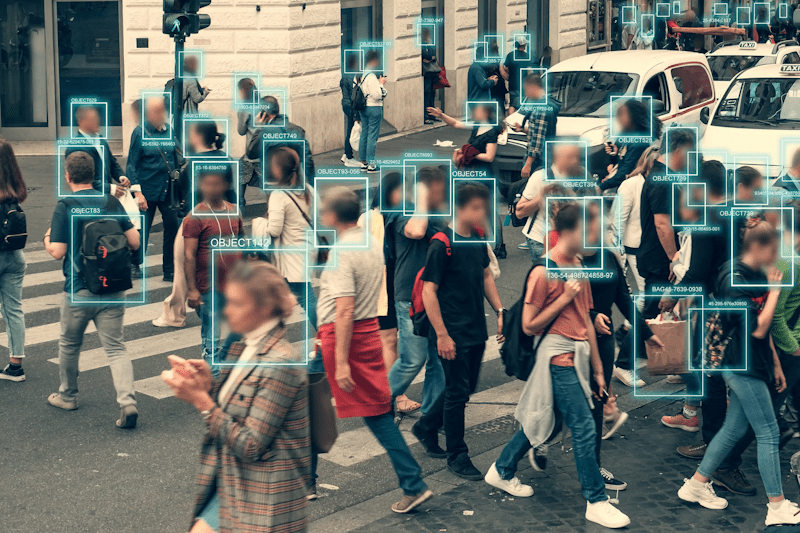
Aaron Brown was working as a CIA case officer in 2018 when he wrote a post for an agency blog warning about what he called “gait recognition.” He cautioned his fellow officers that computer algorithms would soon be able to identify people not just by their faces, or fingerprints, or DNA — but by the unique ways they walked.

Many of his colleagues, trained in the traditional arts of disguise and concealment, were skeptical. One called it “threat porn.” But Brown’s forecast was chillingly accurate. A study published in May reported that a model called FarSight, using gait, body and face recognition, was 83 percent accurate in verifying an individual at up to 1,000 meters, and was 65 percent accurate even when the face was obscured. “It’s hard to overstate how powerful that is,” Brown said.

Share

Canadian pro-freedom group sounds alarm over Liberal plans to revive internet censorship bill

One of Canada’s top pro-democracy groups has sounded the alarm by warning that the Canadian federal government is planning to revive a controversial Trudeau-era internet censorship bill that lapsed.

The Democracy Fund (TDF), in a recent press release, warned about plans by the Liberal government under Prime Minister Mark Carney to bring back a form of Bill C-63. The bill, which lapsed when the election was called earlier this year, aimed to regulate online speech, which could mean “mass censorship” of the internet.

Share

Southport inquiry to consider curfews for ‘potential criminals’

The measures would allow judges to impose restrictions including electronic tags and a ban on internet use on anyone suspected of planning violent crimes

The Southport inquiry will examine whether courts should be allowed to impose sweeping restrictions on people suspected of planning serious violent offences, even if they have not committed any crime.

Opening proceedings on Tuesday at Liverpool town hall, Sir Adrian Fulford, the chair, said the inquiry will consider whether the state should have powers to impose curfews, electronic tags, internet bans and limits on social media use for individuals deemed to pose a risk of serious harm.

Share