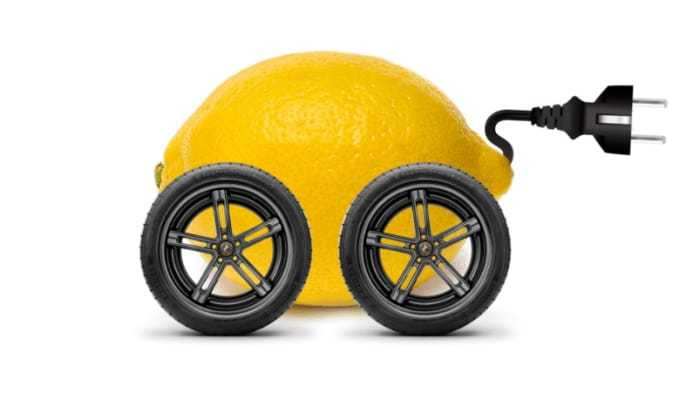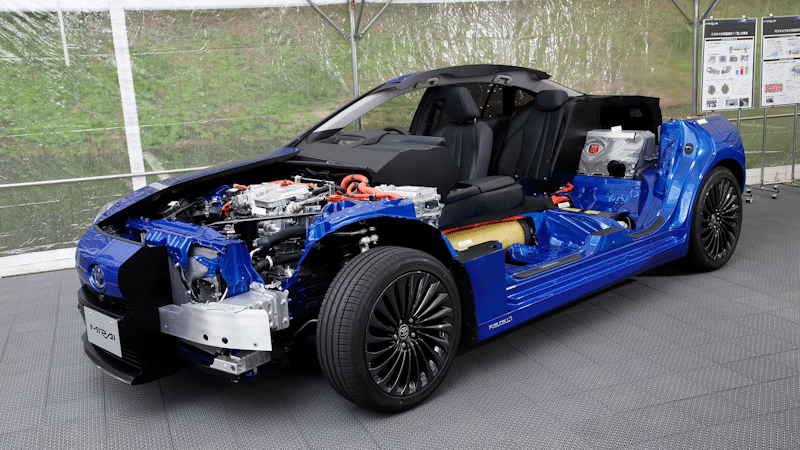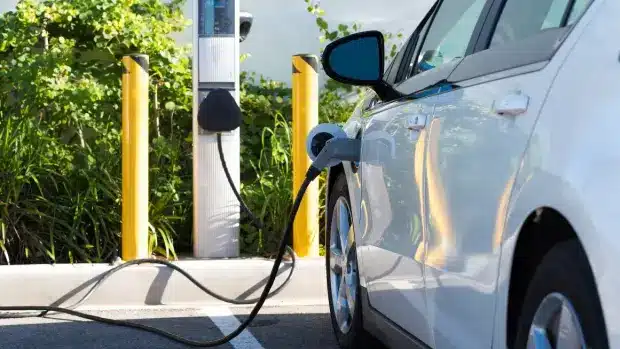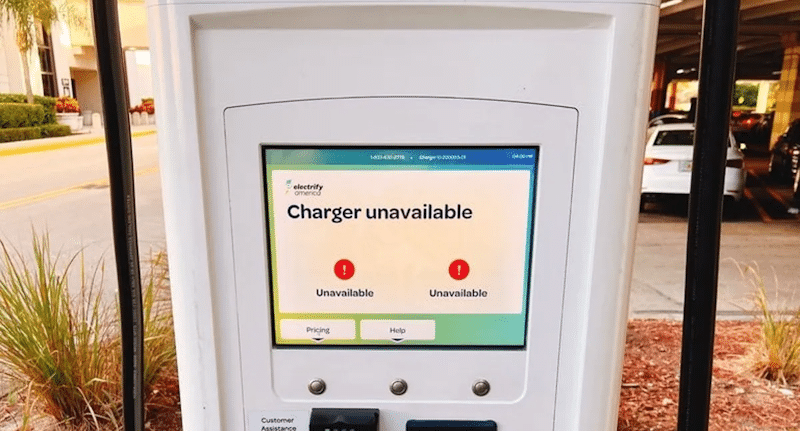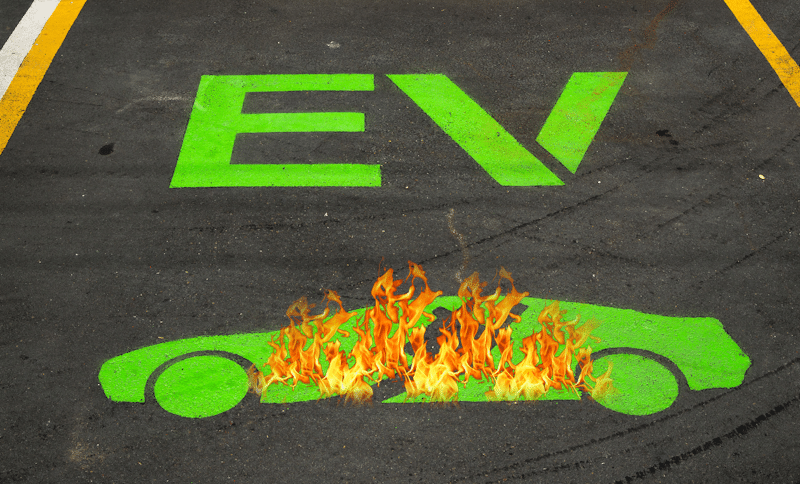
Environmental groups say Canada should allow Communist Chinese EV’s to undermine Canada’s auto sector

A trade war with China over EVs could slow Canada’s low-carbon transition, groups warn

Environmental groups are calling on the federal government to avoid getting into a trade war with China over electric vehicles.

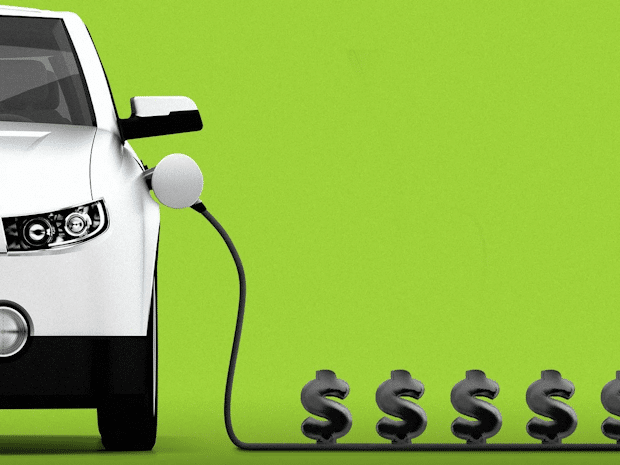
They say they fear trade sanctions could make EVs more expensive, delaying Canada’s transition to a low-carbon economy.

Less than a week after the federal government announced it was considering imposing trade restrictions on cheaper Chinese-made EVs, groups like Environmental Defence are urging Ottawa to consider the ramifications of such a move.

I bet commie Guilbeault agrees.

Share

Why nearly half of EV owners want to switch back to gas vehicles after major buyer’s remorse

Electric vehicles (EV) may benefit the environment, but thousands of owners have expressed their regret over their car purchase.

A McKinsey Mobility Consumer Pulse presentation released in June 2024 by McKinsey & Company indicated that 46 percent of EV owners in the US are ‘very’ likely to switch back to gas-powered vehicles.

The data is based on responses from nearly 37,000 participants who own EVs, but the US results are what surprised the company that conducted the study.

Share

EV mandates don’t make economic sense

According to “energy transition” and “net-zero” enthusiasts, the future looks bright for electric vehicles (EVs). Though not so bright, it seems, that the federal and some provincial governments haven’t had to offer at least $15 billion in subsidies to prompt carmakers to develop Canadian production facilities, as well as lavish subsidies to get people to buy EVs. And since even that isn’t enough to bring consumers around, a Trudeau government mandate now requires that all new light-duty vehicles sold in Canada must be electric or plug-in hybrid by 2035. In other words, the government is banning traditional internal combustion engine vehicles (ICEVs).

Share

Gassy cows and pigs will face a carbon tax in Denmark, a world first

COPENHAGEN, Denmark (AP) — Denmark will tax livestock farmers for the greenhouse gases emitted by their cows, sheep and pigs from 2030, the first country to do so as it targets a major source of methane emissions, one of the most potent gases contributing to global warming.

The aim is to reduce Danish greenhouse gas emissions by 70% from 1990 levels by 2030, said Taxation Minister Jeppe Bruus.

Share

The Enduring American Car

What’s driving the new economy? The old economy’s gas-powered vehicles.

One of the most remarkable and unanticipated benefits of the cloud revolution has been the emergence and rapid growth of the so-called gig economy. Ubiquitous personal geo-location, itself an unheralded revolution, combined with a cloud-centric software “platform” that connects buyers and sellers, has spawned one of society’s most dynamic, free-market employment systems. Hundreds of digital platforms—from Uber and DoorDash to TaskRabbit and Rover—now serve as the marketplace for all manner of trades in goods and services that are, in nearly all cases, facilitated by gig workers. The freelance marketplace already generates more than $200 billion annually. Pew Research found that roughly one in six adults (heavily skewing to young adults), and one in four lower-income Americans, do gig work, for which many say that the income is “important or essential.”

Share

Will Canada join the U.S. in a tariff battle against Chinese EV imports?

China crappy electric cars, EV

The Canadian government appears set to push back against the explosive growth in Chinese electric vehicle imports by joining its allies in a tariff battle that risks triggering retaliation from Beijing.

On Thursday, Ontario Premier Doug Ford called on the federal government to “immediately match or exceed U.S. tariffs on Chinese imports, including at least a 100 per cent tariff on Chinese electric vehicles.”

“Taking every advantage of low labour standards and dirty energy, China is flooding the market with artificially cheap electric vehicles. Unless we act fast, we risk Ontario and Canadian jobs,” the premier said in a media statement.

I’m sure Canada’s China class will steer Justin in Beijing’s approved direction.

Share

Ontario jobs ‘at risk’ if Canada doesn’t match U.S. tariffs on Chinese electric vehicles: Doug Ford

Premier Doug Ford is calling on the federal government to place a 100 per cent tariff on electric vehicles manufactured in China, warning that failure to do so could put jobs at “risk” in Ontario.

The U.S. announced last month that it planned to place new tariffs of more than 100 per cent on Chinese made electrical vehicles but the Canadian government has not yet indicated whether it plans to follow suit.

In a statement released on Thursday, Ford called on the feds to “immediately match or exceed” the U.S. tariffs on Chinese imports, which will eventually apply to some other goods as well.

Share

Another Hurdle for the Electric Vehicle

EVs depend on batteries that must be replaced. This has crushed their resale value.

The truth about battery-powered devices (EVs) is finally being emitted. One of these truths — styled a “hurdle for EV adoption” — is the plummeting resale value of these devices.

How much — and how fast?

How about more than 30 percent in just one year? That’s about five times as much loss in over 12 months as you’d typically lose (about 10 percent) if you bought a vehicle rather than a device. It’s a loss that is actually fast — as opposed to how long it takes to charge a device.

Share

Report says oil cheaper to leave in the ground under Trudeau’s emissions cap

Throwing good money after bad. Even with carbon capture and storage (CCS).

That’s the position Alberta’s oil companies would find themselves in under Ottawa’s proposed emissions cap, according to a new report from Deloitte Canada.

According to the national consulting firm, the emissions rules would make it more economical to simply leave barrels in the ground, costing the Canadian economy $282 billion in lost GDP over 10 years — $191 billion in Alberta alone.

Share

Trudeau’s lunatic EV strategy will cost $6B more than announced, PBO watchdog says

OTTAWA—Canada’s EV-building strategy will cost Ottawa and provinces about $6 billion more than announced, the federal parliamentary budget watchdog says.

A new report released by Parliamentary Budget Officer Yves Giroux says a total of $46.1 billion in government spending across the nascent EV supply chain has been announced. But the PBO estimates the total government support for capital and operating expenses to be up to $52.5 billion, which is $6.3 billion or 14 per cent higher than announced.

Share

Degrowth Is a Dead End

America should destroy its economy and pay climate reparations to other countries in the name of “degrowth,” because that will somehow help the environment. Or at least that is the conclusion of a suspiciously friendly interview between the New York Times and an actual professed eco-Marxist.

The article, by New York Times book critic Jennifer Szalai, ran with the tagline: “economic growth has been ecologically costly — and so a movement in favor of ‘degrowth’ is growing.”

Share

Why Transitioning to Electric Vehicles by 2035 Is Unrealistic

The federal government has mandated that all new light-duty vehicles be electric by 2035. Achieving that goal would require vastly more electrical generation capacity and an enormous expansion of charging stations.

A Fraser Institute study published in March found that handling the higher load would require either 13 large new gas plants or the equivalent of 10 new mega-dams the size of B.C.’s $16-billion hydro Site C. Just one problem: almost all viable hydro sites have already been dammed. Plus, it took 10 years to get environmental approval for Site C and another 10 to build it.

Share