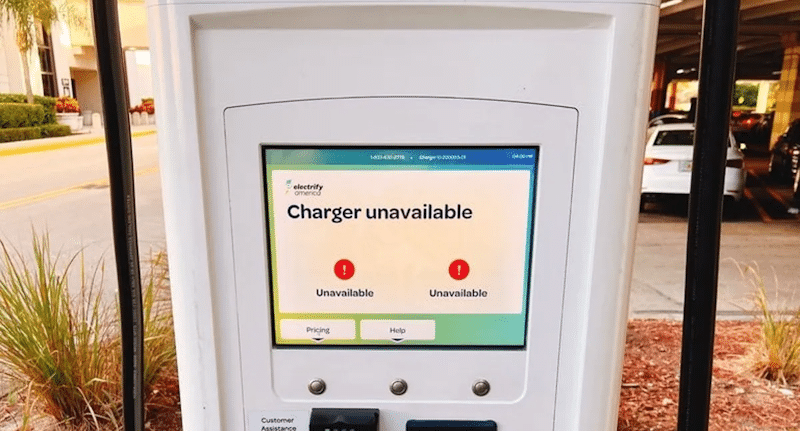
Toronto man stupidly rents EV without much thought about where to charge it but CBC says your money can solve his problems

Toronto EV driver can’t use closest overnight charging station because of permit restrictions

A Toronto-based Uber driver spends nearly half an hour most days walking back and forth between an on-street electric vehicle (EV) charging station and his home.

John Chen says he could cut that walk down to eight minutes each way if the city allowed him to use a closer charging station in his neighbouring permit parking zone.

He can’t charge his EV at home because he doesn’t have a designated parking spot and relies on street parking.

Despite living on the edge of his own parking zone near Coxwell Avenue and Dundas Street, Chen says the city told him he can’t get a permit for the other zone to use the closer charger overnight.

Share

The results are in: How much will wind energy cost this one state’s consumers?

On Friday, The Wall Street Journal published an article by Gordon Hughes that (somewhat rhetorically) asked this titular question: “Why Is New York Paying So Much for Wind Power?”

Hughes called the reader’s attention to the revelation that the state of New York had entered into a contract with two wind energy companies, an agreement that will quadruple the cost of energy for the consumer—and that’s including three billion in taxpayer dollars to offset the final price per megawatt-hour—which is “far above the break-even cost of generating electricity.”

Share

Auto Industry’s EV Retreat Hastens

Ford Motor’s decision this week to kill a highly touted future electric vehicle is a sign that the industry’s pullback on EVs is deepening.

The Dearborn, Mich., automaker said Wednesday it is canceling plans for an electric, family-hauler sport-utility vehicle that Chief Executive Jim Farley once touted as a “personalized bullet train.” The move added to the drumbeat of news from carmakers of delayed or scrapped investments into EV models, factories and battery projects.

General Motors, Volkswagen, Mercedes and other automakers also have curbed their EV ambitions in recent months. Taken together, the walked-back plans are an acknowledgment that the big investments outlined at the start of the decade got ahead of the consumer’s appetite for a full switch to EVs.

Share

Canada Reliant on China for Copper to Achieve Lower Carbon Emissions Goals: Report

Canada’s goal of reducing carbon emissions cannot be achieved without relying on China, a new energy industry report says.

The key to success is copper, an essential component of electrification, according to the authors of “Securing Copper Supply: no China, no energy transition,” published by data and analytics firm Wood Mackenzie.

China dominates in the smelting and refining of copper, which is essential to creating tools needed for cleaner energy and reduced carbon emissions, the report says.

Share

Ford Pulls Back Its Electric Vehicle Push

Ford Motor, which had once hoped to race ahead of other established automakers in electric vehicles, is again slowing the pace of its investments and new battery-powered models.

The automaker said on Wednesday that it would delay the introduction of a new large electric pickup truck by about 18 months, to 2027, and scrap a three-row electric sport-utility vehicle.

The company is also reducing the amount of money it plans to spend on electric vehicles in an effort to stem multibillion-dollar losses on the technology, while adding plans to introduce a new electric delivery van in 2026. A new medium-sized electric pickup is expected in 2027 as well, the company said.

Share

Would you buy an affordable EV made in China?

As the federal government mulls whether to impose tariffs on Chinese electric vehicles, some Canadians say they would jump at the chance to buy a cheaper EV manufactured in that country.

Ottawa held a month-long consultation in July on how to handle Beijing’s powerful presence in the EV sector. Tariffs are among the options on the table.

Michael Wawrykowicz, who lives in Edmonton, uses a small Mitsubishi EV he bought second-hand four years ago for short trips around the city.


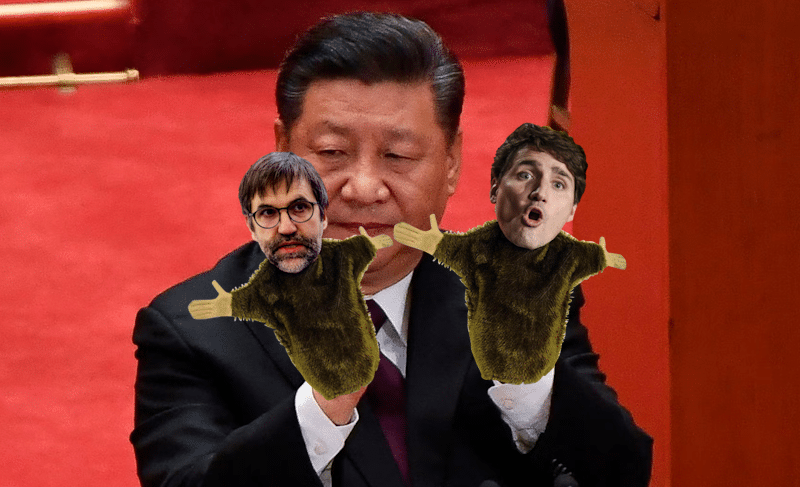
Given this is the CBC, I suspect the article is a trial balloon sent up by the Trudeau gov’t.

Share

Margaret McCuaig-Johnston: Canada must reject Chinese EVs, or face American wrath

Canada has developed a reputation internationally in recent years for being soft on China. The Hogue Commission has heard multitude stories of Chinese interference that have been known to the government with no action taken. Until Industry Minister François-Phillipe Champagne took the reins, investment review decisions handed Canadian companies over to companies that were Beijing-controlled. Defence spending is nowhere near what is needed for defence against Chinese forces in the Pacific or our own Arctic.


I’m not going to buy a domestic EV or a foreign EV.

Interesting … EU Cuts Planned Tariffs On Tesla’s China-Made EVs To 9%

The European Commission announced this AM that, in its ongoing findings of an anti-subsidy investigation into Chinese imports of battery electric vehicles, all Tesla vehicles imported from China will be subject to a 9% tariff. Proposed tariffs on other EV companies were revised slightly ahead of what could become EU trade policy later this year.

Of all the proposed duties on Chinese EVs imported to the EU, Tesla appears to be the big winner and will pay the lowest rate of 9%. Reuters noted the EU “set a new reduced rate of 9% for Tesla, lower than the 20.8% it had indicated in July.”

Share

Why Canadian tariffs on Chinese EV are absolutely necessary

The Center for Strategic & International Studies just revealed the enormity of China’s subsidization of its EV industry

Will she or won’t she? Will Deputy Prime Minister Chrystia Freeland announce tariffs on Chinese electric vehicles this week? If so, will she follow the American lead and tack on a 100% levy on any battery-powered vehicle BYD or Geely might dare to try to import to the United States? Or will ours be a more nuanced — dare I say World Trade Organization-approved — approach like the “variable” tariffs the E.U. are finalizing? The entire Canadian automotive industry awaits her decision with bated breath, with more than $50 billion — the monies promised to Volkswagen, Stellantis, et al to build battery plants here in the Great White Frozen North — hanging in the balance.

What are Trudeau’s China class backers saying?

Share

Heat pumps could bring the German economy to its knees

Emissions would come down. It would create a high skill, high wage economy. And it would reboot industry, accelerate productivity, and deliver a boost to growth. For years we have been told that moving to Net Zero would create hundreds of thousands of jobs, and billions of euros, dollars and pounds have been thrown at the companies promising to make that happen.

But hold on. Now it turns out that the green jobs are disappearing at an accelerating pace – and the investment in creating them will have been squandered.

h/t DS

Share

Trudeau gov’t pouring billions into an EV industry it seems unwilling to protect

I realize that tariffs and electric vehicles aren’t the most alluring subject in mid-August, when we’re trying to hold on to the last weeks of summer.

But you have literally billions of reasons to pay attention — exactly 52.455 billion reasons, which according to the Parliamentary Budget Officer is the number of your tax dollars that governments have invested in the EV industry so far.


Trudeau’s investment or rather waste of our tax dollars on EV’s was a mistake.

It was an ideologically driven green-scam meant to bail out the auto industry which if it had stuck to ICE vehicles would be in much better shape.

China flooding our market with electric vehicles no one wants doesn’t seem like much of a threat.

Share

New Research Debunks the Latest ‘Tipping Point’ Climate Scare to Frighten People into Supporting Net Zero

Last year the mainstream public prints were full of Net Zero-inspired nonsense claiming that the Gulf Stream could collapse by 2025. Classic green fear-mongering of course inspired by the 2004 Hollywood blockbuster The Day After Tomorrow with its harrowing portrayal of weather-related natural disasters. The overturning of the Atlantic Meridional Overturning Circulation (AMOC) could plunge the North Atlantic into a new ice age and have dire weather impacts across the globe, according to a new study. The author, Peter Ditlevsen of the University of Copenhagen, told the constantly-alarmed Guardian: “I think we should be very worried.” But this was a scare story too far and even some scientists expressed doubt about it last year. Now, a new study has been published that points out this alarm about the collapsing Gulf Stream was contingent on unreliable climate models and any collapse could occur from now to infinity.

Share

Carson Jerema: Blame Trudeau for threat of cheap Chinese EVs flooding in

Canada isn’t a country, so much as an elaborate program for distributing public money to a handful of manufacturing companies in southern Ontario. It doesn’t matter if the government in Ottawa is Liberal or Conservative. And it doesn’t matter if whatever is being manufactured is something people want to buy. The existence of industries in other parts of the country, such as oil and gas in Alberta, that thrive largely without subsidies only seems to reinforce Ottawa’s need to coddle Central Canada.

Share

The political consensus on taxing Chinese imports is now complete — your move, Minister Freeland

Now that Conservative Leader Pierre Poilievre and his party have joined the chorus calling for more action against Chinese imports, a key decision facing Finance Minister Chrystia Freeland this month just got a little easier.

Cross-party consensus on the wisdom of lining up with the Biden administration’s incoming tariffs on made-in-China electric vehicles provides the government with more political cover. But there’s still a risk of incoming flak.

To understand how complicated this gets, consider how then-president Donald Trump’s earlier campaign against Chinese state-sponsored overproduction played out for the United States and its trading partners in what was then NAFTA, now the Canada-United States-Mexico Agreement (CUSMA). That policy debate got very confusing for voters who like to slot politicians on a predictable left-right axis.

Share

GUNTER: ‘Green’ energy transition proving to be costly disaster

The past 14 days have been a tough fortnight for those who, like our federal Liberal government, have a cultish obsession with saving the planet through a transition to “green” energy.

The news since the beginning of the month is that electric vehicle sales continue to soften, the cost of the global transition to alternate energy will be many trillions (yes, trillions) more than anyone has admitted and the measures implemented thus far, at great expense already, have had little impact on emissions or fossil fuel use, both of which are up in the past decade.

Share

Tasha Kheiriddin: On EVs, Trudeau puts politics ahead of national security

Prime Minister Justin Trudeau is on a tear. This week he trotted out the b-word — “baloney” — to describe Conservative Leader Pierre Poilievre’s call for tariffs on cheap Chinese-made EVs threatening to flood the Canadian market and demolish domestic manufacturing. In May, the U.S. hiked its tariffs to 100 per cent from 25 per cent, while the EU has set tariffs north of 38 per cent. The Canadian government just wrapped a 30-day consultation on the issue, with a decision expected soon.

Share