
Volvo ditches electric car plans

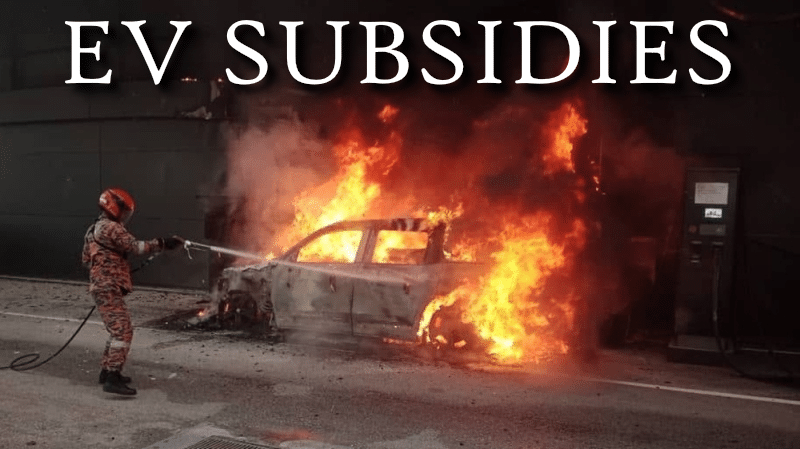
Volvo has ditched plans to sell only electric cars by 2030 amid waning demand for battery powered vehicles.

The Swedish carmaker blamed the move on changing market conditions, amid fears many of the public continue to prefer petrol and diesel models.

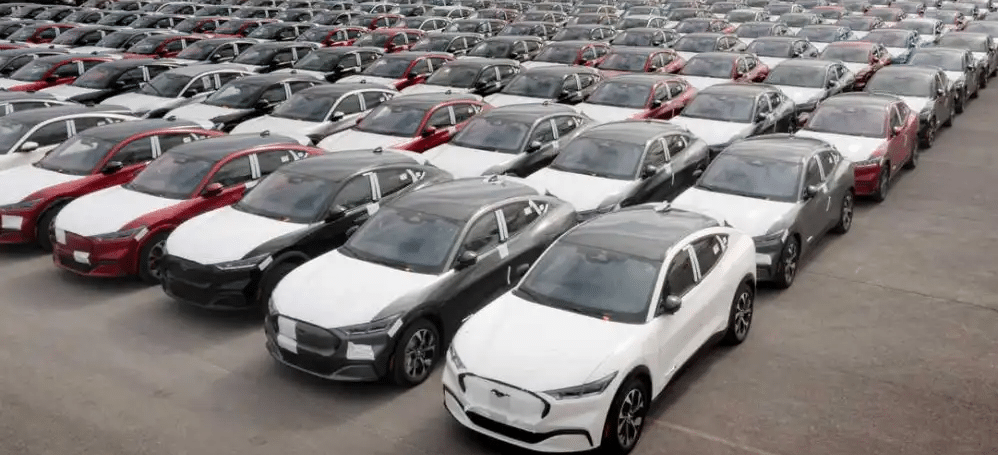
It comes as major carmakers grapple with slowing demand for electric vehicles because of a lack of affordable models and the slow rollout of charging points needed to support electric vehicles.

Share

Volkswagen Considers Germany Plant Closure For First Time in Its History

German car-manufacturing giant Volkswagen is considering closing some of its plants and laying off some of its workforce.

Rising costs were cutting into profits, leaving Volkswagen facing “particularly significant challenges,” the group said in an internal memo seen by AFP. “In the current situation, even plant closures at vehicle production and component sites can no longer be ruled out,” Volkswagen said in the note sent to employees.

Founded in 1937, the company has never had to close plants in Germany.

Share

HANNAFORD: Trudeau Liberals in chaos over energy, climate change policies

Today’s Liberal party energy policies are “absolutely mad, insane” and “a recipe for disaster,” and those advocating them have “no business in public policy,” says former Liberal MP Dan McTeague.

Today, McTeague is President of Canadians for Affordable Energy, a group originally set up by New Brunswick West MP John Williamson, to “challenge governments in Canada to prioritize affordable energy when legislating and regulating environmental and energy policies.”

Share

Why slowing demand for electric cars is forcing manufacturers to ration petrol models

Net zero rules and a lack of consumer incentives to buy EVs risk pushing the market to failure

When the Government announced laws forcing carmakers to sell more electric vehicles (EVs), ministers hailed it as a triumph that would put Britain at the vanguard of the clean energy transition.

Eight months later, however, and there are fears these ambitions are making hard contact with reality.

The zero emission vehicle (ZEV) mandate, which came into force in January, requires 22pc of new cars sold in the UK to be electric in 2024, rising annually to 80pc by 2030.

Share

Nobody noticed, but renewables-heavy states went to ‘Energy Emergency Alert One’ this summer

In what has become a rare circumstance in recent years, managers of the Texas power grid at the Electric Reliability Council of Texas (ERCOT) just successfully endured a summer during which they were not forced to issue conservation warnings or resort to other extraordinary measures to preserve grid integrity on a single day. This uneventful summer was achieved despite the setting of new record power demand on several days in August. Texas has learned its lessons.

Share

Germany: A Cold Wind

Germany’s manufacturing sector, the backbone of its economy, has been struggling of late. It is having to contend with slow domestic demand, and exports, a key element in its success, are running into headwinds. Manufacturing is an energy-intensive sector, and Germany’s high energy costs are hurting its competitiveness. These costs have been driven higher by the withdrawal of “cheap” Russian gas, by Angela Merkel’s decision to resume the country’s reckless abandonment of nuclear power (which is now complete) and by another project eagerly backed by Merkel, massive investments in renewables. Climate policy makers boast about green jobs (and there are some, although many more in China), but the statistic that matters will be the net jobs number. Is the energy “transition” creating more jobs than it is destroying?

Share

The Not-So-Secret Dirty Facts About China’s ‘Clean Energy’ Production

China’s production of batteries for electric vehicles is “definitely not clean,” says energy expert Diana Furchtgott-Roth.

Without its own vast natural energy resources, China is the world’s largest energy importer, but has seized on the economic opportunities of the “green energy” movement. Yet the production of products such as EVs is causing harm to the environment, says Furchtgott-Roth, director of The Heritage Foundation’s Center for Energy, Climate, and Environment. 

h/t SL

Share

Budget Office warns Guilbeault’s EV math doesn’t add up

Steven Guilbeault Enjoys Kissing Xi Jinpings Ass

Electric vehicle prices would need to drop by nearly a third for Environment Minister Steven Guilbeault’s ambitious sales mandate to be feasible, according to a new report from the Parliamentary Budget Office.

Blacklock’s Reporter says the mandate requires that 60% of new passenger vehicle sales be electric by 2030, but the Budget Office raised concerns about the economic viability of this target.

Share

EV prices need to drop by one third if Canada wants to hit sales targets, says gov’t report

Unless policies or technologies change, the cost of electric vehicles (EVs) needs to decrease by 31 per cent if Canada to wants to reach its sales target of 60 per cent EVs by 2030, according to a new report released Thursday by Parliamentary Budget Officer Yves Giroux.

And what about the infrastructure needed to charge all those flashy new EV’s? Any new reactors coming on stream? No?

Share

Germany’s solar obsession is killing its economy

Amid reports of Germany’s economy contracting, Vice Chancellor and Minister for Economic Affairs and Climate Action Robert Habeck has made a sub-optimal if predictable announcement. Citing renewables as Germany’s primary future energy source, Habeck said that manufacturing businesses should adjust their production according to the weather. German industry, he insisted, should produce more when the sun is shining or the wind is blowing. On still or cloudy days, production should be allowed to falter.

Share

US leads wealthy countries spending billions of public money on unproven ‘climate solutions’

Over $12bn in subsidies awarded for technologies like carbon capture experts call ‘colossal waste of money’

A handful of wealthy polluting countries led by the US are spending billions of dollars of public money on unproven climate solutions technologies that risk further delaying the transition away from fossil fuels, new analysis suggests.

These governments have handed out almost $30bn in subsidies for carbon capture and fossil hydrogen over the past 40 years, with hundreds of billions potentially up for grabs through new incentives, according to a new report by Oil Change International (OCI), a non-profit tracking the cost of fossil fuels.

To date, the European Union (EU) plus just four countries – the US, Norway, Canada and the Netherlands – account for 95% of the public handouts on CCS and hydrogen.

h/t DS

Share

Battle brewing between auditor general and House of Commons over ‘green slush fund’ documents

OTTAWA – A parliamentary battle is brewing between the House of Commons and Auditor General Karen Hogan, who has so far refused to comply with an order demanding she hand over documents relating to her scathing audit of the so-called “green slush fund.”

Parliament’s halls may be sleepy during the quiet summer months, but drama has been building between the House of Commons, the Office of the Auditor General (OAG) and, to a lesser degree, the RCMP over a motion adopted by MPs nearly three months ago.

Share

Kelly McParland: While the Liberals fixate on electric vehicles, people are buying hybrids

When politicians make important financial decisions based on a movie they may have seen as kids, it shouldn’t come as a shock if the results prove to be sub-optimal.

Field of Dreams was a hit 1989 film based on a 1982 novel about a 1919 baseball scandal. An Iowa farmer played by Kevin Costner repeatedly hears an ethereal voice advising him “If you build it, he will come.” So he constructs a ball diamond in a corn field and, sure enough, long-dead figures from a long-gone baseball team — including Ray Liotta as Shoeless Joe Jackson — come wandering out of the fields for a game of pick-up.

Share

Ford Loses $44,000 On Every EV Sells As It Switches To Hybrids

Last week, we reported that Ford was canceling its plans for a three-row electric crossover as part of an adjustment to its electric strategy because of cooling demand for EVs. Now we are getting a better look at just how much that strategy is changing and what it’ll end up costing The Blue Oval. Chiefly, Ford is expected to take on $1.9 billion in related charges and write-downs.

The cancelation of this three-row EV comes after Ford said in the Spring that it would be delaying plans for the model by two years to 2027. It also comes during mounting pressure to restore aggressive discounts to get their current EVs off dealer lots.

h/t Mauser

Share

Derek Burney: EVs sales and production clash with market realities

EV sales in North America face new market realities and automakers are shifting their production to meet actual, rather than anticipated demand. After being encouraged by government policy to invest tens of billions of dollars to transition to electric vehicles, companies are rapidly changing gears.

As Sam Fiorani, Vice President of AutoForecast Solutions observed in March , “Getting the first 10 per cent of the electric vehicle market is relatively easy with a good product and a market that wants that product. The next 90 per cent will be much harder to convert.”

Share