A U.S. takeover of Greenland could be ‘shattering of NATO,’ warns Canada’s former military commander

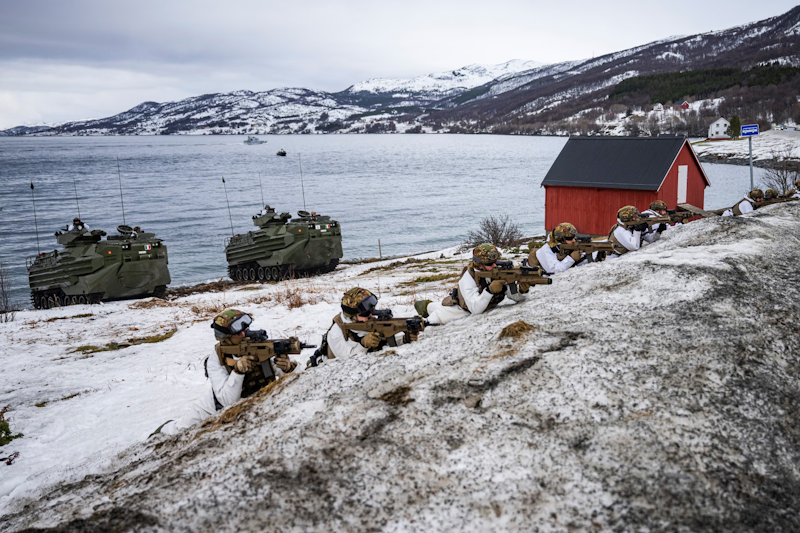
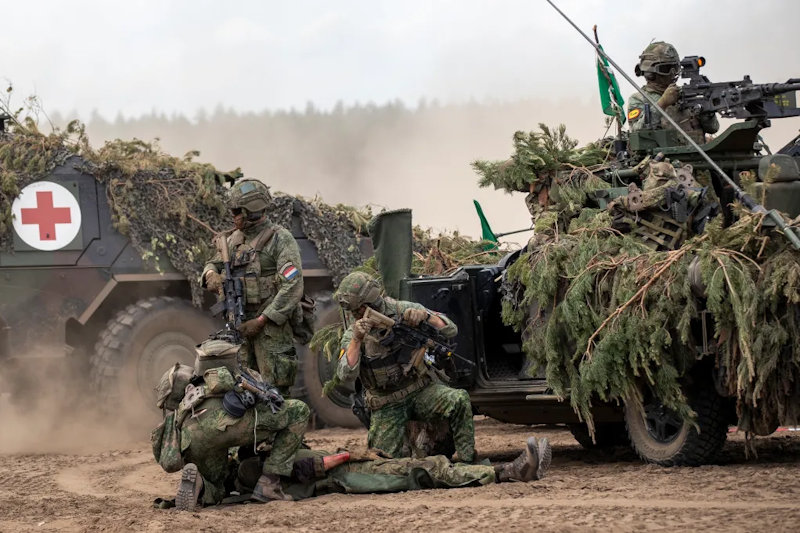
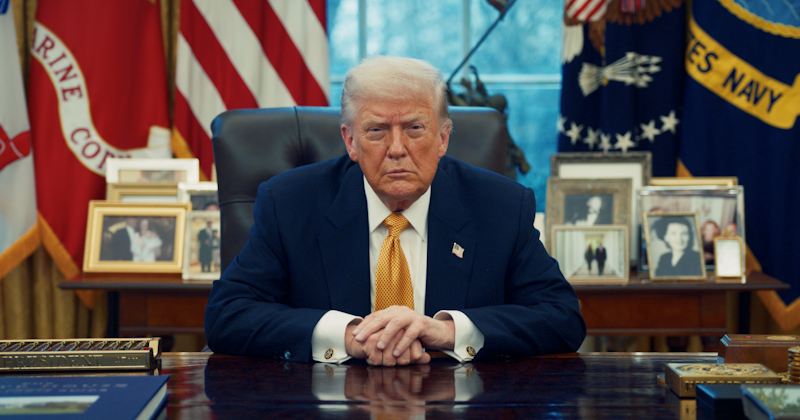
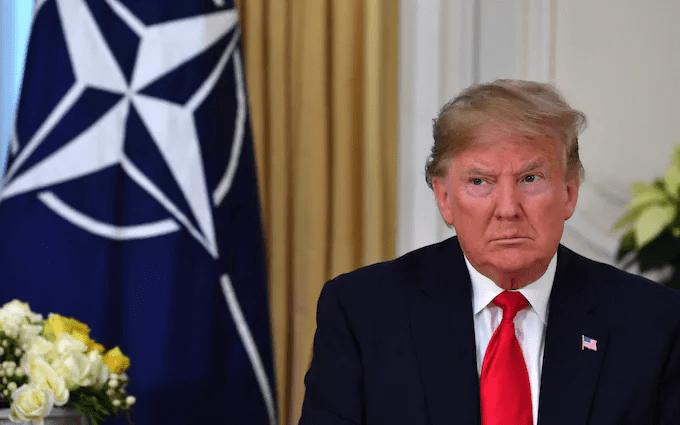
As U.S. President Donald Trump insists his country needs Greenland for security purposes, Canada’s former top soldier is warning that a U.S. takeover of the area could spell the end of the North Atlantic Treaty Organization.

“We have no history of one NATO partner seizing territory from another,” said retired general Wayne Eyre, formerly Canada’s chief of the defence staff, in an interview with CBC’s The House. “I share the Danish assessment that yes, this could be the shattering of NATO, much to [Russian President Vladimir] Putin’s delight.”


I’m pretty sure “Shattering NATO” is a Feature not a Bug to Trump.

Share

Nato spending pledge is Trump’s biggest foreign policy success, Rutte tells BBC

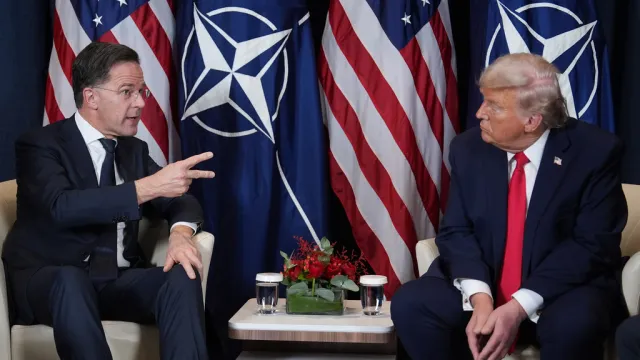
Nato countries’ pledge to spend 5% of their economic output on defence is Donald Trump’s “biggest foreign policy success,” the alliance’s chief has said.

In an interview with the BBC, Mark Rutte said it was thanks to Donald Trump that Nato was “stronger than it ever was”, adding that Trump “is good news for collective defence, for Nato and for Ukraine”.

The US leader has harshly criticised European allies for spending very little on defence – even threatening to withdraw US protection if they fail to do so.

Share

NATO chief warns war with Russia ‘is at our door’ and tells Europe to be ready for action ‘now’ to avoid battle on scale ‘our grandparents and great-grandparents endured’

NATO chief Mark Rutte has warned that war with Russia ‘is at our door’ as he urged European allies to prepare for action now or risk facing a conflict on the scale ‘our grandparents and great-grandparents endured’.

Speaking in Berlin on Thursday, Rutte said too many NATO members remained ‘quietly complacent’ about the threat posed by Moscow and insisted Europe must urgently ramp up defence spending and weapons production to deter Vladimir Putin.

‘We are Russia’s next target,’ he said. I fear that too many are quietly complacent. Too many don’t feel the urgency.

Share

US tells Europe it must take over ‘the majority’ of NATO’s defence capabilities by 2027 as Trump shifts American military focus

The United States wants Europe to take over the majority of NATO’s defense capabilities by 2027, Pentagon officials told diplomats in Washington this week.

The message, recounted by five sources familiar with the discussion, including a US official, was conveyed at a meeting in Washington this week of Pentagon staff overseeing NATO policy and several European delegations.

The shifting of this burden from the US to European members of the North Atlantic Treaty Organisation would dramatically change how the United States, a founding member of the post-war alliance, works with its most important military partners.

Share

Carney government leans on ‘rounding difference’ to claim NATO spending target

The Carney government may meet its NATO defence promise this year only by relying on a “rounding difference,” according to the Parliamentary Budget Office, raising fresh doubts about Ottawa’s claims it is hitting key military spending goals.

Appearing before the Senate national finance committee, Interim Budget Officer Jason Jacques said Canada is only “close” to the NATO benchmark of spending 2% of GDP on defence by December 31 — a target Prime Minister Mark Carney has repeatedly touted as a done deal.

Share

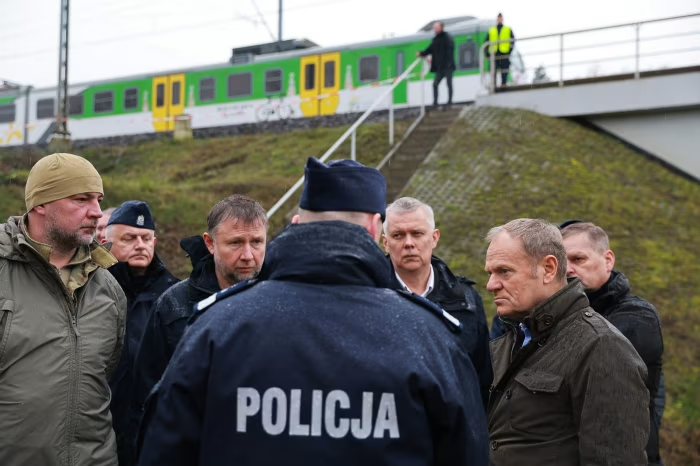
Poland rail bombing signals Russian escalation against Nato

Thanks to the norms of inter-state combat which have governed much of history, we’ve long been conditioned to think of war and peace in binary terms. But what’s happening on Nato’s east shows us that it is in fact a spectrum, with Poland caught right in the grey zone at its midpoint.

This weekend, for the first time since the Second World War, a deliberate explosion damaged a railway line connecting Warsaw to Lublin in what Polish Prime Minister Donald Tusk called an “unprecedented act of sabotage”. Although Polish authorities have not yet named a specific culprit, they’re already stating the obvious — that “all traces lead to Russia.” That’s hardly surprising, given that the damaged rail line serves as a key pathway for shipping aid to Ukraine, and Russia has sent recruits to gather intelligence on Polish rail hubs near military bases and to disrupt train services using radio networks in the recent past.


Assuming it was Russia.

Poland: Ukrainians Working for Moscow Responsible for Railway Explosion

Share

Russia massing nuclear fleet in Arctic circle ‘for war with Nato’

Russia is amassing nuclear weapons and attack submarines in the Arctic Circle as it prepares for war with Nato, Norway’s defence minister has warned.

In an interview with The Telegraph, Tore Sandvik said Oslo had detected increased weapons development on Russia’s Kola peninsula, where its prized Northern Fleet and parts of its nuclear stockpile are based.

He also said that Vladimir Putin was trying to gain full naval control over the Arctic region so that he could block Nato allies’ access to two key shipping routes that would help resupply Western forces in wartime.

Share

In preparing for the end of NATO, Canada falls behind Europe

For months, Canada’s European allies have been actively preparing for the end of NATO as we know it. They’re wondering if Ottawa is fully on board.

The defence ministers of Germany and Norway were in Ottawa this week to pitch a fleet of 12 submarines to Canada (they’re competing with South Korea) which would, by their own words, strengthen a transatlantic alliance that can continue to operate in the absence of the United States.

NATO without the US is the Maginot line.

Share

NATO shouldn’t exist, China told MEPs

Chinese lawmakers told members of the European Parliament that NATO shouldn’t exist, and spouted Russian talking points about the war in Ukraine at a rare meeting in Brussels on Thursday.

The three-hour meeting between the EU Parliament’s China delegation and members of China’s National People’s Congress was the first of its kind in seven years, and came after Beijing’s decision earlier this year to lift sanctions on current and former MEPs.

But rather than a diplomatic thaw, the meeting was tense and testy, marked by the Chinese side challenging NATO’s legitimacy.

Share

Jens Stoltenberg: Why did I flatter Trump? I wanted to save Nato

Trump and weasel Jens Stoltenberg

“It’s important to understand that President Trump is a different politician than most leaders we work with in Nato,” says Jens Stoltenberg. It would be tempting to say this is both obvious and an understatement, but Stoltenberg knows better than most exactly how different Trump is.

As secretary-general of Nato from 2014 until last year, he played a critical role in holding the alliance together when he feared it might collapse during Trump’s first term.

Share

What next for Nato — the inside account of its fight to survive

Last year, as Nato prepared to mark its 75th anniversary, its defence college in Rome published an anthology of science fiction stories imagining what the alliance might look like in 2099, another three quarters of a century in the future. One of the authors envisaged a Chinese artificial superintelligence going rogue and killing 450 million people before it was imprisoned on the Moon. Another imagined a utopia in which Nato would dedicate its energies to nature conservation and schlep cadets across the North Pole in “Thunberg-class” transport ships.

Share

Is Russia laying groundwork for strike on Nato?

Any Nato staff hoping for a quiet September must be feeling disappointed. Estonia has sought consultations with other Alliance members after three Russian fighter jets violated its air space on Friday morning. Lest this appear a one-off accident, Russian drones this month breached Poland’s and Romania’s skies, bringing Nato — in the words of Polish Prime Minister Donald Tusk — “the closest we have been to open conflict since World War Two”.

Share

Can Trump force Nato to get tough on Russian sanctions?

The pipelines would be sealed off. The supertankers would be left in the ports, and the wells would have to be capped. When Russia invaded Ukraine three years ago, it was confidently assumed that sanctions on Moscow’s oil and gas industry would be so punishing for its fragile economy that it would quickly force Vladimir Putin to plead for a settlement. Unfortunately, it has not worked out like that. Instead, the sanctions against Russia have been widely flouted. In response, President Trump has demaned that Nato makes them stick. But would sanctions really work and cripple Putin’s war machine?

Share

Europe is a paper tiger

Europeans are being forced to confront their lack of political will for their own security

“The purpose of NATO,” Lord Hastings Ismay, the alliance’s first secretary general, once quipped, was “to keep the Americans in, the Russians out, and the Germans down.” That formula defined Europe’s security for decades, and it worked because US power anchored the alliance. But as President Donald Trump’s administration demands its European allies carry their share of the burden, shows little appetite for sending troops to Europe and worries more about the Southeast Asian theater, Europeans are being forced to confront their lack of political will for their own security, underinvestment in defense and dwindling public appetite to fight for their country.

Share

NATO’s rearmament reignites age-old defence debate of quantity vs. quality

As NATO nations, including Canada, ramp up rearmament, they are increasingly confronted with various ghosts of the Cold War, notably the resilience of Russian industry and its capacity to be able to deliver weapons — that while often technologically inferior to the West — are “good enough” to wage war.

Moscow’s ability to produce en masse drones, missiles, aircraft and other weapons of war has been hampered by sanctions and a long-term erosion of quality is taking place.


NATO?

Share