Rearmament Without Warriors? A Pointless Exercise in Impression Management

Until the West overcomes its addiction to post-heroic values, NATO’s programme of rearmament will do little to provide its nations with genuine security

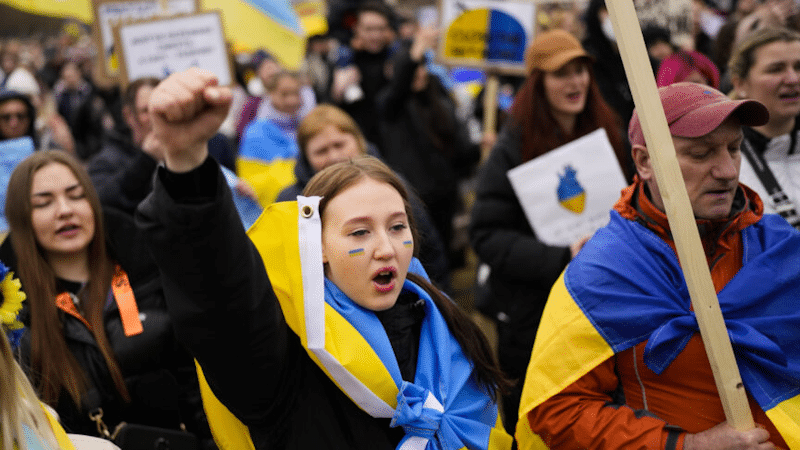
At international summits and in the media, all the talk is about increased defence spending and rearmament. At the recent Hague summit, the NATO allies agreed to increase their defence spending to 5% of their GDP. And yet, all the publicity about finally taking national defence and security seriously comes across as dishonest posturing. Why? Because the leaders of most NATO member states are fully aware that their military forces are not ready for a serious fight. Worse still, the population of Western societies has embraced a post-heroic culture that regards the defence of their nation as not their concern. Young people have been turned off from embracing the values of patriotism, courage, and duty, and, consequently, many of them feel little responsibility for defending their nation.

Share

Is Canada beating ploughshares into swords with its NATO 5% pledge? Not likely

By anyone’s measure, $150 billion a year is an eye-watering amount of money to spend on anything — let alone defence.

While it pales in comparison to the inflation-adjusted appropriations of the Second World War, it is potentially, for this generation, the very definition of beating ploughshares into swords.

Or is it?

Share

It won’t be easy but here is how Mark Carney can pay for his promise to hike defence spending

Last week, Prime Minister Mark Carney and our North Atlantic Treaty Organization (NATO) allies agreed to a new defence investment pledge — investing 5 per cent of annual gross domestic product (GDP) by 2035. That figure includes 3.5 per cent on core military capabilities and 1.5 per cent on defence and security-related infrastructure, such as ports and emergency preparedness systems.

This is an historically significant commitment and is rationalized by NATO political leaders in the context of rising global security threats and a need to increase contribution from non-U. S. members.

Share

NATO’s history of running hot and cold on Ukraine is running cold again

There was a particularly telling moment at a bygone NATO summit about four years ago, which perfectly captured the sometimes capricious way the Western military alliance regards Ukraine.

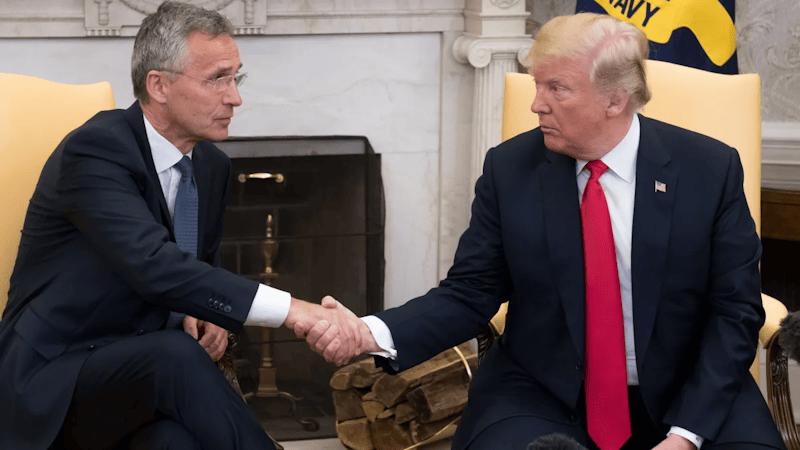
The secretary general of the day, the often unflappable Jens Stoltenberg, was asked about the Eastern European country’s long-standing bid to join the allies.

At that point, Ukraine had been waiting more than a dozen years for admission.

Share

Over 70% of Western Europeans don’t trust US on security … says poll conducted by Carney linked Eurasia Group

Over 70% of Western Europeans think America isn’t a reliable guarantor of European security, according to a new survey. With the Nato summit in the Hague ending today, polling by the Eurasia Group has revealed a crisis of confidence in the Western security apparatus. This comes as Donald Trump has this week cast doubt on his commitment to the alliance’s Article 5 — the commitment to mutual defence when one member is attacked — telling journalists on Air Force One that “it depends on your definition”. Nato Secretary-General Mark Rutte has today insisted that Trump is on board with the agreement, something which the US President has himself now affirmed.


The poll was conducted by a branch of the Eurasia Group calling itself the Institute for Global Affairs.

Western European nations as with Canada inspire little confidence as allies. Trump is right to doubt them.

Share

NATO members step up spending, but doubts about US remain

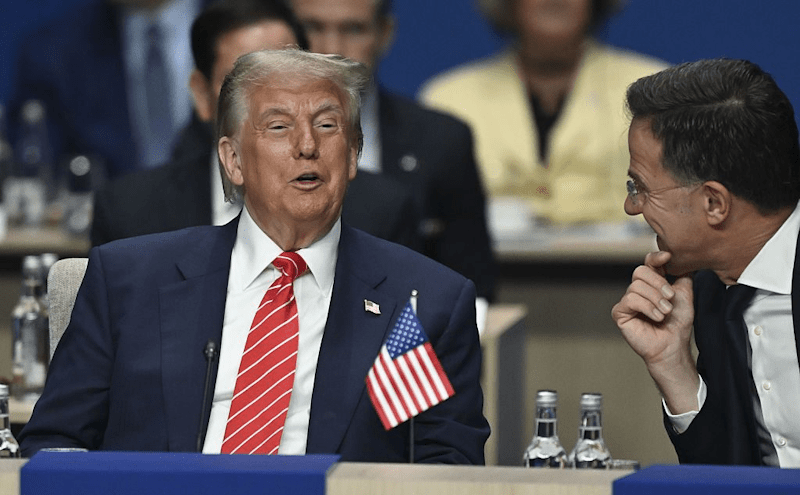
From the perspective of European NATO allies, it all went to plan: A short, one-page and five-point declaration, a nice group photo and even dinner with the Dutch king and queen. At the NATO summit at The Hague, US President Donald Trump was also in good spirits.

When he addressed the press, Trump claimed credit for ending the war in Iran and for getting NATO allies to increase their defense spending to 5% of their national GDPs by 2035.

He praised European members of the alliance for “the love and passion they showed for their countries,” but also said they needed the US. He hailed the new pledge as a “big win for Europe and for western civilization.”

Share

Carney Says Canada Met With European Suppliers Amid F-35 Review

Prime Minister Mark Carney said he met with European defense suppliers about jets and submarines, and expects to conclude a review of a major contract for Lockheed Martin Corp. F-35 jets as soon as this summer.

The remarks came minutes after he signed the North Atlantic Treaty Organization pledge to increase core defense spending as a share of gross domestic product to 3.5% from 2% over a decade. Carney has said Canada should stop sending the vast majority of its defense dollars to the US, after President Donald Trump imposed punishing tariffs and repeatedly said Canada should be an American state.

Share

Putin knows we are spreadsheet warriors and Europe is in no position to fight

The European Union has experienced quite a few shocks over the past two decades. The most significant one was not Covid, or Brexit, or the Ukraine war. It was the sovereign debt crisis. The fairytale story is that Mario Draghi single-handedly ended the crisis when he told the world that he would do “whatever it takes” to save the euro. He was the president of the European Central Bank when he announced a backstop. It is a convenient explanation because it assumes that the crisis is over.

I am going to put my head on the block to predict that this crisis could come back sooner than we think. Last time, it was the southern Europeans who triggered it. This time, it is the northern Europeans with their relentless push for an increase in defence spending to 5% of GDP.

Share

Trump questions U.S. commitment to NATO defense

THE HAGUE — President Donald Trump fell short Tuesday of fully endorsing Washington’s promise to defend its allies, saying of NATO nations that “I’m committed to being their friends” but that whether he is committed to their mutual defense “depends on your definition.”

…Rutte also sent Trump a highly conciliatory direct message on the Signal messaging app, saying: “Congratulations and thank you for your decisive action in Iran, that was truly extraordinary, and something no one else dared to do. It makes us all safer.”

…Rutte’s comments were intended for Trump alone, a senior European diplomat said, noting that his language about the U.S. strike on Iran was likely to be divisive inside NATO, since some countries have condemned the attack as a violation of international law.

Imagine that, NATO Euroweenies siding with Iran. Walking away from NATO makes more sense all the time.

Share

Canada to spend 5% of GDP on defence by 2035, Carney says

Prime Minister Mark Carney says Canada and its NATO allies have all agreed to hike their defence-spending target to five per cent of annual GDP by 2035.

Carney says Canada can no longer rely on its geography to protect it as new weapons and threats emerge on the wold stage.

NATO Secretary-General Mark Rutte put forward a plan that says allies will invest 3.5 per cent in core defence needs — such as jets and weapons — and 1.5 per cent in defence-adjacent areas, such as infrastructure and cybersecurity.

Share

Michael Taube: Carney goes about meeting our NATO target in the most Liberal way possible

Prime Minister Mark Carney recently announced that Canada will finally meet NATO’s defence-spending target of two per cent of GDP. But, as the man wouldn’t know austerity if it hit him over the head, it will come at a significant cost to Canadian taxpayers.

The defence spending target has been a long-standing bone of contention between Canada and NATO. “Allies currently meeting the NATO guideline to spend a minimum of two per cent of their (GDP) on defence will aim to continue to do so,” the members agreed in a declaration following a meeting of the North Atlantic Council in 2014. Any allies below this level would “aim to move towards the two per cent guideline within a decade with a view to meeting their NATO capability targets and filling NATO’s capability shortfalls.”


The 5% of GDP spending target is just a sham, NATO countries have until 2035 to reach the “goal” giving loads of time for freeloaders like Canada to promise the sun, moon and the stars while contributing little.

Once adopted, all member nations except Spain will have until 2035 to reach the goal of 5%.

The agreement calls for at least 3.5% of national GDP to be spent on core military needs, while an additional 1.5% can be allocated for related expenditures.

Maybe it’s all an EU plot to rid themselves of NATO and US dominance. Carney would go big on that grift.

I advise against ever taking Carney at his word. He wants us out of NATO and with the EU yoke round our neck.


NATO’s 5% benchmark would cost Canada $150B a year, Carney says

Signing on to NATO’s new defence spending target could cost the federal treasury up to $150 billion a year, Prime Minister Mark Carney said Tuesday in advance of the Western military alliance’s annual summit.

The prime minister made the comments in an interview with CNN International.

“It is a lot of money,” Carney said.

Share

Trump should make Nato a subscription service

President Trump should “crack the whip” and make Nato a subscription-based organisation, Ben Wallace, a former defence secretary, has said.

Wallace, who was once tipped for Nato secretary-general, said allies should only be allowed membership if by 2030 they were spending 3.5 per cent of national income on defence.

Writing in The Times before Nato’s summit in The Hague this week, he said: “No subscription — no membership. No 3.5 per cent of GDP by 2030 — no protection from Uncle Sam.”

Share

NATO countries agree to increase defence spending to 5%

NATO countries agreed a statement on Sunday for their upcoming summit that sets a goal of 5 per cent of GDP for annual defence and security-related spending by 2035, overcoming objections from Spain, diplomats said.

The statement has the green light from all 32 NATO members, diplomats said, but will only become official when it is approved by leaders including U.S. President Donald Trump at their summit in The Hague on Wednesday.

… Under a plan by NATO boss Mark Rutte, countries would reach 5 per cent of GDP by boosting their core defence spending goal from 2 per cent to 3.5 per cent and spending a further 1.5 per cent on related items like adapting roads and bridges for military vehicles and cyber security.


It would appear Canada has agreed to the increase in principle but there’s no word and it won’t be official till Wednesday.

I wonder if Carney will pull a Spain.

Share

What’s missing in Canada’s defence budget math

What does 2% of GDP for defence mean for Canada?

Compared to most NATO partners, Canada does not calculate its defence spending accurately, since it fails to include some defence-related components.

For instance, the RCMP budget along with the Canadian Coast Guard should be considered defence expenses and be included in the 2% calculations. Most NATO nations include police and coast guard expenses in their calculations of defence spending.


This is interesting Canada is not taking advantage of common NATO member budget expenditures in calculating the 2% spend requirement.

Share

Carney heads to Europe with military spending on the agenda

Prime Minister Mark Carney departs Sunday to meet with European and NATO allies amid heightened tension in the Middle East and mere hours after the United States joined Israel’s war with Iran.

The first stop will be in Brussels on Monday, where the prime minister is expected to sign a comprehensive security and defence partnership with the European Union.

U.S. President Donald Trump bailed early on last week’s G7 summit in Kananaskis, Alta., saying he was needed at the White House to deal with the evolving war where Israel is attempting to not only destroy Iran’s nuclear capabilities, but to instigate regime change.


Carney comes bearing grifts for his EU and WEF pals.

I suspect the talk of adopting Trump’s desired goal of a 5% NATO spend is just hot air.

Share