Canada’s costly NATO reminder: membership doesn’t come cheap

Membership has its privileges, as the old American Express advertisement promised. But it also has steep costs.

Canada faced a potential multibillion reminder of this as defence ministers gathered Thursday at NATO headquarters in Brussels.

They had come to set the stage for annual leaders’ summit in The Hague later this month where talk of defence spending will dominate the agenda.

Share

German, Norwegian officials urge Canada to join ‘familiar family’ in buying new submarines

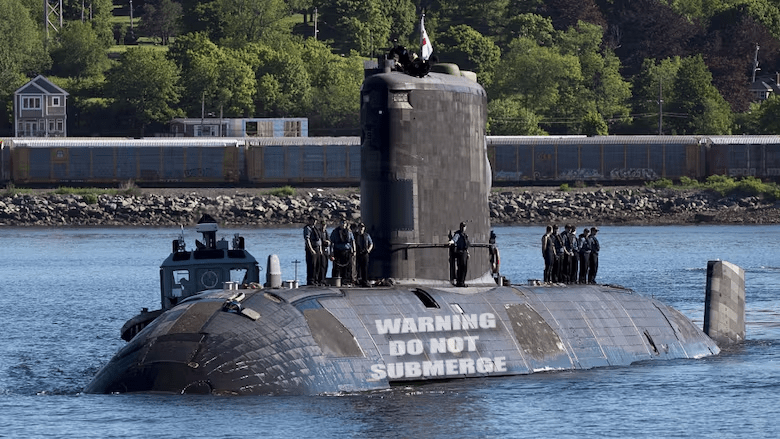
Senior German and Norwegian defence officials say they’re confident Canada will sign on to the ReArm Europe plan in the coming weeks and such a move will make it easier for the Liberal government to buy new submarines from allies.

Jasper Wieck, the political director of the German Ministry of Defence, and Norway’s program director of submarines, Capt. (N) Oystein Storebo, spoke with CBC News recently about the pitch for Canada to join their existing partnership, in which the two nations are constructing cutting-edge boats that will begin to enter service in 2028.

No mention by Carney of NATO’s upcoming demand for a 3.5% members spend: Nato will force Britain to spend 3.5pc on defence

Share

U.K.’s defence review has lessons for Canada, says former NATO chief

Britain intends to expand its submarine fleet and refresh its nuclear deterrent capability as part of a wide-ranging defence review that one of its authors says Canada should read and take to heart.

U.K. Prime Minister Keir Starmer, who ordered the review, unveiled the plan, saying it is meant to prepare the country to fight a modern war and counter the threat from Russia.

“We face war in Europe, new nuclear risks, daily cyberattacks, growing Russian aggression in our waters, menacing our skies,” Starmer said during a media availability at the Govan Shipbuilders Ltd. yard in Scotland.

Starmer, as part of his statement Monday, pledged a hefty increase to U.K. defence spending, bringing it to 2.5 per cent of the gross domestic product by 2027, with “the ambition to hit three per cent in the next Parliament.” He added, however, the goals are subject to economic and fiscal conditions.


They aren’t ready for war … neither are we.

Nato will force Britain to spend 3.5pc on defence

Nato will force Britain to spend 3.5 per cent of GDP on defence by 2032, The Telegraph understands.

On Monday, Sir Keir Starmer said he had an “ambition” to reach 3 per cent by the end of the next Parliament, but stopped short of a firm commitment.

However, at a summit in The Hague later this month, Nato countries will commit to a new target of 3.5 per cent, plus an additional 1.5 per cent on defence-related infrastructure by 2032.

Funny. I haven’t heard Carney mention the increase to 3.5%

Share

Russia may attack Nato in next four years, German defence chief warns

Members of the Western alliance Nato need to prepare for a possible attack from Russia within the next four years, according to Germany’s chief of defence.

General Carsten Breuer told the BBC that Russia was producing hundreds of tanks a year, many of which could be used for an attack on Nato Baltic state members by 2029 or even earlier.

He also insisted that Nato, the North Atlantic Treaty Organization, remains unified over the war in Ukraine, despite differences of opinion expressed recently by both Hungary and Slovakia.

Invite them to invade Poland then invade Russia!

Share

‘Secret’ memo reveals how Canada’s refusal to join missile system in 2005 hurt our reputation

Canada’s armed forces are ready for emergency pronoun deployment under battlefield conditions.

OTTAWA — A “secret” memo from the Department of National Defence last year said Canada’s 2005 decision not to join the U.S. ballistic missile defence system harmed the country’s reputation as a security partner and could make it harder to participate in the AUKUS military collaboration between Australia, the United Kingdom and the United States.

The memo also raised Canada’s long-standing failure to meet its defence spending commitments with the North Atlantic Treaty Organization as “the elephant in the room” that has raised doubts about whether Canada is willing to pull its weight for international security.

Share

Canada faces ‘massive challenge’ as NATO eyes new 5% spending target: expert

OTTAWA – When representatives of NATO nations meet in The Hague late next month, they’re expected to dramatically hike the alliance’s defence spending target for members — the one Canada is failing to hit already.

At the last NATO summit in Washington last year, allies lined up to call out Canada for failing to meet the alliance defence spending target of two per cent of national GDP.

When Prime Minister Mark Carney attends the NATO summit next month, he’ll likely be under pressure to commit to a new defence spending target of five per cent of national GDP.


I see a real possibility of the US asserting control over “our Arctic” for national security reasons as I suspect Canada to remain lackadaisical about defense matters.

Who knows, maybe even NATO will tire of us.

Share

It’s time for Canada to get serious about defence spending

Prime Minister Mark Carney’s first major test on the world stage came this week, when he met U.S. President Donald Trump in Washington. While the discussions covered a range of bilateral issues—from trade to energy cooperation—defence spending was also a focal point.

The United States has long pressed Canada to increase its military investment. The meeting brought renewed scrutiny of Ottawa’s commitment to its NATO obligations, with President Trump saying that he was pleased that Canada was beginning to spend more on defence.

Share

The NATO Country With No Military Gets Serious About Defense

REYKJAVIK, Iceland—North America and Europe meet beneath this island, where continental plates diverge. Icelanders are trying to balance interests on both sides.

The country of fewer than 400,000 people is an anomaly. A founding member of the North Atlantic Treaty Organization, it has no standing military. Though rooted in Europe, it isn’t part of the European Union. Traditionally a fishing island, it has become a tech hub thanks to bountiful geothermal and hydroelectric power.

For decades, Icelanders lived austerely in peaceful remoteness. Their location in the icy waters between Greenland and Norway offered NATO a base during the Cold War from which to monitor Soviet naval traffic, but residents worried little about dangers from warships.

Share

Nato’s ‘drone wall’ that would see Russia’s invasion coming

Germany is seeking to build a “drone wall” along Nato’s eastern border with Russia to help defend its Baltic allies from a future invasion.

Friedrich Merz, the incoming chancellor, has vowed to rearm Germany in response to the threat from Russia, passing historic reforms last month that unlock potentially unlimited spending on defence projects.

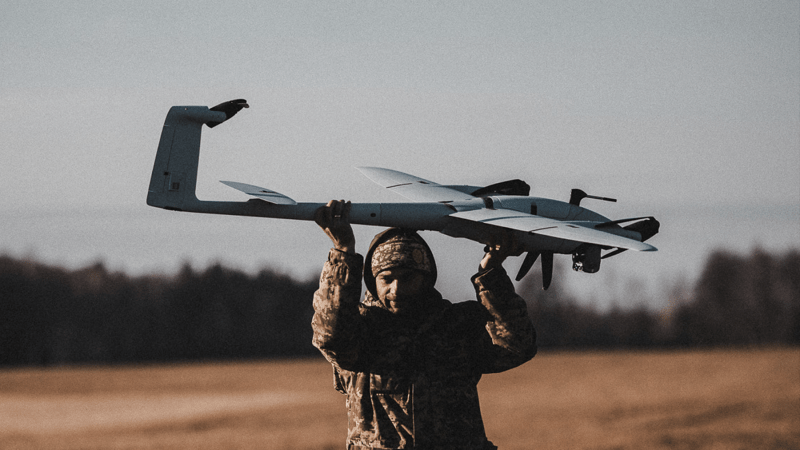
The German arms industry is now discussing the idea of building a fleet of drones – or a “drone wall” – to defend all or parts of Nato’s eastern flank.

Share

Canada and NATO allies asked by Rubio to increase defence spending to 5 per cent of GDP

Canada and other NATO allies were met by a request from the Trump administration to massively hike defence spending at the military pact’s meeting of foreign affairs ministers Thursday in Brussels.

Foreign Affairs Minister Mélanie Joly, who attended the meeting, declined to say whether she thought Canada could increase military expenditures to reach 5 per cent of gross domestic product, as Mr. Rubio requested. “I’m not into speculation,” she said in an interview.

Canada currently spends about 1.37 per cent of its annual economic output on defence and has pledged to reach 2 per cent by 2030. No NATO ally has so far committed to increasing 5 per cent, although Mr. Rubio said Thursday the United States plans to do so.

Share

Obama’s NATO Ambassador: Europe Capable of Running NATO Without US

As CEO of the Chicago Council on Global Affairs and former U.S. ambassador to NATO in the Obama administration, Ivo Daalder is a member in good standing of the foreign policy establishment. In a recent piece on the Foreign Affairs website, Daalder, after the obligatory criticism of Donald Trump’s alleged undermining of NATO, concludes that Trump has been right all along: Europe is “fully capable of ensuring [its] future security [and] [t]he time to start is now.” NATO faces the worst crisis in its 76-year history, Daalder writes, because Trump has “questioned the two core principles” of the alliance: its shared threat perception and its commitment to collective defense.

Share

Trump won’t kill Nato, the alliance is already dead

President Trump is considering giving up US command of Nato, held by American generals since Dwight D Eisenhower became the first supreme commander 75 years ago. This has further shaken those already panicking about the prospect that Trump might be contemplating pulling out of the alliance altogether. They are right to panic about the state of Nato – but not because of Trump.

We hear never-ending boasts that Nato is the most successful defensive alliance in history. Perhaps it was once, although that was never really put to the test.

Share

“Disastrous”: Report Gives Damning Verdict On German Army

It is “premature” for Germany to consider sending its soldiers to Ukraine, warns the Armed Forces Commissioner.

A new report released this week gives a damning assessment of the capabilities of the German army, highlighting its “disastrous” infrastructure, and calling it “premature” for its soldiers to be sent on a peacekeeping mission to Ukraine.

Presenting the report on Tuesday, March 11th, Eva Högl, the Armed Forces Commissioner of the Bundestag, said the Bundeswehr (armed forces) “still has too little of everything” despite a €100-billion special fund, established in the wake of Russia’s invasion of Ukraine, which was supposed to improve recruitment, develop infrastructure, and speed up new weapons procurement.

Share