
As a tool, tariffs may not be to everyone’s taste, but they are a very effective policy instrument in President Trump’s hands.
Trump knows how to use them.
As a tool, tariffs may not be to everyone’s taste, but they are a very effective policy instrument in President Trump’s hands.
Trump knows how to use them.
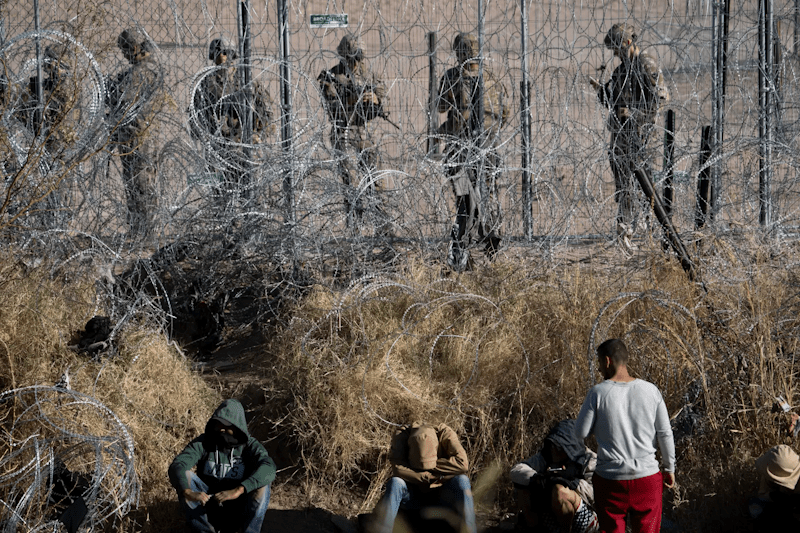
Mexican drug cartels are ordering their members to attack US Border Patrol agents with kamikaze drones and other explosives in a desperate bid to thwart the crackdown at the border, according to an internal memo obtained by The Post.
The alert, which cites social media posts and other sources, cautions federal agents “to remain cognizant of their surroundings at all times” in the face of the new threat.
Some Canadian politicians previously suggested tossing Mexico from a three-nation trade agreement with the United States.
Canada found itself in a precarious position on Monday morning after Mexico cut a deal with President Trump to postpone tariffs in exchange for a major deployment of forces along the border between the two countries.
 Prime Minister Justin Trudeau of Canada spoke to President Trump on Monday morning but no such compromise was reached between the two. A senior Canadian government official with knowledge of the call said the situation was still in flux ahead of a second phone call between the two leaders scheduled for 3 p.m. Eastern, but did not express optimism that a compromise could be reached.
The Mexican president, Claudia Sheinbaum, has said the US and Mexico have agreed to “pause” tariffs threatened by Donald Trump for one month after the two leaders held “a good conversation”.
Mexico had agreed to send 10,000 members of its national guard “to prevent drug trafficking from Mexico to the US, in particular of fentanyl”. In return, the US had agreed to work to prevent high-powered weapons crossing the border into Mexico. The tariffs would be paused for one month as a result, Sheinbaum added.
NEW: Mexican President Claudia Sheinbaum folds, says she agreed to send 10,000 troops to the U.S. border after a “good” call with President Trump.
Remarkable.
Sheinbaum released the following post on X (translated):
“We had a good conversation with President Trump with great… pic.twitter.com/ZPFWCoyYS8
— Collin Rugg (@CollinRugg) February 3, 2025
h/t XC

President Trump’s advisers are considering several offramps to avoid enacting the universal tariffs on Mexico and Canada that he had pledged, according to people familiar with the matter, even as he reiterated Thursday that the tariffs are coming.
The situation is fluid and Trump still may go through with his vow to slap 25%, across-the-board levies on imports from America’s two largest trading partners. The president has consistently said he would do so by Saturday.
But amid ongoing negotiations with Canada and Mexico, the administration appears undecided on whether to impose tariffs on all imports from those countries, the people familiar with the matter said, adding that administration officials are preparing to opt for more targeted measures instead.
Trump announces he is going ahead with placing 25% tariffs on Canada and Mexico.
In response, Canada plans pandemic-scale relief program to plunge the country further into debt and push it to the brink of default.
Buckle up! pic.twitter.com/0BEsBK2bvf
— Pasquale Sasso (@PasqualeSasso) January 30, 2025
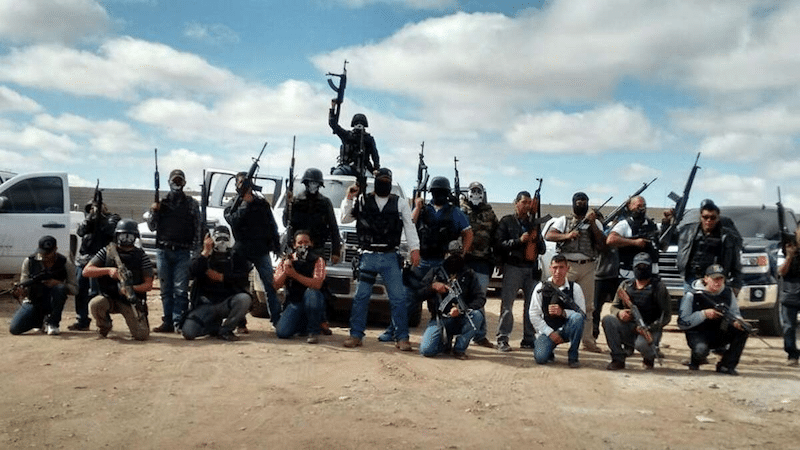
Evan Hafer, a popular veteran and founder of Black Rifle Coffee, was on Joe Rogan’s podcast after the November election. As with any Maga acolyte, the US-Mexico border figured prominently in his mind.
“If we declare war on the cartel, these dudes are not going to understand what the fuck is going on. They are in for a world of ultra-violence,” said Hafer, who served in the Green Berets and the CIA.
“JD [Vance] or Trump had said something with the new guy from Ice, like: ‘We’re going to mobilize tier one units against the cartel.’”
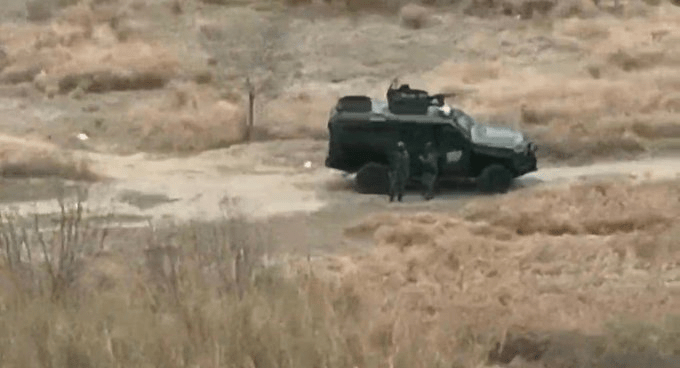
American Border Patrol agents stationed at the Mexican border were fired upon by a suspected drug cartel in an effort to smuggle illegal migrants into Texas.
The gunfight broke out on Monday near the disputed territory of Fronton, Texas, exactly one week after President Donald Trump returned to office and began his sweeping deportation crackdown.
While the cartel suspected of being responsible for the violence has been shooting across the border for years, NewsNation reports that the crisis in the region has ‘escalated in unprecedented ways since President Trump was elected.’
BREAKING: Border Patrol agents fired upon by suspected cartel members at the border during a human smuggling operation, according to@BillMelugin_
.pic.twitter.com/HIMIa8wBpD— Caveman Gamer (@CavemanGamer99) January 28, 2025
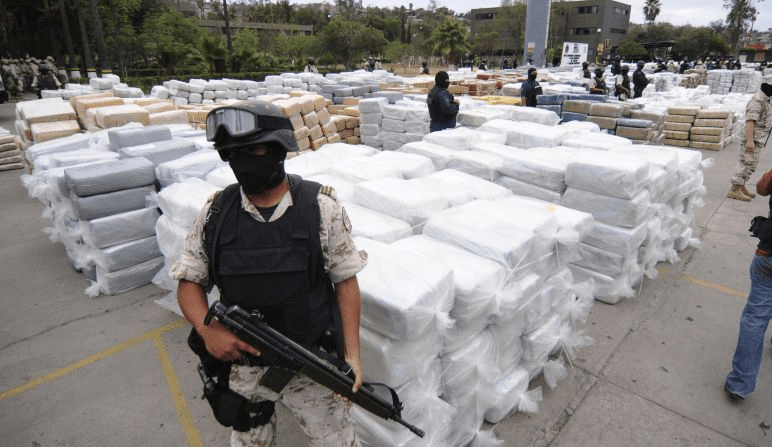
Drug networks are too complex
Most residents in the town of Jerécuaro in Central Mexico were asleep when the car bomb exploded in the plaza at 5.10 am on 24 October, blowing out the windows of stores and scattering debris. But when a second car bomb went off over an hour later in the city of Acámbaro, 30 kilometres away, many residents were heading to work and school. The explosive device blew up outside a police station and injured three officers. Mexico’s recently sworn-in security minister, Omar García Harfuch, blamed the car bombs on the drug cartels fighting a turf war.
Car bombs are one of the many terrifying weapons in the arsenal of Mexico’s cartels as they battle over territory, not only to traffic and sell drugs, but to steal oil from pipelines, smuggle migrants over the US border, and extort businesses, among other crimes. They also wield weaponised drones that drop makeshift bombs unleashing shrapnel and nails. They lay landmines that kill soldiers in their Humvees as well as farmers. And they build fighting vehicles known as “monsters” that look like they are out of Mad Max, with walls of bullet-proof steel and battering rams.
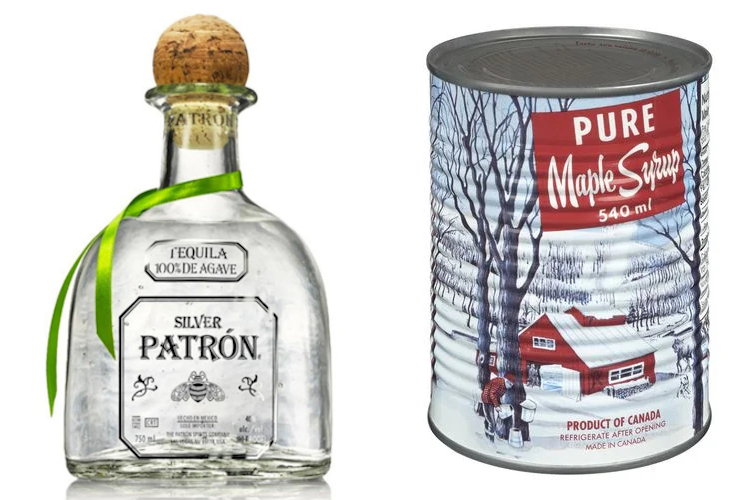
It’s a simple formula: Tequila > Maple Syrup.
Imagine you’re a single guy with a pretty good job. Your buddy offers to set you up with one of his two female friends. But the catch is, you have to choose which one.
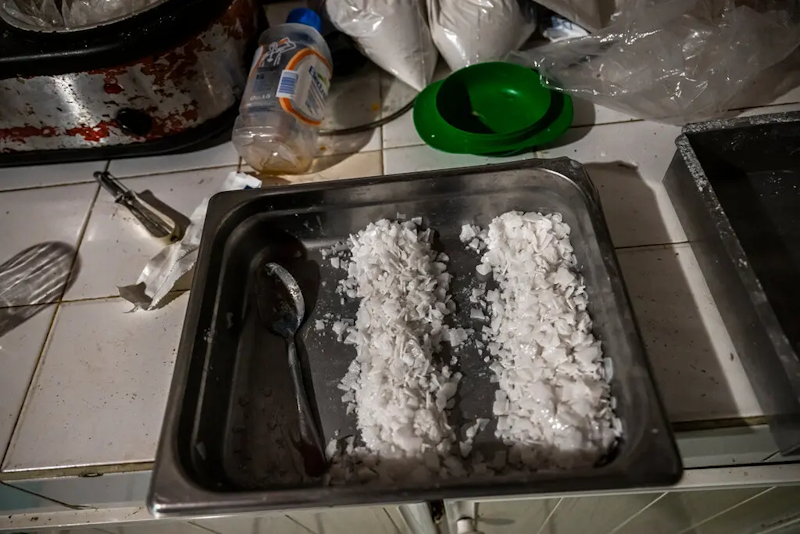
We had just walked into the fentanyl lab when the cook poured a white powder into a stockpot full of liquid. He began mixing it with an immersion blender and fumes rose from the pot, filling the small kitchen.
We wore gas masks and hazmat suits, but the cook had on only a surgical mask. He and his partner had rushed here to fulfill an order for 10 kilograms of fentanyl. While one sniff of the toxic chemicals could kill us, they explained, they had built up a tolerance to the lethal drug.
But then, the cook jerked back.
MEXICO CITY—The once-unthinkable prospect of U.S. military action on Mexican soil is dominating the political conversation in Mexico as the country braces for President-elect Donald Trump’s second term.
With Trump and his allies this year floating the use of American military force against Mexico’s drug cartels, Mexican officials have tried to learn whether he is serious or merely blustering to gain leverage in talks about shutting down the pipeline of migrants and drugs heading into the U.S. Mexico’s new president, Claudia Sheinbaum, has rushed to blunt criticism from Trump’s orbit and put to rest worries at home that there is any danger from the country’s neighbor to the north.
Maybe Trump could order a strike on Harrington lake?
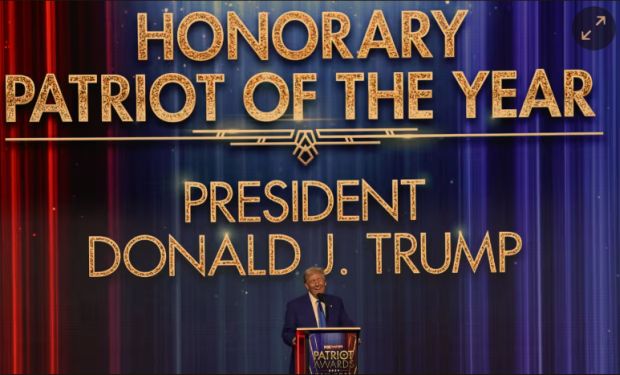
Donald Trump belittled the leaders of the United States’ closest neighbours, Canada and Mexico, at a Fox awards ceremony intended to celebrate his role as America’s greatest “patriot”.
Two weeks after threatening the two countries with 25% tariffs on their imports for supposedly failing to prevent drugs and migrants from crossing the border, the president-elect took evident pleasure in an audience chant that taunted Canada as the 51st US state.
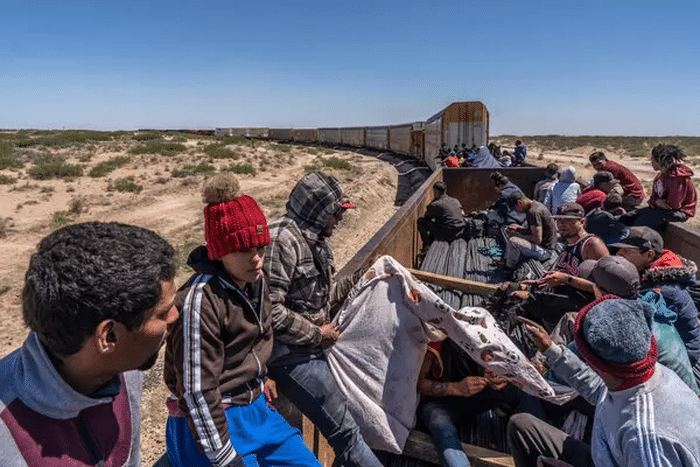
Mexico understands that an open border, the destruction of U.S. immigration law, illegal immigration, and emigration of millions of its own citizens to America are entirely in its own interests.
President-elect Donald Trump recently had a “talk” with newly elected Mexican President Claudia Sheinbaum about the millions who have crossed through Mexico to enter the U.S. illegally.
Afterwards, Trump reported that their conversation went well, and supposedly both had agreed to secure the U.S. border.
Prime Minister Justin Trudeau’s willingness to cut a trade deal with the U.S. alone came as a betrayal, says Mexico’s lead trade negotiator, adding that it has already proven to be a mistake.
Any desire by Canada to divert blame toward Mexico for U.S. problems with illegal immigration and imported narcotics was “erroneous,” Luis Rosendo Gutiérrez Romano said in an interview this week.
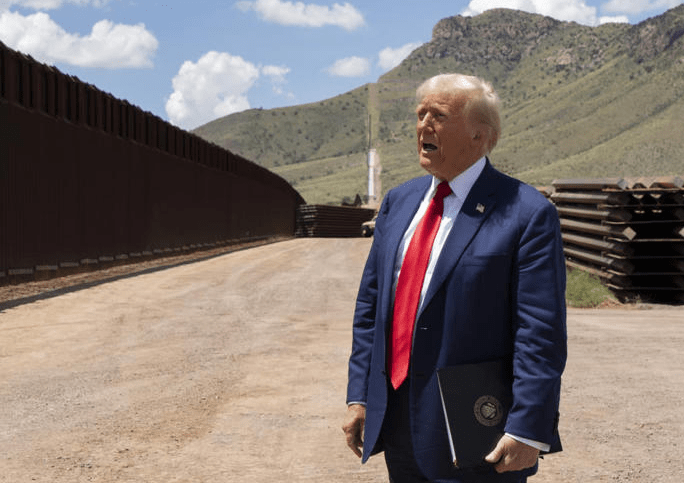
President-elect Donald Trump’s plan to slap a 25% tariff on Mexico’s goods unless it stops fentanyl trafficking and illegal migration risks setting the trade partners on a collision course over an intractable challenge for both countries.
Ahead of the new trade negotiations, Mexico’s greatest weakness has been its historic inability to confront the powerful drug gangs that control about a third of the country. Mexico has had success stopping immigration over the past year, but ending drug smuggling might be an impossible ask, in part because of strong demand in the U.S.
Fentanyl is cheap to produce and easily smuggled. In some large areas of Mexico, organized crime groups dominate local and state officials. Different attempts to fight the gangs, sometimes with U.S. support, have led to violence at home without making any dents on the drug business.
