Right-wing extremists in Germany’s judiciary?

“Rechte Richter” (“Right-Wing Judges”; no English edition so far) is a book published in 2022 by journalist and trained lawyer Joachim Wagner. Its subtitle asks the question: “A danger to the rule of law?”

Wagner is referring to cases like that of Jens Maier, who was a member of Germany’s parliament, the Bundestag, for the far-right Alternative for Germany (AfD) party between 2017 and 2021. After his spell in parliament, he wanted to return to his post as a judge in the eastern state of Saxony.

This, however, didn’t happen, because Saxony’s Justice Minister Katja Meier took the matter to court and was successful: Maier, categorized as a right-wing extremist by Germany’s domestic intelligence agency, the Office for the Protection of the Constitution (BfV), was sent into early retirement. The verdict is not yet final, however, because the suspended judge can appeal the decision.

Share

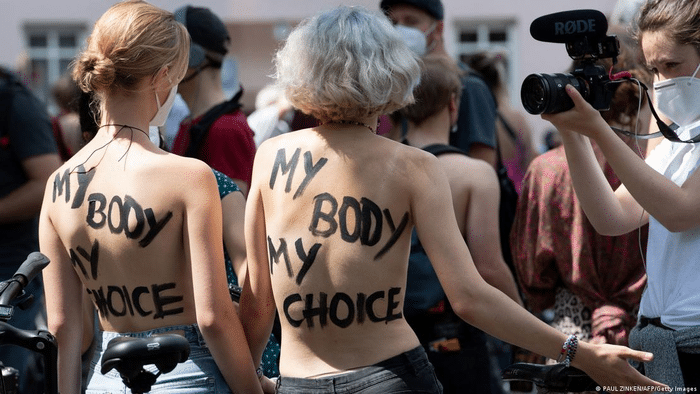
Berlin clarifies gender equality rules for topless bathing

When Lotte Mies went topless at an indoor swimming pool in the Berlin district of Kaulsdorf last December, she was asked to either cover her chest or leave the pool. The 33-year-old activist had already called ahead to check with staff that she could go topless and was told it would not be a problem. But when she refused to cover up, the police were called and Mies was forced to leave.

“It was more than humiliating for me that day and it really wasn’t nice to be treated like a second-class citizen on the basis of my gender and not to be able to decide for myself how to [present] my own body,” Mies told DW.

What could possibly go wrong?

Share

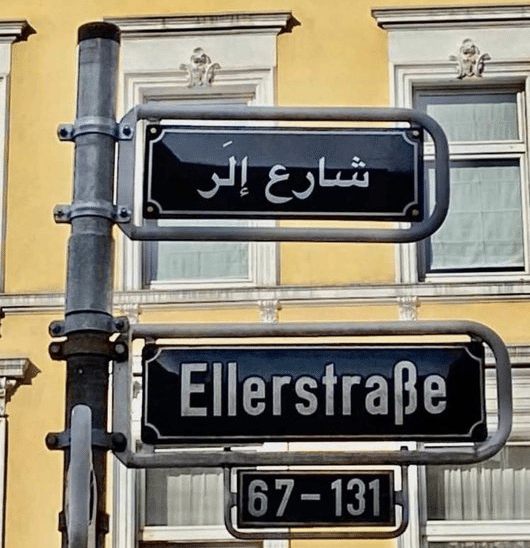
Arabic road signs in Germany

Europe seems determined to go all the way down the road to the end of the nation state.

“Bilingual road signs are a symbolic expression of social inclusion. They show that people identify with their district and diversity.” Thus Samy Charchira, councilor of the Greens in Düsseldorf (very German name), where for the first time in Germany road signs in Arabic have been inaugurated – you know, such as in Cairo, Baghdad or Damascus.

“For several generations, many people, families and traders of Moroccan and North African origin have lived in the district” and “have contributed to building” Germany. “For this they deserve respect, admiration and representation”, underlined the Greens. Morocco’s consul Lalla Loubna Ait-Bassidi also praised the decision: “I am grateful that integration is being expressed in a way that people from 20 Arab nations can read and understand.”

Multiculturalism is the end of nation state and Europe seems determined to go down that road all the way.

Share

Is German industry migrating to the US?

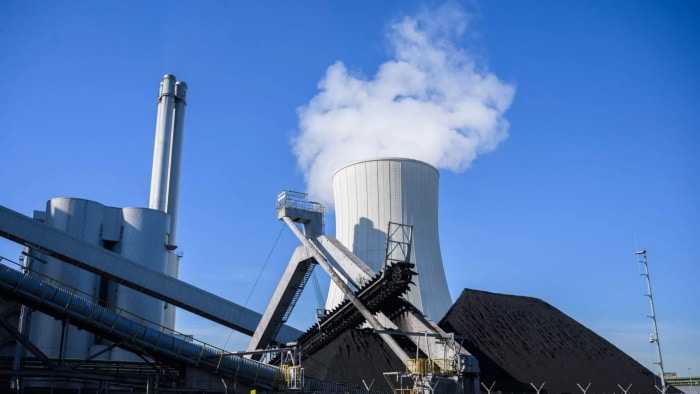
German companies love America. According to the German-American Chamber of Commerce, around 5,600 of them have invested in the US market. As of September 2022, that’s an investment volume of almost $650 billion (€605 billion). And it’s not only big firms like Siemens, Volkswagen or Linde that are currently looking to strengthen their commitment to the United States — in some instances, even building entire new production facilities.

“There are various reasons for it,” says Dirk Dohse, who heads the Innovation and International Competition Research Center at the Kiel Institute for the World Economy (IfW). “One is the increase in geopolitical tensions. Many German companies see the US as a ‘safe harbor.’ Other reasons are the comparatively low energy costs and the very generous subsidies provided under the Inflation Reduction Act.”

Share

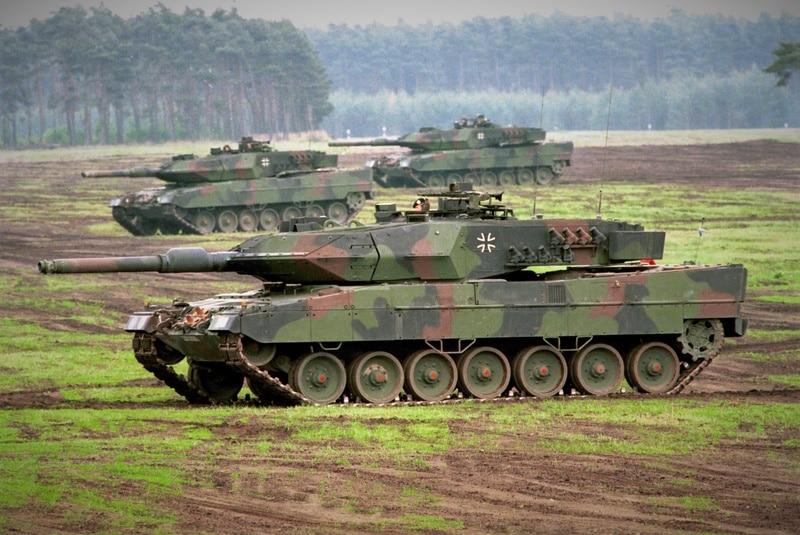
German army’s shoddy kit, tank shortages and poor morale revealed

Germany’s military communications are so poor that soldiers in armoured vehicles are forced to open the hatches or clamber out and shout rather than use the radio, according to a damning report on the wider dysfunctionality in its armed forces.

The commission identified kit shortages, shoddy infrastructure and stifling red tape, ranging from dilapidated barracks with walls propped up by sandbags to 66 accidents caused by a standard-issue parachute that cannot be steered at high speeds or when the wind changes.

Share

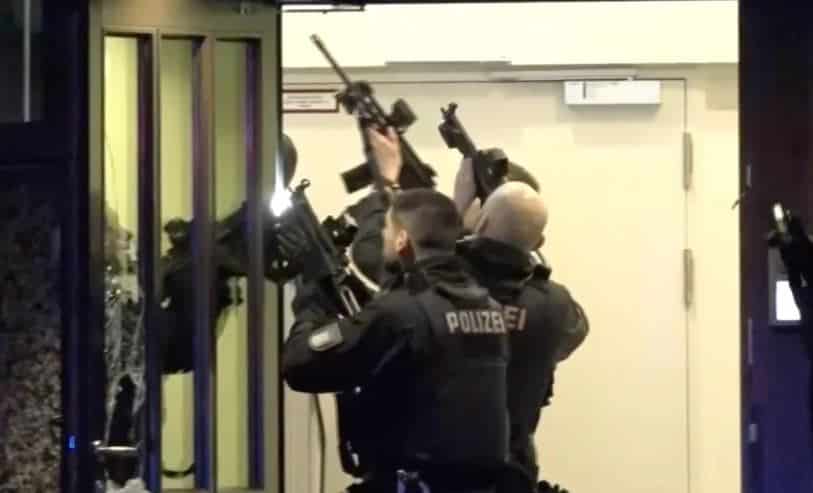
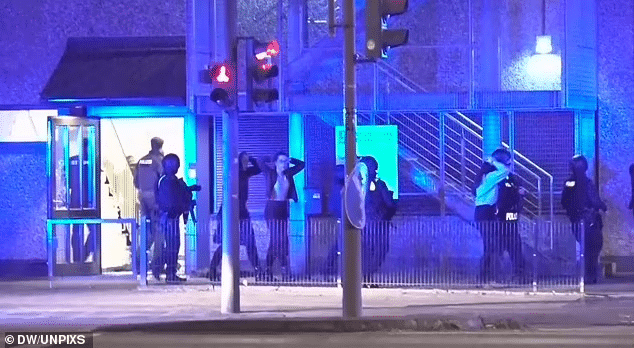
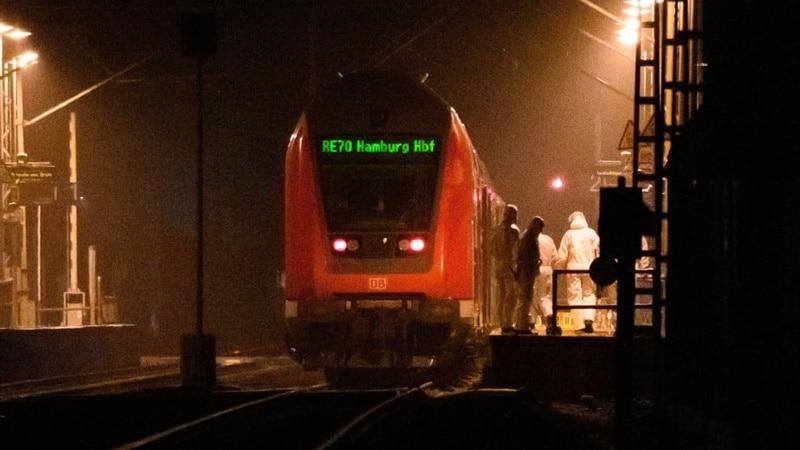
Germany: Mass shooting in Alsterdorf district of Hamburg, reports of 6 dead 14 wounded at Jehovah Witness Kingdom Hall, shooter may be among deceased

Note Google Translate – In the Alsterdorf district of Hamburg, there was a bloodbath in a church that left several dead. The fatal shots were fired just after 9 p.m. in a Jehovah’s Witnesses “Kingdom Hall” — a building used for worship.

According to BILD information, seven people were killed and at least eight others injured. Among them are several seriously injured, according to investigators. The police spoke of a large situation. The population was warned of “extreme danger” via the disaster warning app.

Twitter – Alsterdorf

From the DM – At least seven dead, ‘dozens injured’ in Hamburg bloodbath: ‘Gunmen’ open fire at Jehovah’s Witness church sparking ‘mass casualty incident’ in Germany’s second-biggest city – unclear if ‘shooters’ are dead or alive

They believe that a or the shooter may be among the dead, no motive.


A bit clearer picture emerging at the Guardian – At least seven killed and others wounded in Hamburg shooting

At least seven people have been killed and several more injured after a shooting in the northern German city of Hamburg, German media have reported, citing police and emergency services.

Police said the gunman was believed to be among the dead. “We have no indications of a perpetrator on the run,” a spokesman said.

Hamburg police tweeted earlier on Thursday evening that a major police operation was underway in the GrossBorstel district of the city, adding that they were urgently investigating the background, but gave no further details.

All we know – 7 dead, total likely includes the shooter, unconfirmed number of wounded as high as 14 according to reports, shooter not ID’d, no motive known. Police are calling it an “Amok” shooting according to Bild.de.

h/t HallsofMacadamia

Share

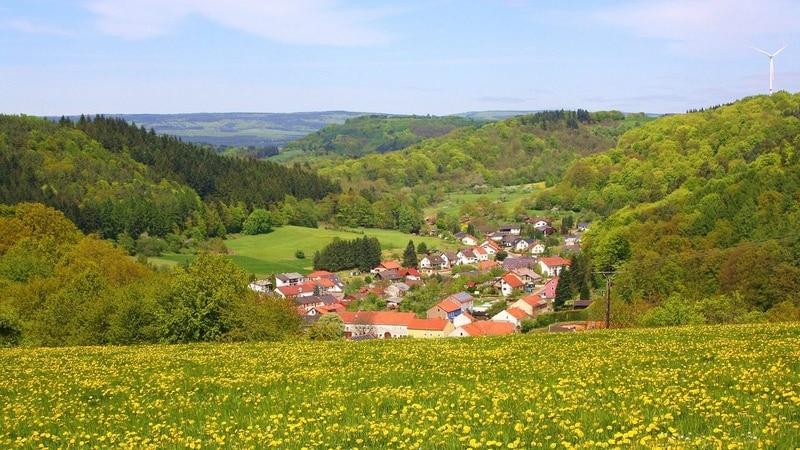
“Extremist” Germans Fleeing Multicultural Cities

The state intelligence chief in Saxony, one of the former states of the German Democratic Republic, has labeled Germans seeking to escape the multiculturalism of big cities for the more tranquil countryside ‘right-wing extremists.’

Dirk-Martin Christian, the president of the Saxon Office for the Protection of the Constitution (LfV)—the East German state’s domestic intelligence agency—smeared those fleeing the “multicultural life” of large urban areas in search of an “intact national community” in more “remote areas” as radical extremists, the Berlin-based newspaper Die Welt reports.

Share

Ukraine war costs Germany’s economy €100 billion

The head of the German Institute for Economic Research (DIW) has said he expects Russia’s invasion of Ukraine to continue to hamper growth and inflate costs in the German economy.

German government interventions and a mild European winter have cushioned the blow of the war and its consequences, but Europe’s largest economy is likely heading for a recession.

DIW President Marcel Fratzscher said the war and its effect on driving up energy prices have already cost the German economy about €100 billion ($107 billion), or about 2.5% of gross domestic product (GDP).

Share

A Russian Mole in Germany Sows Suspicions at Home, and Beyond

A few days before Christmas, a convoy of security vehicles invaded a quiet corner of Weilheim, a quaint Bavarian town of pastel squares and fastidiously kept cobblestone streets. Their target seemed as unassuming as the setting: a local children’s soccer coach.

Before then, nothing had stood out about the man, fellow coaches recalled. He was not short, but not tall — friendly, yet never wanting to discuss anything but soccer. Grasping for words, most landed on the same choice: “unremarkable.”

That changed when they learned he had been arrested on charges of treason and spying for Russia in one of the gravest espionage scandals in recent German history.

Share

Germany: Train and Station Knife Attacks More Than Doubled in 2022

The number of criminal offenses, including violent knife attacks and sexual assaults, rose considerably on trains and at train stations in Germany over the past year. Official government figures reveal that incidents involving knife attacks more than doubled compared to the previous year.

While the federal police registered 398,848 criminal offenses on trains and at train stations in 2022, an uptick of roughly 12% compared to the previous year, 336 knife attacks—82 on trains and 254 at train stations—were recorded, representing an increase of 102% year over year, the Hamburg-based newspaper Der Spiegel reports.

According to the statistics collected by the federal police last year, 71 suspects were investigated for violent crimes involving the use of knives on trains, 36 of whom were classified as “non-Germans”—just over 50%. In the previous year, that figure was six of 25, or 24%.

Share

Is Germany the West’s weakest link?

At the height of the Cold War, it was Britain that appeared to be infested with Russian spies and moles. From the 1950s to the 1980s a series of security scandals, from the defections to Moscow of the Cambridge spies Burgess, Maclean and Philby, to the exposure of the Queen’s art advisor Anthony Blunt as a Soviet mole, made Britain in the eyes of her allies the weakest link in confronting Communist Russia.

Share

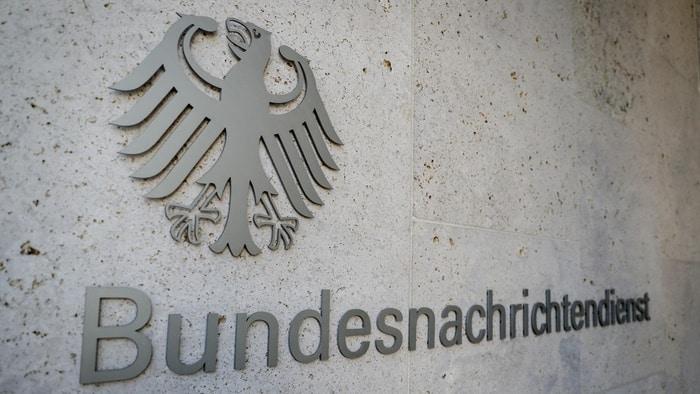
How Germany’s intelligence agency became a liability for Europe

The unmasking of a German football coach as a Russian double agent is the latest in a string of embarrassments for Berlin’s spy unit

On February 24 of last year Bruno Kahl, Germany’s spy chief, was in Ukraine when Vladimir Putin ordered his forces over the border.

He had travelled for “urgent talks” in Kyiv seemingly unaware of the imminent danger of invasion.

The man heading one of Europe’s most important intelligence agencies ended up being escorted home by special forces in a desperate retreat.

Share

German public support for Ukraine is falling

New polls show that attitudes to the conflict may be shifting

As the Russian invasion of Ukraine approaches its first anniversary later this month, it remains unclear how this conflict is supposed to end. Nowhere is this more evident than in Germany’s foreign policy, where Olaf Scholz is proving to be something of an enigma. While it is true that Germany has not been Kyiv’s loudest cheerleader, the reality is that military equipment has been delivered continuously. Only the United Kingdom and the United States have provided more provisions to the Ukrainian armed forces.

Share

Germany arrests second suspect in Russia espionage case

German authorities have arrested a man alleged to have passed intelligence information to Russia, German prosecutors said on Thursday.

The suspect, identified as Arthur E. in line with Germany’s privacy laws, was arrested on Sunday in Munich airport, as he arrived from the US.

German authorities were aided in their efforts by the US Federal Bureau of Investigation (FBI).

“Arthur E. took the information to Russia and handed it over to the intelligence service there,” said a statement from prosecutors.

Share