The dirty secret behind your electric vehicles exposed: How the TIRES produce 20% more pollution than their gas equivalents

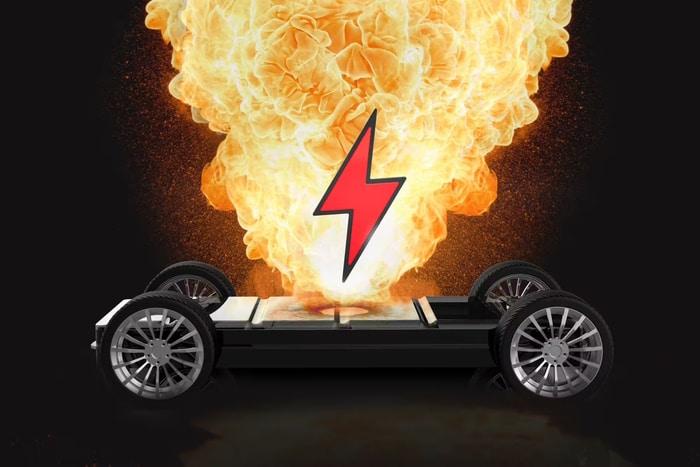
Electric vehicle tires produce up to 20 percent more pollution than their gas-powered equivalents, experts have revealed, meaning EVs could be coming at a higher environmental price than many owners are aware of.

For decades, the impact of tailpipe emissions from gas-powered cars has been the primary draw of battery-powered vehicles.

But experts are warning that tires, which are often overlooked as a source of pollution, are releasing chemicals and microplastics into the environment. While switching to an electric car no doubt helps lower how much carbon you generate, it actually exacerbates the problem of tire emissions.

Share

Woman in love with idea of an electric car … the reality not so much

My EV gave me freedom from the pumps, but took away my freedom to roam

I have always loved road trips. It started in my childhood when every so often my dad would arrive home from work early on a Friday afternoon and holler up the stairs to my mom, “Pack up the car, Marsha! Let’s get out of town!”

My sister and I would be thrilled for the unexpected adventure, heading out from our home in Victoria to wherever was appealing — Washington state, the British Columbia Interior, the Rockies.

In the spring, I purchased a new electric Volkswagen ID.4, which has a range of more than 400 kilometres on a full charge, and thought this was the perfect opportunity for a road trip back to B.C. to move the rest of my belongings to Ontario.


EV’s work fine as city cars but even that won’t last if everyone buys one. There simply isn’t the infrastructure to support mass usage on the scale of ICE vehicles so bear in mind that seperating you from your vehicle is the end-game of the Totalitarian Green Scam.

I am hopeful even docile Canadians will revolt if that twit Trudeau attempts to ban their cars.

The “status symbol” value is sure to drop as the virtue signalers clue in to the fact that they have been lied to and ICE vehicles are much more “green” than EV’s.

I am grateful that my condo does not have the capacity to handle EV charging. I would not want one of these potential fire-bombs parked next to my car.

h/t Mauser

Share

Electric Cars Are a Scam

The left likes to treat skeptics of electrical cars as if they were Luddites. Truth is, making an existing product less efficient but more expensive doesn’t really meet the definition of innovation.

Even the purported amenities and technological advances EV makers like to brag about in their ads have been a regular feature of gas-powered vehicles going back generations. At best, EVs, if they fulfill their promise, are a lateral technology.

Share

What’s Going on With Subsidized EV Battery Plants in Ontario?

With the recent announcement that Stellantis and LG Energy Solution will be moving forward in building their electric vehicle (EV) battery plant in Windsor, Ont., following a financing deal with Ottawa and the Ontario government, there are now plans for two large EV battery plants to be built in the province, both of which have received significant government funding.

The federal government first announced in March that PowerCo, which is a subsidiary company of Volkswagen, would be building the European auto giant’s first overseas battery cell plant in St. Thomas, Ont., after receiving a number of subsidies from Ottawa.

Share

‘They’re Coming for Your Cars’

Even if politicians can push us all into e-vehicles, they will have to be small and scarce to achieve emissions goals.

“The Impossible Dream” is the title of a new report on electric vehicles from the Manhattan Institute’s Mark Mills. After reading the particulars one wonders whether that title is too optimistic. One issue that probably hasn’t received enough attention is that even if politicians can manage to force all of humanity out of cars with internal combustion engines, it will still be extremely hard to meet political emissions targets unless the surviving electric vehicles are small and scarce. What also may not be appreciated given all the alleged innovation surrounding EVs is that production of the minerals needed to make them may become less environmentally friendly, not more.

Share

Electric vehicles are the least effective way of satisfying consumers’ needs

Big government mandates are forcing the national transition to electric vehicles. Consumer demand doesn’t appear to matter.

Government is doling out billions in special loans and subsidies to select companies and twisting tax policy to make EVs appear cheaper. At the same time, heavy-handed mandates are making traditional, reliable cars more expensive and harder to produce.

Share

Slow-selling EVs are the auto industry’s new headache

The U.S. electric vehicle market is growing, but not fast enough during the latest quarter to prevent unsold EVs from stacking up at some automakers’ dealerships or to allow Tesla to avoid new price cuts, according to analysts and industry data.

Rising inventories and price-cutting could represent only a short-term pause in EV market growth. But they could be signals that boosting U.S. EV sales above the current 7% market share level will be more costly and difficult than expected, even with federal and state subsidies. Automakers North America have billions of dollars in EV-related investments riding on how the next several quarters play out. If production of EVs continues to outpace demand, automakers will have to choose between slashing prices and profit margins, or slowing assembly lines.

EV’s have a niche as a status symbol for now. Once their many drawbacks become more widely known they will be avoided based solely on their impracticallity.

Share

Auto Unions Balk at Biden’s Plans To Force Americans Into Electric Vehicles

In a rare show of solidarity, American automakers and the unions representing their employees are begging the Biden administration to back off on its aggressive efforts to force Americans into electric vehicles in the name of combating climate change.

Leaders of the United Auto Workers union asked President Biden’s Environmental Protection Agency to water down a proposal to make upcoming emissions standards for internal combustion engines much stricter by 2027. The new standards would effectively require that two-thirds of all vehicles sold in the United States be electric by 2032.


Brown-John: Electric vehicles may come at substantial cost

… Another concern pertains to Ontario’s electrical grid which at the moment does not have sufficient capacity to service thousands of EV chargers. Don’t forget we’re also shifting away from natural gas to produce electricity.

The Ford government has been adding natural gas generators as a stop-gap measure to meet immediate needs. But this could preclude Ontario from accessing federal government carbon reduction incentives intended to reduce carbon emissions.

So, the obvious question is how in the long run does Ontario generate sufficient electricity to service thousands of EV chargers?

A good article illustrating the Cloudcuckooland inhabited by Trudeau and the like.

Share

Tow No! The Ford F-150 Lightning Struggled in Our Towing Test

Before you hitch an Airstream to your electric truck and set out to circumnavigate the country, you need to understand this: With the largest available battery pack, a fully charged 2022 Ford F-150 Lightning electric truck has less energy onboard than a regular F-150 with four gallons of gas in its tank.

Consider how far a combustion-powered F-150 would tow at max capacity on four gallons of regular unleaded. Thirty five miles? Maybe 40 if you drive slowly?


The video below was the first to let the world know of the very limited capacity of the Lightning as a daily driver work truck.

h/t Mauser

Share

Canada’s billions to Stellantis and Volkswagen make for a bad joke

There’s an old joke about corporatocracy that goes something like this: “Canada is a handful of companies in a trench coat.” If that one doesn’t have you howling in your seat, there’s an addendum: “That we subsidize.” Is it funny yet?

The latest iteration of the joke pertains to multinational automakers Volkswagen and Stellantis. In recent weeks, the latter threatened to pack up shop on its EV battery plant in Windsor, Ont. – and halted construction to drive home the point. That after the federal government and Ontario promised more than $13-billion in capital and tax credits to Volkswagen for a larger factory. As a result, both levels of government scrambled to strike a deal with Stellantis, which was revealed last week to be worth $15-billion.

We are lead by grifters & morons.

Share

GOLDSTEIN: Trudeau, Ford roll the dice on electric vehicles with our cash

With Prime Minister Justin Trudeau and Ontario Premier Doug Ford throwing our money at Volkswagen Group and Stellantis-LGES to build electric vehicle battery plants in Ontario, it’s probably a bad time to mention Volkswagen is cutting back on the production of EV vehicles in Germany, due to “strong customer reluctance in the electric vehicle sector.”

Only stupid people and grifters are on board with EV’s.

Share

How long does it really take to save money on an electric car? Experts warn it can take up to a decade to break even – as EV drivers say they regret investing

The US is in the middle of an electric car revolution. This week, Tesla announced a record surge in sales in the second quarter of the year – delivering 446,140 cars worldwide in the three months leading up to June, outdoing its own prediction of 445,000.

Business has been bolstered in the US by federal tax credits for electric vehicles that have made them more accessible than ever for Americans.

Electric cars are much more expensive to buy, but usually cheaper to run – as maintenance and fuel costs can fall substantially with an eco car.

Share

‘We had no choice’: The inside story of how Doug Ford gave away billions of dollars to a Corporate welfare case in dodgy EV battery plant deal

‘We had no choice’: The inside story of how Doug Ford finally blinked and spent billions of dollars to save an EV battery plant in Ontario

Carlos Tavares, the canny top executive of auto giant Stellantis, says weeks of crisis talks to salvage a Windsor EV battery plant taught him one thing: Canada’s negotiators move way too slowly in a global green industrial race that’s accelerating at warp speed.

“It was difficult to get this agreement inked at the end of the day,” Tavares said in an exclusive interview with the Star from Portugal, “but it was rewarding.”

Rewarding, no question.

Share

‘Massively expensive’: Canadian Taxpayers Federation takes aim at $15B deal for Windsor battery plant

The $15-billion agreement to keep an electric vehicle (EV) battery plant in Windsor, Ont., is “massively expensive for taxpayers,” says the Canadian Taxpayers Federation.

“These big corporations are getting buckets of cash courtesy of cost to taxpayers while the rest of us get tax hikes,” said Franco Terrazzano, federal director for the Ottawa-based federation.

“We have governments that are choosing to help multinational corporations over taxpayers.”

Share