Despite reforms, mining for EV metals in Congo exacts steep cost on workers

After revelations of child labor and treacherous conditions in many cobalt mines, automakers and mineral companies said they would adhere to international safety standards

FUNGURUME, Democratic Republic of Congo — Alain Kasongo, burly and goateed, worked for four years driving the heavy trucks that hauled away tons of cobalt ore from a gaping hole at one of the biggest mines in Congo. The vibrations from the equipment and the jolts of driving over rough ground during his 12-hour shifts could be bone-rattling, he said. Finally, the pain in his spine grew so unbearable that he needed surgery.


Share

Battery plants or bust: Why some think Ottawa’s $30-billion EV bet puts Canada on the wrong track

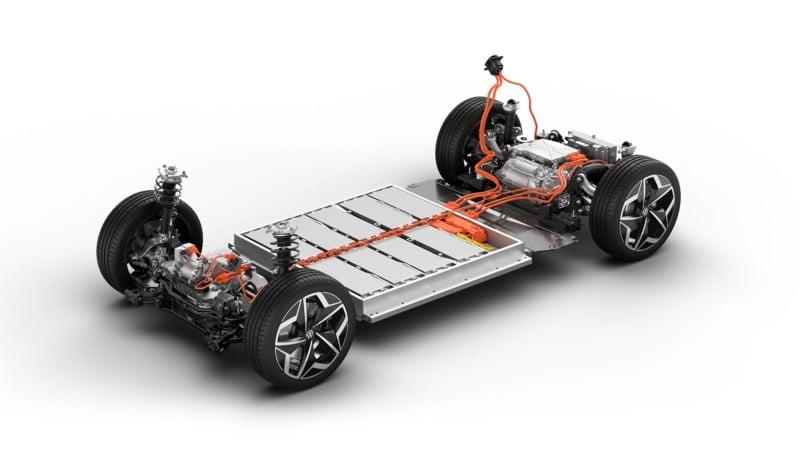
Canada is pouring billions of taxpayer dollars into electric vehicle battery plants, but is this the best way for policymakers to grab a piece of the EV supply chain?

It’s a question some industry watchers are asking now that the federal government has committed $13 billion toward a Volkswagen AG battery plant in St. Thomas, Ont., as well as $15 billion in funding for the construction of a Stellantis NV-LG Energy Solution battery plant in Windsor, Ont.

While batteries are a key component of the EV market, Greig Mordue, a professor of engineering at McMaster University in Hamilton, Ont., and former general manager of Toyota Motor Manufacturing Canada, thinks the incentives were “over-the-top,” and ultimately won’t give Canada the edge over the United States it is looking for.

Share

GREEN: Trudeau EV mandates wildly out of sync with EV metals timelines

Recently on Twitter, Alberta MP Shannon Stubbs, Tory shadow minister for energy and natural resources, put forth a series of tweets on Ontario’s Ring of Fire region, heretofore a promised land of metals and minerals invoked as an enabling resource for the Trudeau government’s electric vehicle (EV) dreams.

Share

‘Bloody Dangerous:‘ Jeremy Clarkson Blasts Electric Cars over Safety Concerns

In a recent critique, television star and car enthusiast Jeremy Clarkson has voiced serious concerns about the safety of electric vehicles, calling them “bloody dangerous.” His concern goes beyond cars to other devices powered by batteries, like electric bikes. Clarkson writes, “People have died, and that’s not surprising when you learn that a fully charged e-bike contains the same explosive energy as six hand grenades.”

Share

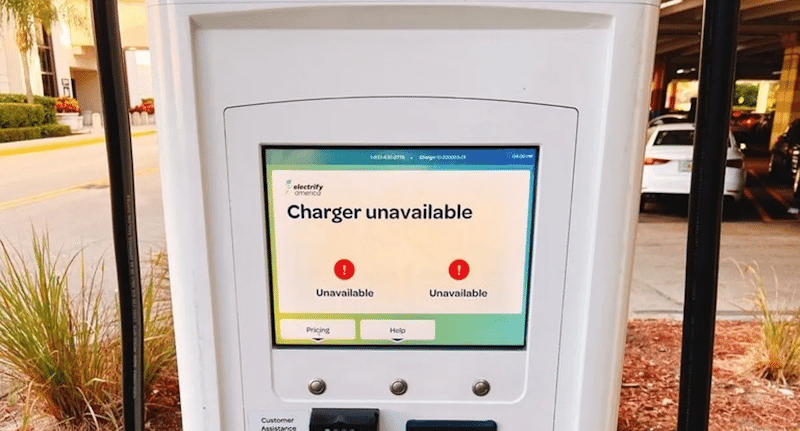
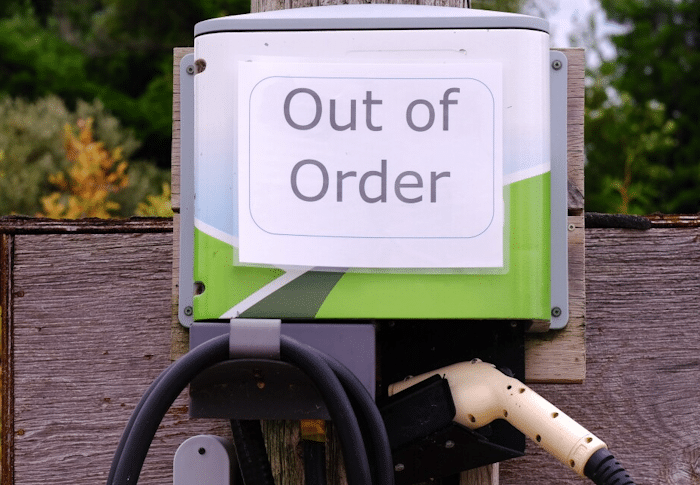
Shorter CBC: Hey Poor People Hurry Up & Pay For Our EV Chargers

When it comes to EV chargers, Canada is way behind the U.S., analysis shows

Canada’s most populous provinces are falling behind many U.S. states when it comes to building fast charging stations for electric vehicles, a CBC News analysis shows, raising questions about whether this country’s infrastructure is ready for a transition to cleaner energy.

Quebec and B.C. fare the worst among Canada’s large provinces in terms of the number of publicly accessible fast charging stations compared to the number of electric vehicles on the road, according to CBC’s analysis of data from Transport Canada, Statistics Canada and the U.S. Department of Energy.

Tax payer dollars should not be paying for the toys of the Rich.

Share

Q&A: Fire on board the Fremantle Highway ship

What caused the fire?

The Fremantle Highway caught fire off the Dutch island of Ameland on July 26. The car carrier had set out from Bremerhaven, Germany, to sail to Singapore. The cause of the fire has not been definitively established, but it is possible that the battery in one of the electric cars on board ignited.

This can happen, for example as a consequence of a production error. On Friday evening, the Dutch authorities reported that the fire had died down and was emitting less smoke. However, it is still burning, and it is not clear for how long the freighter can withstand the heat.

According to the German environment ministry, the ship is carrying 1,600 tons of heavy fuel oil and another 200 tons of marine diesel oil. There is still the danger of an environmental disaster.

Share

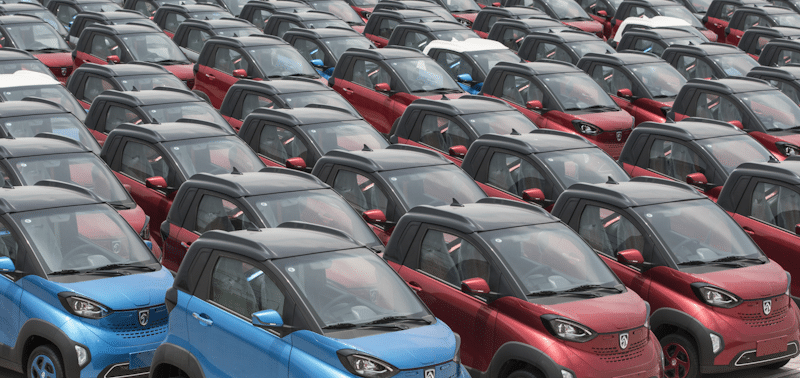
Warning that Chinese electric car ‘invasion’ could paralyse Britain

Communist country’s extensive penetration of the British economy poses national security risk

A coming influx of Chinese electric cars represents a security risk as they could be remotely controlled to “paralyse” Britain, according to the head of the industry’s professional body.

Britons face “major security issues” from Chinese cars, warned Professor Jim Saker, president of the Institute of the Motor Industry.

In a report due to be shared with car makers and regulators, Prof Saker said there was “no way” of stopping Chinese cars coming under remote control.

Share

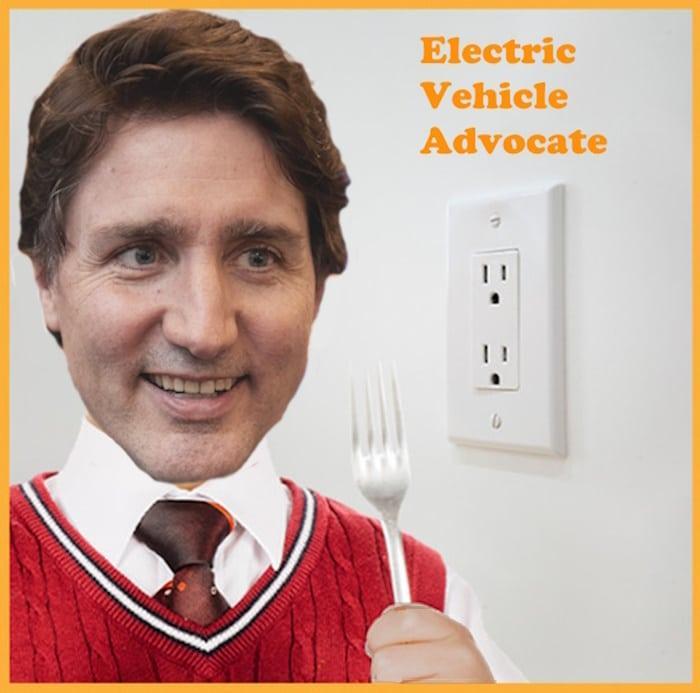
GUNTER: Trudeau government’s policy for EVs just foolish


The Ford Motor Company announced Thursday it was pushing back its target for building electric vehicles (EVs). Instead of rolling out EVs at a rate of 600,000 a year by the end of 2023, Ford would not reach that goal until sometime in 2024 (or maybe even 2025).

It’s like Canada’s industrial policy is being made by a couple of not very bright high school kids.

Share

Why E-Bikes, EVs and Laptops Are Catching Fire

Deadly incidents raise safety concerns about batteries used to power electric cars and cellphones

… The Dutch coast guard is investigating whether a deadly fire aboard a car carrier Tuesday originated in one of the electric vehicles onboard. In June, four people died from a fire caused by lithium-ion batteries at an e-bike repair store in New York City, part of a growing trend. There were 74 lithium battery incidents on flights last year, according to the Federal Aviation Administration, and that number rose every year but three during the preceding decade.

Here’s how the batteries work, and how they can malfunction …

So how easy would it be to sabotage an EV battery?

Share

Electric Vehicles: Ford’s Warning

In a recent Capital Letter, I wrote this on the topic of the current “forced” (the degree of coercion varies from jurisdiction to jurisdiction) switch to electric vehicles (EVs):
A willful determination to enforce a transformation on this scale, regardless of what markets signal, consumers want, and manufacturers can produce, is an invitation to disaster.
The creation of a mass market for EVs in the West was never going to be straightforward, which is why it would have been better to let one develop naturally (or even with a little government help here and there: it’s not unknown for government to play some role in the development of innovative technologies). Instead, Western governments have embarked on a rushed transformation away from the internal-combustion engine without taking much heed of the consequences other than so far as the climate is concerned. (And switching to EVs won’t make too much difference to the climate in the short term, or perhaps even longer, either, but shhhh . . .)
Share

Batteries

Depending on your outlook, the Net Zero movement could result in anything from the seven horses of the apocalypse riding across the sky to the delivery of some sort of Nirvana for humankind.

No matter what your view, some facts are clear and undisputed.

Fact one. It is going to cost a fortune and you will be paying the bill. Fact two. If investments in intermittent wind and solar didn’t provide significant returns, no one would invest in them. Fact three. Intermittent and unreliable generators will always deliver intermittent and unreliable electricity.

Share

William Watson: We need a Model-T EV if consumers are to switch

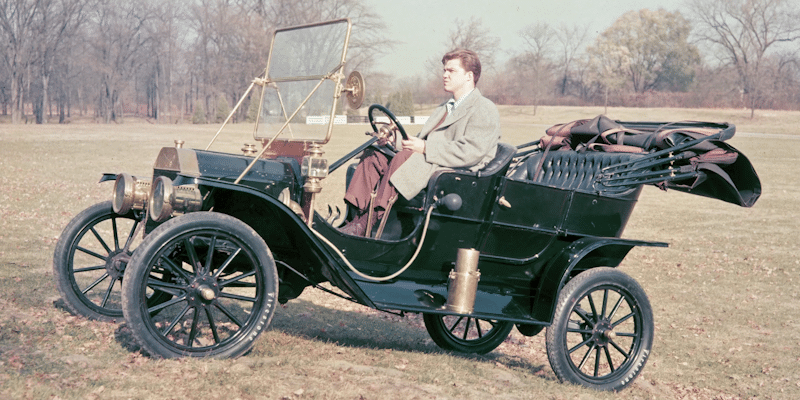
In 1909, a new research paper tells us, cars were very much a luxury good, even in the United States. The average car cost roughly $3,000 at a time when per capita income was $317 and average annual wages in manufacturing $518 (all figures in US$). A manufacturing worker “would have to work for almost six years while consuming nothing in order to afford the average car,” write the paper’s economist-authors, Shari Eli from the University of Toronto and Joshua K. Hausman and Paul W. Rhode from the University of Michigan.


How can an article like this fail to mention that the transition from ICE to EV’s will require a huge investment in infrastructure that is likely to fall far short of requirements, especially in Canada, the country of the Sacred Cash Enviro-Review Payout Machine?

Besides electricity demand just where are those necessary rare earths expected to come from and at what cost? One day the Congo is gonna run out of kids.

Share

Labour council using diesel generators to charge electric bin lorries

A council has been using diesel generators to charge its new electric bin lorry fleet after a problem with their charging stations.

Cardiff Council started transitioning to electric vehicles for its waste collection in 2021 as part of its efforts to hit net zero by 2030.

But it was forced to admit that it was charging the vehicles using diesel generators after a local resident spotted the backup power.

Share

As e-bikes proliferate, so do deadly fires blamed on exploding lithium-ion batteries

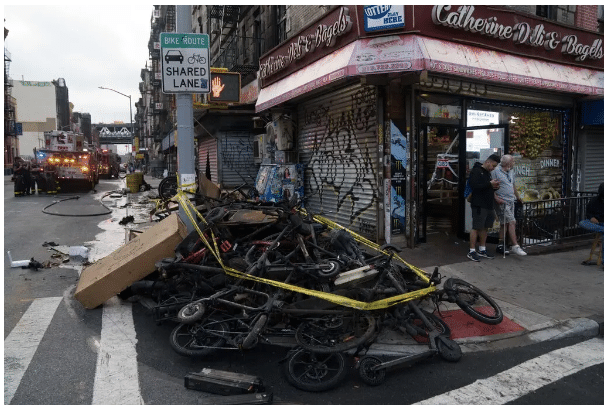
NEW YORK (AP) — The explosion early on a June morning ignited a blaze that engulfed a New York City shop filled with motorized bicycles and their volatile lithium-ion batteries. Billowing smoke quickly killed four people asleep in apartments above the burning store.

As the ubiquity of e-bikes has grown, so has the frequency of fires and deaths blamed on the batteries that power them — sparking a push to better regulate how the batteries are manufactured, sold, reconditioned, charged and stored.

Consumer advocates and fire departments, particularly in New York City, are urging the U.S. Consumer Product Safety Commission to establish national safety standards and confiscate imports that don’t comply with regulations at the border, so unsafe e-bikes and poorly manufactured batteries can be taken off the streets and out of homes.

Share

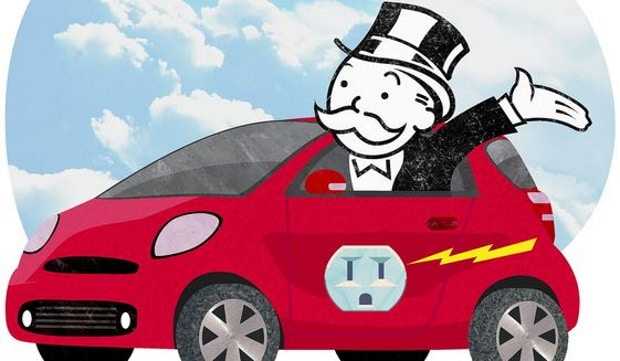
California Uses Temporary Diesel-Powered Electric-Truck Chargers

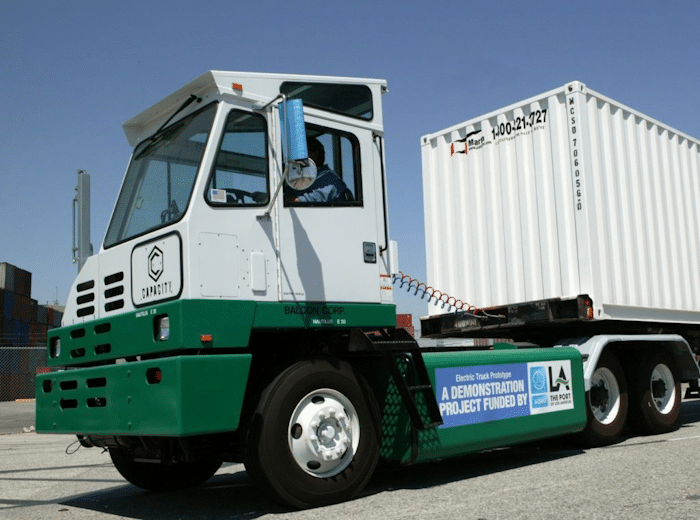
California drayage trucking companies (which operate in and around ports) are running up against a state-mandated deadline of January 1, 2024, after which any new trucks sold in the state must be zero-emissions. With current technology, that means electric, and the state isn’t ready for more electric trucks.

On July 16, the Wall Street Journal reported that there are fewer than 700 electric-truck chargers at depots in California right now. The state projects it will need 157,000 by 2030.

Share