Why Our EV Policies Are So Extremely Stupid

Incentive and tradition are against it, but auto executives occasionally blurt out important truths. The now retired Bob Lutz, who served in top roles for Ford, GM and Chrysler, regularly suggested the government should stop its fuel-economy nonsense and impose a gas tax if it wants Americans to buy high-mileage vehicles.

The late Sergio Marchionne of Fiat and Chrysler correctly called the Obama fuel-economy rules an “electric vehicle mandate.” Not for public consumption, a Toyota executive complained the same rules were also a “second bailout for Detroit” due to a carve-out for U.S.-built gasoline-powered pickups and large SUVs.

Last year, a splenetic industry insider emailed me attacking a column by basically repeating my own argument back to me (a typical phenomenon): Americans want big cars. Detroit is incentivized by the so-called chicken tax to wring all its profits from large, gas-fueled pickups and SUVs while making “compliance” vehicles for the government that lose money.

Share

EVs are running out of customers — and some dealers don’t want them anymore

More electric vehicles are being pumped out of car factories than ever before – but some dealers don’t want them.

Electric car inventory has been piling up on dealership lots this year as companies up their EV production, leading some dealers to say enough is enough. Some are telling automakers they don’t want any more until they can sell what’s sitting, several dealers told Insider.

“We have turned away EV inventory,” said Scott Kunes, COO of Kunes Auto and RV Group, which sells Detroit brands as well as Nissan and Mitsubishi in the Midwest. “We need to ensure that we have a good turn on it.”

This rush to market of a technology not yet ready for prime time is madness.

Share

Ford CEO Admits ‘Reality Check’ When He Took Electric F-150 Truck on Road Trip

Ford CEO Jim Farley admitted he underwent a “reality check” when he tried to make a cross-country road trip in the Ford electric F-150.

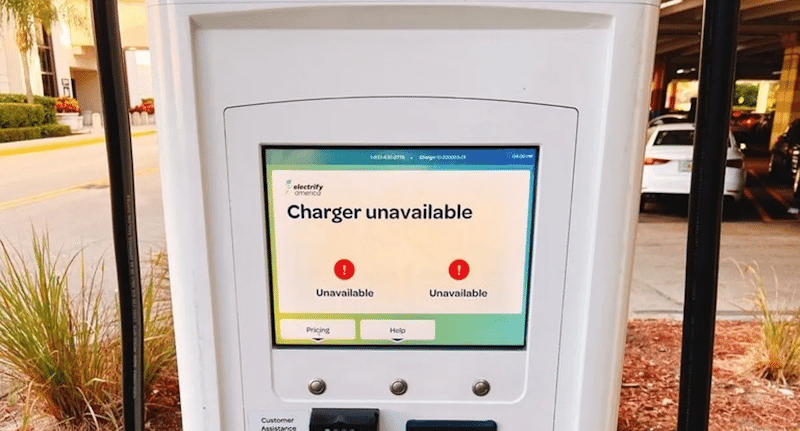
“Charging has been pretty challenging,” Mr. Farley said in a video on X, formerly known as Twitter. “It was a really good reality check of the challenges of what our customers go through and the importance of fast charging and what we’re going to have to do to improve the charging experience.”

Share

Majority of Americans say federal incentives are not convincing them to buy an EV

The majority of Americans say federal incentives are not convincing them to buy an electric vehicle – and some claim it has even put them off entirely.

Joe Biden has ambitions to make two-thirds of new vehicle sales electric by 2032. He also plans to build a network of 500,000 chargers across the country.

But an exclusive survey by DailyMail.com has found that this dream is falling flat.

Share

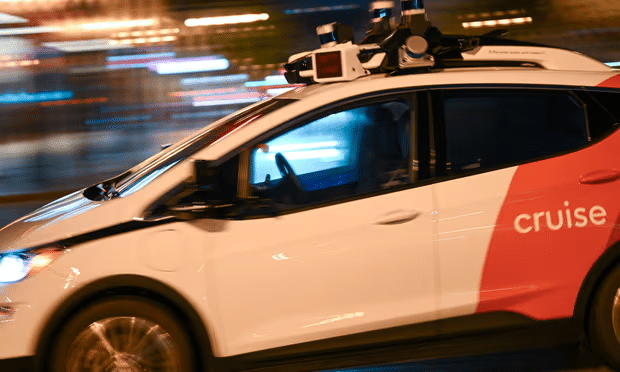
Cruise agrees to cut fleet of San Francisco robotaxis in half after crashes

… The development comes just over a week after California regulators allowed Cruise and the Google spinoff Waymo to operate autonomous robotaxis throughout San Francisco at all hours, despite safety worries spurred by recurring problems with unexpected stops and other erratic behavior.

“The DMV is investigating recent concerning incidents involving Cruise vehicles in San Francisco,” the DMV said on Saturday in a statement to the Associated Press. “Cruise has agreed to a 50% reduction and will have no more than 50 driverless vehicles in operation during the day and 150 driverless vehicles in operation at night.”

Robotaxi breakdowns cause mayhem in San Francisco days after expansion vote

Share

Canada to invest $644 million in Ford battery materials plant in Quebec

Canada will be investing $644 million in a new battery materials production plant to be built in Becancour, Que., by automaker Ford Motor Co. and South Korean companies EcoProBM and SK On Co.

The federal government and the province of Quebec will each provide conditional loans of $322 million to build the plant, which is valued at more than $1.2 billion and is expected to create over 345 jobs, the federal government said in a press release on Aug. 17.

Fun fact!

Share

Is It Time to Ban Electric Vehicles?

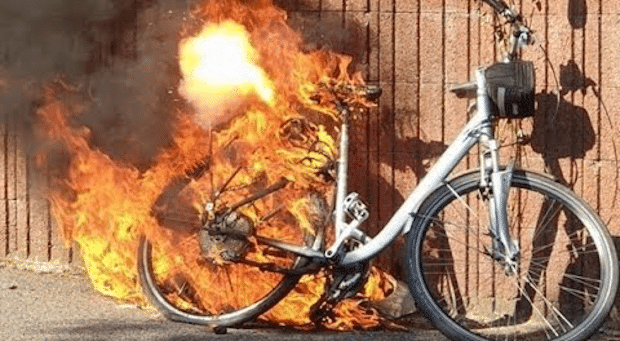
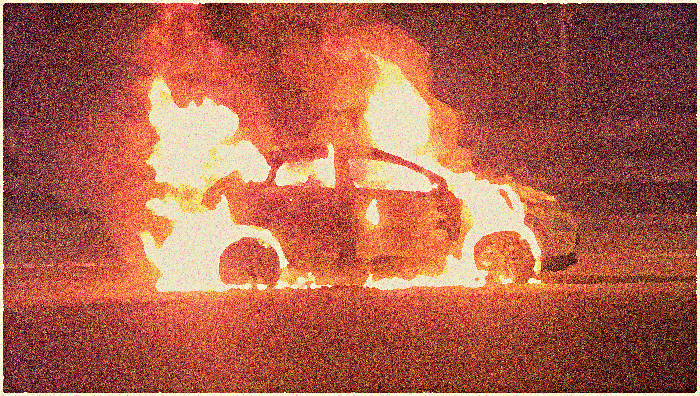
The New York Fire Department recently reported that so far this year there have been 108 lithium-ion battery fires in New York City, which have injured 66 people and killed 13. According to FDNY Commissioner Laura Kavanagh, “There is not a small amount of fire, it (the vehicle) literally explodes.” The resulting fire is “very difficult to extinguish and so it is particularly dangerous.”

Last year there were more than 200 fires from batteries from e-bikes, EVs, and other devices.

Share

Scaremongers on the Left Surprisingly Calm as Deaths Mount From Electric Bike and Car Battery Fires

The New York Fire Department recently reported that so far this year, there have been 108 lithium-ion battery fires at New York City, which have injured 66 people and killed 13. According to the FDNY commissioner, Laura Kavanagh, “There is not a small amount of fire, it (the vehicle) literally explodes.” The resulting fire is “very difficult to extinguish and so it is particularly dangerous.”

Last year there were more than 200 fires from batteries from e-bikes, EVs, and other devices.

Share

Stranded F-150 Lightning Owner Calls EVs “Biggest Scam Of Modern Times”

A Canadian man’s frustrating ownership experience with his brand-new Ford F-150 Lightning is the perfect example of why a poor charging infrastructure can become the worst enemy of EV adoption.

Winnipeg area-based Dalbir Bala bought a Ford F-150 Lightning electric truck in January for around $85,000 (115,000 Canadian dollars), plus tax.

He purchased the vehicle to use it both for work and recreational activities, such as driving to his cabin or going fishing, and chose to go all-electric to save money on gas and because owning an EV is “responsible citizenship these days.” But his ownership experience has been far from ideal so far.

This is a retelling of the poor saps Winnipeg to Chicago journey. Worth a read.

Share

Techno-Hell: Utah and Oregon Now Require GPS Trackers on EVs in Lieu of Registration Fee, Tax Drivers by the Mile

State governments have historically generated revenue to maintain roads, traffic lights, and the like by adding a tax at the pump. Owing to the federal government-prodded transition to electric vehicles (EVs) to combat something called “climate change,” states stand to lose out on this source of revenue as EVs obviously don’t require gasoline to operate.

Share

BC Hydro bids to raise EV charging fees, but customers say time-based fees are unfair

Nanaimo resident Rick Butzelaar bought an electric vehicle less than two months ago and the savings so far have been significant, but he doesn’t have a home charger and a recent bid by BC Hydro to increase public charging rates has him concerned.

The provincial Crown corporation wants to raise rates at public electric vehicle charging stations by 15 per cent from Sept. 1, which the company says would allow it to recover the costs of providing them over 10 years.

Some consumers say the proposed rate hike would reduce the incentive for others to make the switch to an electric vehicle.

Share

‘Gas Guzzlers’: The Government Lied About Car Markets

The regulatory regime forces consumers to buy “efficient” and expensive vehicles.

How did the government get into the business of decreeing how many miles per gallon new cars (and trucks) must deliver? The authority to do this is nowhere to be found in the Constitution — though some will say, rightly, that there were no cars (or trucks) around when the Constitution became the law of the land in 1789.

Share

Family ditches electric truck on drive from Winnipeg to Chicago after charging troubles

The owner of a 2023 Ford F-150 Lightning Lariat with an extended-range battery regrets buying the electric truck after attempting a road trip, only to abandon it and finish the drive with a gas-powered rental vehicle.

Dalbir Bala of La Salle, Man., left the truck in Minnesota last month after he said he tried unsuccessfully to charge the battery at two different charging stations.

“It was really a nightmare frustration for us,” Bala said.

Wait until the “Rolling Blackouts” caused by load shedding start, then the real fun will set in.

Share

How electric cars became a battleground in the culture wars

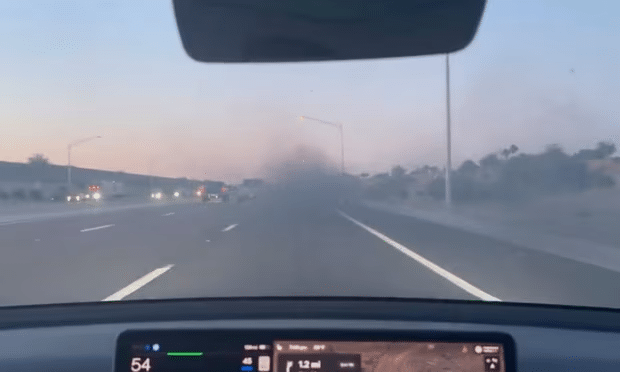
Three pickup trucks lined up on a highway in front of a Tesla in Phoenix, Arizona, to form a rolling roadblock. The Tesla driver, a computer scientist, moved lane to wait for them to let him past. What came next was unexpected: a video on social media from the incident in June shows a belch of acrid black smoke from the engine of one of the trucks, enveloping the electric car following behind.

The Tesla driver had been caught by a “rolling coal”, a deliberate modification of a diesel engine to increase the engine’s horsepower – while also dramatically increasing pollution. It is also illegal: Sinister Diesel, one of the companies selling “defeat devices” used to roll coal, agreed to pay a $1m (£780,000) fine this week for breaking environmental laws.

It was not a one-off. Since at least 2014 rolling coal has become a symbol of dirty protest against the rise of electric vehicles (EVs). Around the world, the electric car has been caught up in the culture wars, as tensions grow around the shift from the era of fossil fuels to net zero carbon emissions.

Share