Auto industry warns China EV tariff concession risks Canadian jobs and investment

Auto industry warns China EV tariff concession risks Canadian jobs and investment

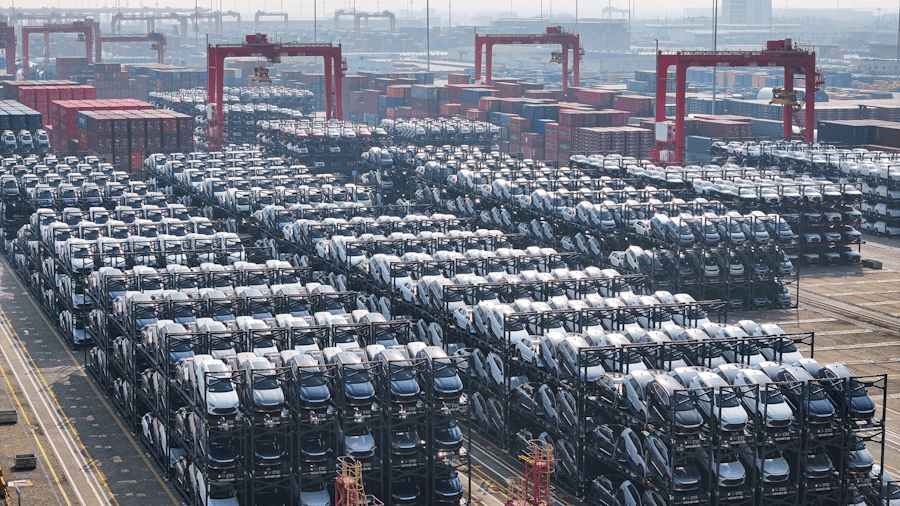
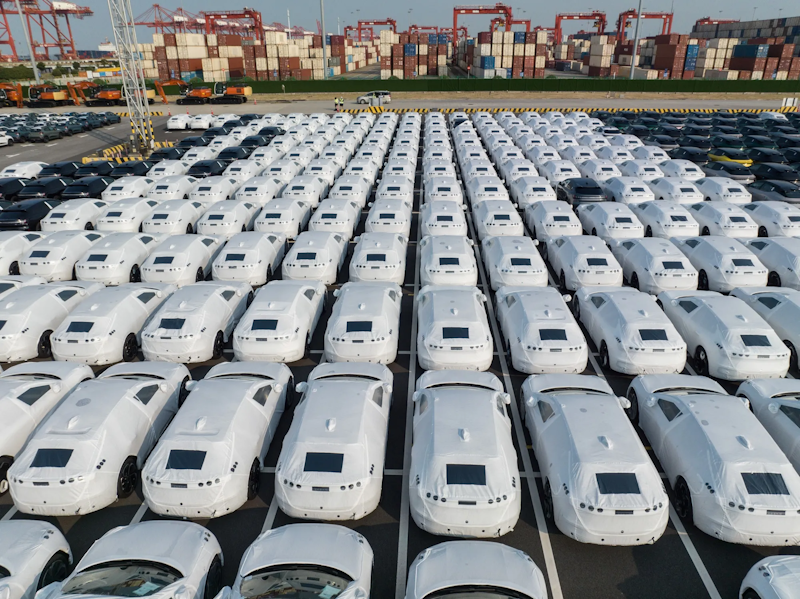
Canada’s auto sector is warning that a federal decision to ease tariffs on Chinese electric vehicles could undermine domestic manufacturing and weaken North American supply chains, as executives say the policy puts Canadian jobs at risk.

The concerns were raised at a Commons science committee hearing after cabinet approved a quota allowing up to 49,000 Chinese-made battery electric vehicles into the Canadian market this year at reduced tariff levels, with the cap set to increase by 6.5% annually.

Share

Quebec EV owner’s 16-month repair nightmare exposes limits of Canada’s first ‘anti-lemon’ law

Quebec EV owner’s 16-month repair nightmare exposes limits of Canada’s first ‘anti-lemon’ law

A Quebec woman whose new electric vehicle was in and out of the shop for 16 months says the first-in-Canada anti-lemon law doesn’t go far enough.

“I find that it’s protecting more the companies than the actual consumer that’s buying the car,” said Natalina Recine.

Her ordeal began when she bought her new Chevrolet Equinox EV at Le Relais Chevrolet, Buick, GMC in Montreal in December 2024.

Share

Best-selling Chinese electric car records everywhere you’ve been

Best-selling Chinese electric car records everywhere you’ve been

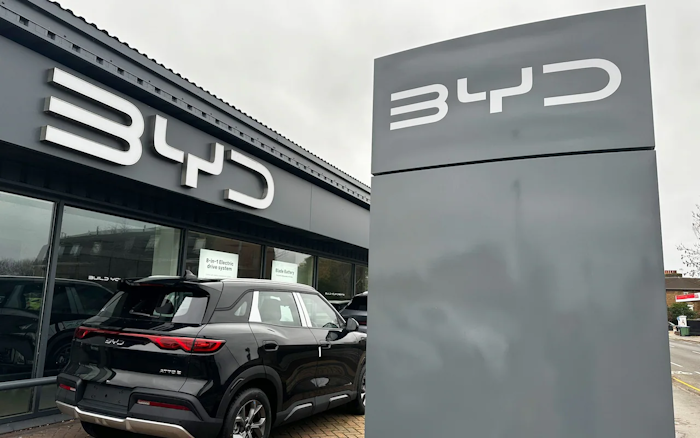
Electric cars made by a best-selling Chinese brand are recording drivers’ every journey and storing them forever, it has emerged.

Security researchers were able to extract the entire location history of a BYD Seal car sold in the UK, from its production in China to its eventual dismantling.

While the company said it was not transmitting location data overseas, experts said the ease with which location history could be obtained represented a security risk.


BYD is moving into the Canadian market.

Share

Federal EV chargers see little use despite millions in taxpayer spending

Federal EV chargers see little use despite millions in taxpayer spending

Federal departments spent millions installing electric vehicle charging stations across government properties, but usage data shows many of the chargers are rarely used, with some sitting idle and others averaging fewer than one vehicle per day.

Blacklock’s Reporter says records tabled in the House of Commons show Natural Resources Canada could not provide a full breakdown of total spending per charger by location, despite overseeing a large portion of the rollout.

Share

The Electric Bus Bust Mayhem Continues

The Electric Bus Bust Mayhem Continues

I do like to follow up and keep you all on top of where things stand with some of the previous stories I’ve covered. Sometimes, it’s true, there’s not much to write about because whatever happened happened and then they lie there like a dead bug until they shrivel and go away of their own accord.

In other cases, there can be happier resolutions, which is always cheerful news, but those are admittedly rare.


Keeping an eye on …

REDACTED: City of Brampton’s $4-billion electric bus deal …

Share

Federal EV rebate rules leave Dodge Charger as only Canadian model eligible without price cap

Federal EV rebate rules leave Dodge Charger as only Canadian model eligible without price cap

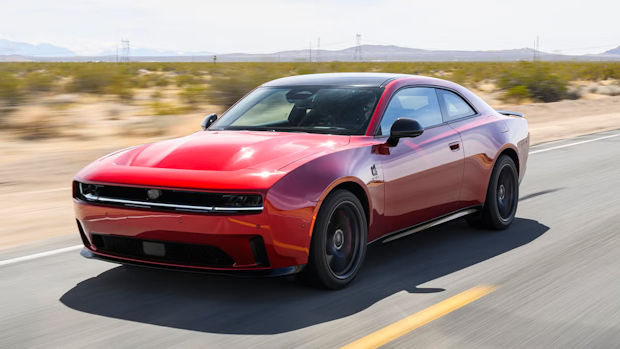
A federal electric vehicle rebate program is drawing scrutiny after records show the Dodge Charger will soon be the only Canadian-made vehicle eligible for incentives without a price cap.

Blacklock’s Reporter says documents tabled in the House of Commons by the Department of Transport indicate that, by year’s end, the Charger — built in Windsor, Ont. — will stand alone in qualifying for rebates on vehicles priced above $50,000.

Share

America Now Has an EV Rust Belt. High Gas Prices Won’t Rescue It.

GM supplier Magna is stuck with a plant built to churn out parts for battery-powered pickups; ‘the magnitude of uncertainty is unparalleled’

ST. CLAIR, Mich.—At first, North America’s biggest auto-parts supplier was thrilled to snag the job of making enclosures for the batteries in General Motors’ new electric pickup. The contract was so big—and promised to be for years to come—that Magna International built a new factory in a Michigan cornfield.

Five years later, that million-square-foot plant is mostly empty and losing money, a casualty of America’s messy breakup with electric vehicles. It is one of dozens of now desolate or sparsely used EV parts plants across the country.

Now the war in Iran has driven gas prices up so sharply that EV enthusiasts are daring to wonder whether U.S. car buyers are willing to give the vehicles another look. But Magna and its big Detroit customers are forging ahead with plans to roll back EV investments.

Share

CBC Offers Praise To Great Helmsman Xi: How China is charging forward with EV adoption as Canada prepares to welcome its cars

Hundreds of robots hum on a factory floor in Ningbo, just south of Shanghai, their long arms swooping and twisting, welding together different models of custom-ordered electric vehicles (EVs).

Robots also move briskly in the corridors delivering parts to different areas of the plant, playing elevator music to alert the few humans who work there to their presence.

This “dark factory” — where the lights don’t need to be on for the work to be completed, such is the extent of its automation — produces Zeekr vehicles, a luxury EV line owned by Geely, which is also the parent company of Volvo and Polestar.


On the one hand you have the CBC shilling for CCP EV’s like it was the Canadian edition of the China Daily pointing out they are almost untouched by human hands.

That unfortunately negates the parallel LPC narrative that our new CCP masters will build vast EV manufacturing plants in Canada employing many grateful Elbow People.

The story of this Great Elbow Forward  forgets to mention that the EV supply chain in glorious China is rife with slave labour!  


Just in … Mass robotaxi malfunction halts traffic in Chinese city

A mass robotaxi outage in the Chinese city of Wuhan caused at least a hundred self-driving cars to stop mid-traffic, sparking renewed debate around the safety of driverless vehicles.

Local police said initial findings suggested a “system malfunction” caused multiple vehicles to stop in the middle of the road on Tuesday.

Videos on social media have documented the outage, with one appearing to show it resulting in a highway collision, although police said no injuries had been reported and passengers exited their vehicles safely.


Share

How smart are battery-operated semi-trucks?

Tesla Transport Truck

I remember how excited the media and customers were when the ugliest truck that ever existed came out, the Tesla Cybertruck. It came out in 2023.

Musk predicted they would sell 250,000 to 500,000 Cybertrucks. In 2024, Tesla sold around 40,000; in 2025, around 20,000. I wonder why vehicles that are expensive, won’t go very far on a charge, are ugly, and take much longer to charge, would have trouble selling.

Share

Canada should ‘absolutely’ match Poland’s Chinese EV ban at military bases: Expert

OTTAWA — Intelligence and cybersecurity experts are warning the Liberal government about national security risks posed by allowing Chinese electric vehicles onto Canadian military bases.

Critics and some experts are even calling on Ottawa to ban the cars from Canadian Armed Forces bases and other sensitive sites due to onboard sensors they say could collect and transmit sensitive information to the Chinese government.

Share

As EV Market Stalls, Battery Makers Shift to Grids and Data Centers

Ford and others are converting battery factories to produce industrial and utility-scale energy storage

Makers of electric-vehicle batteries are pivoting to make energy storage for data centers and utilities, including the likes of Ford Motor

Battery manufacturers made significant investments in the U.S. in recent years, buoyed by policy support for EVs. That changed when President Trump’s administration took away carrots incentivizing EV buyers and did away with sticks that punished automakers for making gas-guzzlers. Benchmark Mineral Intelligence expects energy storage to make up 41% of total U.S. battery demand this year, up from 26% two years ago.

Share

How Canada’s embrace of Chinese EVs could scramble the American market

Americans will soon catch a glimpse of something North American politicians once tried to keep far away: cheap Chinese electric vehicles.

As Canada begins importing the EVs, U.S. residents in border cities like Detroit and Buffalo, New York, may see their northern neighbors at the wheel. Or American tourists visiting Canada may experience brands like Xiaomi, Leapmotor and BYD when taking a ride-share.

It’s a situation that the U.S. and Canada sought to avoid for years, worried that the introduction of China’s low-cost, high-tech EVs would undermine domestic automakers and lead to Chinese surveillance. But President Donald Trump’s 25 percent tariff on Canadian autos and auto parts has scrambled the North American auto market.

Share

Canada’s Conservatives Want Chinese EVs Barred and Their Software Banned

Canada’s Conservative opposition leader Pierre Poilievre on Sunday unveiled a plan to double the country’s vehicle production.

Polievre called for a tariff-free auto pact with the United States while pledging to scrap both the Liberal government’s Chinese EV import quota and its electric vehicle mandate.

Share

Chinese EVs Could Put Canadians Critical of China at Risk

Chinese electric vehicles present risks for Canadians who are critical of Beijing, as the vehicles are capable of sending camera, microphone, and location data back to China, a former senior government official told MPs.

Margaret McCuaig-Johnston, a China expert and senior fellow at the University of Ottawa, told MPs on the House of Commons international trade committee on March 12 that Chinese-made vehicles include software from the Chinese technology company Baidu, which collects data from the vehicles and transmits it back to China.

Share