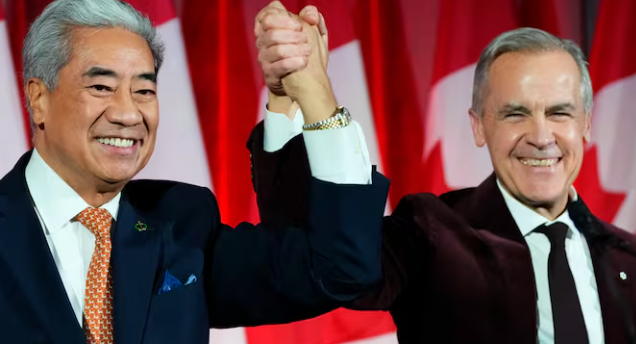
OTTAWA — Days before Prime Minister Mark Carney traded lower tariffs on Chinese electric vehicles for relief on Canadian canola, a Toronto-area Chinese business association reportedly urged his office to remove Canada’s 100 percent surtax on those vehicles, citing support for Canadian farm exports.
“EV’s – Electric Vehicles”
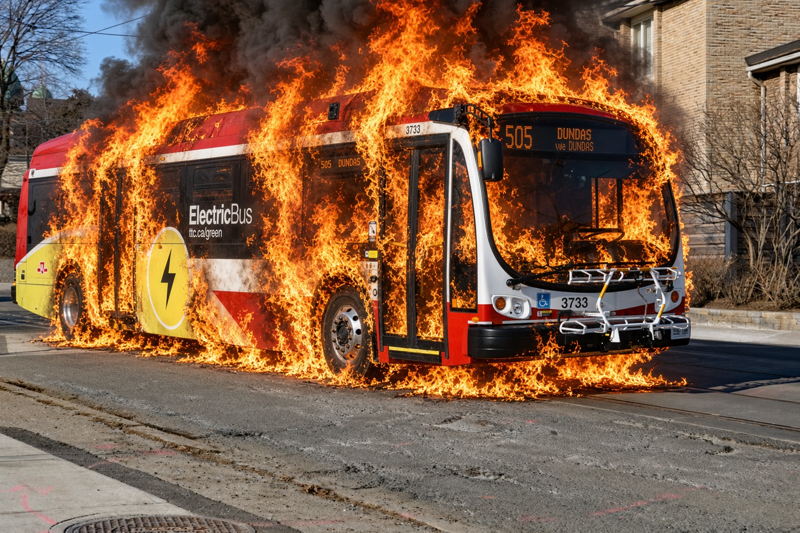
CRACKED: TTC’s disastrous electric bus experience exposed
Weeks before the board of the Toronto Transit Commission hurried a report off the floor, in a transit yard in Philadelphia, the electric buses were on fire.
The Southeastern Pennsylvania Transportation Authority, or SEPTA, had fought a losing battle with its fleet of 25 Proterra Catalyst buses. Cracks kept showing up in the bodies of the buses, including to the chassis, and they seemed to defy any patching done by SEPTA’s engineers.
Canada Ready to Clawback Stellantis Cash Unless Production Resumes at Toronto-Area Factory
OTTAWA—Canada’s Industry Minister Melanie Joly reiterated Friday that Stellantis STLA -4.46%decrease; down pointing triangle could be on the hook for hundreds of millions in repayments to the government unless the company’s factory near Toronto resumes auto production.
The plant, in Brampton, Ontario, has been idle since 2024, and Stellantis is in advanced talks to sell that factory to a Canadian armored-car maker.
“That plant needs to reopen. We need a new model. If not we’ll get our money back,” said Joly, who has threatened to sue Stellantis to recoup cash that lawmakers gave the car maker to retool its factories in Brampton and Windsor, Ontario.
Watch out Stellantis! Joly is on the case!
Volkswagen’s Electric Suicide Pact
Volkswagen is in trouble, and its very survival is now in question. The great German automaker is in peril largely due to the decision of European political leaders to impose an all-electric future on the European auto industry. But VW’s dire situation also stems from its eager embrace of that vision. Volkswagen acquiesced to the EV mandate without any pushback, pledging to be all-electric in Europe by 2035, and all-electric globally soon thereafter. Unfortunately for Volkswagen, the European Union allowed the import of cheap EVs subsidized by the Chinese government to capture much of the (forcibly-compelled) EV market in Europe.
Only 15,603 Chinese-made EVs have entered Canada under Carney-Xi deal
Fewer than 16,000 Chinese-made electric vehicles have entered Canada since January under a trade deal struck between Prime Minister Mark Carney and Chinese President Xi Jinping as part of what Ottawa described as a “new strategic partnership” aimed at easing tensions and strengthening economic ties.
That’s less than one-third of the 49,000 Chinese-made EVs that Canada said would be allowed into this country in 2026 under the deal, which vastly reduced tariff rates. Beijing in turn agreed to scale back retaliatory tariffs on Canadian seafood, canola seed and other farm products.
Carney scrapped EV sales mandate after only 35% of Canadians backed quotas
Prime Minister Mark Carney moved to scrap Ottawa’s electric vehicle sales mandate shortly after federal polling found nearly half of Canadians opposed the regulations and just 35% supported them, records show.
The Department of Natural Resources commissioned the nationwide survey, which found support particularly weak west of Ontario, including British Columbia where the Liberals held 20 seats
(Incognito)
EV charger thefts on the rise as value of copper reaches record high
As Canada aims for a goal of 90 per cent electric vehicle adoption by 2040, thefts from EV charging stations are becoming a prominent issue around the country.
The price of copper, the highly conductive metal which is used in EV charging cables, has been steadily climbing in recent years, to an all-time high of around $20.99 per kilogram earlier this month.
Thieves have been capitalizing on the rise in value, officials say, with thefts costing B.C.’s provincial power company more than $1 million in the past year.
Liberal delegation urged Chinese EV maker BYD to boost Canadian demand
CALGARY — A federal delegation visiting China encouraged electric vehicle giant BYD to generate more demand for its cars in Canada and consider establishing production operations here, according to a newly released report to Parliament.
The visit came as Canadian automakers warned that Ottawa’s guaranteed five-year quota allowing 278,989 Chinese electric vehicles into the country could threaten domestic manufacturing jobs, according to Blacklock’s Reporter.
Lithium-ion battery fire calls on track to reach 100 by year’s end, says Toronto Fire Chief, a 250 per cent spike since 2022
Toronto Fire Chief Jim Jessop is sounding the alarm following an uptick in recent years in explosions caused by faulty lithium-ion batteries, one of which was recently caught on video.
On Sunday morning, Toronto Fire Services responded to reports of a fire in southeast Scarborough on Mayhill Crescent, just south of Lawrence Avenue East and east of Scarborough Gold Club Road.
Yesterday an e-bike burst into flames outside a residence with lithium ion battery cells becoming dangerous projectiles. @Toronto_Fire firefighters are facing these far too frequently and they present unique challenges-flying battery cells, toxic smoke, extreme smoke as examples pic.twitter.com/k3Kw6vKgXH
— Jim Jessop (@ChiefJessopTFS) July 27, 2026
Canada’s Chinese EV Quota Is 38% Full — And Tesla Took Most of It
Ottawa’s quota for Chinese-built electric vehicles has passed a milestone nobody in Ottawa was aiming for. Global Affairs Canada’s utilization report now shows 9,235 vehicles cleared into the country under the 24,500-unit first window that runs March 1 to August 31 — about 37.7% of the allocation, with 15,265 permits still on the table and roughly six weeks left on the clock.
Two months ago the number was 2,910. The acceleration is real. What’s more interesting is what’s inside it.
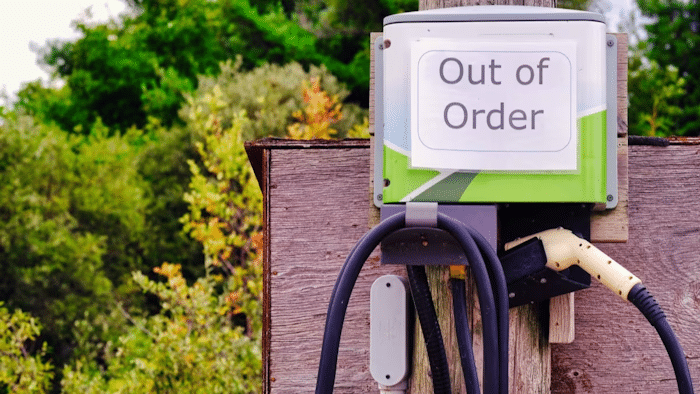
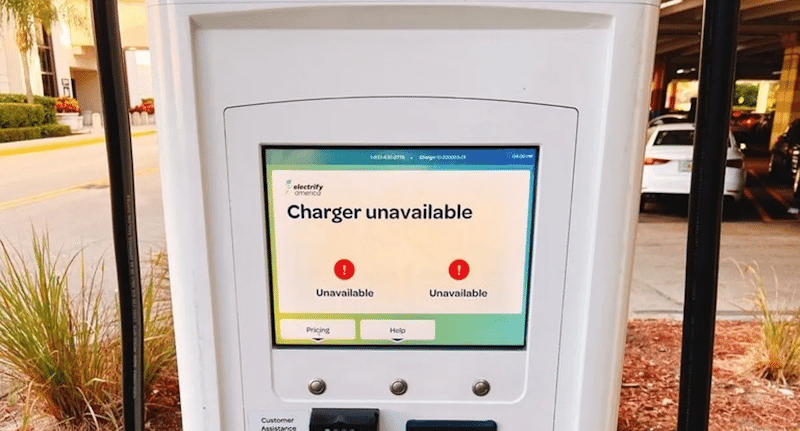
EV fast chargers in Canada are only being used 10% of the time
Canada’s public direct current (DC) fast-charging network continues to stretch beyond EV driver demand, leaving many stations operating well below utilization levels considered financially sustainable.
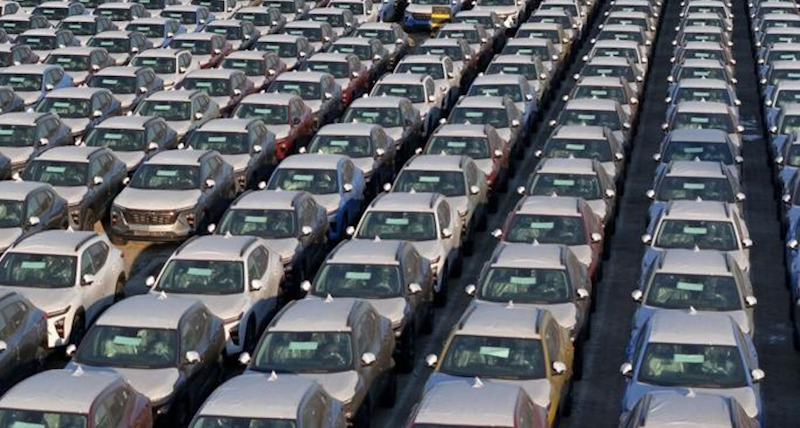
Socialist Spain Now ‘Gateway‘ for Chinese Vehicles Flooding Europe
Existing Chinese vehicle manufacturing plants in Spain have turned the country into a “gateway” for Chinese vehicles into Europe, local outlets stated.
The growing arrival and continued penetration of Chinese automakers in European Union markets is a now years-long phenomenon across the regional bloc. It is reportedly estimated Chinese brands represent a majority of the 27 new vehicle brands on sale in Spain and in other European countries, with Chinese vehicles accounting for nearly ten percent of all sales in Europe.
The Death of the Cash Cow
Looking at the global automotive market, one conclusion is unavoidable: the end of the combustion engine is nowhere in sight. The ideological crusade against Germany’s industrial backbone has merely led to the slaughter of the country’s automotive cash cows.
The reasons behind the decline of Germany’s automotive industry will remain subject to debate. But one thing is clear: an energy policy detached from economic reality, driven by climate-apocalyptic ambitions, has harmed the industry at least as much as strategic mistakes at the management level.
Chinese EVs are a bundle of security risks in a metal box. Do we really want them?
A $25,000 electric vehicle sounds like exactly what Canadian consumers have been waiting for. But when that bargain comes from China, the real cost may have little to do with the sticker price.
Earlier this year, as part of the strategic partnership with China, Prime Minister Mark Carney agreed to allow up to 49,000 Chinese electric vehicles (EVs) into the Canadian market at a favourable tariff rate. These EVs have just begun to arrive with prices between $25,000 to $35,000 – approximately half the current average cost for an EV in Canada. But before Canadian consumers get too excited or seek to jump behind the wheel of a freshly imported BYD or Dongfeng, they should understand why Canada had a prohibitive tariff rate on Chinese EVs prior to this year and what security risks the high-tech automobiles pose to both drivers and the country as a whole.
Chinese EVs arrive in Canada … ready to mine your personal data with Carney government approval!
A new automaker has entered Canada’s electric vehicle market giving some consumers looking to purchase a new vehicle more options.
Lotus, owned by the Chinese Geely Group, recently shipped its first Eletre EVs to Canada under a Canada-China deal signed in January. The premium SUV, made in Wuhan, is the first Chinese-owned and Chinese-built EV available for sale in Canada. The high-end vehicle starts at $119,000, while the fully loaded model sells for $159,000.
… Jody Thomas, Canada’s former National Security and Intelligence Advisor to prime minister Justin Trudeau, said that by law the Chinese state has access to any data gathered by the EVs.
Just the cost of doing business with the Chicoms.