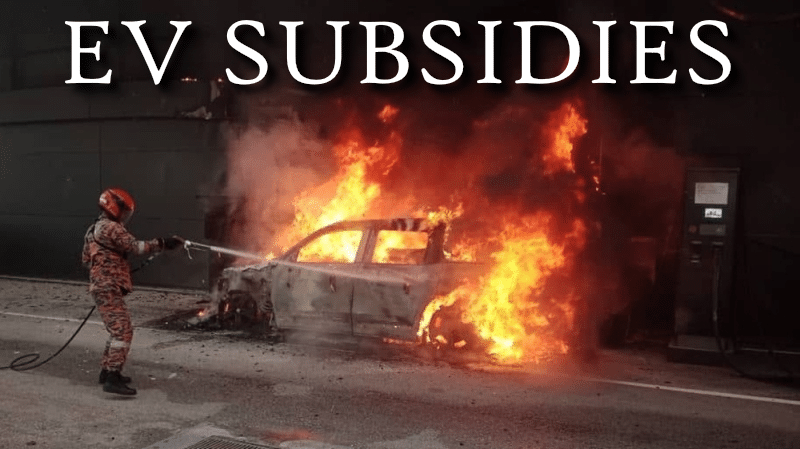
Contractors stiffed for millions in completed work by NextStar EV battery plant that Ontario & Federal governments propped up with $15B in tax breaks

Multiple Canadian contractors that have helped build a sprawling, taxpayer-supported electric vehicle (EV) battery plant in southwestern Ontario allege they haven’t been paid for millions of dollars worth of work, court records show.

Lawsuits between companies on complex projects like the NextStar Energy plant in Windsor aren’t abnormal, according to a veteran construction lawyer.

… But Sylvan Canada, one of the firms that has now resorted to legal action, says its experience on the $5-billion project was far from business as usual.


Share

What’s the deal with the Grits and EV cars?

In ten years you won’t be allowed to buy a new, gasoline-powered vehicle in our country. Sorry, but that’s the law.

Except you will be able to buy one. Confused? Can’t blame you. But the fog begins to lift when realizing the federal Liberals are involved in this malarkey. It’s because the Grits have successfully turned today’s legislation into nothing more than tomorrow’s electioneering gimmick.

Share

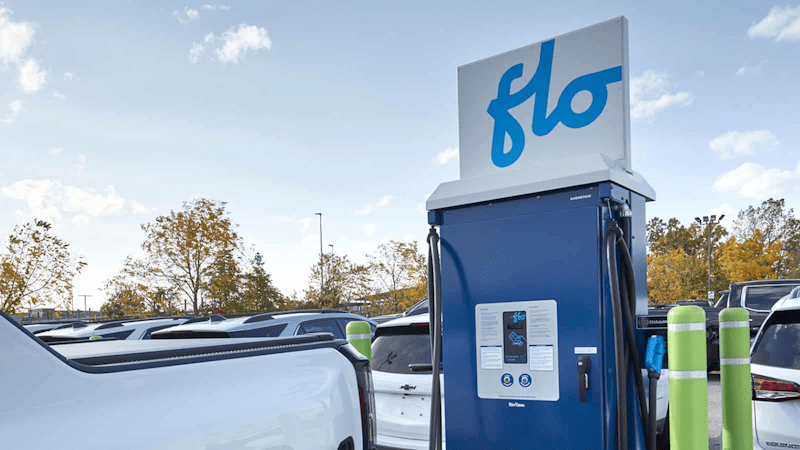
EV charger company Flo to close Quebec plant, lay off workers

A producer of electric-vehicle chargers in Canada is pointing to trade tensions and shifting political dynamics in America as a major contributor to its decision to close a manufacturing facility in Shawinigan, Quebec. Flo, founded sixteen years ago in Quebec as AddENÉRGIE, is shuttering one of its three plants, throwing approximately 80 employees out of work. Flo has two other production sites, one in the Grand-Mère area of Quebec, plus another in Auburn Hills near Detroit.


Of course … Canada Infrastructure Bank marks its first EV charging investment with a $220 million commitment to FLO®

Share

What will kill the electric car this time: Trump or Canada’s haplessness? … Suicide is more likely

It appears we have elected a federal government that is not only eager to support a new oil pipeline in British Columbia, but may end up throwing our electric vehicle ambitions into reverse—if not into the ditch.

This could be hasty and unduly negative, but Prime Minister Mark Carney has so far shown far less interest in the clean technologies of the future than in roads, railways, ports and pipelines for his “major infrastructure” projects.

The most optimistic speculation is that his government will extend deadlines for EV adoption by a few years in response to pressure from the Canadian auto sector. Automakers argue, reasonably, that the Justin Trudeau-era decree—that 20 per cent of new cars sold in Canada must be zero-emissions by 2026—is undoable for a variety of reasons, with one of them being the Trump administration’s sharp turn away from electrification and back to gas-powered behemoths.

Another EV evangelist shorted out of reality.

Share

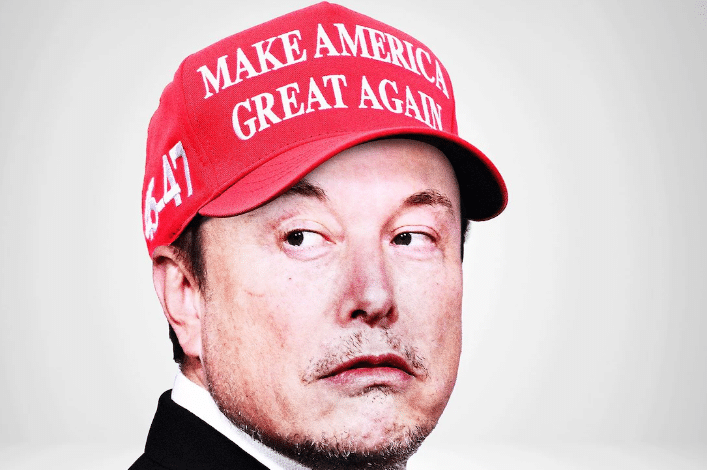
Canada’s EV mandate directly benefits Musk. He’ll lose big if it’s dropped.

OTTAWA — Canada’s electric vehicle mandate is under fire from Washington — and if it falls, one of the biggest losers could be Elon Musk.

That’s because the mandate, a climate change policy from the Justin Trudeau era, requires carmakers to hit 20 percent EV sales by 2026, or else buy credits from companies that have exceeded the goal. In Canada, that means they have to buy credits from Tesla, because it only sells EVs.

The Eco-Fanatics must be so torn.

Share

GREEN: Carney government should swiftly axe foolish EV mandate

Two recent events exemplify the fundamental irrationality that is Canada’s electric vehicle (EV) policy.

First, the Carney government re-committed to Justin Trudeau’s EV transition mandate that by 2035 all (that’s 100%) of new car sales in Canada consist of “zero-emission vehicles” including battery EVs, plug-in hybrid EVs and fuel-cell powered vehicles (which are virtually non-existent in today’s market). This policy has been a foolish idea since inception. The mass of car-buyers in Canada showed little desire to buy them in 2022, when the government announced the plan, and they still don’t want them.

Share

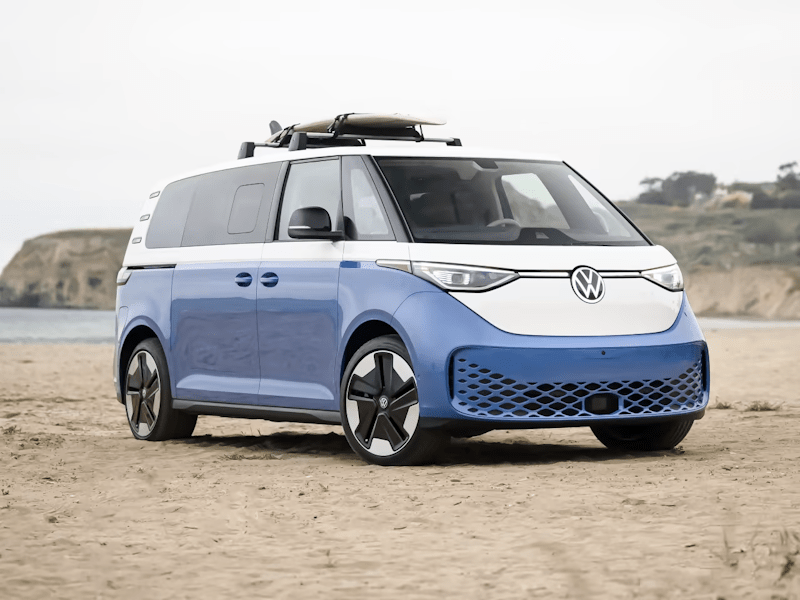
How Volkswagen’s Electric Bus Went From American Flagship to Flop

As psychedelic rock blared, Thomas Schäfer hopped onto a Huntington Beach, Calif., stage flanked by surfboards two years ago to announce the rebirth of an automotive icon, the Volkswagen bus.

The German auto giant was bringing back the bus as an electric vehicle, albeit one with a boxy design and two-tone paint job reminiscent of the original. The reboot was more than two decades in the making, and the company said the vehicle would soon be available in the U.S.

“Finally, finally,” said Schäfer, a top VW executive, as the bus they called the ID.Buzz rolled across the stage to wolf whistles from the crowd.

The reception since has been considerably less enthusiastic.

Share

The madness of Canada’s electric-car mandates

EVs are almost comically unsuited to a vast, cold country like Canada.

Justin Trudeau’s legacy is alive and well in Mark Carney’s iteration of Canada’s Liberal Party. While the former PM’s deeply unpopular carbon tax may have been scrapped, his spirit of phony solutions to the ‘climate-change crisis’ prevails.

Across the border, US president Donald Trump has nixed any attempts at electric-vehicle (EV) mandates, saying, ‘electric cars are fine, but not everyone should be forced to own one’. By contrast, the Canadian Liberal Party has maintained its plan to ensure 20 per cent of new passenger vehicles sold in 2026 are either battery-powered or plug-in hybrid models. It intends to increase that number to 60 per cent by 2030, and to 100 per cent by 2035.

Share

Fanatics that don’t want you to drive anything lobby Carney to keep Stalinesque EV Mandate

Environment group warns against repealing federal EV mandate

An environmental think tank is warning the federal government against repealing its electric vehicle mandate, instead suggesting that politicians should be helping to put more EVs on the road.

In a statement published Friday, Clean Energy Canada gave three recommendations to the federal government to help deliver affordable EVs to Canadians for less than $40,000.
The group, based out of Simon Fraser University in British Columbia, said Ottawa should retool its EV mandate by revisiting its near-term targets to help the auto sector “weather this temporary storm” of slumping EV sales.

Share

Kelly McParland: EV mandate another fanciful Trudeau plan Carney forced to reckon with

It’s not always the unexpected that gets governments in trouble — often enough it’s their own bad judgement, poor timing or general clumsiness that gets in the way. But the unanticipated does happen a lot.

Parties and politicians put time and effort into concocting a set of policies aimed at winning votes by proposing remedies to problems identified as occupying top rungs of current voter concern. If they’re lucky they get elected, presumably intending to put those policies into effect at the earliest opportunity. Then the world shifts and pulls the rug from under them.

Share

Amid tariffs and falling sales, is Canada’s EV mandate doomed?

With U.S. tariffs on steel, aluminum and light-duty vehicles continuing to batter the Canadian automobile industry, the CEOs of Canada’s big three automakers are asking for a break.

They met with Prime Minister Mark Carney this week to lobby for the elimination of the Liberal government’s zero-emission vehicle (ZEV) mandate. Maintaining it, they say, will cripple their companies and put thousands of jobs at risk.

Share

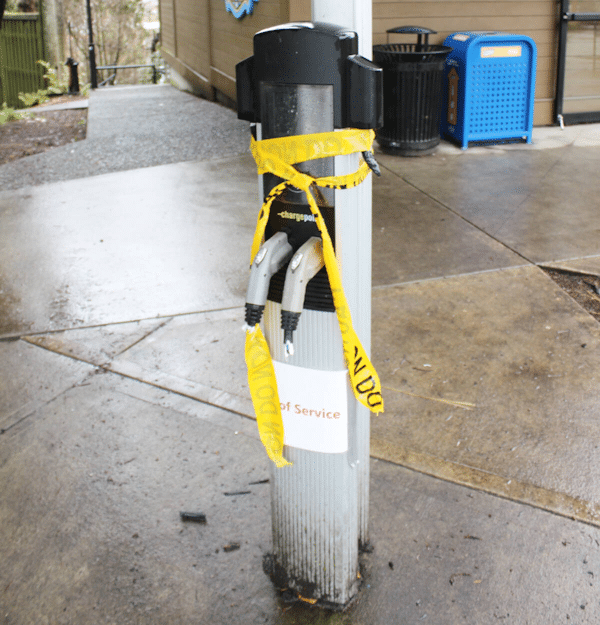
Copper thieves target electric car chargers

Criminal gangs are targeting electric car chargers, stripping copper from the cables and leaving drivers unable to refuel.

InstaVolt, one of Britain’s biggest charging networks, said over 700 stations had been targeted in a wave that it has linked to organised crime. Incidents have risen from 140 a year ago.

The company has been forced to develop an anti-theft electric charger in an attempt to combat the crime wave. Bosses have said the spate of outages has dented consumer confidence in charging stations, affecting electric car uptake.

Share

How Trump’s EV Policy Reversal Could Reshape Canada’s Mandates

The Canadian government has made electric vehicles (EV) a priority over the last few years, with sizable funding for battery factories, a rebate program to improve affordability, and a mandate to phase out the purchase of new gas-powered vehicles by 2035.

But with the U.S. government signing resolutions blocking a similar EV mandate in California and some 17 other states, coupled with continued issues related to affordability, Ottawa’s plan could be facing increasing obstacles.

Share