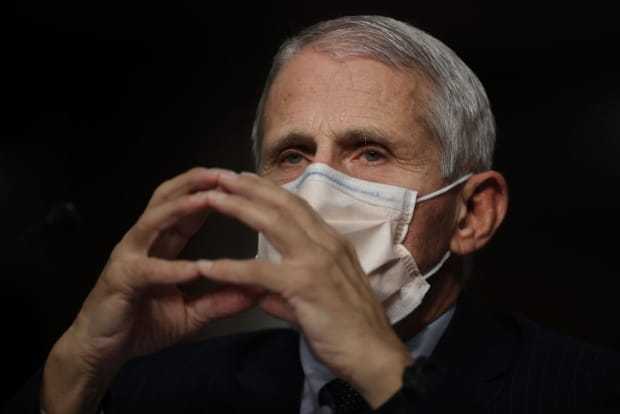

Analysis: Test, test, test? Scientists question costly mass COVID checks

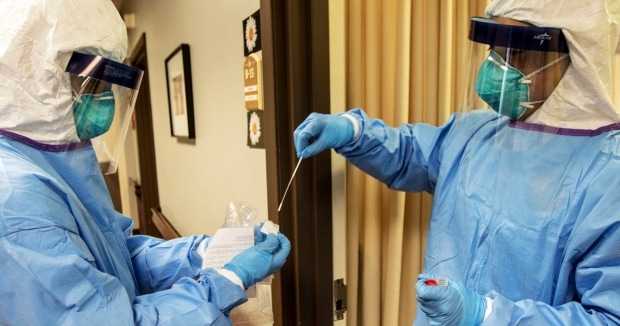
COPENHAGEN/LONDON, May 10 (Reuters) – For many people worldwide, having cotton swabs thrust up their nose or down their throat to test for COVID-19 has become a routine and familiar annoyance.

But two years into the pandemic, health officials in some countries are questioning the merits of repeated, mass testing when it comes to containing infections, particularly considering the billions it costs.

Chief among them is Denmark, which championed one of the world’s most prolific COVID testing regimes early on. Lawmakers are now demanding a close study of whether that policy was effective.

Share

Won’t Get Fooled Again: After the pandemic, Americans should never let public-health authorities deprive them of their liberties.

More than a century ago, Mark Twain identified two fundamental problems that would prove relevant to the Covid pandemic. “How easy it is to make people believe a lie,” he wrote, “and how hard it is to undo that work again!” No convincing evidence existed at the start of the pandemic that lockdowns, school closures, and mask mandates would protect people against the virus, but it was remarkably easy to make the public believe that these policies were “the science.” Today, thanks to two years of actual scientific evidence, it’s clearer than ever that these were terrible mistakes; yet most people still believe that the measures were worthwhile—and many are eager to maintain some mandates even longer.

Share

BA.4, BA.5 in Canada: What we know about the 2 new Omicron subvariants

The World Health Organization (WHO) is closely monitoring two new COVID-19 subvariants of Omicron, the highly transmissible variant of concern now dominant around the world.

Since January, more than 300 cases of the BA.4 and BA.5 sub-lineages have been reported in several countries, according to data by cov-lineages.org. Most of those cases have been detected in South Africa.

As of May 3, Canada had detected three cases – two of BA.4 and one of BA.5, the Public Health Agency of Canada (PHAC) told Global News on Friday.

Wow! 3 cases! But a new wave?

Share

Ontario Liberals pledge to add COVID-19 vaccine to school immunization list


Liberal Leader Steven Del Duca said the best way to get back to normal is to make classrooms safer.

“There are nine existing vaccines … in that roster of universal required vaccines,” Del Duca said during a campaign stop in Ottawa. “We will add the COVID-19 vaccine to that list. And we’re going to do that because the science is settled on this.”

Share

A peer-reviewed MIT study found COVID vaccinations in younger patients were associated with “severe” heart problems

COVID-19 vaccination was “significantly associated” with a 25% jump in emergency medical services (EMS) for heart problems in 16-39 year-olds in Israel, whose vaccination rate is among the world’s highest, according to a peer-reviewed study by MIT researchers.

Published last week in the Nature journal Scientific Reports, the study found no association with COVID infections, however.

Share

How Sweden’s Covid gamble paid off: Scandinavian nation has suffered FEWER deaths in pandemic than majority of Europe

Sweden has logged one of the lowest pandemic death tolls in Europe despite its refusal to impose lockdowns, World Health Organization estimates suggest.

The Scandinavian nation became an international outcast when it defied scientific advice and chose not to shut down in 2020 — instead relying on people’s common sense and light social restrictions.

Now, the WHO’s analysis of excess deaths — people who died directly and indirectly from Covid — suggests the highly-controversial hands-off approach has been vindicated.

h/t RM

Share

Does US really have world’s highest Covid death toll?

The US is approaching one million Covid deaths – the highest total officially recorded anywhere in the world.

But a new report from the World Health Organization (WHO) shows several other countries recorded more deaths above their normal levels than the US over the last two years.

So does the US really have the highest Covid death toll, and by what measure?

Share

COVID led to 15 million deaths globally, not the 5 million reported – WHO

May 5 (Reuters) – Almost three times as many people have died as a result of COVID-19 as official data show, according to a new World Health Organization (WHO) report, the most comprehensive look at the true global toll of the pandemic so far.

There were 14.9 million excess deaths associated with COVID-19 by the end of 2021, the U.N. body said on Thursday.

The official count of deaths directly attributable to COVID-19 and reported to WHO in that period, from January 2020 to the end of December 2021, is slightly more than 5.4 million.

Share

MIT study finds COVID vaccines ‘significantly associated’ with jump in emergency heart problems

COVID-19 vaccination was “significantly associated” with a 25% jump in emergency medical services (EMS) for heart problems in 16-39 year-olds in Israel, whose vaccination rate is among the world’s highest, according to a peer-reviewed study by MIT researchers.

Published last week in the Nature journal Scientific Reports, the study found no association with COVID infections, however.

Share

I Wonder Why Hundreds of CDC Employees Aren’t Vaxxed

For the past two years now, the U.S. Centers for Disease Control and Prevention (CDC) has aggressively lectured us about wearing masks, social distancing, vaccination, and even boosters.

We’re told repeatedly that “the science” says masks work, that the virus can’t travel more than six feet or while you’re eating food, that the vaccines are completely safe, etc.

As of right now, they’re recommending boosters every few months until the end of the world.

But while the CDC officially recommends all of us to get jabbed for eternity, as of April 12, there are nearly 400 employees at the CDC who have refused to get vaccinated. According to a report from the Epoch Times, 382 workers at the CDC are unvaccinated. Another nine have only had one dose of Pfizer or Moderna, meaning they’re technically not “fully vaccinated.” These unvaxxed employees account for 3.2% of the CDC’s workforce.

Share

Study into mRNA vaccine death rates sends ‘danger signals’

A new Danish study reveals disparities in all-cause mortality between mRNA and adenovirus vaccines

Do the covid vaccines save lives? That is the question on many people’s minds, that has led to heated discussions across the world.

A bombshell new study by a distinguished team of Danish researchers led by Prof. Christine Stabell-Benn suggests a surprisingly nuanced answer. In the randomized trials of the covid vaccines, the adenovector-based vaccines, including the AstraZeneca and Johnson & Johnson vaccines, reduced all-cause mortality of study participants relative to people randomly assigned a placebo. Indeed, the reduction in mortality is larger than expected from the Covid effect and may suggest additional beneficial “non-specific effects” from those vaccines against other health threats.

Share

The Battle for Control of Your Mind

In his classic dystopian novel 1984, George Orwell famously wrote, “If you want a picture of the future, imagine a boot stamping on a human face—for ever.” This striking image served as a potent symbol for totalitarianism in the 20th Century. But as Caylan Ford recently observed, with the advent of digital health passports in the emerging biomedical security state, the new symbol of totalitarian repression is “not a boot, but an algorithm in the cloud: emotionless, impervious to appeal, silently shaping the biomass.” The new forms of repression will be no less real for being virtual rather than physical.

These new digital surveillance and control mechanisms will be no less oppressive for being virtual rather than physical. Contact tracing apps, for example, have proliferated with at least 120 different apps in used in 71 different states, and 60 other digital contact-tracing measures have been used across 38 countries. There is currently no evidence that contact tracing apps or other methods of digital surveillance have helped to slow the spread of COVID; but as with so many of our pandemic policies, this does not seem to have deterred their use.

Share