China’s Growing Maritime Empire

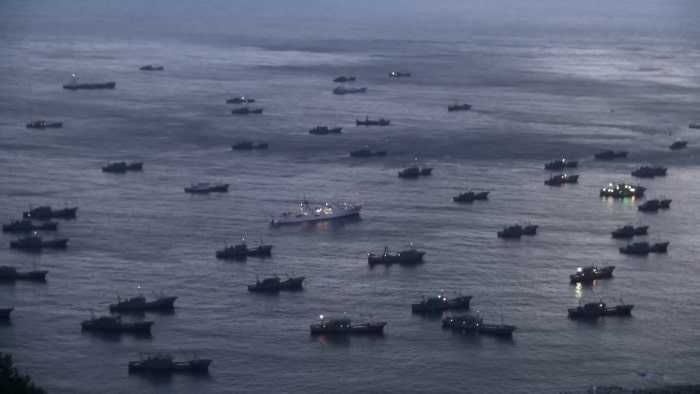
China, through investments in and ownership of ports, is expanding its global maritime reach, and its appetite for ports shows no signs of diminishing. As of July 2020, Chinese firms reportedly “(partly) owned or operated some ninety-five ports across the globe.”

Out of the 95 ports, 22 are in Europe, 20 in the Middle East and North Africa, 18 in the Americas, 18 in South and Southeast Asia, and nine in sub-Saharan Africa. Just three Chinese companies, among them COSCO Shipping Ports and China Merchants Port, two central state-owned enterprises (SOE), account for the operations of 81% of those ports.

Share

Is Beijing on Borrowed Time? Is the U.S.?

Will China Invade Taiwan? Despite the recent saber-rattling, probably not any time soon. It lacks the amphibious capacity to land the 30-plus brigades it will need to overcome the island’s defense. “China does not appear to be currently investing in the equipment likely required for a direct assault on Taiwan, such as large amphibious assault ships and medium landing craft necessary for a large beach assault.”

Share

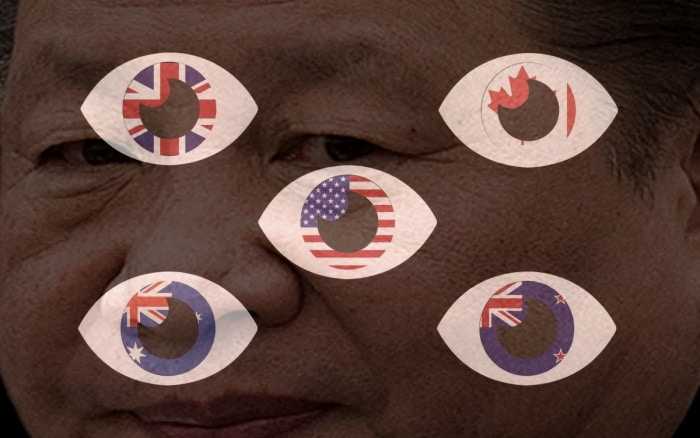
Canada Should Work More With Five Eyes to Counter China and Russia Threats: Report

Canada should collaborate more with its partners in the Five Eyes intelligence alliance to confront the challenges China and Russia pose to the liberal democracies in the West, a new report says.

Titled “Evolving the Five Eyes: Opportunities and Challenges in the New Strategic Landscape,” the report says the members of the Five Eyes—Canada, United Kingdom, United States, Australia, and New Zealand—could work together to expand the ability of the alliance to counter China and Russia on a wider range of fronts, particularly in the areas of technology, information, military, and economics.

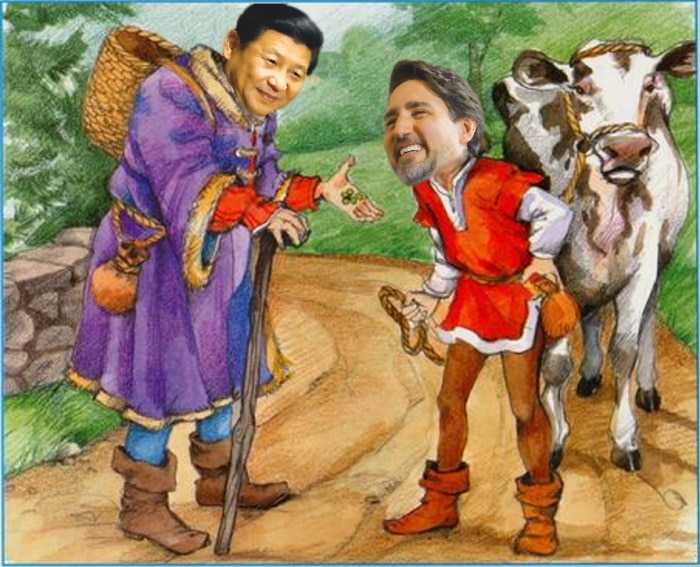
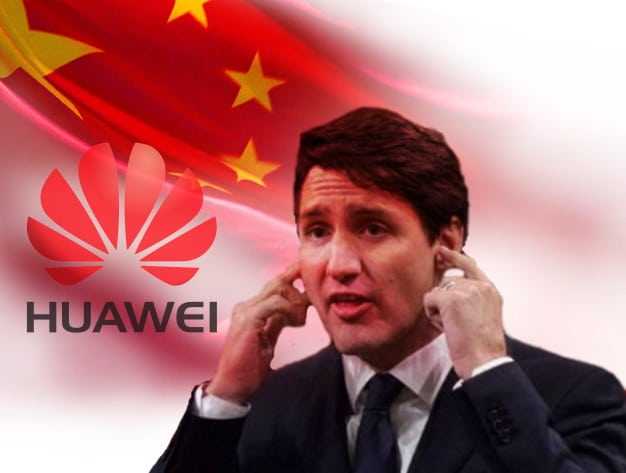
Trudeau and the China class will probably cause Canada to leave “Five Eyes.”

Share

US-abandoned Bagram base reportedly operational for first time in two months, as rumors swirl of Chinese military presence

Bagram Airfield, once the linchpin of the US-led NATO mission in Afghanistan, is said to be powered and serving planes again. A foreign force is rumored to be involved, with fingers pointed at China, which denied eyeing the base.

A photo shared on social media purportedly shows the base on Sunday night with its floodlights on. There are claims that several planes have landed at and taken off from the airfield in recent hours. If confirmed, it would be the first time Bagram had served aircraft in almost 50 days, marking a significant development.

Share

Communist China’s Mouthpiece In Canada’s Senate Plays Race Card

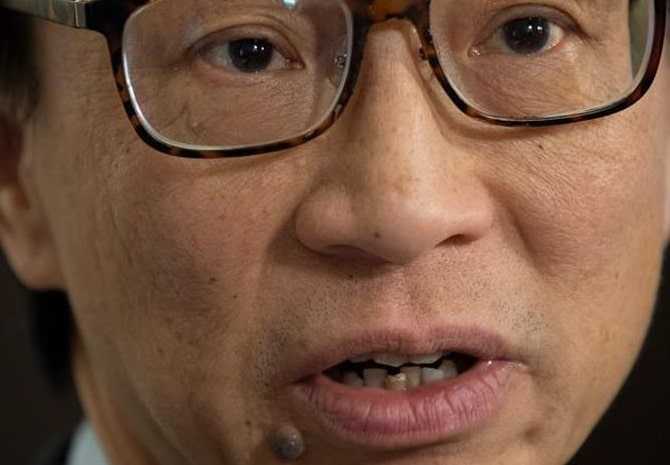
Yuen Pau Woo China’s Man In Canada

Senator accused of being China’s ‘mouthpiece’ worries about rise of anti-Asian racism

OTTAWA – Last June, 33 Canadian senators voted to defeat a motion decrying China’s treatment of Uyghur Muslims as a genocide.

While they all faced criticism from some quarters, only one — Sen. Yuen Pau Woo, leader of the Independent Senators Group — seems to have been singled out as an alleged stooge of China’s communist regime, told to resign and “go home.”

Last week, Woo got a similar reaction when he tweeted about the release of Michael Spavor and Michael Kovrig, the two Canadians arbitrarily detained by China for nearly three years in retaliation for Canada’s arrest of Huawei executive Meng Wanzhou at the behest of the United States.

Share

Meng and the Michaels: why China’s embrace of hostage diplomacy is a warning to other nations

“China was sending a message not just to Canada, but to every other country in the world that they take hostages. And if you step out of line from their policies or don’t toe the line the way Beijing has instructed you to do, then they will take retaliatory action and kidnap your citizens,” said Margaret McCuaig-Johnston, a senior fellow at the University of Ottawa’s graduate school of public and international affairs. “This is the behaviour of a medieval kingdom – not a 2021 superpower.”

China don’t give a damn. Neither does our China class.

Share

China owed $385bn – including ‘hidden debt’ from poorer nations, says report

Researchers have identified debts of at least $385bn (£286bn) owed by 165 countries to China for ”belt and road initiative” (BRI) projects, with loans systematically underreported to international bodies such as the World Bank.

The four-year study by US-based research lab AidData said the debt burdens were kept off the public balance sheets through the use of special purpose and semi-private loans, and were “substantially larger than research institutions, credit rating agencies, or intergovernmental organisations with surveillance responsibilities previously understood”.

Share

China: Big spender or loan shark?

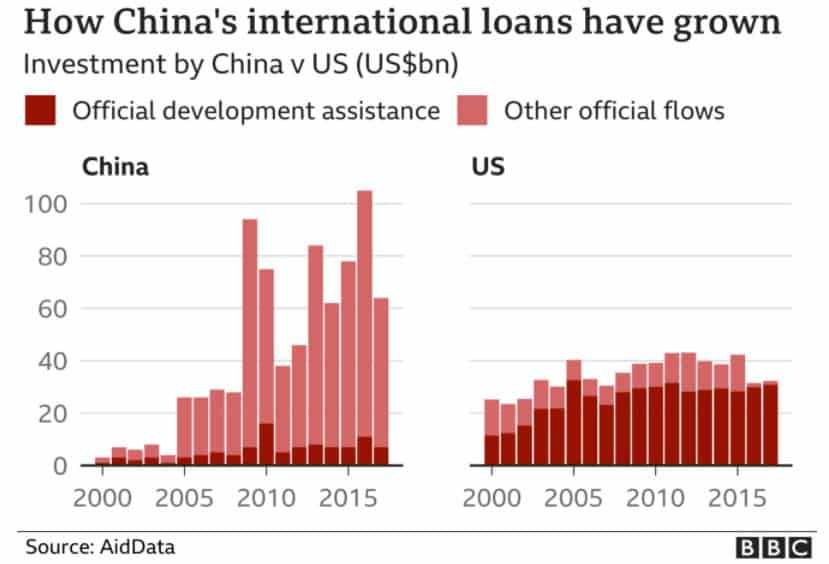
China hands out at least twice as much development money as the US and other major powers, new evidence shows, with most of it coming in the form of risky high-interest loans from Chinese state banks.

The sheer amount of Chinese lending is startling. Not too long ago China received foreign aid, but now the tables have turned.

Over an 18-year period, China has granted or loaned money to 13,427 infrastructure projects worth $843bn across 165 countries, according to the AidData research lab at William & Mary, a university in the US state of Virginia.

Much of this money is linked to Chinese President Xi Jinping’s ambitious Belt and Road strategy. Starting in 2013, it leverages China’s expertise in infrastructure projects, and ample foreign currency, to build new global trading routes.

Share

AUKUS Security Alliance Exposes EU’s Fecklessness

Australia, the United Kingdom and the United States have announced a new tripartite strategic alliance aimed at countering China’s growing assertiveness in the Indo-Pacific region. The AUKUS defense agreement, under which Australia will acquire American-designed nuclear-powered submarines, is a welcome paradigm shift intended to enhance the projection of Western military power in the region.

AUKUS will supplement the Quadrilateral Security Dialogue (also known as “The Quad”), a military partnership between Australia, India, Japan and the United States aimed at protecting freedom of navigation in the broader Asia-Pacific region. It will also strengthen Five Eyes, an intelligence-sharing alliance comprising Australia, Canada, New Zealand, the United Kingdom and the United States.

Share

No One Outside Of China Allowed To Attend 2022 Winter Games In Beijing

The International Olympic Committee said on Wednesday that the only people allowed to attend the 2022 Winter Games in Beijing, China, are those who live in China.

“Tickets will be sold exclusively to spectators residing in China’s mainland, who meet the requirements of the COVID-19 countermeasures,” the IOC said.

I’m sick of the Olympics anyway.

Share

The Meng-Michaels saga ended, Canada is turning back to its Huawei 5G controversy — and the potential of public backlash

…  A decision on Huawei’s participation is part of a broader national security review of next-generation wireless technology. The new technology is as much as 100 times faster than existing 4G technology.

But the decision had seemingly been stalled as Canada’s relationship with the People’s Republic of China spiralled during the saga of Huawei chief financial officer Meng Wanzhou and Canada’s “two Michaels.”

One pollster said those events would make it hard for the Canadian government to now allow Huawei access to the 5G network.

Failing to block Huawei’s involvement would result in swift backlash from Canadians, in fact, predicted Mario Canseco, president of Vancouver-based polling firm Research Co.


There is no reason to delay Huawei’s exclusion. But Trudeau is the figure-head of Canada’s China class and he will protect their interests above all others.

Share

Tasha Kheiriddin: Liberals must demand probe into any China election meddling

It’s a common trope that foreign policy is never a ballot question. As riled up as Canadians got about Afghanistan in our recent election, research showed it had little impact on the choices they ultimately made. Bread and butter issues like childcare or concerns about climate change mattered more than how well the prime minister performed — or did not perform — on the world stage.
Or did it? 

Oh yea, Justin will be right on this, as soon as the China class gives him the go-ahead.


Share

Evergrande’s Fall Shows How Xi Has Created a China Crisis

The developer’s collapse isn’t leading to global contagion, but China’s looming economic disaster might.

A major mistake of the Cold War was the tendency of Western observers to overestimate the Soviet Union. I have often wondered if the same mistake is being repeated with the People’s Republic of China. Then again, for every article over the last 10 years that predicted China’s economy would overtake that of the U.S., there were at least two prophesying a “China crisis.”

“The endgame of Chinese communist rule has now begun,” wrote David Shambaugh in 2015. Wisely, he added: “Its demise is likely to be protracted.” That same year, Jim Chanos of Kynikos Associates warned, “We’re getting inexorably to a tipping point in China.”

Share