With eye to China investment, Taliban now preserve Buddhas

MES AYNAK, Afghanistan (AP) — The ancient Buddha statues sit in serene meditation in the caves carved into the russet cliffs of rural Afghanistan. Hundreds of meters below lies what is believed to be the world’s largest deposit of copper.

Afghanistan’s Taliban rulers are pinning their hopes on Beijing to turn that rich vein into revenue to salvage the cash-starved country amid crippling international sanctions.

The fighters standing guard by the rocky hillside may once have considered destroying the terracotta Buddhas. Two decades ago when the Islamic hard-line Taliban were first in power, they sparked world outrage by blowing up gigantic Buddha statues in another part of the country, calling them pagan symbols that must be purged.

Say what? China plans to destroy an ancient Buddhist city to get the copper buried there

Share

Chinese streaming platforms take down films starring Keanu Reeves after he participated in Tibet-related concert

Chinese streaming platforms including Tencent Video and iQiyi have taken down films and video content starring Canadian actor Keanu Reeves after he participated in a Tibet-related concert organized by a non-profit founded by the Dalai Lama.

Checks by Reuters showed his acclaimed works, the Matrix and John Wick franchises, as well as Speed, were among the films that have been removed. Reuters could not determine when the films were taken down.

Share

Communist China’s TikTok censoring LGBTQ, Nazi terms in Germany: report

TikTok has been running a questionable word-filtering system in Germany, according to a report by German public broadcasters.

The popular Chinese-owned social network has been blocking posts that contain German-language words relating to Nazis, LGBTQ culture and the tennis player Peng Shuai, according to research by NDR, WDR and ARD’s Tagesschau.

Users were able to post the offending keywords, but — in a practice known as shadowbanning — the posts were not visible to others.

Share

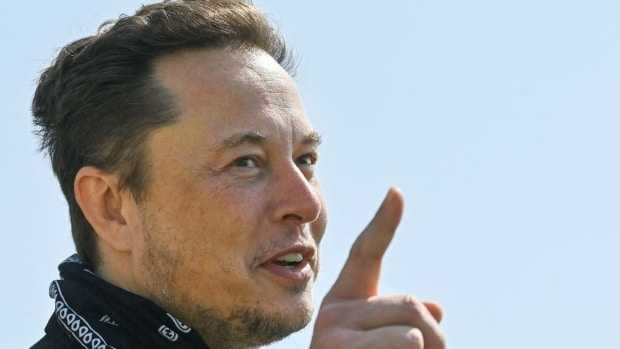
Elon Musk and the Chinese Temptation

Elon Musk has fans all over the ideological spectrum. People on the Left love him for popularizing electric cars with his Tesla company, or maybe for openly smoking pot on podcaster Joe Rogan’s show. Conservatives love him for his entrepreneurial dash and penchant for standing up to politicians and Big Tech censorship of the internet. And everyone loves Musk for responding to Russia’s invasion of Ukraine and severing of its communications links by making his Starlink satellite broadband internet service available in Ukraine and donating Starlink terminals to Ukrainians. The Starlink connectivity, according to one report, may even be helping armed Ukrainian drones target Russian military vehicles.

Less is known about Musk’s business dealings in Communist China, but that might be about to change.

Share

China Closer to Dominating Southeast Asia

While the world is preoccupied with Ukraine, China continues to make aggressive moves in the South China Sea, almost the entirety of which China claims to be part of its territory. At least three islands there have become “fully militarized” according to U.S. Indo-Pacific commander Admiral John C. Aquilino, who told Associated Press on March 21, that on the three islands — Mischief Reef, Subi Reef and Fiery Cross — China has deployed anti-ship and anti-aircraft missile systems, laser and jamming equipment, and fighter jets…

Share

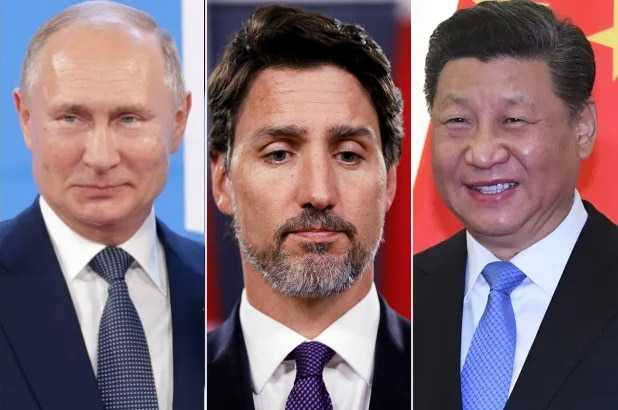
Geoff Russ: Putin and Xi were always the real threat to democracy, not Trump-style populists

For the last two decades, we in the democratic world have sought to identify mad-dog, would-be dictators in the form of frothing demagogues. This methodology is doubtlessly informed by the memory of men like Adolf Hitler and Idi Amin, both rabble-rousing populists who shouted their way to the top, and committed sickening acts of butchery once there. It is very likely why every populist of the 2010s like Donald Trump, Rodrigo Duterte, and even Boris Johnson were condemned as dictatorial or fascistic.

Share

American Elites Have Deep Ties To A New Chinese Spy Chief

The new deputy head of a propaganda and espionage agency in the People’s Republic of China (PRC) has documented ties with business tycoons, university heads and other elite members of American society.

Chen Xu, former party secretary of one of the PRC’s most prestigious universities, Tsinghua, was promoted to deputy head of the United Front Work Department (UFWD), according to an updated leadership roster on the Chinese Communist Party (CCP) portal, which was first reported in Chinese media on Feb. 28.

Share

‘Don’t be naive’: China refuses to condemn Putin’s invasion of Ukraine

China’s ambassador to the United States defended the Chinese government’s refusal to condemn Russian leader Vladimir Putin’s invasion of neighboring Ukraine, telling a TV anchor not to be “naive” as the U.S. urges China to help stop the Kremlin’s invasion.

While the U.S. criticizes China for its “at least tacit approval” of Russia’s invasion, China has repeatedly sought to lay blame at the feet of the U.S., calling it one of the “culprits of the crisis.”

Share

Biden seeks China’s help to end Russia’s war in Ukraine

U.S. President Joe Biden sought to prevent Beijing giving new life to Russia’s invasion of Ukraine in a video call with his Chinese counterpart on Friday as stalled Russian forces pressed on with bombardments of towns and cities.

With Russia looking to regain the initiative, three missiles landed at an airport near Lviv, a western city where hundreds of thousands thought they had found refuge far from Ukraine’s battlefields.

I doubt China is about to become an enthusiastic ally.

Share

How globalisation cheated America – The West’s opening up to China came at a big cost

Globalisation is becoming an increasingly dirty word — and for good reason. Over the last two to three decades, the West’s opening up to low-cost, export-oriented economies like China has hurt the working class and made us worryingly dependent on distant and fragile supply chains.

But did all that free movement of labour, capital, goods and services make us as rich as we were promised? A stunning set of charts from American Compass provides part of the answer (and from a US perspective, obviously).

Share

As China’s military tech dominates, Congress demands science bow to racial ‘justice’

China’s murky intentions regarding its Russian alliance and the Ukraine war are making headlines. Whatever the outcome, the next global conflict could well involve the deployment of Beijing’s growing technological prowess.

China has already surpassed America in several branches of quantum information science, which entails massive computations and nearly instantaneous communications — and in critical areas of artificial intelligence, all of which have military applications.

Share

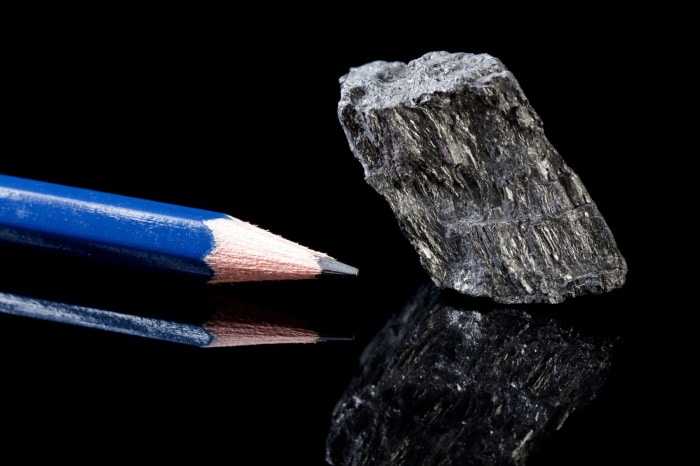
Chinese graphite dominance threatens electric car ambitions

Ripples of last year’s power crunch in China are still being felt by global battery and electric-car makers.

A shortage of coal supplies caused by an Indonesian export ban, a trade war with major supplier Australia and a steep rise in post-COVID-19 domestic demand prompted local Chinese authorities to ration power to energy-intensive industries, including graphite.

The rolling power blackouts as well as the suspension of graphite production in winter further squeezed global graphite supply, already struggling to keep up with strong demand for lithium-ion batteries as global electric vehicle sales went through the roof.

As a result, the mineral, which has often been overlooked when it comes to battery materials, has added to the troubles of battery and car manufacturers, who have been scouring the planet to secure supplies of other battery constituents like lithium, nickel and cobalt.

Share

Why China thinks the West is to blame for Russia’s war in Ukraine

From the beginning of the war in Ukraine, it was clear that China would not condemn Russia’s invasion. On February 25, Beijing abstained from a vote on a UN Security Council draft resolution condemning the attack. China also abstained from a condemnation of the war by 141 countries in the UN General Assembly.

And Beijing’s implicit support of Russia continues despite Moscow’s continued escalation of the war.

Last week, Chinese Foreign Minister Wang Yi said China’s friendship with Russia was “solid as a rock,” and constituted the “most important bilateral relationship” in the world contributing to “peace, stability and development.”

Share