Supreme Court rules environmental impact legislation largely unconstitutional

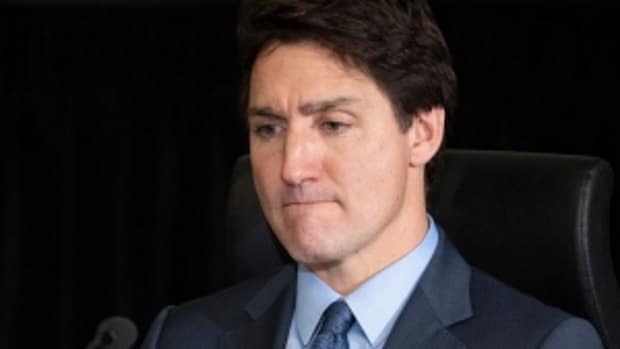
I like stories that make Justin cry.

Canada’s top court has delivered a highly anticipated judgment, writing in a majority opinion that Ottawa’s Impact Assessment Act (IAA) is largely unconstitutional.

The IAA, previously known as Bill C-69, allows federal regulators to consider the potential environmental and social impacts of various resource and infrastructure projects. It was enacted in 2019.

The IAA has long been controversial among conservative politicians in Alberta, including former premier Jason Kenney, who frequently referred to it as the “no more pipelines act.”

Share

Canada’s Temporary Foreign Worker program is ballooning — creating a new class of wage slaves from abroad

This time last year, the media buzz about the labour market was over The Great Resignation, a bigger phenomenon in the United States but occurring here too, as workers took advantage of record-high job vacancy rates to abandon suboptimal jobs for better ones.

This year there’s an emerging made-in-Canada phenomenon that has barely generated a whisper, let alone a buzz: wage slaves from abroad. It’s a result of public policy.

The idea of owning workers seems like an abomination from another time and place. In Canada, in 2023, it’s difficult to comprehend how any worker could be beholden to a single employer.

Share

John Ivison: The leaders of the free world have no time left for unserious Canada

On the eve of Russia’s invasion of Ukraine, Mark Norman, the former vice-chief of defence, made a prediction that sounded overblown at the time.

“I really think the Americans are going to start ignoring us because they don’t think we are credible or reliable. They are not even putting pressure on us anymore,” he said in a January 2022 National Post interview, based on his conversations with contacts in Washington.

Share

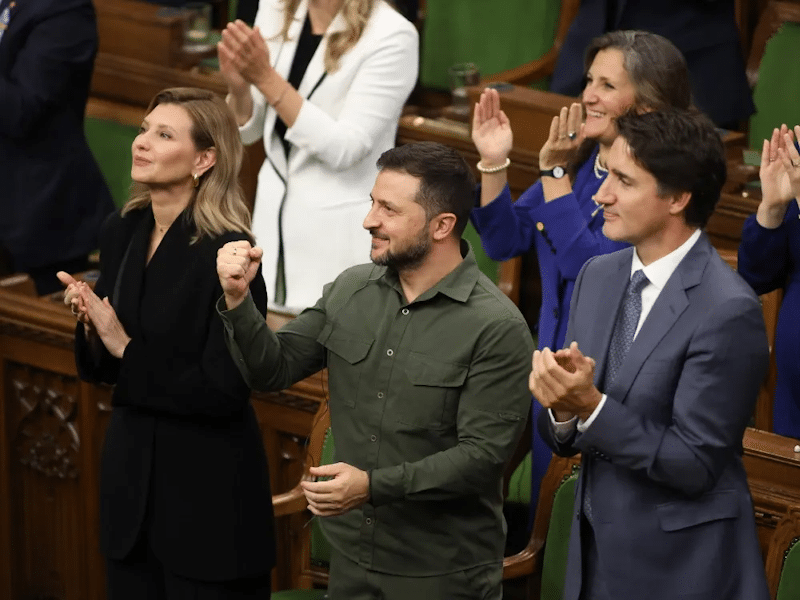
Nazi in Parliament had major impact on Canada’s international reputation: Nanos poll

Nearly one in two Canadians say the recent errant honouring of a 98-year-old Nazi veteran in Parliament has had a major impact on Canada’s reputation abroad, while one third think Canada is providing too much financial support to Ukraine, recent Nanos polling finds.

Recent polling by Nanos Research, commissioned by CTV News to gauge Canadians’ views on the level of impact the widely-condemned Yaroslav Hunka invitation by former speaker Anthony Rota has had, indicates that 48 per cent of respondents felt it had a “major impact.”

Share

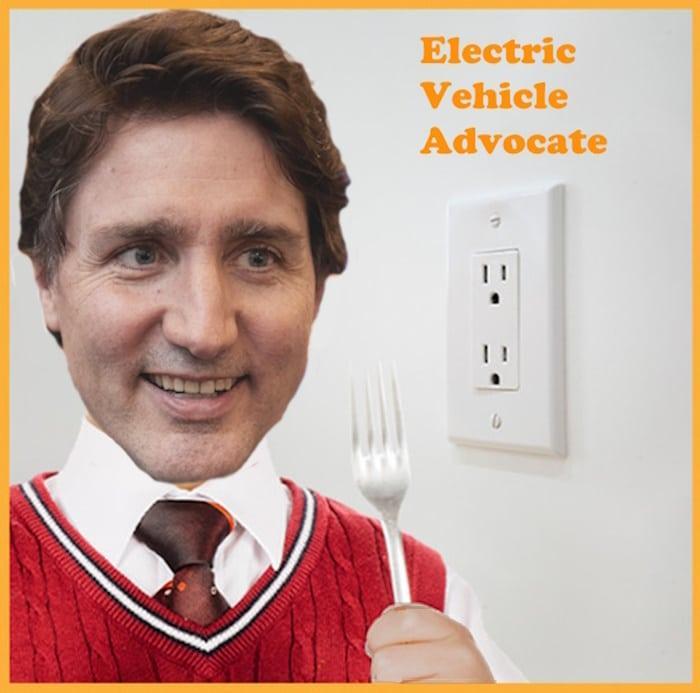
GREEN: Trudeau’s super-charged battery foolishness reaches new heights

Every week, it seems, we get another report revealing the deep thoughtlessness and fiscal recklessness of Ottawa’s electric car and electric-car battery fixation.

For example, the Parliamentary Budget Officer recently asked how long it will take for the federal government to see a return on the $28.2 billion of production subsidies to EV battery-makers Stellantis and Volkswagen. The answer — about four times longer than government originally claimed.

Share

Canada sent $50 million to Palestine in 2018 for ‘relief work’ despite aspersions about funds being channelled to Hamas

Hours after the State of Israel came under attack by Palestinian terror outfit Hamas, Canadian Prime Minister Justin Trudeau on Saturday (7th October) condemned the killing of Israeli civilians.

In a tweet, he said, “Canada strongly condemns the current terrorist attacks against Israel. These acts of violence are completely unacceptable. We stand with Israel and fully support its right to defend itself.”

Foreigners find it odd that Justin Trudeau coddles terrorists at home and abroad.

Share

Canada is alone in the world

It has not been a happy time for Canada in international affairs. Prime Minister Justin Trudeau’s accusation that Indian officials had been behind the murder of a Canadian citizen in Surrey, B.C., in June has sent our relationship with India into a deep freeze. To make matters worse, Canada found itself largely alone, with our friends and allies, who all have an interest in further developing a geostrategic relationship with India, hardly offering Canada their full-throated support.

Share

Canada is losing friends, and it’s not just India

Blame it on its liberal immigration policies and weak counterterrorism laws

On the outskirts of Castlegar, a little town in British Columbia, a statue of Russian novelist Leo Tolstoy stands tall in the garden of the Doukhobor Discovery Centre. Much before Khalistani terrorists brought a culture of guns and gangs to British Columbia, the province became synonymous with the nonviolent and pacifist ideals of the Doukhobors. A small ethno-religious group of Russian origin, the Doukhobors fled to Canada in the 1890s, fearing persecution from the Russian church and state. Tolstoy is said to have assisted in their mass migration, and his statue stands testimony to his efforts and Canada’s tradition of welcoming refugees.

Share

‘Police said I’m in danger’: Sikh activists on edge worldwide after Vancouver killing

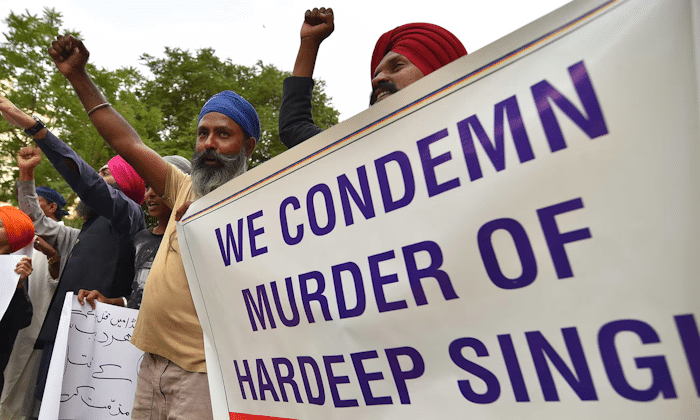
Two months after the Sikh activist Hardeep Singh Nijjar was shot and killed in a parking lot in suburban Vancouver, Canadian police showed up at the house of a close friend with warning: his life was also in danger.

Two officers – one of them from the federal national security team – handed Gurmeet Singh Toor a document known as a “duty to warn” paper. It required him to confirm that they had told him his life “might be in peril” – and to acknowledge that any attempt on his life might put his family at risk.

“I asked them who might be threatening me and why my life was at risk,” Toor told the Guardian. “They said they couldn’t explain the threats because of ‘security reasons’. But they told me they had information that I was in danger.”

Share

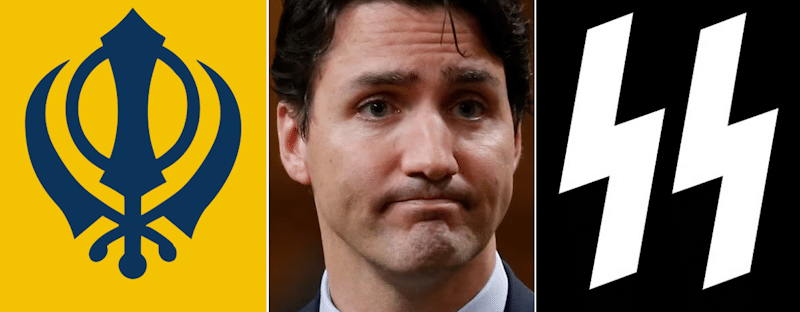
‘Here We Go Again’: A Cabinet Minister on Facing Anti-Sikh Bias

Harjit Sajjan WW II – convinces Ike to stage landings in Normandy

In the aftermath of Prime Minister Justin Trudeau’s assertion that “agents” of the Indian government were involved in the shooting death of a Sikh leader in British Columbia, my colleagues Norimitsu Onishi and Vjosa Isai looked into growing tensions within the Indian diaspora in Canada, ones that reflect divisions in India that have been fueled by Prime Minister Narendra Modi’s Hindu nationalism.

Share

Conrad Black: Trudeau has overseen the chronic backsliding of this once-great nation

Canadians seem not to recognize the undeniable fact that this country is on the verge of (temporarily) becoming an objective failure. For all of our history, most Canadians have had some degree of unease about being subordinate to the British and out-sized by the Americans, and prior to that, in the case of the French-Canadians, about being abandoned by the French and then ignored or disparaged by them. When France was ejected from Canada after nearly 250 years, Voltaire dismissively referred to New France as, “A few acres of snow.” But we have been a successful country, until recently. Prior to this century, the only major wars we engaged in aside from NATO and United Nations missions were the two world wars, the Korean War and the Gulf War, all of which were just wars in which Canada was not itself threatened, sought nothing, but fought with distinction for the cause of freedom throughout the world. We were, along with Australia and next only to the United States, the most prosperous people in the world. We had a strong currency, a growing economy, low crime rates, attracted capital from all over the world, were probably the most racially unprejudiced country in the world, welcomed skilled immigrants from everywhere and built great projects that impressed the world, such as the St. Lawrence Seaway, the TransCanada pipeline and the Montreal World’s Fair in 1967.

Share

GOLDSTEIN: Despite carbon tax rebates, Canadians falling further behind

Says his kids punched him out

The good news for Canadians paying Prime Minister Justin Trudeau’s carbon tax is that the feds will send out their latest quarterly climate action incentive payment this week.

The bad news is that according to the independent, non-partisan parliamentary budget officer, most Canadians paying the federal carbon tax receive less in rebates than they pay in carbon taxes.

Share

As Canadians shiver in the cold, Trudeau hits the slopes in style

Politicians and their families are entitled to the occasional spot of R&R, just like everybody else. Being an elected official, after all, is a stressful job that requires long hours and subjects one to withering public scrutiny.

One politician who’s never had trouble prying himself away from the office is Prime Minister Justin Trudeau. Through his eight years at the helm, Trudeau’s various family getaways have been the source of much public fascination and, on more than one occasion, political controversy. From an ethically dubious trip to Aga Khan’s private island, to a $6,000-per-night hotel suite in London, perhaps no Canadian prime minister has ever travelled in style quite like Trudeau.

Share

Google just got even more unhappy with the Trudeau government — and closer to wiping Canadian news from its search results

OTTAWA—Google says the draft plan to implement Ottawa’s fraught online news law worsens rather than calms its concerns about the legislation, as the clock ticks on the global web giant’s threat to wipe Canadian news from its search engine.

“Unfortunately, while well intended, the act is built upon a fundamentally flawed premise yielding an unworkable framework and process that the regulations unfortunately do not remedy — and in certain instances, exacerbate,” the company’s submission to the federal government reads.

Share

Federal Prediction on Break-Even Period for EV Subsidies ‘Wildly Optimistic,’ PBO Tells MPs

The Parliamentary Budget Officer (PBO) says the federal government’s estimate of five years for it to break even on subsidies to auto giants Volkswagen and Stellantis was “wildly optimistic,” citing the PBO’s recent report that found it would take more than 20 years.

The federal government relied on a report by the non-profit group The Trillium Network for their claim, but Yves Giroux told MPs on the Standing Committee on Industry and Technology Thursday that the Trillium report contained “a lot of assumptions.”

Share