
The great ‘supply’ solution to Canada’s housing crisis flounders — further

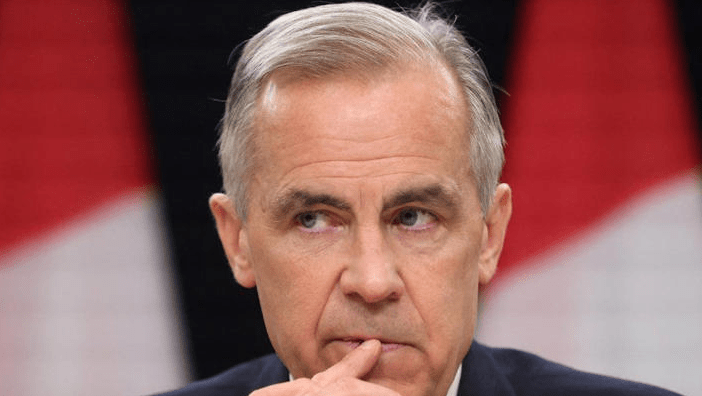
Douglas Todd: To understand why Mark Carney’s goal of building 500,000 houses a year won’t happen, look to New Zealand and the harsh realities right now of making a profit in real estate.

The unspoken maxim within Canadian political circles, I’m told, is that elected officials just can’t win when it comes to either public health care or housing affordability.

No matter what politicians do, voters will continue to complain about poor access to medical care or feel aggravated about super-expensive housing prices.

That’s often why, when it comes to the massive files of health and housing, elected officials go out of their way to at least look like they’re doing something. And to look like they’re being bold.

Share

Plan to accept newcomer parents and grandparents will strain health services, Alberta warns

Alberta’s immigration minister says he’s concerned about the federal government’s plan this year to accept thousands of parents and grandparents of immigrants already in Canada.

Joseph Schow responded Tuesday to a federal notice that Ottawa plans to take in 10,000 applications from those who have previously expressed interest in sponsoring family members.

Schow took issue with the 10,000 figure.

In a statement, Schow said provincial health-care systems, housing and social services don’t have the capacity and could be overwhelmed.

Share

Internal government document predicted ‘immediate’ drop in EV sales without rebate subsidies

OTTAWA — An internal government document reveals there was awareness among some officials that Ottawa ending its electric vehicle subsidies in January would lead to an “immediate” hit to EV sales and market uncertainty, as it coincided with the United States’ rollback of its own electrification programs.

Share

Lowering Canada’s voting age to 16 is her ‘top parliamentary priority,’ senator says

Kymani Wint -Future LPC Voter

OTTAWA — Now that the British government has vowed to lower its voting age to 16 by the next general election, one Canadian senator says it’s past time for Canada to do the same.

The U.K. announced last week that it would lower its voting age from 18 to 16 in a bid to strengthen British democracy and restore trust in politics.

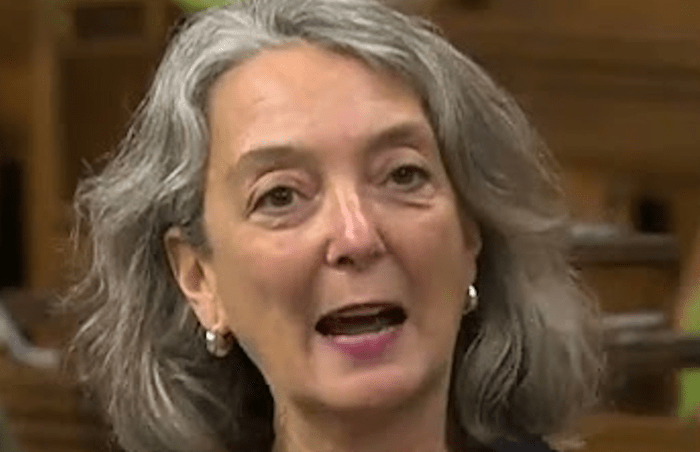
Sen. Marilou McPhedran said the issue has been her “top parliamentary priority” since she joined the Red Chamber. She said lowering the voting age to 16 would be good for democracy and that the only arguments against it are “based on stereotypes.”

Share

I’m all for shared sacrifice, but let’s be clear about who should really foot the bill for Mark Carney’s proposed military spending

A national poll released last week found that Canadians favoured increasing the national debt rather than raising taxes as the best way to pay for the gigantic increase in military spending recently pledged by Prime Minister Mark Carney.

The poll result is hardly surprising. But it tells us nothing.

Indeed, the poll is of dubious value, since it left out the most basic question: Do you support Carney’s plan to massively increase military spending over the next decade?

Share

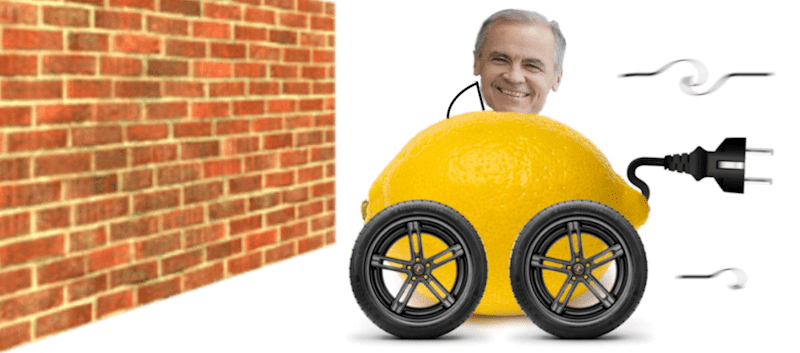
Auto industry says environment minister won’t relent despite calls to scrap EV mandate

Crazy woman

OTTAWA — Automakers calling on Ottawa to roll back its electric-vehicle mandate say their case has so far failed to sway Environment Minister Julie Dabrusin, who appears “committed” to keeping it in place.

Rising pressure over the EV issue is part of the central tension facing Prime Minister Mark Carney, which is how much to adjust the Liberals’ climate policies to address concerns coming from industry and premiers, amid a time of economic uncertainty.

Share

Over 3 million temporary residents now in Canada, including 129,000 with expired permits

Canada’s population of temporary residents has surpassed 3 million, making up 18.5% of the country’s private sector workforce, according to a newly released federal briefing.

Blacklock’s Reporter says the figures, which include more than 129,000 individuals now living in the country without valid permits, were outlined in a May 1 memo from Immigration, Refugees and Citizenship Canada.

Share

CHARLEBOIS: Time for Canadians to serve themselves

Crushed a generation’s dreams

The federal government’s recent overhaul of the Temporary Foreign Worker Program (TFWP) for food service has prompted predictable outcry from restaurant operators.

As of January 2025, new caps limit TFWs to just 10% of a food service business’s workforce — down from 20% or more in recent years — and shorten work permits from two years to one. But this policy shift is not punitive. It reflects an overdue economic recalibration.

Put plainly, the TFWP in food service has run its course.

Share

Geoff Russ: The data is in — fewer newcomers in Canada means lower rent

For too long, Canadians have been misled about the benefits of largely unchecked immigration growth.

Between 2016 and 2023, an average of 612,000 people were admitted annually to Canada on a permanent and temporary basis. There were assurances made that it was all beneficial, while the consequences for housing, wages, or jobs were downplayed.

While in the past a well managed immigration system has been good for Canada, the most recent data reveal the supposed benefits of the Liberals’ mass immigration plans were all a sham.

All immigration must cease and mass deportations instituted.

Share

Auditor-General planning audit of international student program

The federal Auditor-General’s office is planning an audit of the international student program, which has been mired in controversy over a rapid influx of foreign students in recent years.

A spokesperson for the office confirmed to The Globe and Mail that there will be an audit, and a report is expected to be tabled in Parliament next year.

Carney will continue with cosmetic cuts to immigration but the Great Replacement scam will go on.

Share

Carney signals support for new pipeline — will actions follow words?

Prime Minister Mark Carney is giving the strongest signal yet he’s ready to break with a decade of Trudeau government’s obstructionism and move forward with a crucial new pipeline for Canada’s oil and gas sector. In an interview last week, Carney indicated that it is “highly, highly likely” that a new oil pipeline to British Columbia’s coast, something Alberta Premier Danielle Smith has been strongly advocating for, will be among the major national projects pursued by the Carney government.

No.

Share

Chances of national projects going ahead without Indigenous participation is almost ‘zero’ says Gull Masty

The minister of Indigenous Services says major projects that arise under the federal government’s One Economy Act that don’t have the support of Indigenous communities will have almost a “zero” chance of being approved.

“The outcome of these projects is for Indigenous interest to be there, so it requires Indigenous participation,” said Mandy Gull Masty during a scrum with reporters after Prime Minister Mark Carney’s summit with First Nations leaders.

“The likelihood of these projects advancing or being completed without Indigenous people at the table, we heard the prime minister in this session, it is, oh, I want to say, almost, sounded to me, sounded like zero.”

Share

Mark Carney’s ‘build, baby, build’ aspirations face a challenge from Indigenous leaders

The Grand Hall of the Canadian Museum of History in Gatineau, Que., can make you feel small.

It’s a soaring, glass-walled space that stretches across the belly of the museum, facing the Ottawa River and Parliament Hill on the opposite shore.

The Grand Hall is set up like a Pacific Northwest coastal village from the 19th century, with the undulating shape of the massive space emulating a shoreline. A boardwalk runs along the “waterfront,” before the facades of houses from six different First Nations along the coast of British Columbia, from the Coast Salish in the south to the Haida and North Coast communities further up.

We lose.

Share