

OTTAWA — Time to put away the chequebook and pick up a pair of scissors.
That’s the message the Canadian Taxpayers Federation has for Parliamentarians returning to Ottawa on Monday, as the House of Commons begins its fall session.
OTTAWA — Time to put away the chequebook and pick up a pair of scissors.
That’s the message the Canadian Taxpayers Federation has for Parliamentarians returning to Ottawa on Monday, as the House of Commons begins its fall session.

Food does not move by magic. In Canada, it moves largely by diesel.
Diesel powers tractors and combines. It carries ingredients to processors, distribution centres and refrigerated loads to restaurants and grocers. It supports fishing, storage and last-mile delivery. When diesel rises sharply, the food system is not hit once. The shock travels through the chain several times before reaching consumers.
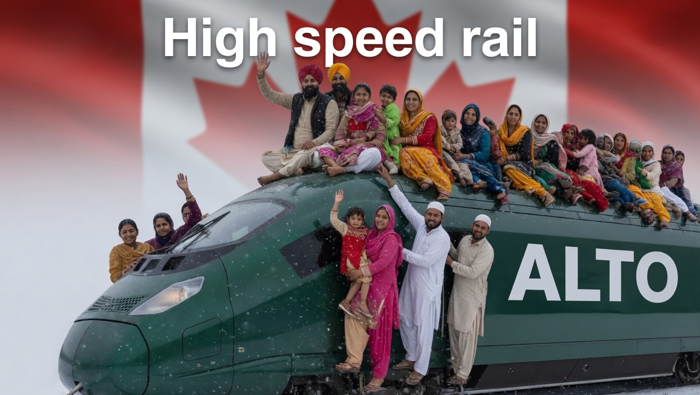
Canada does not have the engineering and manufacturing expertise to build Alto. Therefore, Canada also does not have the expertise to supervise the building of Alto.
Instead of developing a domestic capacity for high-speed train technology and manufacturing, as an essential all-sectors nation-building exercise, Canada will contract external (Western globalist) capacity; and everyone will be paid off, financiers first, all the way down to every deficient but obedient careerist civil servant.
🚨 BREAKING: Farmers are rising up against the Liberals $90 Billion high-speed train, Alto project!
The Carney government is seizing their land here in Rigaud, Quebec and many are not happy. Follow my posts for live updates on the ground today.
Full report to follow. pic.twitter.com/1HackTT3Rt
— Alexandra Lavoie (@ThevoiceAlexa) September 19, 2026
h/t Hermes
A growing number of Canadians are contemplating what once seemed unthinkable — abandoning North American free-trade agreements and joining the European Union.
McGill University’s Maria Popova is urging Canada to seek European Union membership to counter U.S. President Donald Trump’s threats to Canadian sovereignty. Popova, an Associate Professor of Political Science and Scientific Director of Montreal’s Jean Monnet Centre, spoke with former federal Finance Minister Bill Morneau. Morneau, who played a key role in Canada’s 2017 USMCA negotiations — the trade deal between the United States, Mexico, and Canada — believes that strong relations with the United States are vital to Canadian prosperity.

Canada’s “elbows-up” approach to American tariffs has been unique among market-based economies. What have the EU, Japan, South Korea, U.K. and especially Mexico done differently and what lessons might we learn from them? Mexico has recently announced it wants to complete trade negotiations with the U.S. before the November midterms. That would leave Canada as a jilted bride.
The prime minister and the country obviously had a difficult hand to play in dealing with President Donald Trump — erratic, unreliable, crude and rude — and his clear desire to make Canada the 51st state rightfully angered Canadians.

For most of the generation that followed the Cold War, Canadians had the luxury of forgetting about the North Atlantic. The Soviet Union disappeared, NATO expanded eastward, and the waters between North America and Europe seemed less like a strategic front than a vast and secure highway connecting friendly countries. That comfortable assumption is now dangerously out of date.
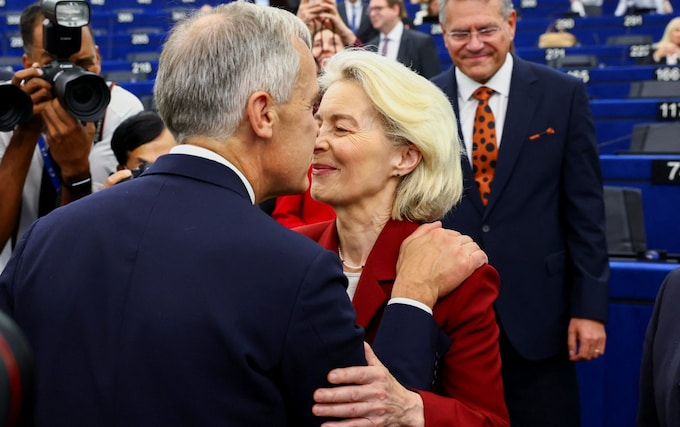
“Canada has what the world wants,” Mark Carney likes to tell people. But what does Canada want? The European Union, apparently. The bloc’s President, Ursula von der Leyen, has announced that Canada would become its first “associate member.” This is happening, she said, because “above all… Europe and Canada believe in democracy.”
Really? The EU spent years trying to block Brexit. And in 2015, when Greece voted to reject the conditions on EU loans, Brussels replied with even more stringent conditions. “There can be no democratic choice against the European treaties,” von der Leyen’s predecessor said at the time. But the rise of right-wing parties across Europe – most recently, the AfD’s election victory in the German state of Saxony-Anhalt – is proof many have lost confidence in the EU project.
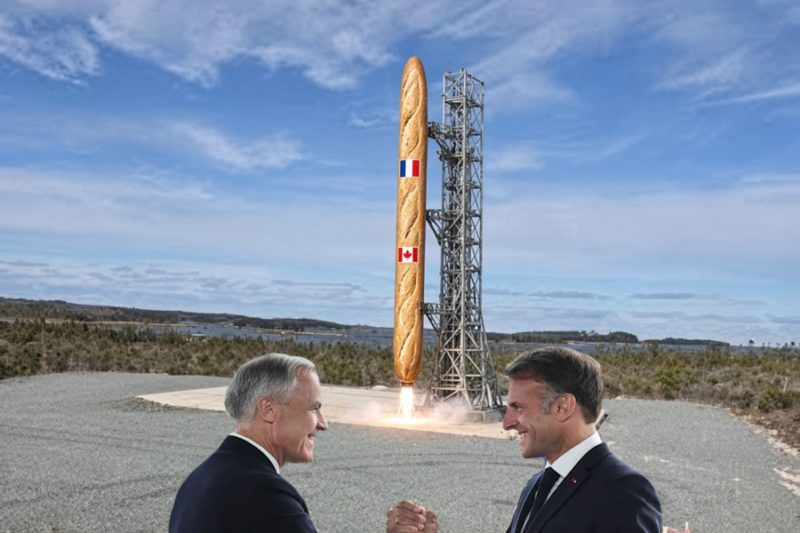
Canada and France have asked their space agencies and defense departments to develop and share infrastructure including space-launch systems, Prime Minister Mark Carney said on a visit to a French territory near Newfoundland and Labrador.
The prime minister made the announcement Sunday alongside French President Emmanuel Macron at Saint-Pierre, the capital of Saint-Pierre and Miquelon, a French archipelago that sits just off Canada’s Atlantic coast. No timelines or funding commitments were disclosed.
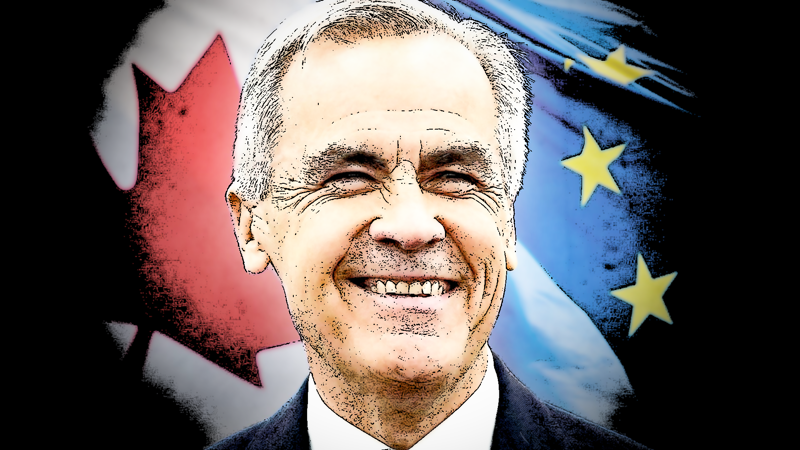
Whatever becoming an “associate member” of the European Union means, what it does is drive home the importance of Prime Minister Mark Carney reaching a deal with the U.S. on trade.
Last year, the value of Canadian goods exported to the 27-member-country EU was $43 billion, or 5.5% of our total merchandise exports of $779 billion.
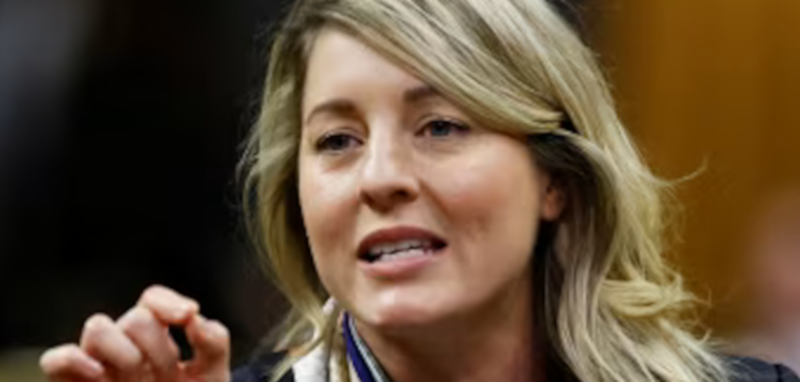
OTTAWA—Canada’s Industry Minister Melanie Joly reiterated Friday that Stellantis STLA -4.46%decrease; down pointing triangle could be on the hook for hundreds of millions in repayments to the government unless the company’s factory near Toronto resumes auto production.
The plant, in Brampton, Ontario, has been idle since 2024, and Stellantis is in advanced talks to sell that factory to a Canadian armored-car maker.
“That plant needs to reopen. We need a new model. If not we’ll get our money back,” said Joly, who has threatened to sue Stellantis to recoup cash that lawmakers gave the car maker to retool its factories in Brampton and Windsor, Ontario.
Watch out Stellantis! Joly is on the case!

Federal Conservatives have called on both the auditor general and the Parliamentary Budget Office (PBO) to examine whether the proper process was followed in the Liberal government’s plan to acquire airborne early warning planes from Swedish aircraft-maker Saab.
Sources told CBC News earlier this month that the GlobalEye, the government’s choice for the air force, met only a handful of the military’s requirements and will need important modifications.
Looks like a flying Vegomatic.

OTTAWA — As evidence mounts of Chinese, Mexican cartel and Iranian-linked penetration of Canada’s official institutions and its big banks — a dimension still largely unexamined outside testimony in the Cameron Ortis case, in which the RCMP’s intelligence director was convicted of leaking Five Eyes secrets to large-scale Toronto money launderers tied to terror and Iran — a Canadian judge has decided citizens must see the alleged police corruption that York Regional Police merely stumbled upon while investigating a plot to murder a senior jail official.
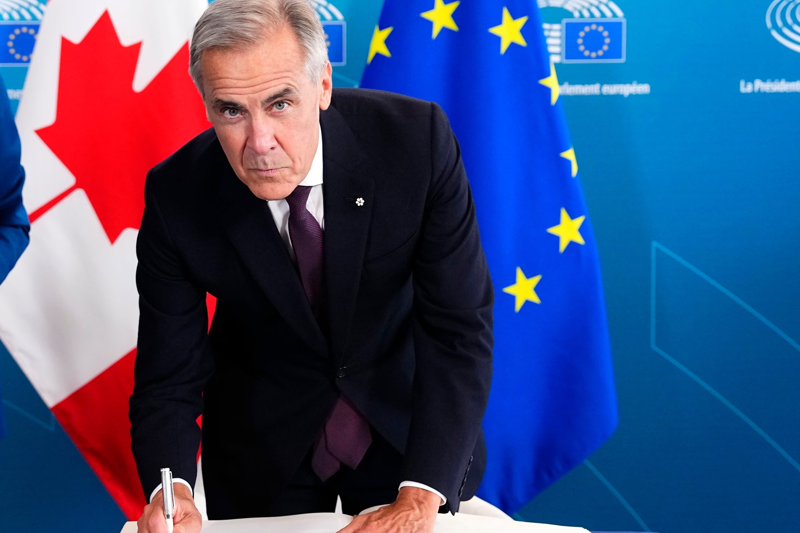
Ursula von der Leyen brought a new mascot to her annual State of the Union address to the European parliament: the Canadian prime minister, Mark Carney.
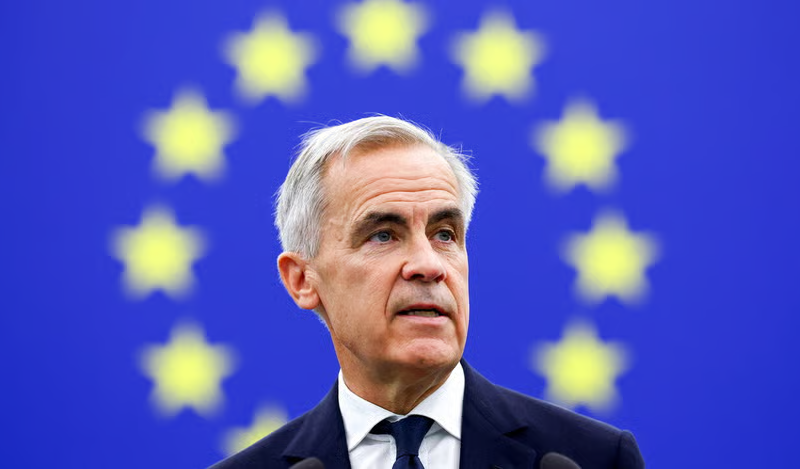
The leader of a plucky, like-minded liberal democracy, locked in an unsought trade war with its much bigger bully of a neighbour, Carney crossed the Atlantic and attended this flagship event of Europe’s political calendar to demonstrate his country’s shared values and desire to get closer to the EU. He was rewarded with a standing ovation and the first ever offer of an (invented) status of “associate member” of the EU.
I hope it remains performative BS.
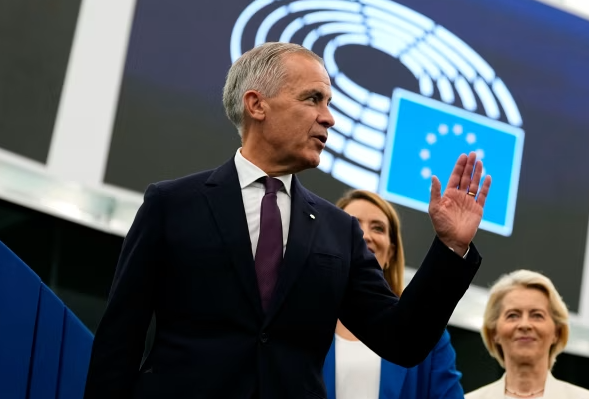
On Wednesday, European Commission President Ursula von der Leyen gave an American-style “State of the Union” address to the European Parliament in Strasbourg, France. During her speech, she proposed that Canada be admitted as an “associate member” of the ostensibly European Union. Canadian Prime Minister Mark Carney sat in the front row as an honored guest before delivering a speech of his own to the parliament the next day. Taken together, the Leyen-Carney parade of oratorical self-puffery exuded a nauseating bouquet of arrogance, foolishness, incompetence, and stale entitlement.
Mark Carney’s speech to the European Parliament should set off alarm bells across Canada, and the West in particular. In it, Carney praised the European Union’s (EU) power to impose rules and standards “that the world frequently adopts,” otherwise known as the “Brussels Effect.” While intended as a compliment, Alberta and Saskatchewan should hear it as a threat and ask: Is closer integration necessary, and what are its implications?
But it would be good for Carney.
