On a mild though grey winter’s day just before Christmas, citizens of the Yugoslav Socialist Republic of Slovenia voted 95.7% in favour of becoming independent. Six months later, after negotiations regarding a looser “confederal” arrangement with their Serbian overlords in Belgrade broke down, the Slovenian Parliament issued a unilateral declaration of independence (UDI).
Canada’s Corrupt Liberal Government
Canadian savings deteriorate as spending outpaces income: report
Savings have deteriorated for a majority of Canadians, particularly the bottom 80 per cent of Canadian households, as spending significantly outpace income growth, according to research by Boston Consulting Group.
Consumer spending is up, but that growth isn’t coming from income for those outside the top 20 per cent earners. The report said that for the lowest 20 per cent of earners, spending jumped 27 per cent over the past five years, while disposable income just went up three per cent.
Bryan Brulotte: Canada can’t afford another unbuilt pipeline
Canada’s greatest energy problem is not that we produce too little oil. It is that we have spent more than a decade making it increasingly difficult to sell it. Ottawa’s decision to support, in principle, a new pipeline to Canada’s Pacific coast is encouraging, but approval alone will not restore investor confidence. Trust, once lost, must be earned back. For years, governments layered Canada’s energy sector with carbon taxes, increasingly complex regulations, emissions caps, tanker restrictions and political uncertainty. Investors responded exactly as rational investors should. They invested elsewhere.
Guns and butter: The true cost of Canada’s military spending is yet to be tallied
Canada will never be a military powerhouse. But it is making up for lost time during the post-Cold War years, when spending on fighting machines sank to risible levels. As various MPs have stated, Canada had planes that wouldn’t go up and submarines that wouldn’t go down, and still does for the most part. Today, only one of Canada’s four rust-bucket submarines is in service and its CF-18 fighter jets are twice the age of some of its pilots.
At competing Stampede breakfasts, 2 very different visions for Alberta emerge
It may have been the final day of the 10-day Calgary Stampede exhibition and rodeo, but two pancake breakfasts held simultaneously Sunday morning made clear the battle for the hearts and minds of Albertans is just ramping up.
At Ranchman’s Cookhouse and Dancehall, one of Calgary’s most well-known western bars, the pro-independence group Let Alberta Decide hosted a pancake breakfast, drawing hundreds. One man wore a shirt that read “Alberta First. Ottawa Last,” before grabbing a plate of eggs, sausages, pancakes and fruit.
Can Carney’s big military spending save Canada’s economy? (Or should it?)
“This historic investment in the Canadian Armed Forces will bring strong economic benefits and jobs across the country,” said the Defence Minister when the federal government announced its preferred bidder for the navy’s submarine program this week. We’ll be hearing a lot more of this as Canada’s ambitious defence procurement program ramps up – that it will not only make us safer, but richer. But is that true? Does defence spending juice economic growth?
Good account of the sub purchase.
— Fyure (@Fyure3) July 10, 2026
Shopify president fears for future of Jews in Canada as families contemplate what was ‘unthinkable five years ago’
The president of Canada’s biggest tech company says antisemitism has been “normalized under the thinnest veil of advocacy,” and many members of the Jewish community are thinking about their future in Canada.
Harley Finkelstein was confronted, again, by an aggressive protester at Montreal’s Startupfest on Wednesday, the third time in two years he has been aggressively challenged in public for his support of Israel.
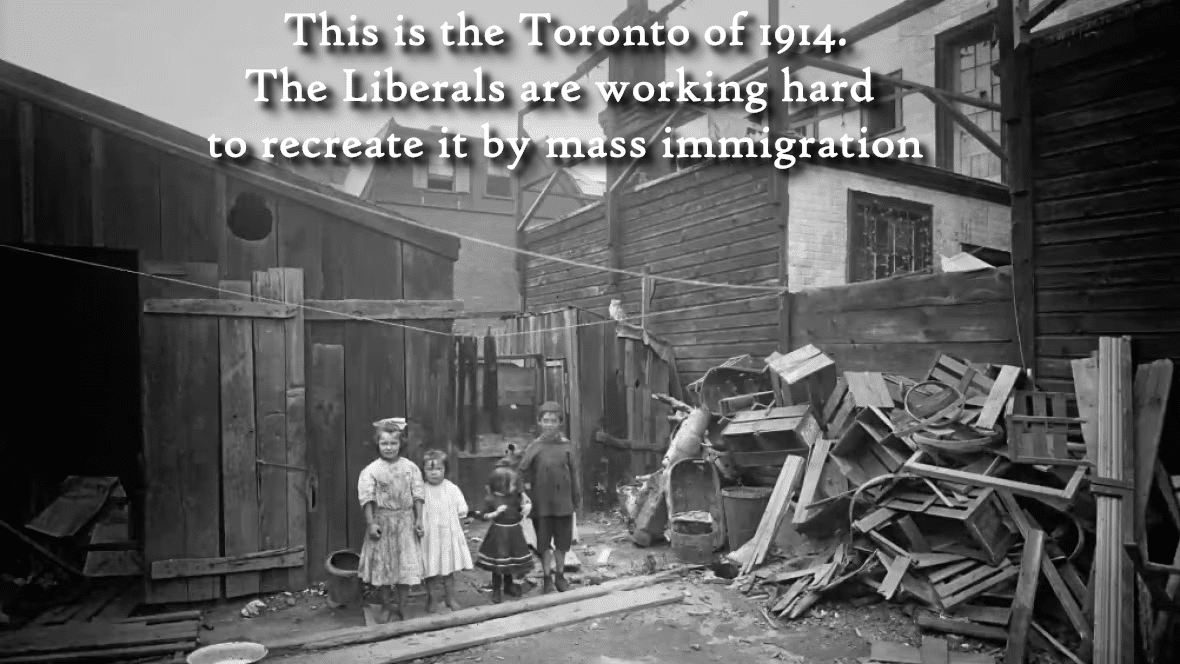
Mass immigration will make it very difficult to reverse this situation.
Mark Carney’s visit to Saudi Arabia revealed a narrowed vision of Canada’s place in the world
“O Canada” was played in Saudi Arabia this week for the first time in 26 years. That quarter-century silence tells the real story behind Mark Carney’s visit to Jeddah.
The last Canadian prime minister to visit Saudi Arabia was Jean Chrétien, in 2000, during a 12-day Middle East tour driven by a very different ambition: to reinforce Canada’s role as a credible participant in the Oslo peace process and to lead the international working group on Palestinian refugees. Canada then aspired to play a distinctive diplomatic role in the region and strengthen multilateralism.
What will the Elbows say?
Carney talks about Canada’s ‘energy sovereignty.’ But what does that really mean?
Soon after Donald Trump took office for a second time, with punishing tariffs and menacing talk of Canada as “the 51st state,” this country’s leaders began to invoke the idea of “energy sovereignty.”
It was a response to the fact that the biggest consumer of Canadian oil — the U.S. — was becoming increasingly hostile and erratic, an economic quandary that could only be managed by seeking new customers.
Carney? He still believes we should all be driving electric cars.
MACLEOD: Lich, Barber, and the dangerous criminalization of protest
Canada’s justice system has now sent its message, and it is not subtle.
Tamara Lich and Chris Barber were not murderers, arsonists, violent revolutionaries, or even criminals. They were two Canadians who helped lead a peaceful protest against government mandates during one of the most heavy-handed periods in modern Canadian history. For that, the Crown vigorously pursued them for years, seeking prison terms of seven years for Lich and eight years for Barber.
GOLDSTEIN: Flawed and costly vision of Canada’s Liberal anointed
In 1995, the great American conservative thinker Thomas Sowell authored a seminal book on the mindset of liberal elites — The Vision of the Anointed — Self-Congratulation as a Basis for Social Policy.
While obviously not based on the bizarre journeys of the Justin Trudeau and Mark Carney governments on the issue of climate change, it describes, with remarkable foresight what happened in Canada starting two decades later.
STIRLING: Canada is sleepwalking into personal carbon rationing
As Premier Danielle Smith and Prime Minister Mark Carney shook hands and smiled for the cameras for the submission of Alberta’s proposal for a West Coast Pipeline, a collection of climate change science jigsaw pieces was falling out of place.
Hey, big spender: Why we need to start giving Carney a bit less benefit of the doubt
Mark Carney is committing enormous sums of public money with little explanation, in ways that neither Justin Trudeau nor most other prime ministers before him could have gotten away with.
It can be easy to look past, because of the financial gravitas that Carney carries.
Easy, too, because his spending spree this summer has mostly involved priorities — fossil-fuel infrastructure, defence — that don’t tend to invite noisy criticism from fiscally conservative chattering classes in the same way as social investments. And it’s broadly been in line with a national appetite for spending to bolster economic sovereignty and national unity, and to decrease reliance on the United States.
Carney is a very talented grifter.
Mark Carney’s government loves memorandums of understanding. So, what are they exactly?
Prime Minister Mark Carney’s way of communicating and branding things is so distinct that some choice Carneyisms have crept into everyday Canadian speech over the year and a half he’s been a daily national presence.
We don’t have plans or policies in this country right now – everything is a strategy. Public money purportedly luring private investment is, of course, catalyzing.
WTF?
Their reactions are absolutely hilarious 😂 pic.twitter.com/sBRgeA6Qun
— Epic Clip Vault (@EpicClipVault) July 11, 2026