Letting go of China’s money – the price Canada must pay for its principles

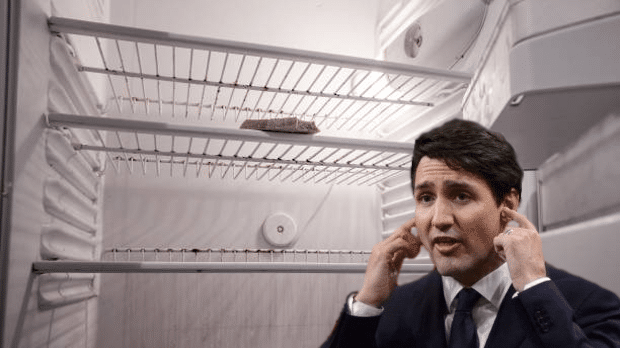
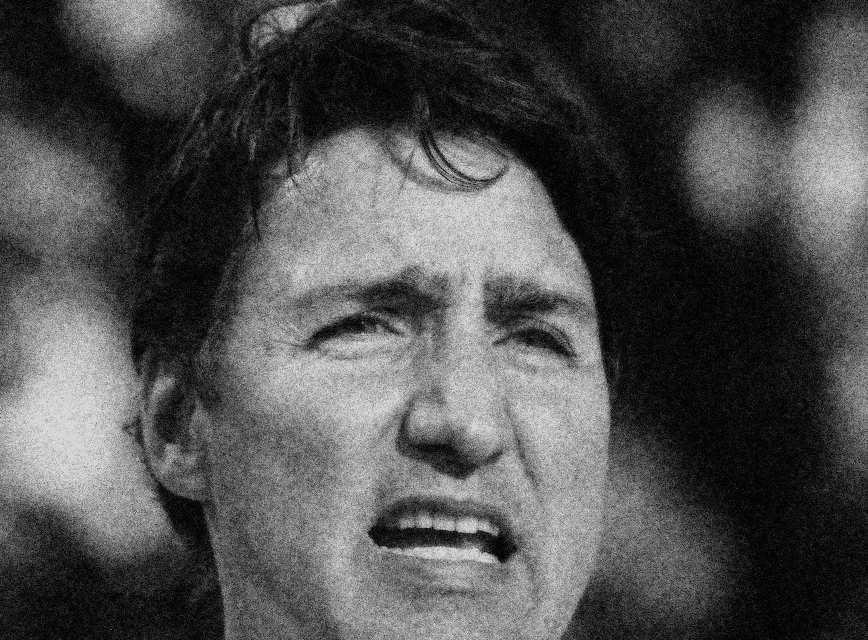
They made Justin cry.

Remember the 1990s? It was an innocent time when globalization was lifting all boats. Massive, multilateral trading agreements were all the rage. And any trade disputes were modest irritations that could be smoothed over with a few glasses of chardonnay.

Fast forward to the 2020s, and everything has shifted. The brave new world of neoliberal economics has been rocked to its core. And now geopolitical tensions are sparking some very unpleasant shocks to global trade.

Share

Liberals created conditions for housing chaos but blame everyone but themselves.

Ottawa considering a cap on international students to ease housing pressure, says Fraser

Canada hosted more than 800,000 international students last year, according to the government’s figures.

“When you see some of these institutions that have five, six times as many students enrolled as they have spaces for them in the building … you’ve got to start to ask yourself some pretty tough questions,” he said.

 

This “moment of clarity” likely came about because the Globe mentioned publicly that they will shortly be publishing an expose on the abuse of the foreign students program and the Liberals are using the CBC to get ahead of the story.

Don’t forget the LPC have allowed their corporate cronies to import wage slaves on a whim.

Of course it is Junior – Trudeau Says Immigration a ‘Solution’ to Housing Shortage

Share

Energy Experts Question Guilbeault’s Visit to China

When Vijay Jayaraj was growing up in India, power blackouts were frequent. He said the blackouts affected everything from schooling to employment—because when there was no power, it was difficult to get much done.

He pointed to the cotton industry of South India, a major employer.

“But all the industries were disrupted whenever there were phases … of continuous blackouts, eventually translating into thousands of lost jobs,” he told The Epoch Times

Share

Why Steven Guilbeault Sits on a Chinese Regime Body

With Steven Guilbeault set to be the first Canadian cabinet minister to visit China since 2018, questions have been raised about his role with a Chinese regime environmental body.

Mr. Guilbeault, in charge of Environment and Climate Change Canada (ECCC), will go to China from Aug. 26 to 31 to participate in the annual general meeting of the China Council for International Cooperation on Environment and Development (CCICED).

Share

Want to ease Canada’s housing crisis? Let’s start by being responsible about international student visas

Desperate calls by schools to urge local homeowners to rent out their rooms; students paying $650 a month to live three-to-a room in college towns boasting monthly rents upward of $2,000; a viral TikTok video purports to show an international student living under a bridge in Scarborough, Ont.

Housing is a complicated issue. It will take co-ordination, cash, and time to fix. But in the short term, there is at least one glaringly obvious – if surely controversial – way to help ease the challenge of finding affordable rental accommodation: We need to stop issuing so many international student visas.

Share

Canada to invest $644 million in Ford battery materials plant in Quebec

Canada will be investing $644 million in a new battery materials production plant to be built in Becancour, Que., by automaker Ford Motor Co. and South Korean companies EcoProBM and SK On Co.

The federal government and the province of Quebec will each provide conditional loans of $322 million to build the plant, which is valued at more than $1.2 billion and is expected to create over 345 jobs, the federal government said in a press release on Aug. 17.

Fun fact!

Share

The Liberals have broken Canada’s immigration system

… the Liberal government has gone to extraordinary lengths to give employers a nearly unlimited supply of low-wage workers, with many of those now arriving via the education visa stream. Those visas used to be entirely about education, but many schools now appear to be partly or even mostly peddling something else, namely the opportunity to reside and work in Canada, usually in a low-wage job.

Canada’s immigration system used to be the envy of the world.

Note my use of the past tense.

To appreciate what was good about Canada’s previous immigration strategy – the one followed until recently through governments Progressive Conservative, Conservative and Liberal – contrast it with the dysfunction of our friends down south.

HATE THE LIBERALS.

Share

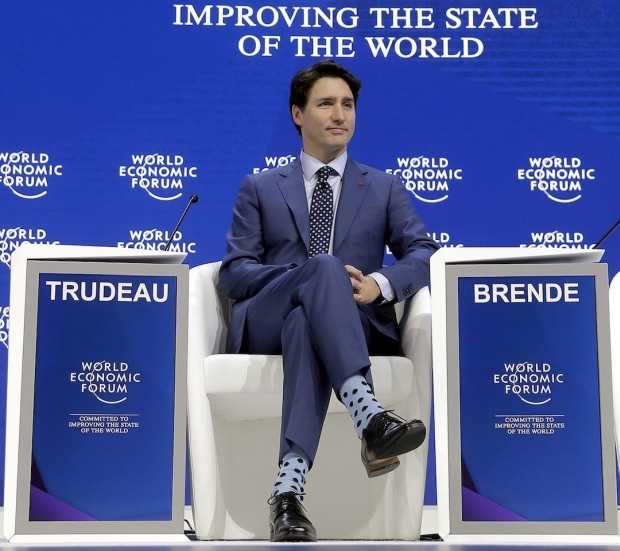
GOLDSTEIN: Even Harper and Freeland warned us about the WEF

The World Economic Forum is again in the news because of a Canadian Press wire story that appeared in many media outlets accusing Pierre Poilievre and the Conservatives of “embracing the language of mainstream conspiracy theories.”

Share

Colby Cosh: Nonsense for Trudeau to open immigration, but not the economy

This week, the Wall Street Journal, a strong candidate for “best newspaper in the English-speaking world,” became the latest news outlet to lift a questioning eyebrow at Canadian immigration policy. WSJ’s superb Ottawa reporter Paul Vieira gestures, for the benefit of his paper’s international audience, at facts most of our readers already know well. Inflexible, highly regulated parts of the economy like housing, medicine and transport are screaming under the burden of immigration levels with few precedents anywhere — levels the Liberal government has done nothing but increase.

Share

Canada Tests the Limits of Its Liberal Immigration Strategy

The intake of newcomers is rising rapidly and straining housing, healthcare and transportation

Canada is known for its embrace of immigrants and hasn’t experienced the same backlash that has been seen recently in countries such as the U.S. and the Netherlands. But new polling released last month from Ottawa-based Abacus Data reflects skepticism, with 61% of citizens saying the government’s plans are too ambitious because of the negative impact on housing and healthcare. The Canadian Medical Association said the country’s population-to-physician ratio ranks 29th out of 36 developed-world economies, while data from the Organization for Economic Cooperation and Development show Canada’s hospital-bed capacity is one of the lowest on a per-capita basis among rich-world economies.


Canada is known for its embrace of immigrants?

Submission to mass immigration is more like it.  Romanticized views of immigration in Canada are the domain of politicians selling snake oil nowadays.

No one signed on for an inundation of incompatible cultures or to have their own government dismiss their heritage and nation as so much racist garbage.

Multiculturalism was weaponized and the smear of racism was used as a bludgeon to smash dissent and ensure Canadians clapped like trained seals in approval whenever the topic of immigration was raised.

Ethnic disaporas possessed of little in common with Canadian values are catered to by our political class who tolerate the intolerable for votes.

Who asked that hiring decisions be made on the basis of government ordained victim status?

Who asked that being white be considered a virtual hate crime and Canada be turned into a low trust society?

Who asked for “racialized sentencing guidelines” for criminals as if the average Joe who just wants to be left alone is somehow responsible for the alleged historic oppression of predators?

No one asked for a balkanized society where foreign ethnic conflicts spill out into our streets.

Who asked for an immigration policy that does not benefit citizens?

No one asked because it was imposed upon us and its true purpose is to benefit the corporate and political classes at our expense. 

No one asked because divide and conquer works best when its victims are forbidden to talk about it until it’s too late.

This so called “embrace of immigration” is better described as a choke hold.

Share

CTV Reveals Vast Poilievre Conspiracy – The first rule of WEF is don’t talk about WEF.

Poilievre’s Conservative party embracing language of mainstream conspiracy theories

… “It’s far past time we rejected the globalist Davos elites and bring home the common sense of the common people,” said a Saturday fundraising email.

The Conservative party also recently sent out mailers with a poll asking people to tell Prime Minister Justin Trudeau who they think the prime minister should stand with: working Canadians or the World Economic Forum.

The wording implies Trudeau’s cabinet is beholden to the latter.


Junior’s handlers have him hopping aboard every democracy destroying Globalist bandwagon there is.

Conspiracy theories aside, there is something fishy about the Great Reset

It’s a corporate takeover of global governance that affects our food, our data and our vaccines

… The idea of stakeholder capitalism and multi-stakeholder partnerships might sound warm and fuzzy, until we dig deeper and realise that this actually means giving corporations more power over society, and democratic institutions less.

The plan from which the Great Reset originated was called the Global Redesign Initiative. Drafted by the WEF after the 2008 economic crisis, the initiative contains a 600-page report on transforming global governance. In the WEF’s vision, “the government voice would be one among many, without always being the final arbiter.” Governments would be just one stakeholder in a multi-stakeholder model of global governance. Harris Gleckman, senior fellow at the University of Massachusetts, describes the report as “the most comprehensive proposal for re-designing global governance since the formulation of the United Nations during World War II.”

Share

Show me the money: Canada Bread penalty raises questions about criminal fines

Canada Bread Company agreed to pay a $50 million fine on June 21 after pleading guilty to fixing the price of bread sold in grocery stores.

This fine is the highest ever imposed for a cartel offence in Canada — more than seven times higher than the previous record.

It is also the second-highest fine imposed on a corporation. Only the $280 million fine SNC-Lavalin agreed to pay as part of a 2019 plea deal settling foreign corruption and fraud charges was larger.

Share

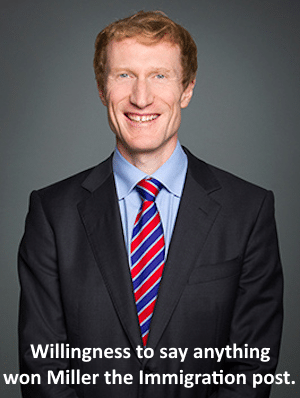
Setback for housing starts: 13 of Immigration Minister Miller’s carpenters caught fleeing Trudeau’s shithole state for the U.S. via Akwesane

Akwesasne Mohawk police say they recently detained 13 people who were allegedly attempting to cross illegally into the United States from Canada.

Police say they received a call on Saturday regarding foreign nationals on the American side of the territory in the village of Kana:takon, also known as St. Regis.

Officers found a family of four walking down the road and another family of nine in a private home, and turned them over to Canadian authorities.

It’s bad when the illegals are bugging out.

Now who will build our houses?

Share

Canadian businesses seek to hold on to slave labour supported supply chains for just a wee bit longer

Canadian businesses seek extension on 2024 rules targeting slavery in supply chains

Canadian industries are pushing back against the country’s planned January launch of the Modern Slavery Act, intended to fight forced labour and child labour in supply chains, as mining and apparel trade groups say the government has failed to spell out the details of the law’s requirements.

The act, which passed in May, seeks to push corporations to provide greater transparency about their supply chains in order to avoid abetting what critics say amounts to modern slavery. The new measure takes effect on Jan. 1, 2024.

However, lobby groups, including mining companies and apparel manufacturers, are warning that a perceived lack of clarity about the rules could lead to unwanted penalties and prevent critical goods from entering Canada.


Well someone has to mine rare earths under hazaourdous conditions to make those electric car batteries.

And while they’re at it they’d also like a second opinion on price fixing as there’s a lot of money to be made stealing bread from the mouths of children.

Share

Canada is on the verge of destroying far more journalism jobs than it ever could have hoped to save.

Here’s a word of caution for policy-makers looking to help publishers retrieve some of their advertising revenue lost to web giants such as Google and Meta: Whatever you do, don’t look to Canada for inspiration.

Canada’s efforts to “defend democracy,” as Prime Minister Justin Trudeau put it, have turned out to be a counterproductive fiasco. The government hoped the Online News Act would salvage a struggling legacy news industry and become a model to be copied globally. But it is the most spectacular legislative failure in Canada’s living political memory.


Gee, soon the only media in Canada will be the CBC. How terrible for Justin!

Share