“They’ve been very nasty to us on trade. Historically, Canada has been very, very bad to us on trade,” President Donald Trump said on Friday.
The Canadian response to these words has been to scoff and claim that Canada is the best trading partner the U.S. has. Turns out both of those things can be true at the same time, and if you listen to the Americans, they have several serious issues with us.
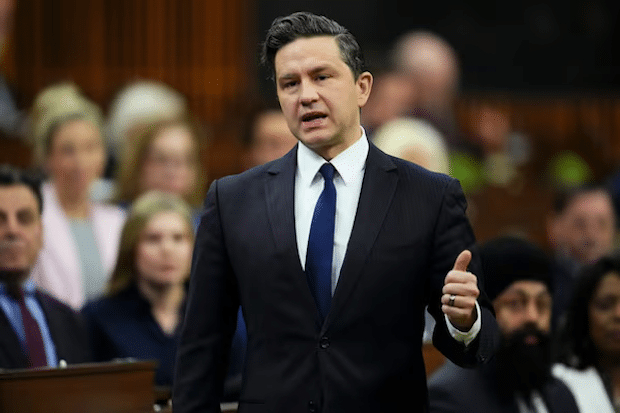
Like an untended lawn that’s become encased in unpleasant brush, the Canadian public service is overgrown. It needs a lot more than a couple of passes with a lawnmower — it needs a chainsaw, and only Conservative Leader Pierre Poilievre has the guts to wield it.
On Wednesday, the Tories set out clear benchmarks for the public service cleanup. The plan is to not replace employees when they leave, the party’s deputy leader, Melissa Lantsman, told the National Post. Given that around 17,000 staff members end their service each year, that will reduce the size of the federal workforce by upwards of 68,000 positions over a four-year mandate
“Canada really is a fundamentally rich country that has chosen not to act like one for 10 years,” says political theorist David Polansky.
If you ask the average Canadian — “Are you ashamed that you’re an oil and gas giant and have all these incredible minerals?” — the answer is no. But it’s a sentiment that’s dominant among the governing class, David asserts, and “that governing class is not very representative.”
It’s starting to become clear why Pierre Poilievre was so keen to have an election last fall.
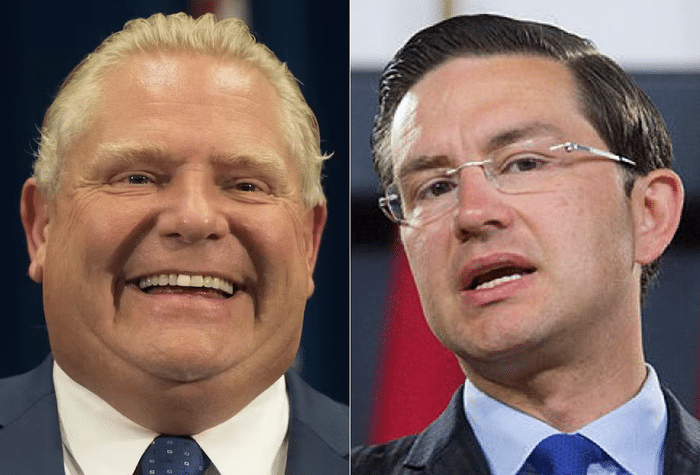
Not only is Donald Trump raining on the Conservative leader’s parade, but now Premier Doug Ford will be beating Poilievre to the campaign trail with the Feb. 27 Ontario election to be called within days.
Poilievre is going to be hoping that Ontarians are in such an anti-Liberal mood that they will be happy to vote conservative twice this spring. A federal election campaign is widely expected to be launched not long after Parliament resumes at the end of March.
Canadian unity is back on the agenda, given the strong polling of the Parti Québécois and its commitment to a sovereignty referendum. With support for sovereignty at around 36 per cent, there is justifiable concern over the outcome of a third Quebec referendum campaign. For one, it could occur with a new recession and frequent incendiary comments from U.S. President Donald Trump, who has targeted the valuable American trade supporting our economy.
Between the death bed repentances of the federal Liberal leadership contenders trashing the political legacy of the Trudeau government they’re part of, and Ontario Premier Doug Ford insisting he needs a new election mandate to take on U.S. President Donald Trump on tariffs, the conclusion is inescapable.
Survey says more young Canadians believe the history of the Holocaust is exaggerated
OTTAWA – On Monday the world will mark eight decades since the liberation of Auschwitz, the notorious Nazi extermination camps where more than a million people, most of them Jews, were murdered during the Second World War.
But as world leaders and Auschwitz survivors prepare to gather at the Auschwitz-Birkenau Memorial and Museum in southern Poland, a new survey suggests a growing number of Canadians believe the history of the Holocaust has been exaggerated.
A panel survey commissioned by the Association of Canadian Studies and conducted by the polling firm Leger last spring found 18 per cent of Canadians between 18 and 24 years old agreed with the statement “I think the Holocaust was exaggerated.”
I wonder who these young “Canadians” are.
What is their ethnicity? Are they native born or of migrant background?
1st, 2nd, 3rd generation?
What is their religious upbringing if any? Mohammedan? Christian? Hindu?
Mass immigration has imported mass antisemitism, mass cultural incompatibility and mass cultural indifference to Canadian norms and values.
The 3rd world has little knowledge of or care for the holocaust having their own messy histories to sort.
Are pollsters able to sift this data?
Probably, but at the risk of being smeared as racist or phobic.
Do they choose to promote someone’s preferred narrative which rules out a deep dive?
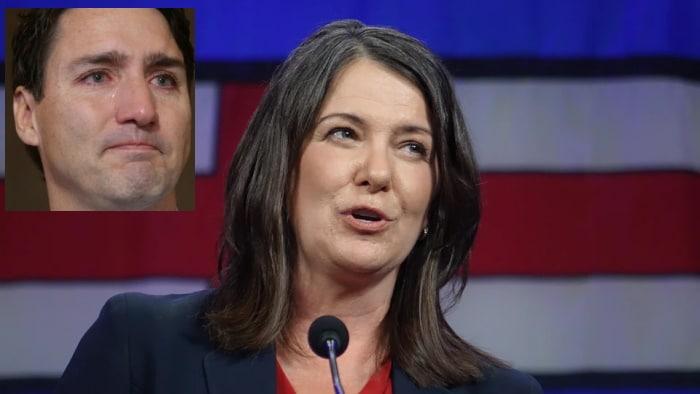
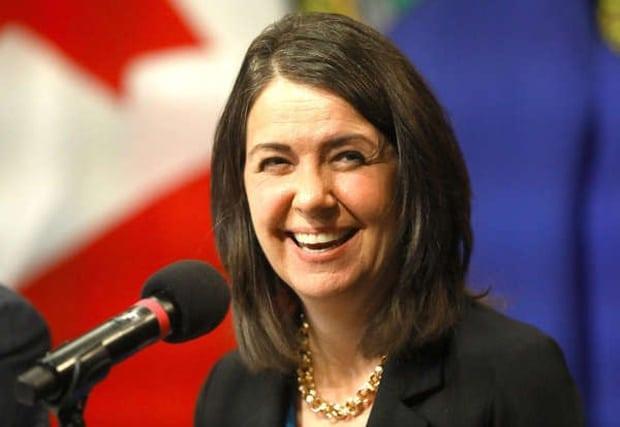
Alberta Premier Danielle Smith — who’s stood in staunch opposition to the idea of cutting off energy exports to the U.S. in response to the potential imposition of tariffs — insists she isn’t creating a national unity crisis by publicly opposing her fellow premiers on the issue.
“I think the problem that we saw is that we were getting together as a group of premiers and the prime minister saying, ‘let’s not negotiate this in public,’ and I did my part, saying, ‘let’s focus on the things that we know the Americans care about: national security and border security,’ and everybody else went off freelancing,” Smith told CTV’s Question Period host Vassy Kapelos in an interview airing Sunday.
Their new neighbors will quickly introduce her to Islam’s quaint cultural norms
VANCOUVER — British Columbia climate activist Zain Haq and his wife Sophia Papp are planning to live together in Pakistan if his threatened deportation proceeds on Saturday, and blame his imminent expulsion on bureaucratic failings by immigration officials.
Haq, a Pakistani citizen who co-founded activist group Save Old Growth as an international student, was granted a temporary resident permit last April, pausing deportation to allow his spousal application for permanent residency to be processed.
No Canadian has been more visible, more strategic, and more on-the-ground on the U.S.-Canada tariff file than Alberta Premier Danielle Smith. You don’t have to like her approach to recognize that she has been enormously successful in securing an in-person audience with decision-makers in the U.S., to whom she has been making her case for Canadian carve-outs to U.S. President Donald Trump’s 25-per-cent tariff threat. (As she confirmed in a news conference on Jan. 21, she is pushing for a national exemption, and not simply a provincial one.) Her social media feeds have documented her meeting with senators from West Virginia, Florida and Oklahoma, governors from North Dakota, Louisiana, Arkansas, Montana, Mississippi and others in the days before and after inauguration – and that’s following her visit to Mar-a-Lago earlier this month, where she had the direct ear of Mr. Trump.
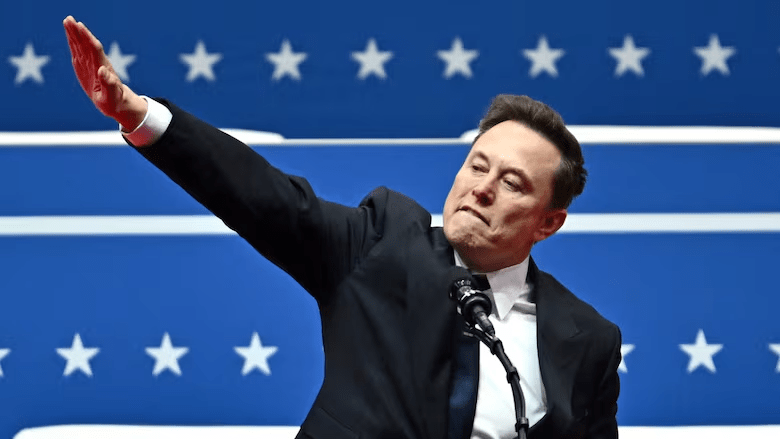
New Democrat MP Charlie Angus is calling on Elections Canada to launch an investigation into Elon Musk and his social media platform X, saying he is concerned about potential interference by the tech billionaire in the next federal election.
In a two-page letter to Chief Electoral Officer Stéphane Perrault, Angus said Musk has been playing a role in recent elections in a variety of countries, donating millions of dollars to conservative candidates and using X, formerly known as Twitter, to amplify the political messages of candidates he favours.
“He has formed alliances with right-wing populist leaders, amplified extremist influencers and spread hate disinformation towards marginal groups,” Angus wrote.
And of course the CBC ran with the Musk Hitler Not Hitler really pic.
As a wise Canadian once put it, you don’t know what you’ve got till it’s gone. And when it comes to the partnership with Canada, the average American has no idea what they’ve got.
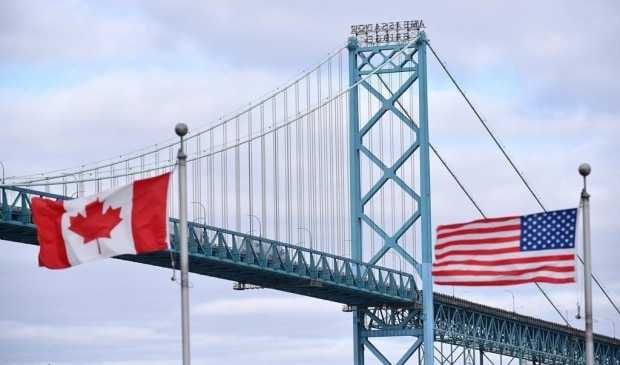
Before President Donald Trump drives his tariff bulldozer through paradise, Canada needs to launch a crash program of talking to Americans about the world’s most successful economic relationship and friendship, what will happen when it’s gone, and how much that will cost them.
With a PM like Trudeau it’s a wonder they let any of us cross the border.
Canada has a “limited capacity” to welcome people looking to resettle, the federal immigration minister said, as the country braces for a potential influx of migrants in the wake of U.S. President Donald Trump’s border crackdown.
As part of a series of executive orders cracking down on immigration, this week Trump suspended America’s refugee resettlement program, leaving stranded thousands in war-torn countries across the globe who were approved to come to the United States.
Immigration Minister Marc Miller said the U.S. decision is “unfortunate” and Canada will continue to be there for people fleeing conflict, but there is a limit to how many it can support.
Federal ministers appear to remain optimistic about Ottawa’s defence spending in the wake of President Donald Trump’s proposal to raise NATO targets from 2% to 5%.
Trump speaking via video conference at the World Economic Forum (WEF) in Davos, Switzerland on Thursday said the United States has for too long been carrying the weight for its ally nations.
As Canadian politicians try to come up with a response to Donald Trump’s tariff threat, a sticking point has emerged over a significant Canadian retaliatory option: limiting exports of Canadian oil and gas to the U.S.
The majority of Canada’s oil exports, largely produced in Alberta, go to the United States. And Alberta Premier Danielle Smith has flatly refused to entertain the option of cutting off that supply to American refineries if Trump slaps a 25-per-cent tariff on all Canadian goods, including gas and oil.

 “They’ve been very nasty to us on trade. Historically, Canada has been very, very bad to us on trade,” President Donald Trump said on Friday.