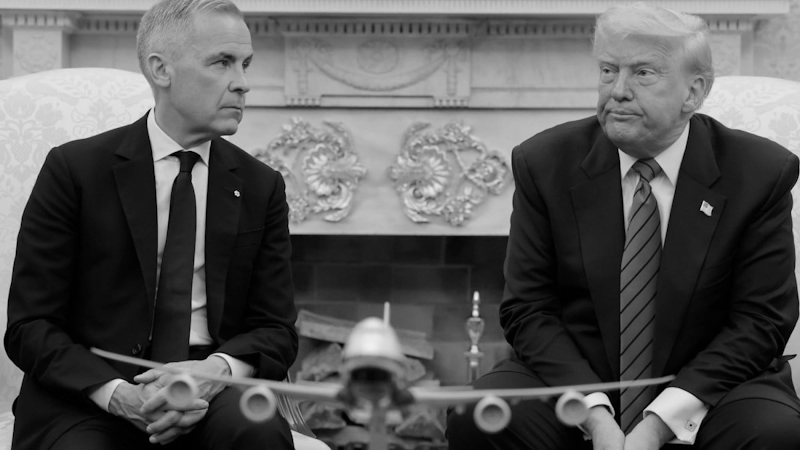
Carney hints at dropping some U.S. tariffs if it will help Canadian industries hit by trade war

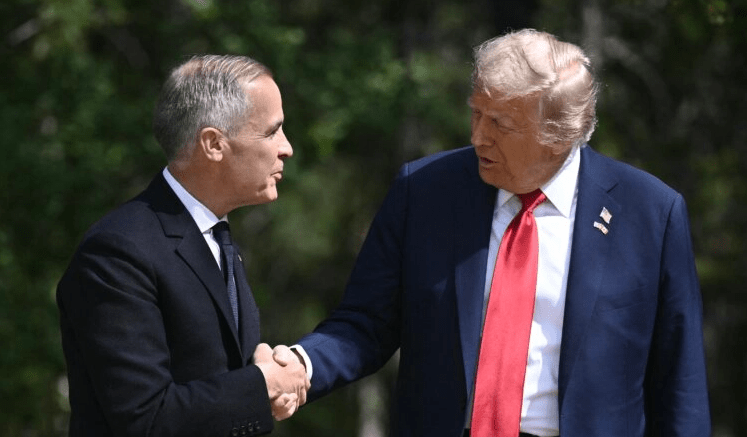
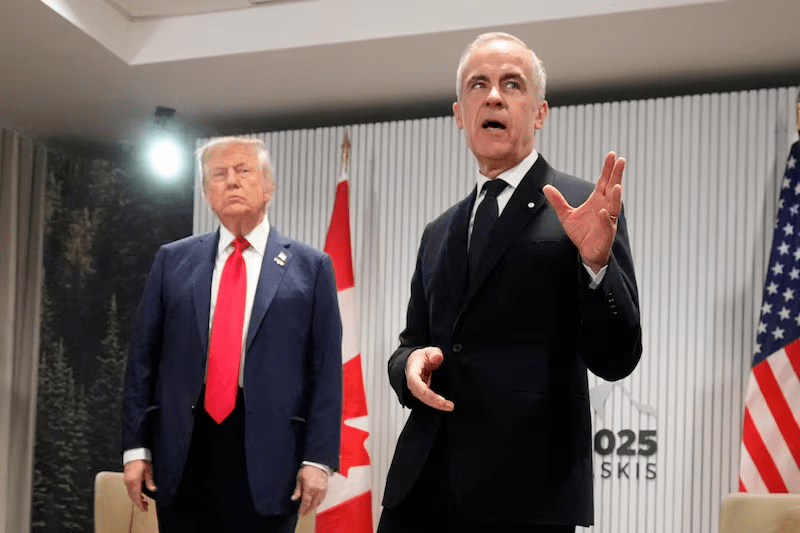
Prime Minister Mark Carney showed no signs of retaliating against U.S. President Donald Trump’s increased tariffs — and even suggested he’s open to removing existing tariffs if it would help Canadian industries.

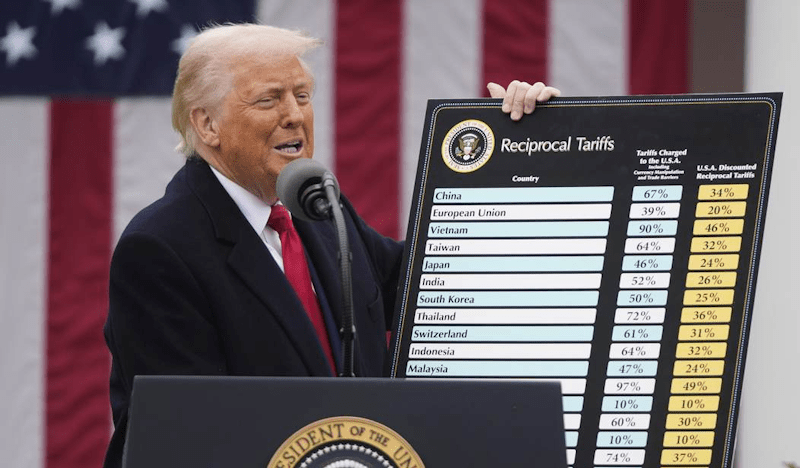
Carney faced questions Tuesday about Canada’s next steps after the two countries failed to reach a trade deal by the Aug. 1 deadline, resulting in a 35 per cent import tax on some Canadian goods. The rate applies to goods not covered by the Canada-U.S.-Mexico Agreement, which governs trade between the three countries.

The Great Negotiator at work.

Share

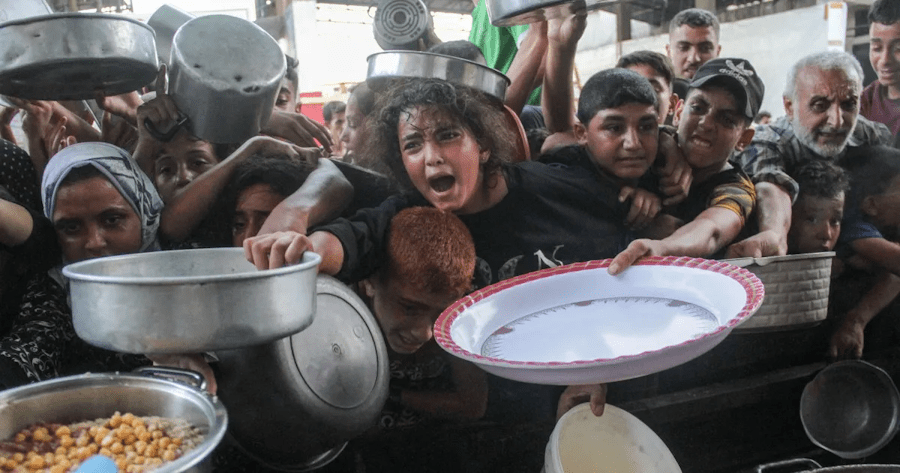
As a Jewish Canadian, I want my community to speak out about the horrors in Gaza

In the winter of 1975, I went to work on a kibbutz.

I was 17 years old. The work in the fish ponds was not glamorous: I stood for hours in a large, stinky pool of muddy water hauling spiny St. Peter’s fish out into a tank for export. But the trip was an ideological inspiration. Here was Jewish community. Here were whole neighbourhoods celebrating my holidays. The communal kibbutz lifestyle united in the building of something new, something hopeful.


The author writes of counting the vertebrae of starving Gazan children.

That would be the ill children Hamas has exploited to advance their agenda among the willfully gullible of the west.

No doubt children suffer but I have grave doubts about the alleged food shortages that come from a people who celebrate rape, murder and the ‘martyrdom’ of their own children.

Share

Did Hamas write this?

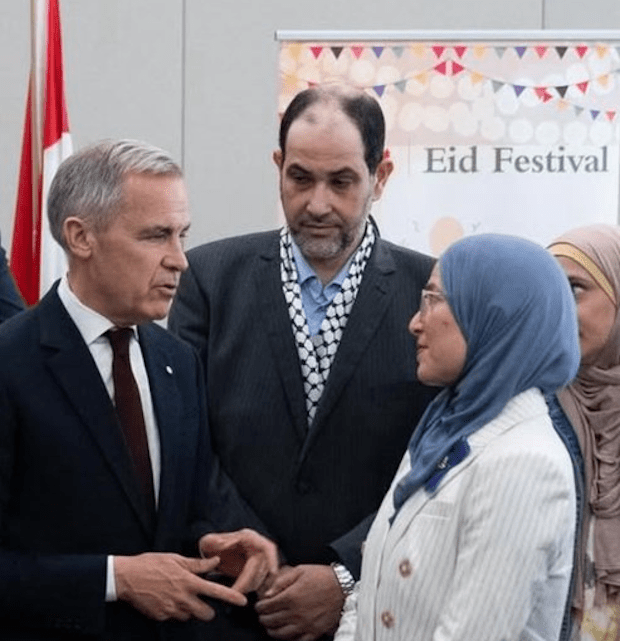
Carney and Islamophobia Tsar – gets assurance daughter won’t be tossed off roof.

Why did Mark Carney choose this moment to recognize Palestine as a state?

The announcement by Prime Minister Mark Carney Wednesday to recognize Palestine as a state took many Canadians by surprise. Up until recently, Canada and other western states seemed committed to the view that the recognition of Palestine would come at the end of a lengthy peace negotiation between Israel and the Palestinian Authority. Two states for two peoples has been a central pillar of Canadian and other western countries’ Middle East policies for decades. Indeed, that is precisely what was envisioned at the time the United Nations voted Israel into existence in 1947. Unfortunately, Israel’s Arab neighbours rejected partition, attacked Israel and the rest is some very complicated, bloody history.

Share

Spain dismantles smuggling ring moving migrants to Canada with fake passports: police

Spanish police say they have dismantled a criminal network that facilitated illegal entry into Canada and the U.K. using forged passports and travel documents.

In a press release by Spain’s National Police, the smuggling operation primarily targeted Yemeni nationals and involved more than 40 migration attempts.

The network allegedly charged each migrant up to C$4,400.

Share

What does Donald Trump want from Canada? We are about to find out

Where do things stand for Canada after the United States imposed a new, higher tariff last Thursday evening?

In the short run, not much has changed. In the long run, a lot may yet change.

Since the signing of the landmark Canada-United States Free Trade Agreement in 1988, the relationship has been about ever-lower trade barriers and ever-easier movement of goods and services across the border. It was part of a global trend. Under President Donald Trump, the U.S. is reversing course, hard and fast.

Share

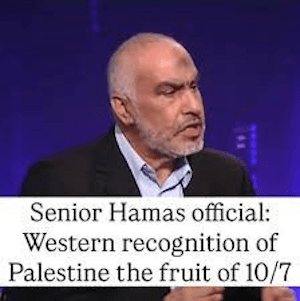
‘The Fruits of October 7’: Hamas Leader Praises European, Canadian Calls for Palestinian Statehood

Senior Hamas official Ghazi Hamad on Saturday hailed Canadian, British, and French plans to recognize a Palestinian state as “the fruits of October 7,” crediting Hamas’s terrorist attack on Israel with growing Western support for such a state.

“Why are all the countries recognizing a Palestinian state today?” Hamad, a senior member of the Hamas politburo, asked during a Saturday interview on Al Jazeera, according to a translation by the Times of Israel. “Before October 7, did any country dare recognize a Palestinian state?”
Share

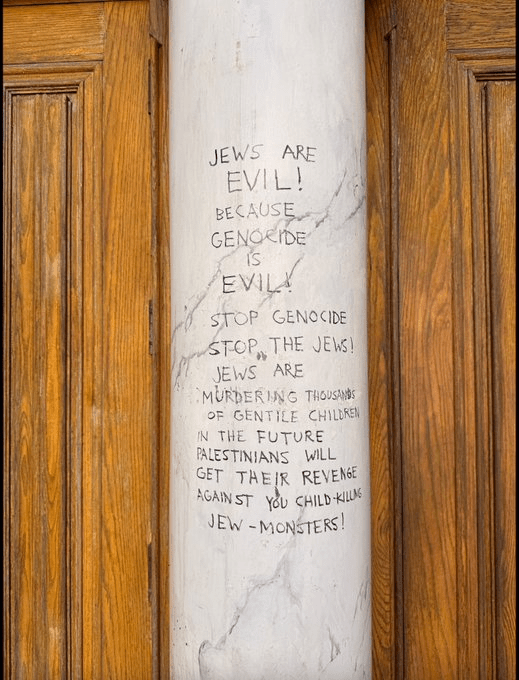
‘Disgusting act of hate’: Victoria synagogue vandalized with antisemitic statements

Congregation Emanu-el Synagogue in Victoria, B.C.

B.C.’s premier and public safety minister are condemning the vandalism of Canada’s oldest surviving synagogue and pledging to support police and the community while an investigation is underway.

The Victoria Police Department was called to the Congregation Emanu-el Synagogue on Saturday around 8 p.m.


This is we are told a “progressive” synagogue.

Don’t believe the crocodile when he promises to eat you last.

Share

Dozens of asylum seekers intercepted crossing into Quebec from U.S. in back of truck

Three alleged smugglers and 44 asylum seekers attempting to enter Canada from the U.S. were intercepted in Stanstead, Que., by the RCMP overnight Sunday.
With the help of provincial police, authorities arrested the asylum seekers, who were travelling in a truck, near Haskell Road. Some of them included children. RCMP brought the asylum seekers to the Canada Border Services Agency (CBSA) office in Stanstead, according to CBSA east border district director Miguel Bégin.

… Bégin said most of the migrants were transferred to the Saint-Bernard-de-Lacolle regional processing centre, where they are being screened for their eligibility for asylum in Canada.


There is no reason for them to be eligible for asylum in Canada.

Share

CHARLEBOIS: CUSMA-Exempt — the 93% Mirage

Since Aug. 1, many Canadian commentators have downplayed the impact of the 35% tariffs the United States has imposed on select Canadian goods, citing the Canada–United States–Mexico Agreement (CUSMA) and its oft-repeated claim that 90% to 93% of Canadian exports remain exempt.

While technically true, this statistic masks the much more complicated — and far less reassuring —reality for Canada’s agri-food sector.

Share

Public Servants Risk Scrutiny for Criticizing Government Online: Federal Guidance Document

Ottawa has issued a guidance document informing public servants they may face scrutiny if they post content on social media that it deems partisan, disrespectful, or critical of government policies—even when shared from anonymous personal accounts.

The document seeks to provide “guidance for public servants on their personal use of social media.”

Share

Kelly McParland: Bowing to Trump would betray Canada

Prime Minister Mark Carney’s post-midnight response to Washington’s latest escalation of its tariff war was calm, measured, sensible and appropriate, everything the current regime in Washington is not.

Canada, Carney said, will continue to negotiate in search of a reasonable agreement, notwithstanding the absence of any indication the U.S. is open to reasonable negotiations. What Washington wants is to continue operating what amounts to a global extortion racket, threatening all America’s best customers with dire consequences if they refuse to bow to its demands and offer up supplication to whatever notion occurs to President Donald Trump at any given moment.


Is supporting Carney any better? I doubt it.

Share

Sheryl Saperia: Supporting Palestinian statehood means endorsing violence

Former U.S. vice-president Hubert Humphrey once observed that “foreign policy is really domestic policy with its hat on.” This deceptively simple phrase captures a profound truth: a country’s stance on international affairs is almost never just about abstract ideals or global ethics. It reflects, and often redirects, domestic pressures, political calculations and the ideological currents coursing through national life. Canada’s proposed recognition of Palestinian statehood is a prime example — a foreign policy move with far-reaching consequences for our national and international security.

Carney is cool with that.

Share

‘This is bad news’: Former foreign minister warns on U.S.-Canada trade tensions

Canada is bracing for further tension in its trade relationship with the United States, after President Donald Trump imposed sweeping new tariffs.

“This is bad news,” said former foreign affairs minister Peter MacKay in an interview with CTV News Channel Sunday.

“It’s bad news for the markets. It’s bad news for many sectors on both sides of the border. … There is a lot of impetus now to try to bring this to an end.”


Crap like this will not win Carney many friends, not here not in the USA ask Justin.

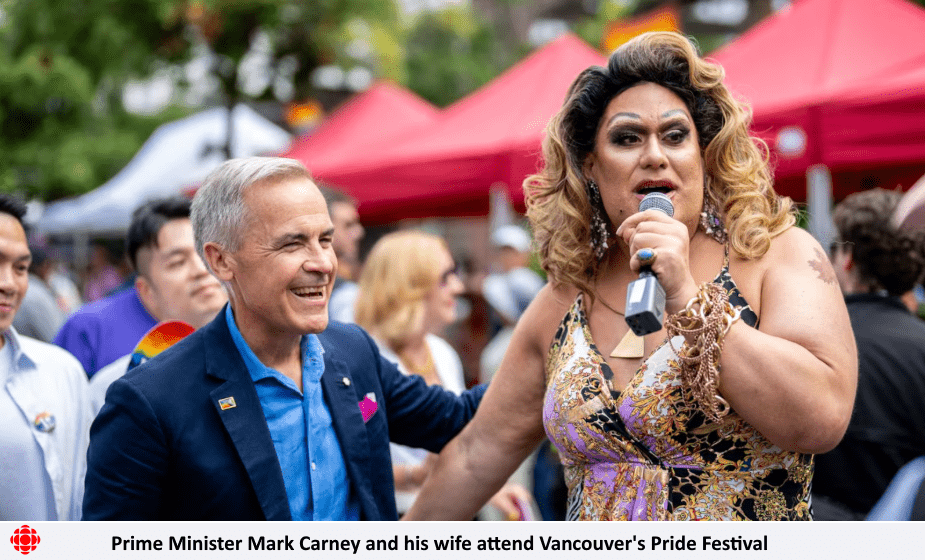
Prime Minister Mark Carney attends Vancouver Pride parade

Share

The two ways Trump’s tariffs on Canada could collapse — despite his fight to keep them

WASHINGTON, D.C. — Time’s up. On Friday, U.S. President Donald Trump raised the tariff rate on Canadian goods not covered under the Canada-United States-Mexico Agreement (CUSMA) from 25 to 35 per cent, saying they “have to pay a fair rate.” The White House claims it’s because of Canada’s failure to curb the “ongoing flood of fentanyl and other illicit drugs.” U.S. Customs and Border Protection (CBP) data, however, show that fentanyl seizures from Canada make up less than 0.1 per cent of total U.S. seizures of the drug; most smuggling comes across the Mexican border.

Share