Carney Pulls Canada Closer to Europe as Both Struggle With Trump

Carney Pulls Canada Closer to Europe as Both Struggle With Trump

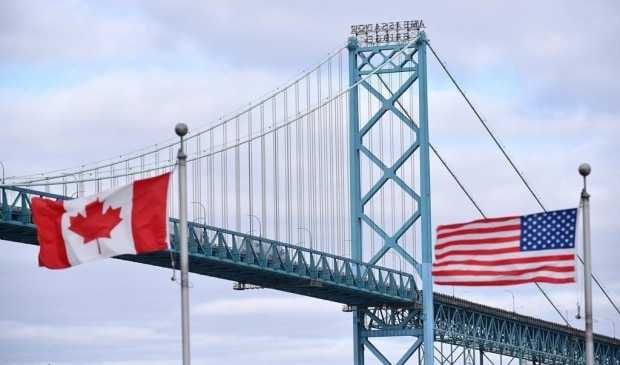
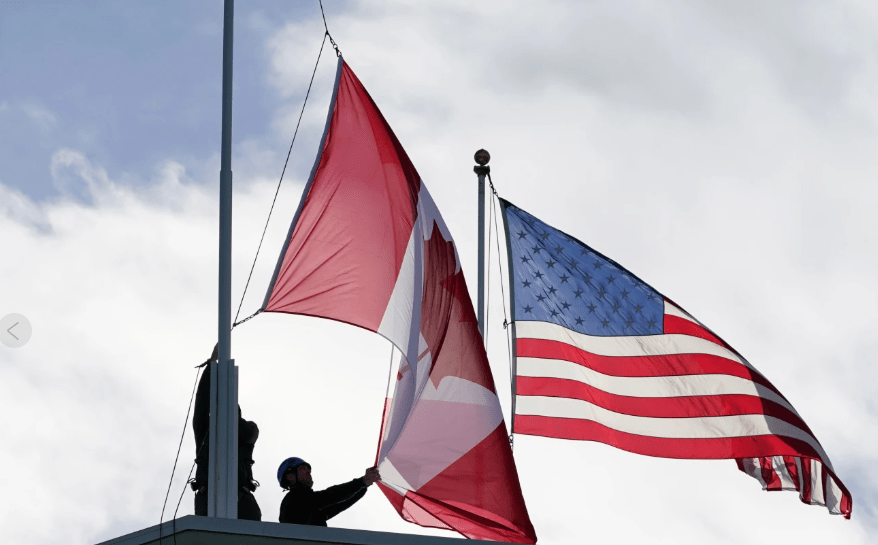
Canada and the European Union are turning commiseration and anxiety over their turbulent relationships with the United States under President Trump into a deepening bond.

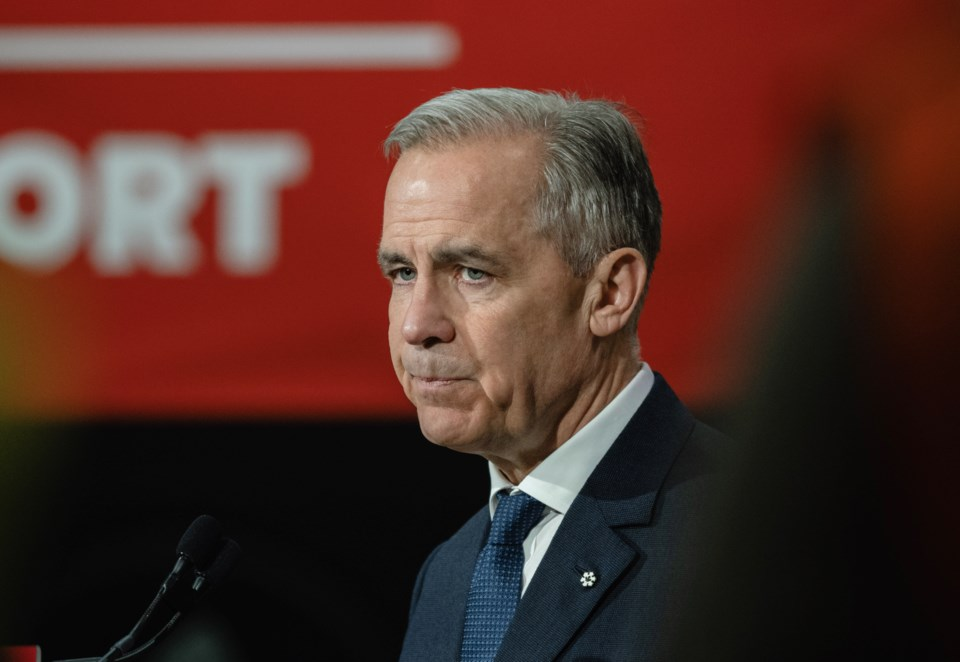
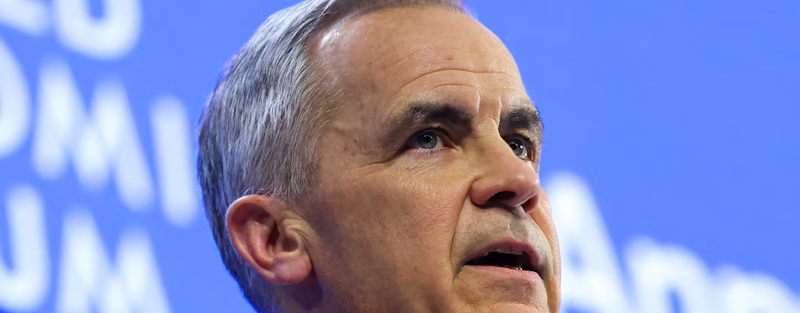
On Monday, Prime Minister Mark Carney of Canada joined a summit of European leaders in Yerevan, the capital of Armenia, putting his country at the heart of some of Europe’s biggest priorities. He was the first non-European head of government to be invited to the gathering, known as the European Political Community summit.

Mr. Carney’s relentless pursuit of new, expanded alliances to lessen Canada’s dependence on the United States coming as Mr. Trump threatens to unravel decades of economic integration, has effectively led Canada to be welcomed as something of an honorary European Union member.

Article from the tweet above … This is swell! Canada and the EU can kick Mississippi’s but together! Well Sorta.

What Happens When Europeans Find Out How Poor They Are?

Do Europeans understand how poor they are? And what will happen when they find out? Those are the Continent’s big political-economy questions for the next few years—perhaps decades.

The widening gap between American and European prosperity is among the most important facts of the global economy. The clearest manifestation is the chasm in per capita gross domestic product: $94,400 in the U.S., according to the International Monetary Fund, compared with $65,300 in Germany, $61,000 in the U.K. and $52,000 in France.

While America’s prosperity advantage isn’t new, today’s scale is. From a fairly narrow edge throughout the 1980s, the gap widened a bit in the 1990s. Since 2007, however, European per capita incomes have more or less stagnated while the U.S. has enjoyed another growth spurt.

Share

Ottawa gives billion-dollar lifeline to steel and aluminum sectors as Trump tightens tariffs

Ottawa gives billion-dollar lifeline to steel and aluminum sectors as Trump tightens tariffs

The federal government announced on Monday another package to prop up the hard-hit steel, aluminum and copper sectors after U.S. President Donald Trump tightened his tariff regime to apply to more products, hammering Canadian industry.

At a plant in Vars, Ont., Industry Minister Melanie Joly said the government will establish a $1-billion loan program through the Business Development Bank of Canada (BDC) so companies most affected by the Trump scheme can get the money they need to stay in business.

Share

Buy Canadian has caused pain in parts of the U.S., but America will be just fine

Buy Canadian has caused pain in parts of the U.S., but America will be just fine

There were the star-spangled boos, the shelves emptied of California pinot noir and Kentucky bourbon. There were the cancelled trips and the conferences relocated closer to home. There were counter-tariffs and government promises to find new markets. And there were decisions at the grocery store about which ketchup to buy and which dog food to leave on the shelf.

For more than a year now, Canadians − at least, some of them − have fulminated against their closest international neighbour, eschewing U.S. goods and avoiding American vacation destinations.

Share

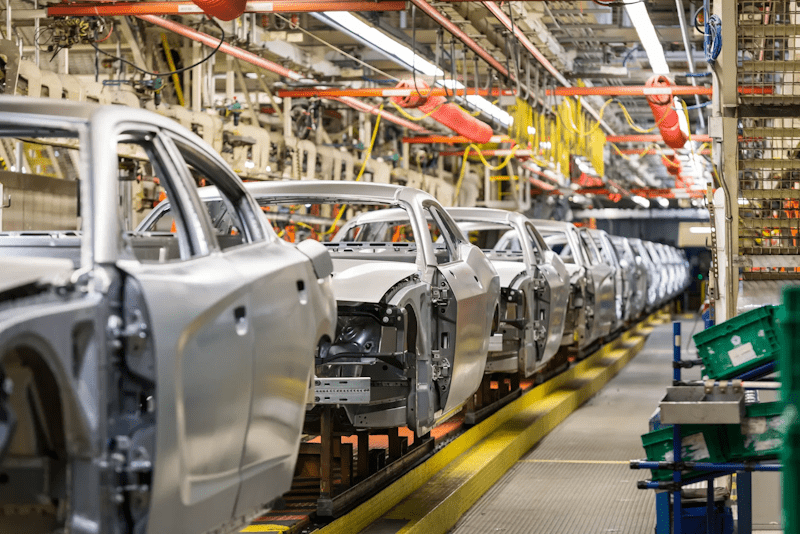
Auto giants warn China EV quota will gut Canadian industry and jobs

Auto giants warn China EV quota will gut Canadian industry and jobs

Canada’s auto sector is raising alarm bells over Ottawa’s decision to open the door to Chinese electric vehicles, warning the move could undercut domestic manufacturing and cost jobs.

Blacklock’s Reporter says executives from General Motors Canada told MPs that new federal concessions allowing thousands of low-tariff Chinese electric vehicles into the country risk weakening Canada’s industrial base and “hollowing out” its skilled workforce.


We were likely to lost auto manufacturing anyway, this will accelerate it.

They certainly didn’t waste any time …

Chinese EVs were spotted in Toronto, here’s what you need to know ahead of their Canadian release

h/t Mauser (Incognito)

Share

Trump’s trade czar tells Canadians that ‘America First’ is policy, not a slogan: sources

Trump’s trade czar tells Canadians that ‘America First’ is policy, not a slogan: sources

United States Trade Representative Jamieson Greer told Canadians looking for insights into the future of bilateral trade this week that “America First” is policy, not a slogan, and they should not expect a return to the way things were.

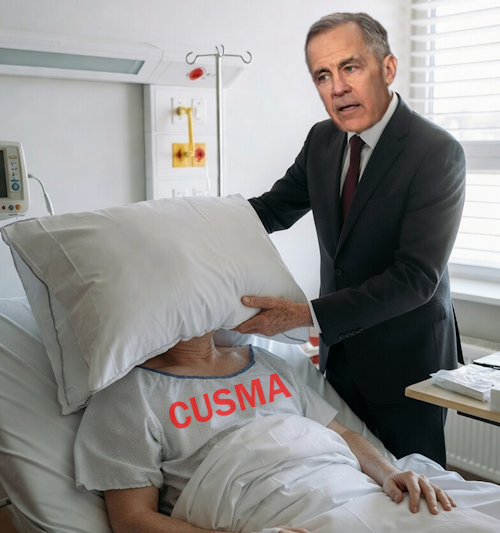
Sources who attended a roundtable with U.S. President Donald Trump’s trade czar in Washington on Wednesday told The Canadian Press that Greer was measured and pragmatic as he laid out the administration’s policy goals ahead of the coming review of the Canada-U.S.-Mexico-Agreement on trade, better known as CUSMA.

Share

Canada won’t ‘leverage’ energy, critical minerals in trade talks: PM

Canada won’t ‘leverage’ energy, critical minerals in trade talks: PM

OTTAWA – Prime Minister Mark Carney is rejecting the notion that Canada might use energy or critical minerals as “leverage” in upcoming trade talks with U.S. President Donald Trump’s administration.

The prime minister made the remarks in an interview with The Canadian Press, his first since declaring he would enter federal politics more than a year ago.

Carney said he wouldn’t describe those sectors as “leverage” since Canada is not talking about stopping any sort of existing trade.

Share

Can Carney reduce Canada’s U.S. trade dependence? 50 years of history says ‘no’

Can Carney reduce Canada’s U.S. trade dependence? 50 years of history says ‘no’

Federal governments have for decades failed to reduce Canada’s dependence on U.S. trade, according to a new report, suggesting that Prime Minister Mark Carney faces an overwhelmingly steep climb in his effort to pivot the country away from its southern neighbour.

In a new report, the Fraser Institute studied the last 50 years of Canada’s trade diversification efforts, which included the signing of 16 free trade agreements with non-U.S. countries between 1988 and 2020. For all that work, however, Canada hardly increased its exports to non-U.S. trade partners, particularly in the last 25 years. Meanwhile, China — seemingly the sole benefactor from Canada’s diversification push — has gobbled up virtually all of what was diverted away from the U.S. in recent decades, the report found.

Share

WHISSELL: What if Carney wants the USMCA to expire?

WHISSELL: What if Carney wants the USMCA to expire?

The deadline of July 1 for the mandatory joint review of the United States-Mexico-Canada Agreement (USMCA) is fast approaching. United States (US) protectionism is leading the Western world down a more transactional path, one where old economic partnerships are being redefined. This shift is causing a great deal of anxiety for Canadians as the future of trade remains uncertain.

Share

Howard Lutnick’s right. Canada needs to limit EV trade with China

Howard Lutnick’s right. Canada needs to limit EV trade with China

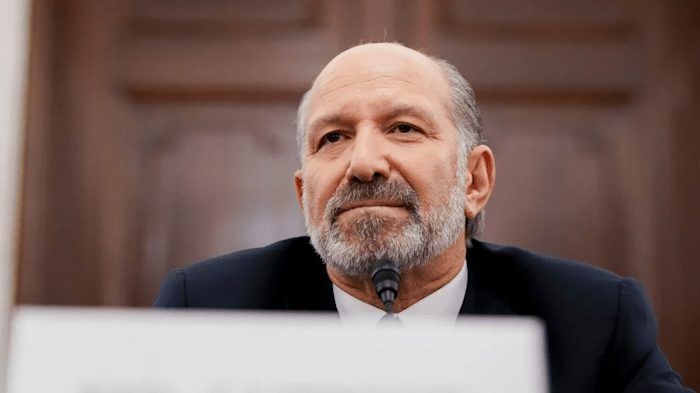
Was Prime Minister Mark Carney “nuts” to make a deal to import electric vehicles from China? That’s what Howard Lutnick says. “Carney has a problem with us,” the U.S. Commerce Secretary told a conference audience April 17. “He gets on a plane and he goes to China. Does he think the Chinese economy’s gonna buy his stuff? China is entirely an export-driven economy!”

Lutnick’s style was crude, his attitude abrasive. The deal he trashed was arguably a rational tactic to buy Canada’s canola sector some short-term breathing space. But on the challenges of trading with China, he wasn’t wrong.

Share

Why Canada’s supply management system is going to disappear

Why Canada’s supply management system is going to disappear

Asked about how he went bankrupt, one of the characters in Ernest Hemingway’s novel The Sun Also Rises replies, “gradually, then suddenly.” That’s what’s in store for Canada’s supply management system, an outdated, regressive policy from the 1970s that protects the dairy and poultry sectors by artificially raising consumer prices and drastically restricting imports. It will disappear, gradually then suddenly, for many reasons.

Share

Pacific Mall in Markham is a ‘trade barrier,’ says the U.S. Here’s why — and why that may be changing

Pacific Mall in Markham is a ‘trade barrier,’ says the U.S. Here’s why — and why that may be changing

Andrew Carandang and Jonathan Pan have been coming to Markham’s Pacific Mall for as long as they can remember — but there are still surprises to be had.

“They sell tools here?” Pan said, walking through the mall’s glass-box maze of more than 350 stores and stalls.

Three years ago the lifelong friends brought their online vintage clothing business Legacy Toronto into a physical store here, in what a sign inside brags is the largest indoor Asian mall in North America: “You must see it.”


The Star celebrates counterfeit goods.

Share

Many Elbow Cranks have avoided the U.S. for over a year. Have we reached the point of no return?

Many Elbow Cranks have avoided the U.S. for over a year. Have we reached the point of no return?

Many Canadians have avoided the U.S. for over a year. Have we reached the point of no return?

Fredericton landscape painter Bruce Newman used to be a frequent visitor to the United States. Up to a dozen times a year, he’d travel to the country to vacation with his wife, meet up with fellow artists or capture picturesque landscapes on canvas.

But those visits abruptly ended early last year, when U.S. President Donald Trump started a trade war with Canada and suggested the country should become the 51st state.

Newman says recent events in Minnesota, where U.S. Immigration and Customs Enforcement (ICE) officers clashed with protesters, further reinforced his resolve.


Elbow Cranks supporting illegal alien criminals in Canada on CBC!

Share

J.D. Tuccille: U.S. getting richer while Britain, Europe and Canada are falling behind

J.D. Tuccille: U.S. getting richer while Britain, Europe and Canada are falling behind

We sometimes forget that the bad economic policy choices of U.S. politicians often pale in comparison to those of their counterparts in other countries. The result is that, despite the government’s best efforts, Americans are growing more prosperous at a faster rate than their peers elsewhere. The divergence is happening so rapidly, the U.K.’s Institute of Economic Affairs (IEA) recently pointed out, that Britons (among others) lose track of how quickly they’re falling behind Americans’ wealth and living standards. A return to free-market principles could help to once again even the score.


You have to wonder what the Elbow people were voting for.

Share

Best-selling Chinese electric car records everywhere you’ve been

Best-selling Chinese electric car records everywhere you’ve been

Electric cars made by a best-selling Chinese brand are recording drivers’ every journey and storing them forever, it has emerged.

Security researchers were able to extract the entire location history of a BYD Seal car sold in the UK, from its production in China to its eventual dismantling.

While the company said it was not transmitting location data overseas, experts said the ease with which location history could be obtained represented a security risk.


BYD is moving into the Canadian market.

Share

By taunting Mark Carney, Donald Trump’s trade team is only helping Canada

By taunting Mark Carney, Donald Trump’s trade team is only helping Canada

If U.S. President Donald Trump’s administration hoped to strengthen Canada’s hand in trade talks, it could hardly have done a better job.

This week, the U.S. deputy trade representative Rick Switzer told the Council of Foreign Relations that Prime Minister Mark Carney is guilty of “political malpractice” for pitting himself politically against the president, that he’s driven by his “ego,” and is an unserious leader who’s failed to acknowledge the United States’ force over Canada.


I don’t speak Elbow, maybe this nonsense sounds better in the original.

Share