Why two Canadian provinces are in a spat over Crown Royal whisky

A British owned, Canadian-made whisky is at the centre of a spat between two provinces that is testing a unified “Team Canada” approach in the face of US tariffs.

It started after the whisky maker, Diageo, said it will shut down a bottling plant in Ontario to move some of it closer to US consumers.

Soon after, Ontario Premier Doug Ford angrily poured out a bottle of Crown Royal in front of reporters, and now says the product will be removed from provincial liquor stores. This has alarmed neighbouring Manitoba, where a Crown Royal distillery is a key employer in the small town of Gimli.


Rifts grow within the Elbow Kingdom.

Share

Ontarians toasting Doug Ford’s Crown Royal ban, poll suggests

Ontarians support Premier Doug Ford’s removal of Crown Royal whisky from LCBO shelves to protest the company’s closure of its bottling plant here, a new Abacus Data poll suggests.

Ford has vowed to stop selling the popular Manitoba-made rye at Ontario liquor stores after U.K.-based Diageo shutters its Amherstburg factory near Windsor next month, which will cost about 200 jobs.

“Crown Royal should have thought twice before closing their plant here,” the premier told reporters at Queen’s Park on Tuesday, expressing concerns Diageo is moving jobs stateside.


It’s distilled in Manitoba.

Share

Almost one in three Canadians say U.S. might try to invade Canada: poll

OTTAWA – Following the recent U.S. military intervention in Venezuela, a new poll suggests almost a third of Canadians say the United States might attempt “direct action” to take control of Canada.

It suggests one-in-five Americans think the same.

The poll, which was conducted online and can’t be assigned a margin of error, surveyed 1,540 Canadians between Jan. 9 and Jan. 11.

Share

LILLEY: Canada risks trading U.S. democracy for China’s dictatorship

WASHINGTON — Walking through Lafayette Park and across the north side of the White House on Monday afternoon, there was the usual gaggle of people taking selfies. There were also the usual protesters, people with signs reading “not my president” and of course given the recent news, protesting ICE in Minnesota.

Share

Trump claims CUSMA is ‘irrelevant’, but says Canada ‘wants it’

U.S. President Donald Trump on Tuesday said the ​Canada-U.S.-Mexico Agreement — the trade pact also known as CUSMA — is not relevant for the U.S., but Canada wants it, as he pushed for companies to bring manufacturing back to American soil.

“There’s no real advantage to it — it’s irrelevant,” Trump said. “Canada would love it. Canada wants it. They need it.”

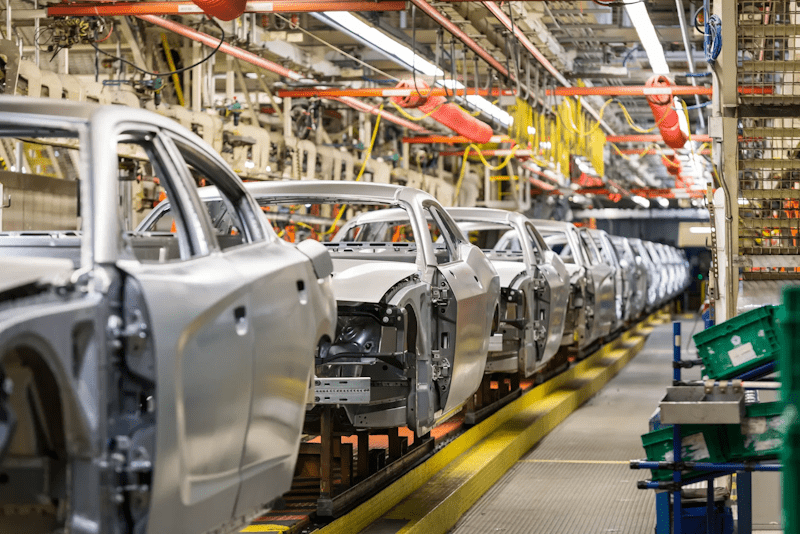
The Detroit Three automakers are ​heavily reliant on supply chains that include significant parts production in Mexico and Canada, and all three produce hundreds of thousands of vehicles annually ⁠in both countries.


Not to worry, with luck we’ll be swimming in ChiCom EV’s thanks to Carney!

Share

Mark Carney wants to boost trade with China without angering Donald Trump

VANCOUVER—At a critical time of upheaval in global politics, Prime Minister Mark Carney is trying to court the attention of one great power and avoid the ire of another, all while holding his political ground at home.

Carney was to leave Canada Tuesday afternoon. En route to Beijing, the prime minister detoured to do the thing he’s accused of not doing enough: listen to the political leaders who could make or break a key part of his ambitious trade agenda.

Share

Doug Ford says he’s ‘100% dead against’ lifting Canadian tariffs on Chinese EVs

As Prime Minister Mark Carney heads to China for talks aimed at boosting trade, Premier Doug Ford is imploring him to keep Canadian tariffs on Chinese electric vehicles.

The Star reported Monday that Carney’s officials are in “active discussions” with Beijing about lowering or dropping the 100 per cent tariffs on Chinese EVs that Canada imposed in 2024.

That’s because the prime minister — who has brought Saskatchewan Premier Scott Moe with him on the trade mission — hopes that, in exchange, China will remove its punitive counter-tariffs on Canadian canola and seafood.

Share

Canadian return trips from U.S. by car decline for 12th straight month: StatCan

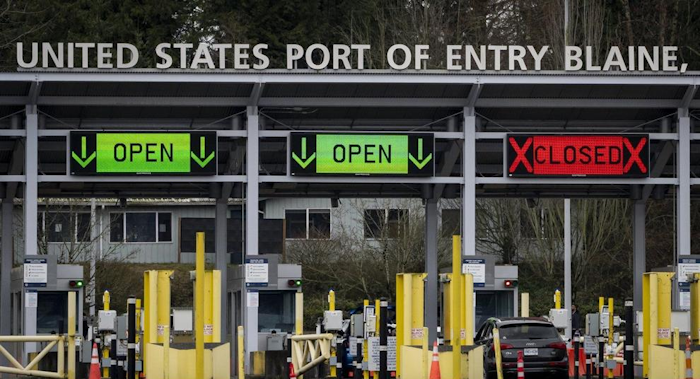
The number of Canadians travelling to and from the United States by car was down for the 12th consecutive month, Statistics Canada data shows.

In December, 1.3 million Canadians returned from the U.S. by automobile, a “steep decline” of 30.7 per cent from the same month in 2024, says Statistics Canada data released on Monday.

The data noted that Dec. 28 was the busiest day for road travel at the border, with 73,800 Canadians returning to the country.

Share

Carney government in talks with China about EV tariffs

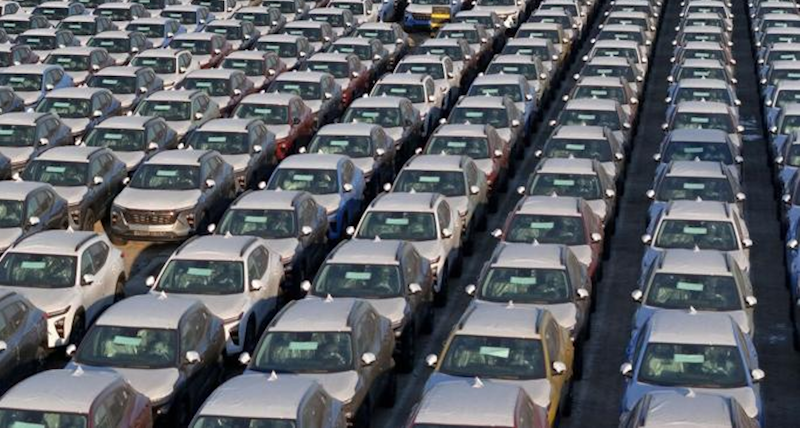
OTTAWA — Canadian negotiators are in “active discussions” with China about lowering or dropping tariffs on Chinese-made electric vehicles in exchange for easing punitive Chinese counter-tariffs on Canadian canola and seafood, but government officials declined to say how it might affect Canada’s trade tensions with a U.S. administration that is hawkish on blocking China’s EVs from North America.

On the eve of Prime Minister Mark Carney’s trip to Beijing, the talks are considered so politically sensitive as the U.S. and Canada navigate the upcoming negotiation to renew the North American free trade pact that Canadian officials would say very little about the tariff dispute that is jamming Ottawa between China and the U.S. and opened a double trade war for this country.


It appears Ford was not asked for comment.

Share

Canada must stand up to Donald Trump — or there will be no one to stand up for Canada

It is not just the attack on Venezuela, breaches of the United Nations’ Charter, or the use of illegal force that still somehow left a dictatorship in place.

It is not just the threats to annex Greenland or to make Canada the 51st state — both of which would violate the territorial integrity of sovereign states protected under international law.

It’s not just the admiration that U.S. President Donald Trump has for Russia’s Vladimir Putin or Israel’s Benjamin Netanyahu, both in the process of illegally annexing territory.


The Elbow People are afraid! I doubt Canada will receive support beyond “words”.

Share

Tariffs force Canadians to cut spending as costs rise

Most Canadians say tariffs are squeezing household budgets and forcing changes in day-to-day spending, according to federal polling that found rising prices and growing financial stress tied to U.S. trade policy.

Blacklock’s Reporter says survey results show 64% of Canadians have changed how they spend money because of tariffs, while 80% concluded policies under U.S. President Donald Trump have made everyday goods more expensive.

(Incognito)

Share

KLEIN: Political theatre puts jobs at risk

Doug Ford’s recent comments about pulling Crown Royal off Ontario liquor store shelves because its parent company is closing a bottling plant should concern every Canadian who cares about jobs, trade, and our country’s reputation.

Crown Royal is a Manitoba-made product with a long history in this country. Threatening to punish it over a corporate decision made by its parent company is not strength. It is political theatre. And political theatre has consequences.

Share

Venezuela attack shakes Canada’s economy far beyond oil – it’s a reckoning for the ages

Transmountain Pipeline Terminal

The U.S. raid on Venezuela has raised the threat level in Canada. The immediate concern has been whether it would dent Canadian oil exports, though the bigger worry is if the apparent success of the military operation in Venezuela makes this country next. Donald Trump has never backed away from his suggestion that Canada should become the 51st state, and the White House has laid hungry eyes on our mineral resources.

Share

The U.S. wants Venezuelan oil. Does that undercut Canada’s leverage in trade talks?

Just hours after the United States announced it had attacked oil-rich Venezuela and captured its president Nicolás Maduro, the wife of a top adviser to U.S. President Donald Trump issued a stark warning to Canada on social media.

“The U.S. doesn’t need anything from Canada,” wrote Katie Miller, whose husband Stephen Miller is Trump’s deputy chief of staff for policy and homeland security adviser. “Free trade is over.”

It’s a familiar refrain from those within Trump’s orbit, and from the president himself. But the argument has taken on new meaning now that the United States could have access to Venezuela’s staggeringly large reserves of heavy crude oil — similar to what’s produced in Western Canada.

Share